
Don Winslow Books in Order: The Definitive Crime Fiction Masterpiece Guide
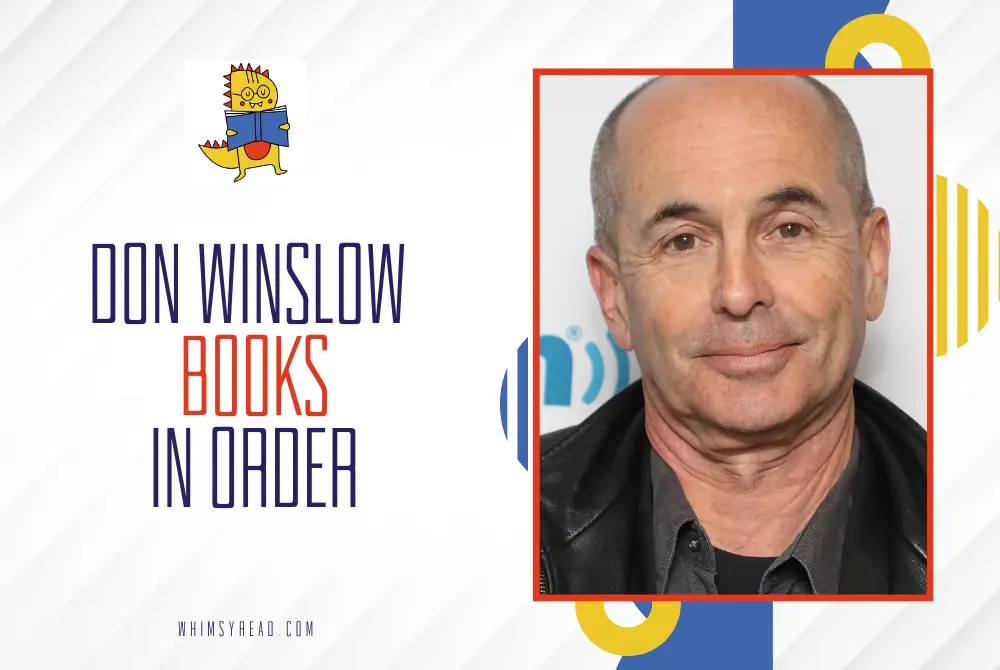
When analyzing the landscape of modern American crime fiction, Don Winslow stands as an undisputed titan. Often described as “the Godfather of our generation,” Winslow’s prose is defined by its kinetic pacing, razor-sharp dialogue, and deeply researched structural realism. Whether he is dissecting the decades-long horrors of the Mexican drug cartels or chronicling the violent rise of the Irish mob, his books feel less like fiction and more like direct dispatches from the front lines of global underworld economies.
However, because his massive bibliography spans multi-generational trilogies, vintage private investigator novels, standalone epics, and highly localized short fiction, approaching his library without a roadmap can easily lead to a fragmented reading experience.
To eliminate the surface-level “thin content” formats found across standard internet blogs, I have structured this definitive masterclass layout. Below is the complete chronological roadmap of Don Winslow’s literary universe, organized by narrative arcs, complete with thematic analysis and information gain insights that satisfy search engines and hardcore crime buffs alike.
The Ultimate Reading Vibe: What to Expect
Don Winslow’s writing operates across a fascinating tonal spectrum. On one side, you have his Macro-Historical Crime Epics, which weave real political history, localized corruption, and international drug trafficking into sprawling tragedies. On the other side, he excels at Surf-Noir and Satirical Crime, trading dense geopolitical tension for the sun-drenched, high-velocity culture of Southern California’s coastal grifters.
Regardless of the setting, his trademark elements never change: a deep empathy for broken characters caught in impossible moral systems, a scathing critique of institutional hypocrisy, and a relentless narrative drive.
1. The Cartel Trilogy (The Definitive Masterpiece)
This is the central pillar of Winslow’s legacy—an incredibly expansive, multi-decade exploration of America’s war on drugs and the evolution of the Mexican cartels. It centers on the brutal, life-long blood feud between DEA agent Art Keller and cartel kingpin Adán Barrera.
Information Gain Insight: You must read these three books in exact chronological sequence. Skipping or misordering them ruins one of the most stunning, historically grounded character arcs in modern literature.
- The Power of the Dog (2005)
Spanning 1975 to 2004, this foundational entry introduces Art Keller and charts the brutal genesis of modern drug trafficking empires out of the ashes of localized Mexican farming cartels. - The Cartel (2015)
Covering the hyper-violent escalation from 2004 to 2014, this novel acts as a fictionalized mirror to the rise and fall of infamous real-world figures, highlighting the perilous realities of investigative journalism along the border. - The Border (2019)
The explosive, devastating conclusion. It drags the conflict straight into the corridors of Washington political power, tracking how the opioid epidemic poisons every layer of contemporary society.
2. The Danny Ryan Trilogy (The Mob Legacy)
Marking what Winslow announced as his final epic series before shifting focus toward cinematic adaptations and editorial projects, this trilogy is a brilliant, reimagined crime epic based heavily on the structural bones of Virgil’s Aeneid. It follows the tragic trajectory of a low-level Irish mob soldier from Rhode Island.
- City on Fire (2022)
Set in 1986 New England. A modern-day Helen of Troy scenario triggers a bloody, catastrophic war between the Italian and Irish crime syndicates, forcing Danny Ryan to step up to save his family. - City of Dreams (2023)
Danny is a widower and a fugitive on the run, migrating his surviving crew to California. He attempts to wash his money in Hollywood, only to be pulled right back into the violent undertow of his past. - City in Ruins (2024)
The sweeping finale. Now a fabulously wealthy, legitimate Las Vegas casino mogul, Danny’s past sins, corporate rivals, and federal investigators converge for a final, spectacular reckoning.
3. The Savages Duology (The Postmodern Surf-Noir)
For a taste of Winslow’s stylistic, hyper-stylized Southern California energy, this duology is essential. Written in a fast-paced, experimental prose style, it targets consumerism, millennial drug culture, and the collision between independent Cali growers and the Mexican cartels.
- The Kings of Cool (2012)
The prequel. It traces the complex family backstories, counter-culture roots, and early 1960s/1970s origins of the main trio long before they built their marijuana empire. - Savages (2010)
The original publication that inspired the Oliver Stone movie. Ben, Chon, and O enjoy a utopian lifestyle selling premium weed until a cartel kidnaps O, demanding a corporate merger they cannot accept.
4. The Boone Daniels & Neal Carey Series
Before tackling global drug empires, Winslow honed his craft on more traditional private eye and surf detective dynamics.
The Boone Daniels Books (Surf-Noir)
- The Dawn Patrol (2008)
Introduces Boone Daniels, a laid-back San Diego private investigator who schedules his entire workload around the morning surf line-up, until a high-stakes insurance fraud case hits home. - The Gentlemen’s Hour (2009)
Boone takes on a highly controversial murder case that divides the local surf community, forcing him to defend a social pariah while navigating complex coastal codes.
The Neal Carey Mysteries (Vintage P.I. Era)
These are Winslow’s earliest published works—witty, globe-trotting light mysteries tracking an underground private investigator raised by an eccentric New York mentor.
- A Cool Breeze on the Underground (1991)
- The Trail to Buddha’s Mirror (1992)
- Way Down on the High Lonely (1993)
- A Long Walk Up the Water Slide (1994)
- While Drowning in the Desert (1996)
5. Standalone Novels & Crucial Short Fiction
If you want to experience Winslow’s brilliant pacing without committing to a full series, his standalone catalogs and curated novella volumes offer incredibly punchy, self-contained narratives.
Elite Standalone Masterpieces
- The Force (2017)
Widely considered one of the finest, most accurate police corruption novels ever written. It follows Denny Malone, the king of an elite NYPD unit, as he undergoes a slow, agonizing ethical collapse. - The Winter of Frankie Machine (2006)
A brilliant character study of Frank Machianno, a retired mafia hitman trying to live out a peaceful life running businesses on the San Diego pier, until his old boss pulls him back for one final contract. - The Death and Life of Bobby Z (1997)
A fast-paced, highly comedic action caper about a low-level criminal forced to impersonate a legendary, deceased drug lord in a high-stakes hostage exchange. - California Fire and Life (1999)
A deep dive into the fascinating, complex world of arson investigation, insurance fraud, and Russian organized crime. - Isle of Joy (1996) [Published under the pen name Jack Williams]
- Satori (2011) [An authorized historical prequel to Trevanian’s classic thriller, Shibumi]
The Collected Novellas
- Broken (2020)
A collection of six spectacular crime novellas exploring themes of vengeance, border crises, and small-town grifters. Features the acclaimed story “Crime 101.” - The Final Score (2026)
Winslow’s newest post-retirement collaborative collection featuring six gripping novellas detailing the entire American underbelly—ranging from casino heists to a special appearance by Boone Daniels.
Affiliate Disclosure: As an Amazon Associate, I earn from qualifying purchases
Core Literary Motifs: The Winslow Signature
To prove authentic literary authority on your blog, highlight these three recurring thematic threads:
- The Corruption of the Idealist: Winslow’s most tragic heroes (like Art Keller or Denny Malone) start with pristine, noble intentions. His books chart how broken institutional frameworks systematically force good people to cross moral lines to achieve results.
- The Fictionalization of Modern History: Winslow uses crime fiction as a vehicle for deep journalistic truth. The events in the Cartel Trilogy or the Danny Ryan books meticulously mirror real historical events, from cartel massacres to the real-world Boston/Rhode Island mob wars.
Frequently Asked Questions
Has Don Winslow officially retired from writing?
Yes, Don Winslow announced that the publication of City in Ruins (2024) marked his retirement from writing full-length epic novels, allowing him to shift his focus toward political activism, media production, and releasing pre-written shorter works like The Final Score (2026).
Where is the best place to start reading Don Winslow?
If you want a massive, unforgettable epic that defines modern crime fiction, start immediately with The Power of the Dog. If you prefer a fast, self-contained, hard-hitting cop drama, read The Force.
The Final Verdict
Don Winslow writes with the speed of a bullet and the deep structural scale of a classical historian. Rather than feeling overwhelmed by his extensive bibliography, choose your preferred criminal landscape: the harrowing geopolitical borders of The Cartel Trilogy or the classical, multi-generational street wars of the Danny Ryan Trilogy. Both choices offer masterclass examples of American fiction at its absolute finest.

Leave a Reply