
V.C. Andrews Books in Order: The Complete Series Guide (Updated 2026)
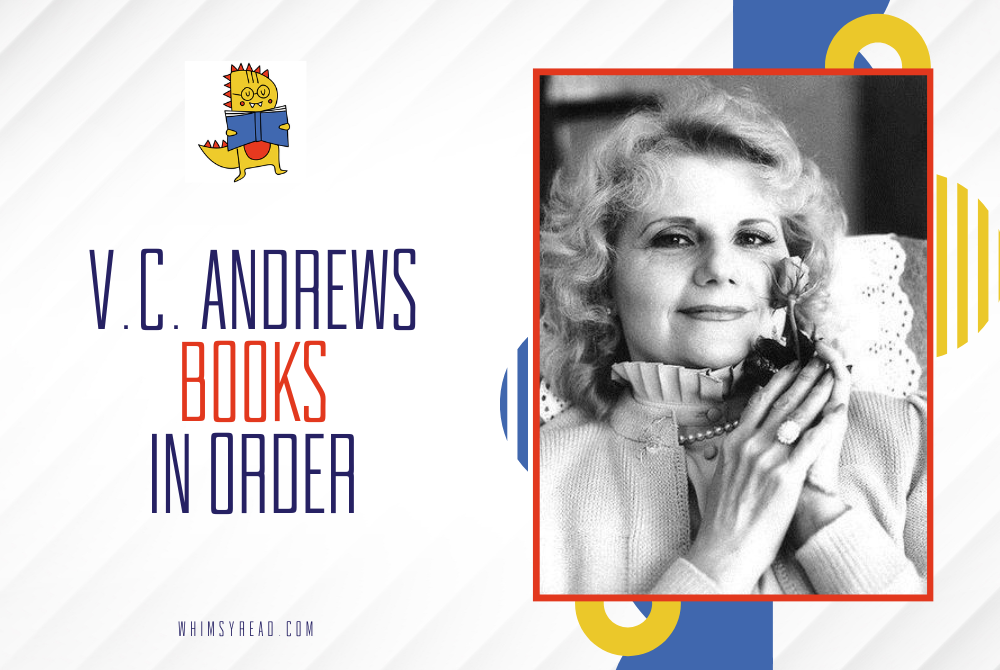
I need to tell you something my mother told me when she handed me Flowers in the Attic at thirteen years old: “Don’t read this at night.” I ignored her completely, stayed up until 3am, and emerged the next morning genuinely shaken and absolutely unable to stop.
That experience — that specific combination of gothic dread, family horror, and compulsive unputdownability — is what V.C. Andrews built her legacy on. And what a legacy it is. Collectively, more than 107 million copies of her books have been sold around the world and translated into more than 25 languages. That number is staggering when you consider that Andrews herself died in 1986 having written fewer than ten novels.
The V.C. Andrews phenomenon is genuinely unlike anything else in publishing. Understanding it requires knowing the real story — who wrote what, when, and why the name on the cover has meant two very different things across four decades. This guide covers all of it.
The Most Important Thing to Know: V.C. Andrews vs. Andrew Neiderman
Before any lists, this distinction matters enormously and most reading guides bury it.
V.C. Andrews died on December 19, 1986, from breast cancer. She left behind outlines and story ideas, and after her death her estate hired ghostwriter Andrew Neiderman to continue publishing novels under the V.C. Andrews name.
Neiderman was originally brought on to write Garden of Shadows — the prequel to Flowers in the Attic — as a one-time contract. But Andrews’ continued popularity led the estate to ask Neiderman to take on her brand and continue publishing books under her name. He has now done so for nearly forty years, producing more than 100 novels.
Here is the clear breakdown of what Andrews actually wrote:
Written by V.C. Andrews herself:
- Flowers in the Attic (1979)
- Petals on the Wind (1980)
- If There Be Thorns (1981)
- Seeds of Yesterday (1984)
- My Sweet Audrina (1982)
- Heaven (1985) — Casteel #1
- Dark Angel (1986) — Casteel #2
- Fallen Hearts (1988) — Casteel #3, partially written by Andrews, completed by Neiderman
Partially written by Andrews, completed by Neiderman:
- Garden of Shadows (1987) — Dollanganger prequel
- Fallen Hearts (1988) — Casteel #3
Everything else — from the Cutler series (1990) onward — is written entirely by Andrew Neiderman under the V.C. Andrews name.
From the Cutler series onwards, all novels attributed to Andrews are ghostwritten by Neiderman.
This is not a criticism of Neiderman — he slipped into Andrews’ voice with considerable skill and has maintained a recognizable style across decades. But readers deserve to know which books came from Andrews herself, and many guides don’t make this clear.
Series 1: The Dollanganger Series — The Beginning of Everything
This is where V.C. Andrews begins. The Dollanganger series is her most famous work, the series that made her name, and the one every new reader should start with.
It follows Cathy and her siblings from the attic of Foxworth Hall through generational secrets and scandal.
Books written by V.C. Andrews:
- Flowers in the Attic (1979)
- Petals on the Wind (1980)
- If There Be Thorns (1981)
- Seeds of Yesterday (1984)
Partially written by Andrews, completed by Neiderman:
- Garden of Shadows (1987) — prequel, set before Book 1
Written by Neiderman as V.C. Andrews:
- Christopher’s Diary: Secrets of Foxworth (2014)
- Christopher’s Diary: Echoes of Dollanganger (2015)
- Secret Brother (2015)
- Beneath the Attic (2019)
- Out of the Attic (2020)
- Shadows of Foxworth (2020)
Affiliate Disclosure: As an Amazon Associate, I earn from qualifying purchases
Flowers in the Attic (1979)
A family is torn apart when a mother and her dying father are forced to keep her children — Chris, Cathy, Cory, and Carrie — hidden away in an attic for years. As time passes, dreams and desires become entwined with superstitious fears that the Devil will take control of the children and they must be destroyed. This is the book that defined Andrews’ legacy. The attic of Foxworth Hall is one of gothic fiction’s most powerful settings — claustrophobic, increasingly sinister, and suffused with the particular horror of adults failing children catastrophically. The taboo elements are handled with surprising psychological sophistication. This is not exploitation for its own sake — it’s a serious examination of what confinement and betrayal do to people who should have been loved.
Petals on the Wind (1980)
After three years in the attic, Cathy, Christopher, and Carrie hatch a successful escape plan. Once out, they try to find security and happiness but must face painful memories and dark secrets that threaten to tear them apart. Many readers consider this the best book in the series — it has more narrative scope than the debut, the revenge plot is deeply satisfying, and Cathy’s voice reaches full power. Do not skip it.
If There Be Thorns (1981)
The story moves to the next generation — Cathy’s sons Jory and Bart, and the arrival of a mysterious old woman next door who begins poisoning Bart’s mind with dark family history. The generational continuation is one of Andrews’ most effective structural choices — showing how trauma echoes forward into children who had no part in creating it.
Seeds of Yesterday (1984)
The final Andrews-written Dollanganger novel brings the saga to an emotionally devastating conclusion. The Foxworth Hall setting returns, the damage of the attic generation ripples into a third generation, and Andrews closes her central story with characteristic darkness and emotional weight.
Garden of Shadows (1987)
In this prequel, Olivia moves to Foxworth Hall with her husband Malcolm, hoping for a life of happiness and love. But the gloomy mansion hides dark secrets and forbidden passions, threatening Olivia’s two sons and one daughter with a stain of jealous obsession. Partially written by Andrews, completed by Neiderman — it reads slightly differently from the core four but serves as valuable backstory for readers who want to understand how Foxworth Hall became what it is.
The Christopher’s Diary Sub-series and Later Additions (2014–2020)
These are fully Neiderman-written extensions of the Dollanganger world, set in the modern day. Christopher’s Diary: Secrets of Foxworth is a revealing account of the events within the walls of Foxworth Hall as documented by 14-year-old Christopher Dollanganger, discovered by 17-year-old Kristen Masterwood and her father during a visit to value the property for sale. These books are for devoted fans of the original series who want more of the world — they don’t replace the core four and are best read after completing them.
Series 2: My Sweet Audrina — The Standalone Gothic Masterpiece
1. My Sweet Audrina (1982) — Written by V.C. Andrews
2. Whitefern (2016) — Written by Neiderman
My Sweet Audrina introduces a tragic cast of characters and explores a toxic form of parental love. Andrews writes about love, deceit, innocence, and betrayal. Audrina Adare grows up in a house full of clocks that have all been stopped, haunted by the memory of her older sister — who also happened to be named Audrina, and who died in the woods under circumstances no one will fully explain. The novel is Andrews’ most psychologically sophisticated work — more intimate than the Dollanganger books, more focused on the mechanics of memory and gaslighting. Many readers consider it her finest achievement. It works completely as a standalone — you do not need Whitefern (the Neiderman-written sequel) to have a complete experience.
Series 3: The Casteel Series — Heaven’s Story
Heaven Leigh Casteel fights poverty and abuse. This series follows Heaven from Appalachian poverty through a journey toward wealth, identity, and the discovery of her true family history.
Written by V.C. Andrews:
- Heaven (1985)
- Dark Angel (1986)
Partially written by Andrews, completed by Neiderman:
3. Fallen Hearts (1988)
Written by Neiderman as V.C. Andrews:
4. Gates of Paradise (1989)
5. Web of Dreams (1990)
Heaven (1985)
One of Andrews’ most emotionally raw novels. Heaven Leigh Casteel is the daughter of a poor Appalachian family — dirt floors, abusive stepmother, siblings sold off one by one. The novel charts her resilience and determination with the kind of visceral detail that made Andrews’ fans so fiercely loyal. This is Andrews at her most socially grounded — the gothic elements are present but the poverty is not romanticized.
Dark Angel (1986)
Heaven escapes her past and discovers that her true heritage is considerably more complicated and considerably more gothic than she imagined. Andrews wrote this shortly before her death and it shows the full maturity of her craft.
The Major Neiderman-Written Series — A Guide to the Landscape
From here onward, all V.C. Andrews books are written by Andrew Neiderman. The series proliferated enormously across the 1990s, 2000s, 2010s, and 2020s. What follows is an organized guide to the major series, each with reading order and a brief description.
The Cutler Series (1990–1991)
- Dawn (1990)
- Secrets of the Morning (1991)
- Twilight’s Child (1991)
- Midnight Whispers (1992)
- Darkest Hour (1993)
Dawn Longchamp discovers her comfortable life is built on lies when she learns she was kidnapped as an infant from a wealthy Virginia beach family. The series follows her reclamation of her identity and her place in a family that is as dysfunctional as any Andrews ever created. Widely considered the best of the early Neiderman-written series — the voice is closest to Andrews herself, and the Virginia beach setting is vividly rendered.
The Landry Series (1994–1996)
- Ruby (1994)
- Pearl in the Mist (1994)
- All That Glitters (1995)
- Hidden Jewel (1995)
- Tarnished Gold (1996)
Set in the Louisiana bayou, the Landry series follows Ruby Landry from Cajun poverty to New Orleans wealth and the dark secrets that follow both worlds. The Southern Gothic atmosphere is the strongest in any Neiderman-era series — the bayou setting gives the books a distinct flavor that fans consistently celebrate. The Landry series became a beloved Lifetime movie.
The Logan Series (1996–1997)
- Melody (1996)
- Heart Song (1997)
- Unfinished Symphony (1997)
- Music in the Night (1997)
- Olivia (1999)
Melody Logan discovers her family secrets after moving from West Virginia to Cape Cod. The New England setting and the musical theme give this series its own distinctive identity within the wider V.C. Andrews universe.
The Hudson Series (1999–2000)
- Rain (1999)
- Lightning Strikes (2000)
- Eye of the Storm (2000)
- The End of the Rainbow (2001)
Rain Arnold is a biracial teenager in Washington D.C. whose world collapses when she discovers her true parentage. One of the more socially conscious series in the Neiderman era — Rain’s experience of race and class adds a dimension not common in earlier Andrews fiction.
The Shooting Stars Series (2001–2002)
- Cinnamon (2001)
- Ice (2001)
- Rose (2001)
- Honey (2002)
- Falling Stars (2001)
Five young women at a performing arts school, each with her own dark family secret and each given her own book before the ensemble finale. A compact, interconnected series well-suited to readers who want to sample the Neiderman-era style without committing to a five-book family saga.
The DeBeers Series (2002–2003)
- Willow (2002)
- Wicked Forest (2002)
- Twisted Roots (2002)
- Into the Woods (2003)
- Hidden Leaves (2003)
DeBeers has the longest novel series in which she has six V.C. Andrews books in order. Willow De Beers discovers her father was a psychiatrist with dangerous secrets — and that her entire identity is built on them. The psychiatric setting gives this series an unusual psychological dimension.
The Gemini Series (2004–2005)
- Celeste (2004)
- Black Cat (2004)
- Child of Darkness (2005)
Twins Celeste and Noble — or are they? One of the more genuinely supernatural-leaning series in the Andrews catalog, with themes of spirit possession and identity that push into territory Andrews herself might have found intriguing.
The Broken Wings Series (2003)
- Broken Wings (2003)
- Midnight Flight (2003)
Three girls at a reform school with brutal methods and secrets of their own. A shorter, more contained series that functions almost as a single novel split across two volumes.
The Usher Series (2018–2019)
- Into the Darkness (2018)
- Capturing Angels (2019)
A more recent entry in the Neiderman-written catalog with updated contemporary settings while maintaining the signature gothic family drama.
The Eden Series (2022–2024)
- Becoming My Sister (2022)
- Birdlane Island (2025)
These ultra-gothic stories center on Fern and her mother, living and working in the creepy Davenport family’s old, massive mansion. The most recent ongoing Neiderman series, with Birdlane Island published in March 2025 as the current final entry.
The TV and Film Adaptations
The V.C. Andrews catalog has been adapted multiple times. The Landry series became a beloved Lifetime movie. Flowers in the Attic was first adapted in 1987, then again as a Lifetime television film in 2014 — followed by Lifetime adaptations of Petals on the Wind, If There Be Thorns, Seeds of Yesterday, and Garden of Shadows, creating a complete Dollanganger adaptation arc. Lifetime has also produced adaptations of the Ruby/Landry series, the Logan series, and several standalone entries. The adaptations vary considerably in quality — most fans agree the books are superior in almost every case, but the Lifetime films have introduced new readers to the catalog consistently.
Who Was V.C. Andrews? The Author Behind the Gothic Legacy
V.C. Andrews was born Cleo Virginia Andrews on June 6, 1923, in Portsmouth, Virginia, and she grew up nearby in Virginia Beach. As a teenager she suffered a serious fall that led to lasting back problems, and she lived with chronic pain for the rest of her life. She never married, and for much of her life she lived with her mother — a relationship that was close, complicated, and often practical in the day to day. She was a working artist long before she was a bestselling novelist. Andrews trained through correspondence courses and built a career as a commercial artist and illustrator. She did portrait work and fashion illustration, and she also wrote shorter pieces for confession magazines while she figured out what kind of stories she wanted to tell at novel length.
Andrews was drawn to the tension between tidy, respectable families and the secrets they keep locked away. Her books put young heroines under extreme pressure and then watch what they do with the truth once they finally get it.
The biographical parallel is impossible to ignore: a woman who spent her life in a body that confined and limited her, writing obsessively about young people confined in houses, attics, and families from which they cannot escape. The claustrophobia in Andrews’ fiction is not invented — it is lived experience translated into gothic metaphor.
Andrews died on December 19, 1986, in Virginia Beach, from breast cancer. She was 63.
What Makes V.C. Andrews Different From Other Gothic Writers
The gothic novel has a long tradition. What made Andrews’ contribution distinctive enough to sell 107 million copies?
She made the family the monster. Traditional gothic fiction places the horror outside — in the castle, the moor, the supernatural force. Andrews placed it inside the dinner table, the family portrait, the mother’s loving smile. The people who are supposed to protect you are the danger. That inversion hit something true and terrifying for millions of readers.
Her heroines survive. They are abused, confined, betrayed, and psychologically destroyed in various combinations — but they push through. Cathy Dollanganger’s determination is epic. Heaven Casteel’s resilience is ferocious. Audrina’s piecing together of her own stolen memory is one of the most satisfying character arcs in gothic fiction. These are not passive victims. They fight.
She wrote about things no one else was writing about. The taboo content in Andrews’ books was unprecedented for mainstream commercial fiction in 1979. She handled incest, abuse, confinement, and religious extremism with a directness that publishers initially resisted and readers immediately responded to. The controversy was the point — she was writing about things that happened in real families and were never spoken about.
The houses are characters. Foxworth Hall, the Casteel shack, the Whitefern mansion — Andrews’ settings are as psychologically developed as her protagonists. The architecture of her fictional houses mirrors the architecture of her characters’ trauma with a precision that feels deliberate and achieved.
Where to Start — My Honest Recommendation
For every new reader: Start with Flowers in the Attic (1979).
There is no other starting point. This is the novel that defines what V.C. Andrews means, the one that will tell you immediately whether this world is for you, and the one that all other books in the catalog are in conversation with. Read all four Andrews-written Dollanganger books before exploring other series.
If you want Andrews’ best single novel: My Sweet Audrina (1982). Tighter than the Dollanganger series, more psychologically sophisticated, and haunting in a way that stays with you differently than the attic books. Many devoted readers consider it her masterpiece.
If you want to explore the Neiderman era: Start with the Cutler series (Dawn, 1990) — it’s the closest in voice and quality to Andrews herself, and serves as the best introduction to the extended catalog.
If you want the best Southern Gothic entry: The Landry series (Ruby, 1994) — the Louisiana bayou setting is the strongest atmospheric achievement of the Neiderman years.
Frequently Asked Questions
How many V.C. Andrews books are there?
There are more than 100 books published under the V.C. Andrews name. V.C. Andrews herself wrote fewer than 10 before her death in 1986. The rest were written by ghostwriter Andrew Neiderman.
How many books did V.C. Andrews actually write herself?
Andrews personally wrote Flowers in the Attic, Petals on the Wind, If There Be Thorns, Seeds of Yesterday, My Sweet Audrina, Heaven, and Dark Angel. She partially wrote Fallen Hearts and Garden of Shadows, which were completed by Neiderman after her death.
Who is Andrew Neiderman?
Andrew Neiderman was hired by the Andrews estate after her death to complete Garden of Shadows as a one-time contract. His success led the estate to ask him to continue publishing books under the V.C. Andrews name. He has now written more than 100 novels under that name across forty years, while also publishing novels under his own name.
What is the best V.C. Andrews book?
Among the books Andrews herself wrote, Flowers in the Attic and My Sweet Audrina consistently top reader polls. My Sweet Audrina is often cited by literary readers as her most sophisticated work. Among the Neiderman-written books, the Cutler series (Dawn) and the Landry series (Ruby) are most frequently recommended.
Are the V.C. Andrews books connected to each other?
The Dollanganger series, Casteel series, Audrina duology, and several other series each have internal continuity and must be read in order within their series. Most series are self-contained — you do not need to read one series to understand another.
How many copies have V.C. Andrews’ books sold?
Collectively, more than 107 million copies of her books have been sold around the world and translated into more than 25 languages.
Are V.C. Andrews books appropriate for young adults?
The books contain mature themes including abuse, incest, confinement, and sexual content. They are frequently discovered by readers in their early teens — which was Andrews’ own intended audience in some respects — but parents should be aware of the content. The books do not glamorize the dark elements they depict; they examine them seriously.
What should I read after V.C. Andrews?
For the gothic family saga element: Daphne du Maurier’s Rebecca, Anne Rice’s gothic novels, and Barbara Michaels’ gothic fiction cover similar atmospheric territory. For the dark family secrets and female resilience elements: Celeste Ng’s Little Fires Everywhere and Gillian Flynn’s Sharp Objects share the DNA of Andrews’ preoccupations in contemporary literary form.
Final Verdict
V.C. Andrews wrote fewer than ten novels. She died at 63 having published a handful of books across seven years. And yet her name appears on more than 100 titles, has sold over 107 million copies, and continues generating new books and adaptations decades after her death.
That is an extraordinary legacy — and a complicated one. The books Andrews herself wrote are genuinely remarkable: dark, psychologically sophisticated, formally inventive in ways that mainstream commercial fiction rarely attempted in the late 1970s and early 1980s. Flowers in the Attic and My Sweet Audrina in particular are works that reward serious reading, not just consumption.
The Neiderman-written books are something different — consistent, professional extensions of Andrews’ formula that have kept millions of readers engaged across four decades. They are not what Andrews wrote, but they are what her readers wanted more of, and Neiderman has delivered it with remarkable consistency.
Start with Flowers in the Attic. Stay up too late. Emerge slightly shaken the next morning. Welcome to one of publishing’s most enduring gothic universes.

Leave a Reply