
5 Best Books for Social Anxiety: My Honest Reading Guide (2026 Updated)
I want to be upfront about something before we get into the books. I am not someone who has been clinically diagnosed with social anxiety. But I have felt its edges — the dry mouth before a presentation, the over-rehearsed sentence I practised six times before saying it wrong anyway, the post-conversation replaying of everything I said that could have landed badly.
In banking, where I spent nine years, the culture rewarded confidence loudly and punished hesitation visibly. I watched colleagues — brilliant people — shrink in meetings, not because they lacked ideas but because the social cost of speaking felt too high. I started reading about anxiety not for myself but to understand them. What I found changed how I see people entirely.
These five books are the ones I would hand to anyone who has ever felt that the social world moves at a speed they cannot quite match — and who wants to understand why, and what to do about it.
What Is Social Anxiety — And Why Books Help
Social anxiety is more than shyness. It is a persistent, disproportionate fear of being watched, judged, or humiliated in social situations — a fear that often knows it is irrational and yet persists anyway. It can turn genuinely ordinary interactions — a meeting, a party, elevator small talk with a colleague — into sources of intense psychological distress.
It is also one of the most common anxiety disorders in the world, affecting an estimated 12% of people at some point in their lives. And crucially, it is one of the most treatable — particularly with Cognitive Behavioral Therapy approaches, which several books on this list draw on directly.
Reading about social anxiety works for a specific reason that is worth understanding: it breaks the isolation. Social anxiety thrives on the belief that your experience is uniquely embarrassing — that other people move through the world effortlessly while you are the only one whose heart hammers before a phone call. Every book on this list dismantles that belief in a different way.
The 5 Best Books for Social Anxiety
1. How to Be Yourself — Ellen Hendriksen PhD
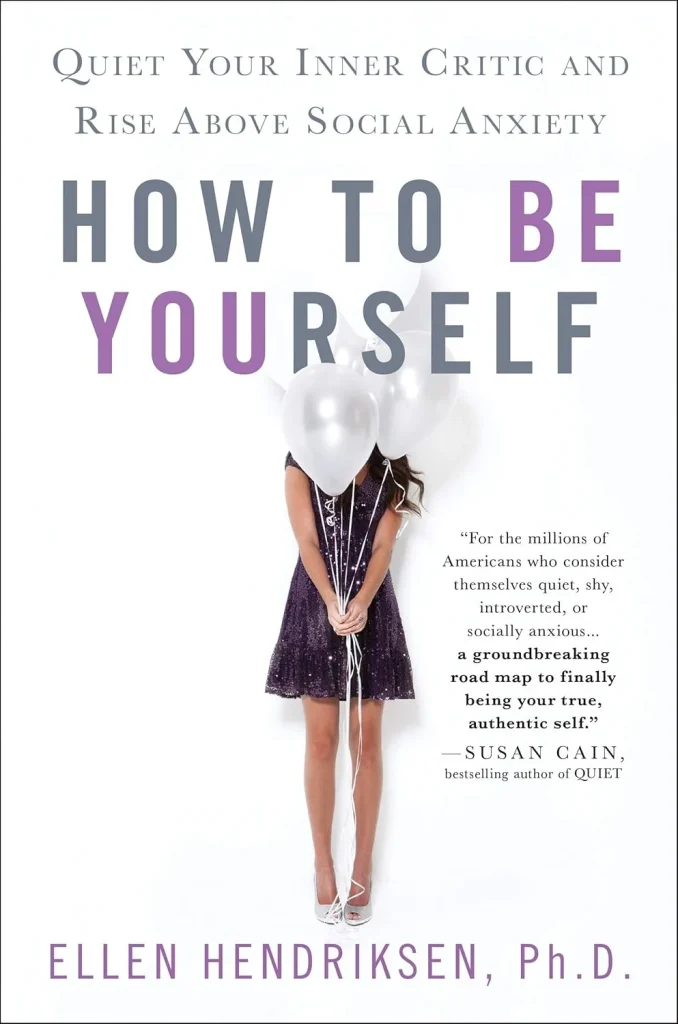
Best for: Understanding why social anxiety happens and what to actually do about it
Published: March 13, 2018
This is the book I recommend first because it was written by someone who is not merely an expert on social anxiety but someone who lives with it. Ellen Hendriksen is a clinical psychologist and researcher at Boston University’s Center for Anxiety and Related Disorders — and she has social anxiety herself. That combination of clinical authority and lived experience gives this book a quality that pure academic texts rarely achieve: it is simultaneously rigorous and deeply kind.
The central argument is deceptively simple and genuinely liberating. Hendriksen argues that social anxiety is not a deficit — it is not evidence that something is wrong with you. It is your Inner Critic running a threat assessment that is calibrated too high. You already have a self worth showing. You do not need to become someone else. You need to quiet the voice that tells you the self you have is not enough.
What you will learn: The neurological and psychological mechanics of why social anxiety develops and persists, the cognitive distortions that feed it — particularly the “Spotlight Effect” and “mind-reading” — and a behavioral approach to rewiring anxious patterns through gradual exposure and behavioral experiments. Hendriksen calls this “being yourself” not as a platitude but as a specific, learnable skill.
What makes it stand out: The humor. Hendriksen writes about anxiety with a dry wit that makes the subject feel less heavy. Chapters that could easily be clinical and intimidating are instead genuinely entertaining. She manages to write a book about fear without making you afraid to read it.
Who this is for: Anyone encountering the topic of social anxiety for the first time. Also excellent for people who know they have social anxiety but have always felt it was just “who they are” rather than a pattern that can genuinely shift.
My take: This was the first book I read on this subject and it reframed how I understood quieter people entirely. The banking world I came from had no vocabulary for the kind of internal experience Hendriksen describes — everyone was just told to “put themselves out there.” This book explains why that advice, however well-intentioned, often makes things worse rather than better.
2. Hey Warrior — Karen Young
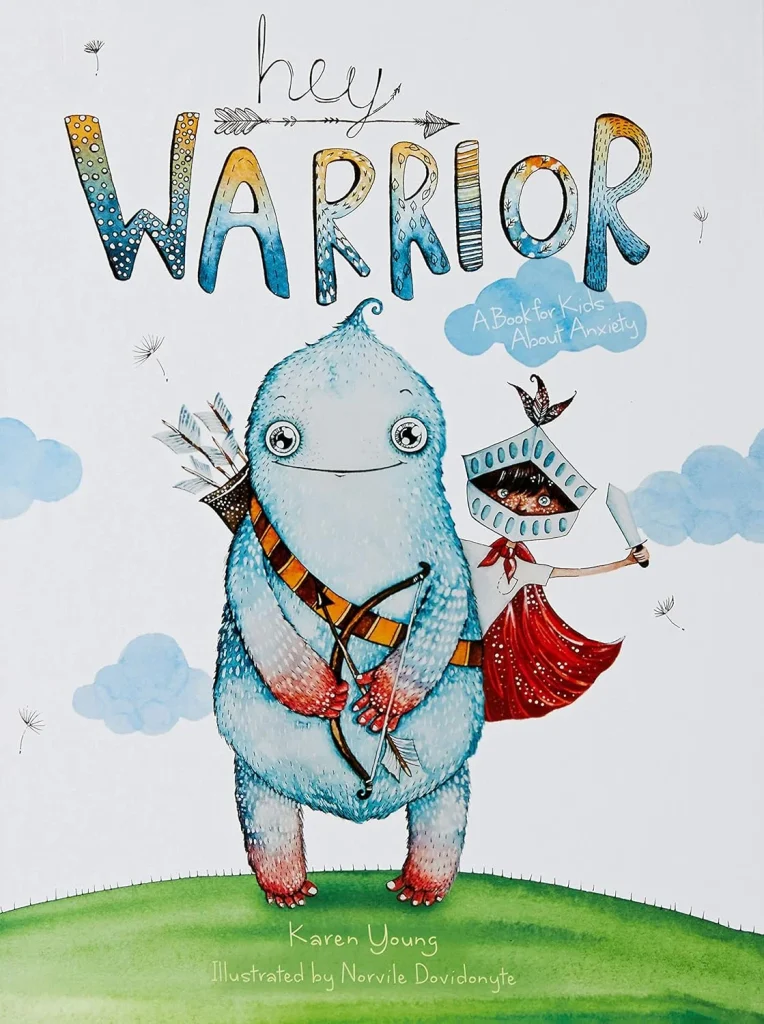
Best for: Understanding anxiety’s neuroscience in language anyone can understand
Published: January 1, 2017
This book was written for children. I am recommending it to everyone.
That combination sounds contradictory until you read it. Hey Warrior explains the amygdala — the brain’s threat-detection center, the “warrior” of the title — in language so clear and warm that it makes the physiology of anxiety genuinely understandable for the first time for many adult readers who have been told they “just need to calm down” their whole lives.
The amygdala is simply doing its job. It is a vigilant, hardworking structure in your brain whose entire purpose is to detect potential threat and trigger a response before the thinking brain has time to evaluate whether the threat is real. In people with anxiety, this system is calibrated too sensitively — it fires in response to perceived social threat the same way it fires in response to physical danger. Understanding this does not make the anxiety disappear. But it fundamentally changes your relationship to it. Instead of “what is wrong with me,” the question becomes “how do I help my warrior brain understand that this situation is safe.”
What you will learn: The neuroscience of the fight-or-flight response in genuinely accessible language, why anxiety symptoms — racing heart, shallow breathing, nausea, tunnel vision — are not signs of weakness but signs of a protection system working correctly in the wrong context, and how to begin recalibrating the threat response through reassurance, gradual exposure, and self-compassion.
What makes it stand out: The illustrations and language. Written for children ages 6–12, the book strips away every unnecessary complexity and gets directly to what matters. Adult readers consistently report that concepts they have heard described in clinical language for years suddenly made sense for the first time when presented this simply.
Who this is for: Parents who want to help anxious children understand what is happening in their bodies. Also — and I say this without any condescension — adults who have tried more clinical books and found the language alienating. And anyone who wants to read this alongside a child in their life.
My take: I read this with my youngest. The conversation it started about worry, about the brain’s warrior, about what to do when something feels scary even though it probably is not — that conversation was worth more than I expected. I understood my own anxious moments differently afterwards. Sometimes the simplest explanation is the most useful one.
3. Quiet: The Power of Introverts in a World That Can’t Stop Talking — Susan Cain
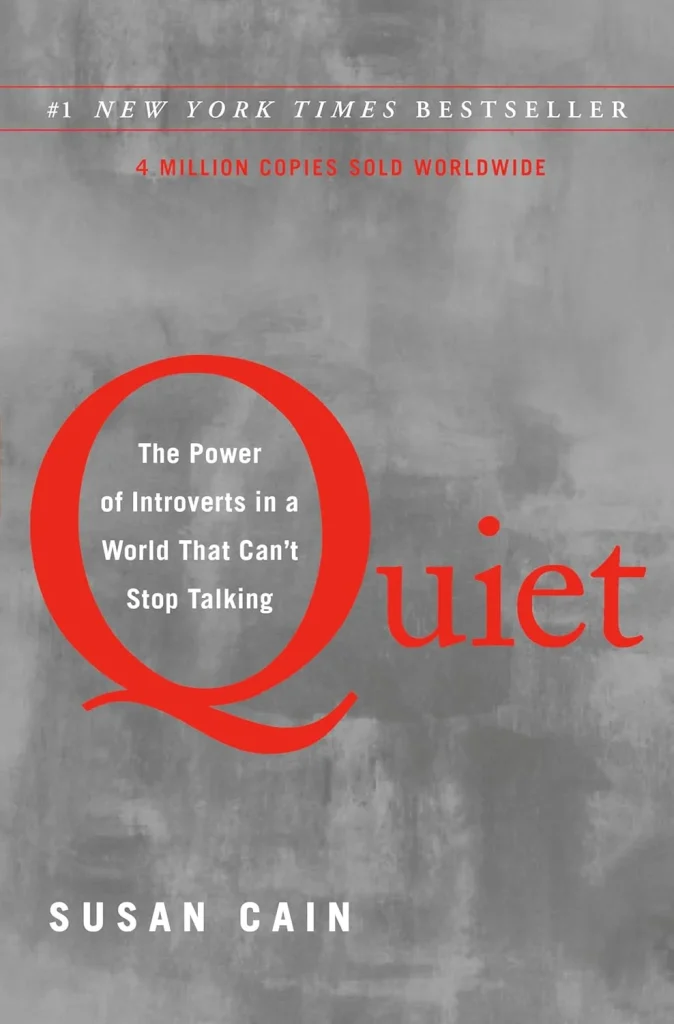
Best for: Cultural validation for anyone who has ever been told their quietness is a problem
Published: January 29, 2012
Social anxiety and introversion are not the same thing — Susan Cain is careful to make this distinction. Introversion is a personality trait, a preference for less stimulating environments and a tendency to process internally. Social anxiety is a fear response. But they overlap significantly — particularly in cultures that treat extroversion as the default setting for competence and success.
That cultural context is exactly what Quiet addresses. And it is important because social anxiety does not develop in a vacuum. It develops partly through repeated messages — from school, from workplaces, from social norms — that the way you naturally engage with the world is wrong. Quiet dismantles those messages with research, history, and dozens of profiles of people who changed the world while fundamentally preferring to do so quietly.
What you will learn: The history of the “Extrovert Ideal” in Western culture and how it became the dominant framework for evaluating competence and worth. The neuroscience of introversion and why introverts genuinely process the world differently rather than just failing to keep up. Case studies of Rosa Parks, Steve Wozniak, Warren Buffett, and Gandhi — people whose quiet temperament was central to rather than despite their impact. Practical strategies for navigating environments built for extroverts when you are not one.
What makes it stand out: The research. Cain spent years interviewing psychologists, neuroscientists, business leaders, and educators. Every claim is sourced. The book feels authoritative rather than just validating — which matters when you have been told your whole life that the problem is with you rather than with the framing.
Who this is for: Quieter readers who have internalized the belief that their natural temperament is a deficiency. Also essential reading for managers, teachers, and parents who want to understand and support the introverts in their lives rather than inadvertently pushing against them.
My take: The cricket world I grew up in rewarded loudness and physical dominance. The banking world I moved into rewarded confident performance. Quiet was the first book that articulated clearly why neither of those environments felt entirely natural to me — and why that was information rather than a problem to be fixed.
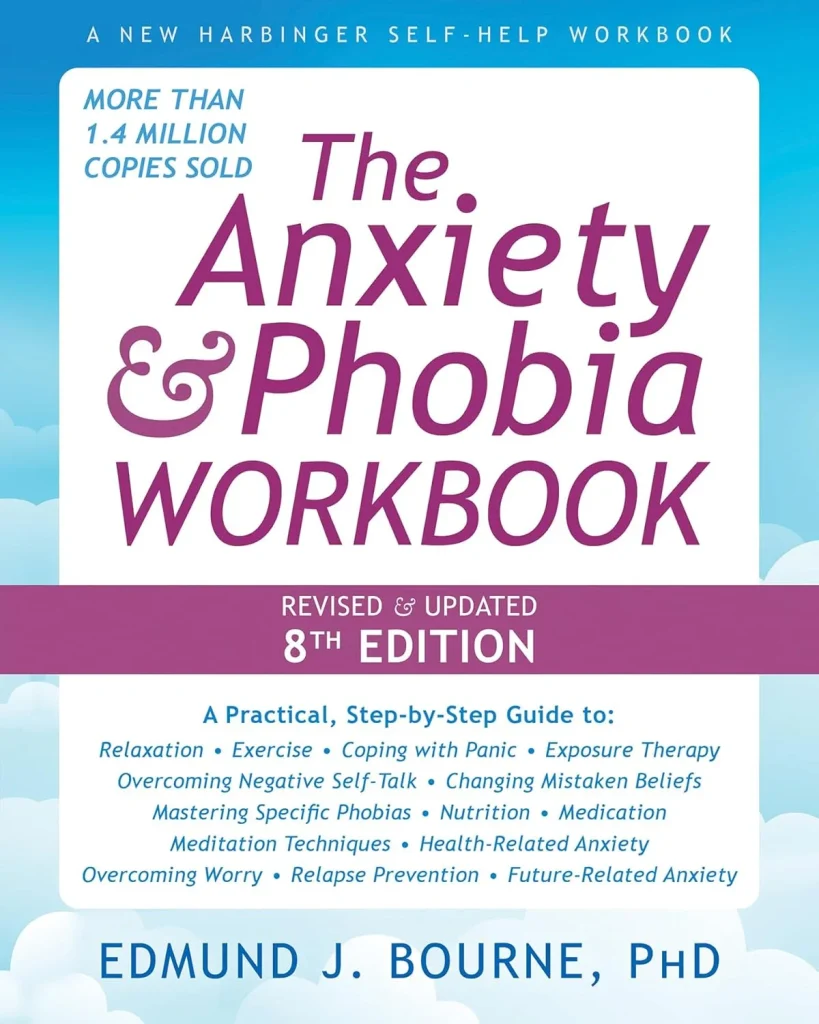
4. The Anxiety and Phobia Workbook — Edmund J. Bourne PhD
Best for: Structured, evidence-based exercises you can actually do
Published: May 1, 2020 (7th Edition — most current)**
This is the book therapists recommend most frequently to clients working through anxiety between sessions. Edmund Bourne’s workbook has been in print for thirty years and gone through seven editions — each updated to incorporate the latest research. That longevity is itself a quality signal. Very few self-help books survive thirty years of the field developing around them.
Where How to Be Yourself gives you understanding, this workbook gives you tools. The difference matters. Understanding why anxiety happens is genuinely useful — but it does not by itself change the anxious response. Doing the exercises in this book does.
What you will learn: Breathing and relaxation techniques grounded in parasympathetic nervous system science — not generic “just breathe” advice but specific protocols that physically interrupt the anxiety response. Cognitive restructuring worksheets that teach you to identify and challenge anxious thoughts in real time. Exposure therapy hierarchies that let you build tolerance to feared situations incrementally rather than through overwhelming confrontation. Chapters on sleep, nutrition, exercise, and their documented effects on anxiety that most standalone anxiety books skip entirely.
What makes it stand out: The workbook format means you engage with the material rather than just reading it. Research on behavioral change consistently shows that active engagement — writing, completing exercises, tracking — produces more lasting change than passive reading. This book is designed around that evidence.
The 7th Edition specifically includes updated research on neurobiology and new sections on digital anxiety — social media, screen time, and the specific ways online environments amplify social anxiety symptoms. The most current edition is worth reading over earlier versions for this reason.
Who this is for: Anyone who wants a structured, step-by-step approach rather than narrative insight. Also essential for people already working with a therapist — this workbook complements professional support rather than replacing it. If you can only buy one book for someone you love who is struggling with anxiety, this is the one.
My take: I am an analytical person by background — nine years in banking trained me to want frameworks and processes rather than just concepts. This book speaks that language fluently. Every chapter ends with something actionable. It does not just tell you things — it shows you how to change them.
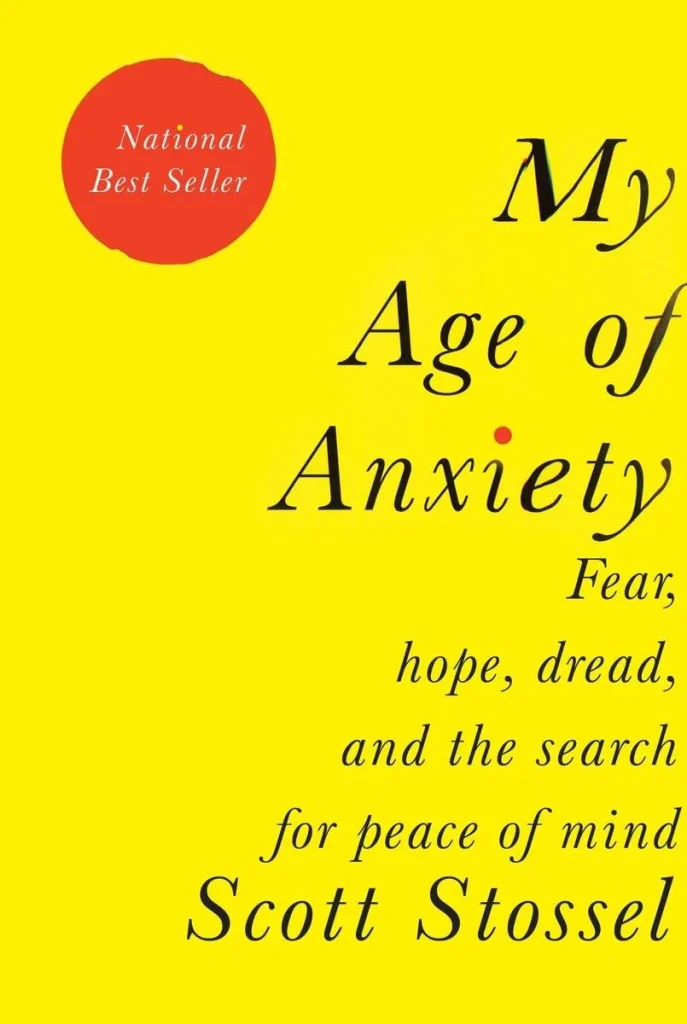
5. My Age of Anxiety: Fear, Hope, Dread, and the Search for Peace of Mind — Scott Stossel
Best for: Feeling genuinely less alone in your experience of anxiety
Published: January 7, 2014
Scott Stossel is the editor of The Atlantic, one of America’s most prestigious magazines. He is also one of the most severely anxious people I have encountered in print — and his willingness to document that with complete honesty makes this book something genuinely rare in the anxiety literature.
The book is two things simultaneously. It is Stossel’s personal memoir of a lifelong, often debilitating battle with anxiety — emetophobia, aviophobia, social anxiety, claustrophobia, and a list of phobias that would be almost comic if they were not clearly so genuinely painful. And it is a sweeping intellectual history of how humanity has tried to understand anxiety — from ancient philosophy through Freudian psychoanalysis through modern neuroscience and psychopharmacology.
What you will learn: The history of how anxiety has been understood, classified, medicated, and treated across centuries of medicine and philosophy. The current scientific debates about the biological basis of anxiety — the serotonin hypothesis, the role of genetics, the relationship between temperament and environment. And most valuably for many readers: the frank, honest account of what it actually feels like to live inside severe anxiety — from someone who is simultaneously intellectually equipped to analyze it and unable to stop experiencing it.
What makes it stand out: The combination of intellectual rigor and personal vulnerability. Stossel does not write about anxiety from a position of recovery. He writes from inside it — describing medication trials, therapy approaches, and coping strategies with the honesty of someone who has tried everything and found partial answers rather than complete ones. That honesty is more comforting than a success story would be for many readers.
Who this is for: People who want to understand the full historical and scientific context of anxiety. Also — and this is the book’s most powerful function — people who feel uniquely broken by their anxiety and need to see that someone brilliant, accomplished, and deeply human is living with the same experience.
My take: This book made me think about several people from my banking years differently. High-performing, visibly successful people who I assumed moved through the world effortlessly. Stossel’s account reminded me that the performance of ease is not the same as its presence. That reframe has stayed with me.
How to Choose the Right Book for Where You Are Right Now
Not everyone needs all five at once. Here is a practical guide based on where you are starting from:
If you want to understand why social anxiety happens: Start with How to Be Yourself by Ellen Hendriksen. It is the most accessible and compassionate explanation of the psychology available.
If you want practical exercises and a structured approach: Start with The Anxiety and Phobia Workbook. It is the most actionable book on this list and the one most likely to produce measurable change.
If you have been told your quietness is a problem: Start with Quiet by Susan Cain. The cultural validation it provides is often the first step toward taking anxiety seriously rather than just trying to push through it.
If you want to understand the neuroscience simply: Start with Hey Warrior. Do not let the children’s book classification put you off. The clarity it provides is genuinely useful for adults.
If you want to feel less alone: Start with My Age of Anxiety. Stossel’s honesty about the experience of living with anxiety is the most humanizing thing I have read on the subject.
The Cycle of Social Anxiety — Why It Persists
Understanding the mechanism that keeps social anxiety running is genuinely useful — it turns an overwhelming experience into something with identifiable parts that can be addressed individually.
The Trigger — An upcoming social event, an unexpected conversation, being called on in a meeting, a notification that someone wants to video call.
The Inner Critic — Automatic thoughts that fire faster than conscious reasoning: “I’ll say something stupid. They’ll think I’m boring. I’ll embarrass myself. Everyone will notice how nervous I am.”
Physical Symptoms — Heart rate increases, breathing shallows, muscles tense, face may flush. These are the amygdala’s protective response — entirely normal physiologically, but experienced as signs of impending failure in a social context.
Safety Behaviors — Over-rehearsing what to say, avoiding eye contact, staying near exits, checking your phone, speaking too quickly, leaving early. These feel like coping but they actually maintain the anxiety by preventing the brain from learning that the feared outcome does not happen.
Post-Event Rumination — Replaying the interaction after it ends, identifying every moment that could have gone better, building a case against yourself. This is often the most exhausting part of the cycle — the event is over but the anxiety continues.
The trap: Safety behaviors and rumination both feel like they are helping while actually feeding the cycle. Every book on this list, in different ways, addresses how to interrupt this loop.
Core Strategies That Run Through All Five Books
As you read, you will notice several overlapping strategies that the research consistently supports:
Challenge the Spotlight Effect — The belief that others are watching and evaluating you as closely as you are watching yourself. Research consistently shows people are dramatically less focused on you than you assume — they are primarily focused on their own experience and their own impression management.
Shift attention outward — During anxiety-provoking interactions, anxious attention tends to turn inward — monitoring physical symptoms, evaluating performance in real time, anticipating judgment. Deliberately shifting focus to the other person — what are they actually saying, what do they actually need — interrupts the self-monitoring loop and typically reduces anxiety symptoms.
Gradual exposure — Avoidance is the most common response to social anxiety and the most counterproductive. Each avoided situation confirms to the brain that it was genuinely threatening. Gradual, voluntary exposure — starting with low-stakes social situations and building incrementally — is the most evidence-supported behavioral treatment available.
Self-compassion over self-criticism — Anxiety is not a character flaw. It is a protection system calibrated too high. Treating it with the same patience you would extend to a friend dealing with the same experience is not soft — it is neurologically more effective than self-criticism, which activates the very threat response you are trying to calm.
Frequently Asked Questions
What is the best book for social anxiety for beginners?
How to Be Yourself by Ellen Hendriksen PhD is the most accessible starting point — written by a clinical psychologist who has social anxiety herself, it combines scientific authority with genuine warmth and practical CBT-based strategies. It is the book I recommend to anyone encountering this subject for the first time.
Is social anxiety the same as being introverted?
No — they are distinct but overlapping experiences. Introversion is a personality preference for less stimulating environments and internal processing. Social anxiety is a fear response — a persistent dread of being judged or humiliated in social situations. Some introverts have social anxiety, many do not. Some extroverts have social anxiety. Susan Cain’s Quiet addresses the overlap and distinction thoroughly.
Can books actually help with social anxiety or do I need therapy?
Books — particularly workbooks like The Anxiety and Phobia Workbook — can produce measurable improvement, especially for mild to moderate social anxiety. They are also highly effective as supplements to professional therapy. For severe social anxiety that is significantly limiting your daily life, professional support from a therapist trained in CBT is strongly recommended alongside rather than instead of reading.
What is the difference between shyness and social anxiety?
Shyness is a temperament — a tendency toward wariness in new social situations that often decreases with familiarity. Social anxiety is a clinical condition — a persistent, disproportionate fear that causes significant distress and can impair daily functioning. Many shy people do not have social anxiety. Many people with social anxiety do not consider themselves shy — they desperately want connection but fear it simultaneously.
Is Hey Warrior only for children?
It was written for children aged 6–12 but is genuinely useful for adults — particularly adults who have found clinical explanations of anxiety alienating or difficult to access. The simplicity of the neuroscience explanation is its strength for any age.
Which book is best for parents of anxious children?
Hey Warrior by Karen Young is the most accessible resource for both reading with anxious children and helping parents understand what their child is experiencing. How to Be Yourself provides the adult framework that helps parents understand the mechanics of the anxiety their child is dealing with.
Are these books a substitute for medication?
No. Medication for anxiety is a medical decision to be made with a qualified healthcare provider. These books complement both therapy and medication but do not replace either. Several books on this list — particularly The Anxiety and Phobia Workbook and My Age of Anxiety — discuss medication honestly as part of a broader treatment approach.
What should I read after these five books?
If you want to go deeper into the CBT approach, Overcoming Social Anxiety and Shyness by Gillian Butler is the natural next step. For the neuroscience of anxiety more broadly, Why Has Nobody Told Me This Before? by Dr. Julie Smith covers overlapping territory with exceptional clarity. For a memoir that complements Stossel’s, First, We Make the Beast Beautiful by Sarah Wilson is among the most honest accounts of living with anxiety in print.
Final Verdict
Social anxiety is common, it is treatable, and you are not alone in it. Those three facts are worth repeating because social anxiety specifically convinces you of the opposite — that your experience is uniquely embarrassing, that other people manage effortlessly, that the fear is permanent.
None of those things are true. And every book on this list, in a different way, is evidence against them.
Start with How to Be Yourself if you want understanding. Start with The Anxiety and Phobia Workbook if you want structure and exercises. Start with Quiet if you need someone to tell you that your natural temperament is not the problem. Start with Hey Warrior if you want the simplest and most human explanation of what is happening in your brain. Start with My Age of Anxiety if you need to feel less alone.
Any of these five is a genuinely good starting point. The important thing is to start.

Leave a Reply