
Tintin Books in Order: The Complete Guide to Hergé’s Adventures (2026 Updated)
I want to tell you something before we get into the reading order.
Between the ages of twelve and sixteen, I did not just read Tintin. I lived inside those albums. Growing up in Bangladesh, the world Hergé drew felt simultaneously impossibly far away and completely real — the snow-covered mountains of Tibet, the jungles of the Congo, the desert landscapes of the Middle East, the moon. Every album was a journey I took completely seriously, with the absolute conviction of a child who has not yet learned to be cynical about the things that move him.
I still remember every character with the kind of clarity that only comes from genuine childhood obsession. Snowy — Milou in French — the small white fox terrier who was Tintin’s most constant and loyal companion. Captain Haddock with his magnificent, rolling explosions of invented insults — blistering barnacles, thundering typhoons — a man whose bluster concealed a warmth and loyalty that made him one of the great comic characters in any medium. Professor Calculus, deaf to the point of elaborate comedy, devoted to his inventions with a focused sincerity that was somehow never mockable. The Thompson Twins — Thomson and Thompson — those identically bowler-hatted detectives who were simultaneously completely useless and completely endearing. Bianca Castafiore, the opera singer whose voice shattered glass and whose presence always heralded chaos. Nestor, the butler at Marlinspike Hall, patient and dignified through everything.
I have not read Tintin since my teenage years. Some things you protect from revision the way you protect a perfect memory — by leaving it exactly where it is. But every character’s name and every adventure’s shape is still there, vivid and immediate, the way the best childhood reading always stays.
This guide is for everyone who grew up with these albums and everyone who is discovering them now. Both groups are fortunate.
How Tintin Came to Exist — Hergé and the Creation of a Legend
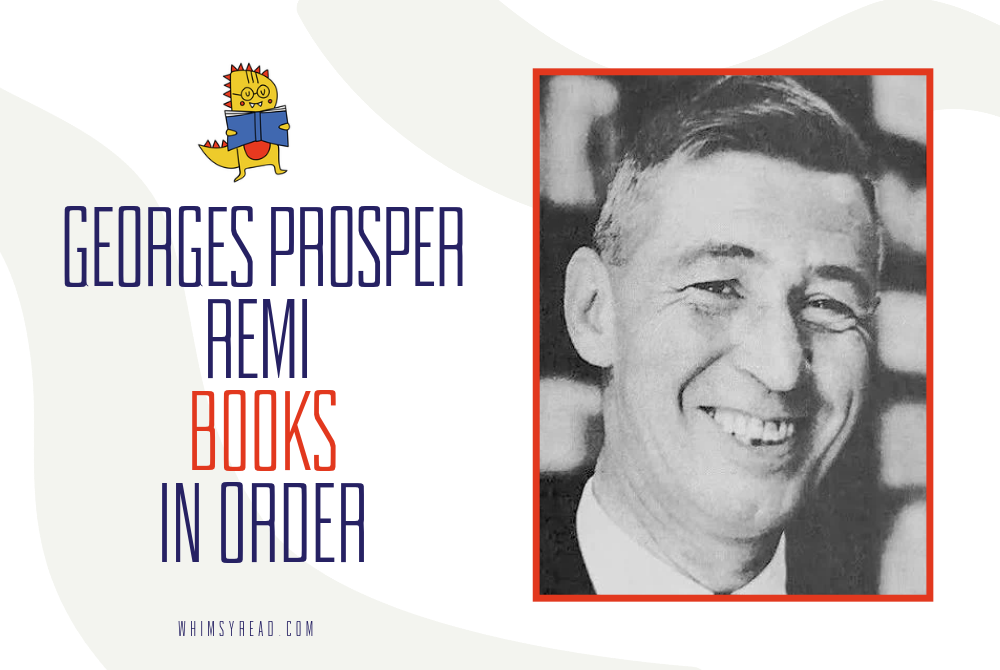
Georges Prosper Remi — known to the world by his pen name Hergé, derived from reversing his initials R.G. — was a Belgian cartoonist born in Etterbeek, Brussels, on 22 May 1907. He created Tintin in 1929 for a children’s supplement of a Belgian Catholic newspaper called Le Vingtième Siècle. The first adventure — Tintin in the Land of the Soviets — was drawn in black and white and published in serial installments, with Hergé essentially inventing the visual language of the modern comic album as he went.
What Hergé created over the next five decades was something genuinely unprecedented. His ligne claire style — clear lines, flat colours, precise detail, and an extraordinary ability to convey movement and expression — became one of the most influential visual approaches in the history of comics. The albums were translated into more than 70 languages. By the time of the centenary of Hergé’s birth in 2007, sales exceeded 200 million copies worldwide.
Hergé worked on his final album — Tintin and Alph-Art — until his death on 3 March 1983. It was published posthumously as an unfinished work. He had explicitly instructed that no one should continue the series after his death, and the Hergé Foundation has honoured that instruction. The 24 albums are complete. The story is finished. What exists is what there is — and what there is is extraordinary.
The Complete Tintin Books in Order — All 24 Albums
The official reading order follows the original publication sequence of the completed colour albums:
- Tintin in the Land of the Soviets (1930, colourised 2017)
- Tintin in the Congo (1931)
- Tintin in America (1932)
- Cigars of the Pharaoh (1934)
- The Blue Lotus (1935)
- The Broken Ear (1937)
- The Black Island (1937)
- King Ottokar’s Sceptre (1939)
- The Crab with the Golden Claws (1941) — Captain Haddock’s first appearance
- The Shooting Star (1942)
- The Secret of the Unicorn (1943)
- Red Rackham’s Treasure (1945)
- The Seven Crystal Balls (1948)
- Prisoners of the Sun (1949)
- Land of Black Gold (1950)
- Destination Moon (1953)
- Explorers on the Moon (1954)
- The Calculus Affair (1956)
- The Red Sea Sharks (1958)
- Tintin in Tibet (1960)
- The Castafiore Emerald (1963)
- Flight 714 to Sydney (1968)
- Tintin and the Picaros (1976)
- Tintin and Alph-Art (1986, posthumous and unfinished)
Every Tintin Album Summarized
Tintin in the Land of the Soviets (1930)
The very beginning — Tintin travels to the Soviet Union as a reporter and uncovers the dark reality behind Bolshevik propaganda. This first album is rougher and more explicitly political than anything Hergé would produce later. It was originally published in black and white and only colourised in 2017. Read it for historical completeness rather than as a representative example of what the series becomes — the craft and warmth of the later albums are not yet fully present here.
Tintin in the Congo (1931)
Tintin and Snowy travel to the Belgian Congo. This album is the most uncomfortable of the entire series to read today — it reflects the colonial attitudes of 1931 Belgium with a lack of self-consciousness that is genuinely jarring. Hergé himself later expressed regret about it. It is part of the official canon but requires significant historical context. Reading it is worthwhile for understanding how Hergé’s worldview evolved across his career.
Tintin in America (1932)
Chicago, gangsters, Native Americans, and the Wild West. America is drawn with energy and affection and the album moves at a pace that shows Hergé’s storytelling instincts sharpening rapidly from the first two entries. The critique of American capitalism embedded in the story is more pointed than its surface adventure suggests.
Cigars of the Pharaoh (1934)
A cruise in the Mediterranean leads Tintin to an Egyptologist’s expedition, an ancient tomb, and a drug smuggling conspiracy that stretches across continents. The first truly globe-spanning Tintin adventure and the first appearance of the Thompsons. The direct sequel is The Blue Lotus.
The Blue Lotus (1935)
The continuation of the Cigars of the Pharaoh story takes Tintin to Shanghai, 1931, in the middle of the Japanese invasion of Manchuria. This is the album that transformed Hergé’s approach to his craft — his friendship with a young Chinese student named Zhang Chongren led him to research Chinese culture and history with a genuine seriousness he had not brought to earlier albums. The Blue Lotus is where Hergé becomes the storyteller he would remain for the rest of his career. One of the finest albums in the entire series.
The Broken Ear (1937)
A stolen fetish from a South American tribe leads Tintin into a war between two fictional republics — San Theodoros and Nuevo Rico — that is one of the sharpest political satires in the series. The depiction of arms dealers manipulating small nations into war remains devastatingly relevant.
The Black Island (1937)
Tintin investigates counterfeit banknotes and ends up on a remote Scottish island with a monster. The atmosphere is superb — one of the best adventure-mystery hybrids in the series — and the Scottish setting is drawn with unusual care and specificity.
King Ottokar’s Sceptre (1939)
A fictional Central European kingdom, a royal sceptre, and a plot to overthrow its king. Published in 1939 as fascism was reshaping Europe, the album reads as a pointed allegory. One of the most sophisticated political stories in the series and the first appearance of Tintin’s recurring antagonist Rastapopulous.
The Crab with the Golden Claws (1941)
The album that changed everything. This is where Captain Haddock makes his first appearance — found drunk in the hold of a ship Tintin has boarded to investigate an opium smuggling operation. Their first meeting is fractious and funny and genuinely touching. By the end of the album they are friends in the way that the best fictional friendships work — because they were built under pressure and proved themselves real.
If you are introducing someone to Tintin for the first time and want to start somewhere other than the very beginning, start here. Everything that follows is better for knowing how Haddock arrived.
The Shooting Star (1942)
A meteorite falls into the Arctic Ocean and a scientific expedition races to reach it first. The album has a dreamlike quality — the images of the enormous spider and the giant mushrooms on the meteorite’s surface were among the images that stayed with me most vividly from my childhood reading. Hergé’s ligne claire style handles the surreal with the same clarity it handles the realistic, and the effect is genuinely unsettling.
The Secret of the Unicorn (1943)
Tintin buys an old model ship at a flea market and discovers clues hidden inside its mast pointing to buried pirate treasure. The Unicorn is the first album of a two-part story and introduces Marlinspike Hall — the ancestral estate that becomes Haddock’s home and the series’ recurring domestic anchor. It also introduces Haddock’s ancestor Sir Francis Haddock, whose seventeenth-century adventures are told in flashback with wonderful swashbuckling energy.
Red Rackham’s Treasure (1945)
The conclusion of the Unicorn story introduces Professor Calculus, who arrives at Haddock’s door with a submarine of his own design and a plan for reaching the treasure site. Calculus is an extraordinary comic creation — a man of genuine brilliance who mishears almost everything anyone says to him and responds to the misheard version with absolute sincerity. His relationship with Haddock — exasperated, affectionate, fundamentally loyal — is one of the series’ great pleasures.
The Seven Crystal Balls (1948)
Seven scientists who participated in an expedition to Peru are struck by a mysterious sleeping sickness one by one. The album builds genuine suspense through accumulation — each new victim tightening the grip of something ancient and inexplicable. Ends on a cliffhanger that leads directly into Prisoners of the Sun.
Prisoners of the Sun (1949)
The continuation of The Seven Crystal Balls takes Tintin, Haddock, and Zorrino — a young Peruvian boy — deep into the Andes to find the kidnapped Professor Calculus and confront the descendants of the Inca empire. The mountain scenery is among the most beautiful Hergé ever drew and the climax — in which Tintin uses a solar eclipse to engineer their escape — is one of the series’ most celebrated moments.
Land of Black Gold (1950)
Oil sabotage in the Middle East and the return of Oliveira da Figueira — a merchant Tintin first met in Cigars of the Pharaoh — along with the first appearance of the Abdullah, the impossibly spoiled young son of Emir Mohammed Ben Kalish Ezab. Abdullah is the series’ most reliably infuriating recurring character, which is to say Hergé drew him with complete comic precision.
Destination Moon (1953)
Professor Calculus has been recruited by a fictional European country to build a rocket to the moon. The album reflects the space race atmosphere of the early 1950s with remarkable prescience — Hergé researched rocketry and lunar science carefully and produced a technically credible account of moon travel six years before the first satellite launch. The first part of a two-album story.
Explorers on the Moon (1954)
Tintin, Haddock, Calculus, the Thompsons, and — accidentally — a stowaway actually walk on the moon. Published in 1954, fifteen years before the Apollo 11 landing, Hergé’s depiction of zero gravity, the lunar surface, and the psychological pressures of space travel is extraordinary in its accuracy. The album ends with one of the series’ most genuinely moving moments — a sacrifice that still lands with full emotional weight. Among the finest achievements in the entire run.
The Calculus Affair (1956)
Calculus has invented a device capable of shattering glass using sound waves. Various powers want it. The album is the series’ most explicit Cold War thriller — the fictional countries of Borduria and Syldavia serve as transparent Soviet and Western European analogues — and the chase across Europe that forms its backbone is constructed with real thriller craft. Widely regarded as one of the greatest Tintin albums.
The Red Sea Sharks (1958)
Tintin and Haddock discover a network of slave trading disguised as a pilgrim transport operation. The most morally serious album in the series — Hergé handles the subject with genuine anger — and the one in which the most recurring characters from the entire series appear simultaneously.
Tintin in Tibet (1960)
Tintin believes his friend Chang — first introduced in The Blue Lotus — has survived a plane crash in the Himalayas when everyone else has given him up for dead. He and Haddock climb into the mountains to find him. This is widely considered the most personal and emotionally resonant album in the series — Hergé was going through a personal crisis while drawing it and the album bears the marks of that experience in the intensity of Tintin’s refusal to abandon hope. The Yeti appears not as a monster but as something more ambiguous and ultimately more affecting. Many readers consider this the single best Tintin album. It is the one that makes adults cry.
The Castafiore Emerald (1963)
An extraordinary album in which almost nothing happens. Bianca Castafiore — the opera singer whose glass-shattering soprano has terrorized Haddock throughout the series — arrives at Marlinspike Hall for an extended visit. A jewel goes missing. Journalists arrive. The Thompsons investigate. Hergé builds genuine mystery and comedy from the smallest possible materials and produces an album that is formally unlike any other in the series — no exotic travel, no grand villain, no physical danger. It is a masterpiece of reduction.
Flight 714 to Sydney (1968)
A billionaire’s private jet is hijacked and the passengers find themselves on a remote Indonesian island with a fanatical collector, an ancient extraterrestrial mystery, and a figure from Tintin’s past. The album takes Hergé’s storytelling in a genuinely strange direction — towards the supernatural and the cosmic — that divides readers. The ending is deliberately unresolved in ways that feel intentional rather than incomplete.
Tintin and the Picaros (1976)
Hergé’s final completed album. Tintin and his companions travel to a fictional South American country to free the falsely imprisoned Castafiore and the Thompsons. The album has a melancholy quality — a sense of things ending, of a world that has grown more complicated than adventure can fully address. It is not the series at its peak, but it is a thoughtful and honest conclusion to a fifty-year journey.
Tintin and Alph-Art (1986, posthumous)
Hergé was working on this album — involving the contemporary art world and a mysterious cult — when he died in 1983. What exists is a collection of pencil sketches and notes rather than a finished work. It is published as found — incomplete, raw, heartbreaking in what it promises and cannot deliver. Read it last and read it knowing you are seeing a great artist’s final, unfinished thoughts.
The Characters — Everyone Who Made These Albums Live
Tintin
The nominal hero — a young Belgian reporter with a remarkable gift for finding himself in the middle of international conspiracies. Tintin is fundamentally decent, genuinely brave, and almost entirely without personal life. He has no family, no romantic interests, no ambitions beyond the next story. He is a vehicle for adventure and an embodiment of a certain kind of moral clarity — the kind that twelve-year-old readers find enormously appealing. Hergé drew him with deliberate simplicity so that readers could project themselves into him.
Snowy (Milou)
The small white fox terrier who accompanies Tintin through every adventure. Snowy is more than a pet — in the early albums especially, he is a genuine participant in the action, occasionally saving Tintin’s life, frequently getting into trouble of his own. His internal monologue provides some of the series’ funniest moments. The relationship between Tintin and Snowy is the emotional core of the early albums in a way that the later ensemble never quite replaces.
Captain Haddock
The greatest supporting character in the history of comics. Haddock arrives in Book 9 as a broken man — a ship’s captain reduced to alcoholism by circumstances beyond his control — and becomes, across the subsequent albums, the series’ moral and emotional heart. His friendship with Tintin is the relationship that gives the later series its warmth. His profanity — which Hergé constructed entirely from non-obscene words deployed with furious creativity: sea gherkins, ostrogoth, bashi-bazouk, ectoplasm — is one of the great running jokes in literature. His home, Marlinspike Hall, gives the series a domestic anchor that transforms it from picaresque adventure into something with genuine continuity and consequence.
Professor Cuthbert Calculus (Professor Tournesol)
A scientist of extraordinary capability who is profoundly deaf and absolutely refuses to acknowledge it. Calculus mishears virtually every conversation he participates in and responds to his misheard version with complete conviction — a comic mechanism that Hergé deploys with precision and never exhausts. Beneath the deafness and the eccentricity is a man of genuine moral courage — the Calculus of Destination Moon, Explorers on the Moon, and The Calculus Affair is a figure of real dignity.
Thomson and Thompson (Dupont and Dupond)
The two identically moustachioed detectives who appear throughout the series, usually to investigate whatever Tintin has already solved. They are not stupid — they are something more precise and funnier than stupid. They are thoroughly convinced of their own competence in a way that prevents them from recognising its absence. Their bowler hats and identical responses to any situation — “To be precise…” — are among the most reliable sources of comedy in the series.
Bianca Castafiore
The opera singer whose presence signals impending chaos and whose soprano has been breaking Haddock’s composure since The Secret of the Unicorn. Castafiore is a figure of magnificent comic obliviousness — she consistently mispronounces Haddock’s name, sings at inappropriate moments, and remains entirely unaware of the disruption she causes. Her album — The Castafiore Emerald — gives her a rare centrality and reveals, underneath the comic excess, a character with genuine warmth.
Nestor
The butler at Marlinspike Hall — patient, precise, dignified, and unflappable in the face of whatever chaos Tintin and Haddock’s adventures generate within the household. Nestor is a minor character in terms of plot but a major character in terms of atmosphere — his presence makes Marlinspike feel inhabited and real.
How Tintin Shaped My Childhood — A Personal Account
Between the ages of twelve and sixteen, I read every Tintin album I could find. In Bangladesh in the late 1980s and early 1990s, this required a certain amount of determination — these were not always easy to locate — and that determination was entirely worth it.
What Hergé gave me was the world. Not a simplified version of it, not a sanitised version — the actual world, in all its geographical and cultural variety, drawn with a precision and affection that made every destination feel real. I had never been to Tibet. I had never been to Peru or Scotland or the Belgian countryside or the moon. But Hergé’s ligne claire style — those clean, confident lines, the flat colours, the extraordinary ability to make a panel convey both information and atmosphere simultaneously — made me feel I knew these places. I visited them during every reading session with the complete conviction of a child who has not yet learned to be sceptical about the things that move him.
Snowy was the first character I loved unreservedly. The small white dog who was always there, always loyal, always slightly more sensible than his circumstances warranted. When I was twelve, Snowy felt like the companion I would have wanted on any adventure — completely present, completely trustworthy.
Captain Haddock arrived in my reading life like a revelation. Here was an adult character who was allowed to be imperfect — who had failed, genuinely and significantly, before the story found him — and whose friendship with Tintin was the process of recovering something worth being. His insults delighted me in a way I could not have articulated then and can only partially articulate now: there was something in the invention of them, the reaching for the most extreme possible language while staying technically within bounds, that felt like watching a form of freedom.
Professor Calculus made me laugh more consistently than any character in any medium for the four years I spent in those albums. The deafness was funny, yes. What was funnier — and what I understood better as I got older — was the dignity. Calculus never acknowledged his deafness because to acknowledge it would have been to admit limitation, and limitation was incompatible with the completeness of his interior world. He was not merely deaf. He was entirely himself.
Thomson and Thompson were the joke that never wore out. Identical in appearance, identical in incompetence, identical in their absolute confidence — and yet distinguishable, just barely, by the single detail of their moustaches. I read their scenes slowly, savouring the inevitability of whatever failure was approaching.
And Bianca Castafiore — mispronouncing Haddock’s name with cheerful persistence across album after album — was the comic element I understood least as a child and appreciate most now. She is not a villain. She is not even an obstacle, not really. She is simply a force of nature that Haddock has no defence against, and Hergé’s decision to give her an entire album — The Castafiore Emerald, the most formally unusual entry in the series — is one of the most confident artistic choices in the entire run.
I have not reread Tintin since those four years between twelve and sixteen. Like the Tarzan novels, these albums belong to a version of me that does not need revision. What I remember is vivid and specific and mine. The snow-capped mountains of Tintin in Tibet, drawn with a stillness that felt sacred. The surreal images of the meteorite in The Shooting Star. The moon’s surface in Explorers on the Moon — white and vast and utterly silent in the way that only drawings can be silent. Snowy’s small determined face. Haddock’s magnificent fury. Calculus walking serenely through chaos, mishearing everything, understanding nothing and everything simultaneously.
Some books find you at exactly the right age. These found me at twelve, and they have never entirely let go.
Where to Start — My Honest Recommendation
For complete beginners: Start with The Crab with the Golden Claws (Book 9). It is the point at which the ensemble that defines the series begins to assemble — Haddock arrives, the stories gain emotional depth, and the craft is fully mature. Everything before it is valuable but optional for a first-time reader.
For readers who want the very beginning: Tintin in the Land of the Soviets is historically important but not representative of the series’ quality. If you want to start at the beginning, Tintin in America (Book 3) is a better starting point for the early period.
For the single best introduction to what Tintin can do: Tintin in Tibet (Book 20) is the most emotionally complete album in the series and the one most likely to convert sceptics. It requires no prior knowledge to read and delivers the full range of what Hergé achieved.
For children reading for the first time: The Secret of the Unicorn and Red Rackham’s Treasure (Books 11 and 12) as a pair — a complete adventure with treasure, pirates, and a proper resolution that satisfies completely.
The two-part stories to read together: Always read The Seven Crystal Balls and Prisoners of the Sun back to back. Always read Destination Moon and Explorers on the Moon back to back. These are single stories published across two volumes and reading them separately diminishes both.
Tintin on Screen — Films and TV
The Adventures of Tintin (2011)
Steven Spielberg directed this motion-capture animated film combining elements of The Crab with the Golden Claws, The Secret of the Unicorn, and Red Rackham’s Treasure. Jamie Bell voiced Tintin, Andy Serkis played Haddock, and the film was visually extraordinary — the motion capture technology was used to replicate Hergé’s ligne claire style in three dimensions with considerable success. It received strong reviews and won the Golden Globe for Best Animated Feature Film. A sequel directed by Peter Jackson has been in development for over a decade.
The Adventures of Tintin (TV series, 1991–1992)
An animated television series that adapted most of the albums faithfully. The animation is conventional by later standards but the adaptations are generally respectful of the source material and serve as a reasonable companion to the books rather than a replacement for them.
Frequently Asked Questions
How many Tintin books are there?
There are 24 official Tintin albums created by Hergé. This includes 23 completed albums and one unfinished posthumous work — Tintin and Alph-Art (1986). The series is complete and no authorised continuation has been produced following Hergé’s explicit instructions.
What order should I read Tintin books in?
Publication order is the recommended reading order for the complete experience. However new readers can begin at Book 9 — The Crab with the Golden Claws — where Captain Haddock first appears, without missing essential background. Two-part stories (The Seven Crystal Balls / Prisoners of the Sun and Destination Moon / Explorers on the Moon) must always be read as consecutive pairs.
Is Tintin suitable for children?
Yes — the series is recommended for ages 8 and up. Earlier albums contain colonial attitudes that require context for younger readers. The adventure and humour are accessible across age groups and many adults find the later albums — particularly Tintin in Tibet and The Calculus Affair — as rewarding as any adult fiction.
Who created Tintin?
Tintin was created by Belgian cartoonist Georges Prosper Remi, known by his pen name Hergé. He first published Tintin in January 1929 and worked on the series until his death on 3 March 1983.
Will there be more Tintin books?
No. Hergé instructed that no one should continue the series after his death and the Hergé Foundation has honoured this. The 24 albums are the complete and final canon.
What is the best Tintin book?
Reader consensus consistently names Tintin in Tibet as the finest single album — the most emotionally resonant and personally meaningful work in the series. The Calculus Affair and Explorers on the Moon are close behind among readers who prefer the thriller and adventure registers respectively.
Is Tintin in the Congo appropriate to read?
Tintin in the Congo reflects the colonial attitudes of Belgium in 1931 in ways that are genuinely uncomfortable by contemporary standards. Hergé himself acknowledged this in later years. It is part of the official canon and worth reading in historical context, but requires awareness of those attitudes rather than uncritical acceptance of them.
What is Tintin’s dog called?
Tintin’s dog is called Snowy in English editions — Milou in the original French. Snowy is a small white wire fox terrier who accompanies Tintin through every adventure in the series.
Did Tintin ever get a sequel series?
No authorised sequel series exists. Several unofficial or parody works have appeared over the years but none carry Hergé Foundation authorisation. The 24 Hergé albums are the only canonical Tintin stories.
What nationality is Tintin?
Tintin is Belgian — created by a Belgian artist for a Belgian newspaper audience. His nationality is never explicitly stated within the albums themselves, but the cultural context is clearly Belgian.
Final Verdict
Hergé spent fifty years drawing the same character through twenty-four adventures — from a rough black-and-white newspaper serial in 1929 to an unfinished pencil sketch in 1983 — and across that span produced something genuinely unrepeatable. The best Tintin albums are not merely good comics. They are complete works of visual storytelling that reward rereading at every age, that carry genuine moral and emotional intelligence, and that demonstrate what the medium of sequential art can achieve when practised at the highest level.
Whether you are reading these for the first time or returning to them after decades away — the albums are waiting. Snowy is ready. Haddock has probably already said something magnificent. Calculus has not heard a word of it.
Welcome to Marlinspike Hall. You are going to love it here.

Leave a Reply