
Tim LaHaye Books in Order: Left Behind, Biblical Thrillers, and Nonfiction
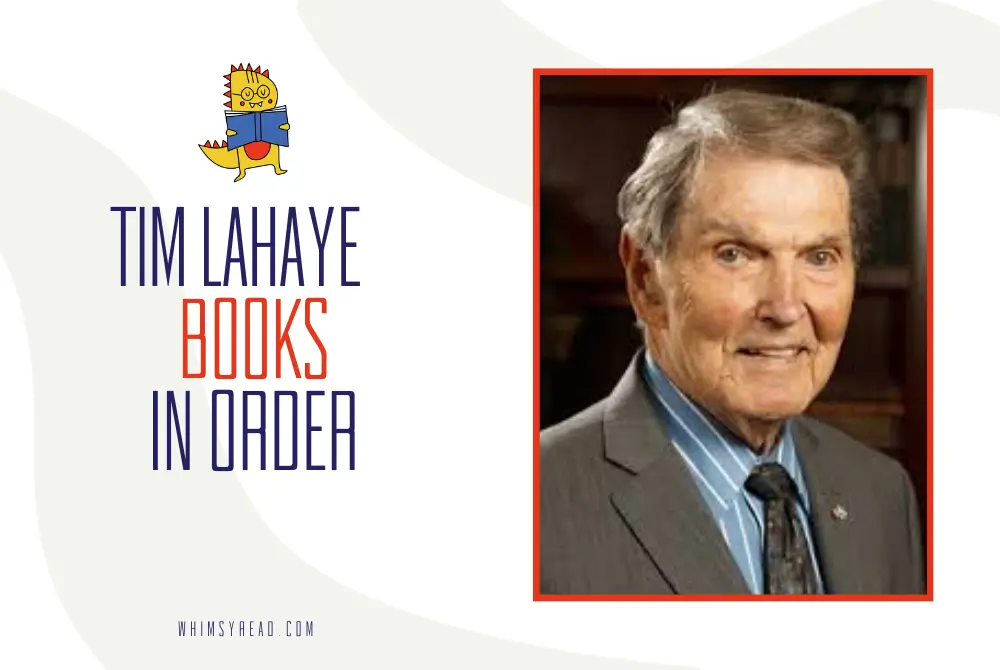
Tim LaHaye (1926–2016) was an American pastor, evangelical writer, and public speaker who wrote widely about Christian living and biblical prophecy. He became internationally known through Left Behind, a series of apocalyptic novels produced with novelist Jerry B. Jenkins that imagines the world after the Rapture from a particular evangelical interpretation of end-times prophecy.
His catalogue is unusually difficult to count. Alongside adult novels are 40 young-reader books, series prequels, collaborations with several writers, many devotional and nonfiction works, omnibus editions, and adaptations. More importantly, publication order is not always story chronology. This guide addresses the reading decisions first, then separates the most important fictional series from selected nonfiction works without pretending that every updated edition is a new title.
Understanding the Left Behind Reading Order
There are three distinct paths through this fictional universe. The 13 main adult novels follow the original published narrative, the three prequels explain developments leading to the disappearances, and the 40-book young-reader sequence follows different characters during the same broad period. Newcomers generally benefit from the main adult series before the prequels because the original books establish the mysteries, characters, and rules of the fictional world.
Left Behind Adult Novels in Publication Order
1. Left Behind (1995)
Airline pilot Rayford Steele and journalist Cameron “Buck” Williams face a world-altering crisis when millions of people suddenly disappear, leaving aircraft, homes, and governments in confusion. Their attempt to make sense of the event introduces a group of believers who will become the Tribulation Force and sets up the series’ interpretation of biblical prophecy.
2. Tribulation Force (1996)
Rayford, Buck, and their allies begin organizing their response to the global upheaval while a charismatic political leader rises to extraordinary influence. The second novel transforms the shock of the disappearances into a struggle over faith, loyalty, and survival during the unfolding Tribulation.
3. Nicolae (1997)
Nicolae Carpathia’s political power expands as international conflict intensifies and the Tribulation Force searches for ways to resist his influence. The book brings the series’ Antichrist figure into sharper focus and raises the risks faced by the core group.
4. Soul Harvest (1998)
Catastrophic events scatter the characters and force Rayford and Buck to search for loved ones amid widespread destruction. Their personal losses unfold against the novel’s larger vision of a world dividing into competing spiritual and political allegiances.
5. Apollyon (1999)
The earth faces escalating supernatural judgments while Carpathia continues tightening his control. The Tribulation Force must navigate danger and doubt as the scope of the crisis moves beyond anything ordinary political resistance can address.
6. Assassins (1999)
An assassination plot against Nicolae Carpathia creates tensions among people who oppose him for very different reasons. The story puts questions about resistance, prophecy, and individual responsibility alongside its political suspense.
7. The Indwelling (2000)
Following a turning point in Carpathia’s fate, the global leader’s return becomes a terrifying spectacle within the series’ prophecy-driven narrative. The Tribulation Force recognizes that their struggle is entering a new, more dangerous phase.
8. The Mark (2000)
The regime introduces a system of identification and economic control that forces ordinary people into life-altering choices. The novel centers the moral dilemma behind the “mark of the beast” as the characters try to protect themselves and others without yielding their beliefs.
9. Desecration (2001)
Carpathia’s actions in Jerusalem bring the confrontation between religious belief and political power into an especially visible setting. The Tribulation Force works amid accelerating disasters as events associated with the biblical end-times narrative unfold.
10. The Remnant (2002)
As destruction spreads, groups of believers struggle to survive and preserve their communities. The narrative builds toward the final stage of the conflict while keeping the continuing characters’ personal stakes in view.
11. Armageddon (2003)
The remaining forces move toward an anticipated confrontation in the Middle East. The novel combines military danger with the characters’ growing conviction that the sequence of events is approaching its decisive moment.
12. Glorious Appearing (2004)
The end-times drama reaches the return of Christ as imagined within LaHaye and Jenkins’s interpretation of Revelation. The book functions as the main story’s culminating confrontation, resolving its central apocalyptic conflict.
13. Kingdom Come (2007)
Set after the central Tribulation narrative, Kingdom Come explores the period associated with the millennial kingdom. It is an epilogue-like continuation rather than a replacement for Glorious Appearing, and it should be read after the first twelve adult novels.
Before They Were Left Behind: The Three Prequels
Published after the success of the original series, these novels move backward in the story’s timeline. First-time readers can safely wait until after Glorious Appearing or Kingdom Come; returning readers may enjoy seeing how familiar people and conflicts developed.
1. The Rising: Antichrist Is Born (2005)
This prequel traces the early circumstances and formative history associated with Nicolae Carpathia. It gives later events additional context by looking at the human and supernatural foundations of the series’ central antagonist.
2. The Regime: Evil Advances (2005)
Carpathia’s influence grows as geopolitical ambitions and conspiracies begin converging. The story bridges his early life and the crisis that readers first encounter in Left Behind, emphasizing his rise to power.
3. The Rapture: In the Twinkling of an Eye (2006)
The narrative approaches the disappearances that launch the main series, showing the lives and circumstances surrounding that moment. Because it leads directly into Left Behind, it is the final prequel in chronological story order.
Left Behind Chronological Order Versus Publication Order
Publication order: Left Behind → Tribulation Force → Nicolae → Soul Harvest → Apollyon → Assassins → The Indwelling → The Mark → Desecration → The Remnant → Armageddon → Glorious Appearing → the three later-published prequels → Kingdom Come.
Story chronology: The Rising → The Regime → The Rapture → Left Behind through Glorious Appearing → Kingdom Come.
Chronology makes sense for a reread. Publication order generally makes more sense for beginners because the original opening is designed to introduce the story’s premise without explaining everything first.
Left Behind: The Kids Books in Order
The 40 shorter books follow young people including Judd Thompson, Vicki Byrne, Lionel Washington, and Ryan Daley amid the upheaval depicted in the adult series. Tim LaHaye and Jerry B. Jenkins are credited on the series, with Chris Fabry significantly involved in its writing; the books target younger readers but retain the apocalyptic themes and escalating danger of the wider franchise.
1. The Vanishings (1998)
Teenagers confront the sudden disappearance of family members and familiar adults and discover that the world no longer follows its ordinary rules. This first installment introduces young viewpoints on the Rapture event that drives the adult novels.
2. Second Chance (1998)
The surviving young characters try to decide what to believe after the disappearances. Questions of trust, grief, and faith grow more urgent as they search for people they can rely on.
3. Through the Flames (1998)
New hazards challenge the teenagers as they seek safety in a world struggling to recover from catastrophe. The novel presses them to act together instead of approaching danger as isolated individuals.
4. Facing the Future (1998)
The young survivors recognize that the crisis is not temporary and begin adjusting their plans accordingly. Relationships and personal commitments become increasingly important as the larger threat takes shape.
5. Nicolae High (1999)
School life and youth identity are brought under the shadow of Nicolae Carpathia’s growing influence. The characters must decide what to say publicly and what to keep within their trusted circle.
6. The Underground (1999)
A covert network becomes more important as the teenage believers face increasing pressure. Their attempts to communicate and gather safely make secrecy a practical necessity rather than a dramatic game.
7. Busted! (2000)
The young characters risk having their hidden activities exposed to authorities. The possibility of capture tests their resourcefulness and the reliability of their allies.
8. Death Strike (2000)
Danger grows more immediate as the Tribulation’s effects reach the young survivors. They must respond to threats that make survival and loyalty difficult to separate.
9. The Search (2000)
An urgent search drives the youth group to look for answers and people they fear they may have lost. The action highlights how much the characters have come to depend on one another.
10. On the Run (2000)
With danger closing in, escape becomes a central concern for the young believers. Keeping the group together requires quick decisions and confidence in uncertain information.
11. Into the Storm (2000)
The teenagers face another stretch of turmoil and unstable conditions. Their growing courage is tested by the realization that faith does not remove every danger.
12. Earthquake! (2000)
A destructive earthquake adds physical disaster to the dangers already created by political repression. Survival becomes an immediate task as the group tries to navigate the aftermath.
13. The Showdown (2001)
The rising conflict forces the group toward a confrontation they can no longer postpone. Courage, judgment, and the consequences of earlier choices come to the foreground.
14. Judgment Day (2001)
New disasters give the young characters a stark view of the Tribulation’s escalating stakes. Their choices are framed by the series’ interpretation of prophecy and moral accountability.
15. Battling the Commander (2001)
The teenagers encounter opposition from people enforcing the increasingly powerful regime. Outsmarting authority requires secrecy, cooperation, and a willingness to take risks.
16. Fire from Heaven (2001)
Events associated with supernatural judgment further destabilize the world. The young survivors must maintain hope while danger becomes harder to explain in ordinary terms.
17. Terror in the Stadium (2001)
A crowded public setting becomes the scene of a threat that tests the characters’ judgment. The installment contrasts the visibility of mass events with the vulnerability of people trying to remain unnoticed.
18. Darkening Skies (2001)
Worsening conditions make it clear that the world’s crises are intensifying. The teenagers adapt their survival plans and struggle to keep contact with the people they trust.
19. Attack of Apollyon (2002)
A new wave of terrifying events pushes the young believers into danger. The story links their experiences with the larger judgments described in the adult Left Behind sequence.
20. A Dangerous Plan (2002)
A risky strategy offers the group a possible way forward but exposes them to discovery. The young characters must balance the need to act with the consequences if the plan fails.
21. Secrets of New Babylon (2002)
The regime’s center of power becomes an important focus as the group pursues critical information. Discovering what is hidden there may help them understand how Carpathia’s system operates.
22. Escape from New Babylon (2002)
After entering dangerous territory, surviving the journey out becomes a major challenge. The installment makes pursuit and escape central to the ongoing youth resistance story.
23. Horsemen of Terror (2002)
The young characters face another sequence of frightening events associated with apocalyptic prophecy. Their experience emphasizes the human impact of the series’ increasingly severe judgments.
24. Uplink from the Underground (2002)
Secret communication allows the group to share information despite the regime’s reach. Technology and trust become vital tools for coordinating the activities of people who cannot meet openly.
25. Death at the Gala (2003)
A public celebration becomes entangled with danger and death. The contrast between official appearances and the reality of the Tribulation highlights the risks of moving through spaces controlled by powerful people.
26. The Beast Arises (2003)
Carpathia’s power is presented in increasingly sinister terms as the global conflict escalates. The young believers must reconsider how to resist a system demanding obedience.
27. Wildfire (2003)
A destructive fire adds a new survival challenge to an already unstable world. The teenagers’ efforts to stay safe test both practical skills and their commitment to help others.
28. The Mark of the Beast (2003)
A compulsory system of identification forces characters to make choices with lasting consequences. The young survivors confront the cost of rejecting demands they believe violate their faith.
29. Breakout! (2003)
Captivity and the possibility of escape drive this part of the story. Friends must act quickly and rely on limited resources when the danger of being discovered is greatest.
30. Murder in the Holy Place (2003)
Violence in a sacred setting intensifies the confrontation between political authority and religious conviction. The youth group’s search for the truth proceeds amid increasingly serious personal danger.
31. Escape to Masada (2003)
The historic fortress of Masada becomes linked to the characters’ attempt to flee danger. Its setting adds a recognizable location to the series’ continuing conflict in the Middle East.
32. War of the Dragon (2003)
The widening apocalyptic conflict threatens the young survivors and their allies. The group must decide how to support one another when violence spreads beyond any single safe location.
33. Attack on Petra (2004)
The ancient city of Petra becomes the setting for another threat against those seeking refuge. As the stakes rise, the survivors must protect one another under the pressure of attack.
34. Bounty Hunters (2004)
People willing to pursue believers for reward create an additional layer of danger. The young characters can no longer assume that strangers have harmless reasons for approaching them.
35. The Rise of False Messiahs (2004)
Competing religious claims challenge those already struggling to understand the extraordinary events around them. The group must decide how to evaluate messages that promise safety or salvation.
36. Ominous Choices (2004)
With the end-times conflict nearing its climax, several options carry serious risks. The teenagers’ decisions reflect the experience they have gained since the earliest disappearances.
37. Heat Wave (2004)
Extreme heat creates another physical ordeal during the unfolding judgments. The story emphasizes the difficulty of protecting vulnerable people when even the environment becomes dangerous.
38. The Perils of Love (2004)
Relationships and emotional commitments become especially complicated as danger increases. The characters discover that loyalty can require sacrifice as well as affection.
39. The Road to War (2004)
The young survivors move closer to the conflict’s decisive phase. Preparations for war strain both practical resources and the hopes that have sustained the group.
40. Triumphant Return (2004)
The youth storyline reaches its concluding events within the Left Behind interpretation of Christ’s return. After forty connected installments, the characters’ experiences receive a resolution that parallels the adult saga.
Babylon Rising Series in Order
For readers who prefer archaeological adventure to the continuing Tribulation saga, this four-book series follows Michael Murphy, a biblical archaeologist and professor. The first book was coauthored with Greg Dinallo; later installments were written with Bob Phillips.
1. Babylon Rising (2003)
Michael Murphy pursues an archaeological discovery with potentially enormous implications for his understanding of the Bible. His search draws him into conflict with secretive adversaries who want to control or suppress the evidence.
2. The Secret on Ararat (2004)
Murphy follows another perilous investigation tied to the biblical past and the mystery of Mount Ararat. The search for physical evidence becomes increasingly dangerous as hostile forces interfere.
3. The Europa Conspiracy (2005)
Ancient clues and modern conspiracies intersect as Murphy undertakes another high-stakes hunt. The book keeps the series’ emphasis on biblical artifacts while broadening the threat posed by its enemies.
4. The Edge of Darkness (2006)
Murphy confronts continuing danger involving archaeological discoveries, hidden powers, and questions of faith. The fourth installment brings the series’ adventure framework to another escalating confrontation.
The Jesus Chronicles Books in Order
Coauthored with Jerry B. Jenkins, these novels imagine the lives and perspectives of the four Gospel writers. They are biblically inspired historical fiction, not replacements for the biblical texts themselves, and contain invented scenes or dialogue used to tell a narrative.
1. John’s Story: The Last Eyewitness (2006)
John reflects on his experiences with Jesus and his later responsibility to preserve testimony about those events. The novel combines biblical episodes with a fictionalized picture of the last surviving apostle’s life and memories.
2. Mark’s Story: The Gospel According to Peter (2007)
Mark’s developing commitment to the early Christian movement brings him into contact with Peter’s recollections of Jesus. The story imagines the personal circumstances behind the writing of Mark’s Gospel.
3. Luke’s Story: By Faith Alone (2009)
Luke, a physician who did not personally follow Jesus during his ministry, investigates testimony from those who knew him. His intellectual skepticism and growing faith shape the novel’s account of research, conversion, and Gospel writing.
4. Matthew’s Story: From Sinner to Saint (2010)
The former tax collector Matthew is reimagined through his conversion and commitment to following Jesus. His personal change becomes a lens for retelling familiar Gospel moments from a particular disciple’s perspective.
The End Series in Order
These modern political thrillers were coauthored with Craig Parshall and feature Joshua Jordan, a former military figure drawn into threats with international and prophetic implications. They are a separate series, not sequels to Left Behind.
1. Edge of Apocalypse (2010)
Joshua Jordan becomes entangled in a national security crisis involving sophisticated attacks and international instability. The thriller connects his efforts to protect the United States with the possibility that biblical end-times events are approaching.
2. Thunder of Heaven (2011)
Joshua’s responsibilities expand as bomb threats and political pressure shake the country, while Abigail Jordan works to protect their family and defend his position. The novel raises the stakes of a conspiracy that threatens both public safety and private lives.
3. Brink of Chaos (2012)
Amid escalating turmoil, Joshua tries to respond to dangers that conventional strategy cannot easily contain. The story blends action and political anxiety with the series’ prophetic framework.
4. The Mark of Evil (2014)
Joshua faces an increasingly coordinated threat in which technology, ideology, and international conflict converge. The concluding book asks how far a person should go to stop catastrophe without abandoning essential convictions.
Soul Survivor Series in Order
These four shorter Christian suspense stories were coauthored with Bob DeMoss and address pressures confronting younger characters, from media culture to risky decisions and manipulation. They are not part of the Left Behind timeline.
1. The Mind Siege Project (2001)
A project intended to challenge or shape young people’s beliefs becomes the focus of a suspense-driven examination of persuasion. The novel links questions about truth and culture to the choices faced by its young characters.
2. All the Rave (2002)
A dance-party setting exposes the risks facing young people pulled into an intense social scene. Relationships, pressure, and questions of conscience drive the book’s contemporary Christian thriller plot.
3. The Last Dance (2002)
A high-school relationship becomes complicated by warning signs and choices that carry serious consequences. The book addresses personal boundaries and the difficulty of recognizing danger within an apparently ordinary romance.
4. Black Friday (2003)
An investigation linked to hospitals and suspicious events puts a young protagonist in a dangerous situation. The story closes the sequence with the same emphasis on moral choices under pressure found in its predecessors.
Tim LaHaye’s Standalone Fiction and Notable Nonfiction
LaHaye’s nonfiction career began well before the Left Behind phenomenon. He wrote on Christian family life, temperament, marriage, Bible study, and biblical prophecy, often coauthoring with his wife Beverly LaHaye, pastors, counselors, or other writers. The selection below highlights influential original books and topics; it is not an assertion that his more than fifty nonfiction titles can be represented by a short list.
Spirit-Controlled Temperament (1966)
This early nonfiction work relates traditional temperament categories to Christian spiritual growth. Its approach reflects a particular religious self-help framework rather than a contemporary scientific personality assessment.
How to Be Happy Though Married (1968)
LaHaye discusses marriage, expectations, and communication from an evangelical Christian perspective. The book predates much of his prophecy writing and helps explain the family-life side of his career.
Transforming Your Temperament (1971)
Building on his earlier personality teaching, LaHaye considers how temperament traits might be reshaped through faith and disciplined behavior. Readers interested in his self-help ideas may find it a useful continuation of Spirit-Controlled Temperament.
The Beginning of the End (1972)
This work examines contemporary events through LaHaye’s interpretation of biblical prophecy. It anticipates topics that would become central to his later apocalyptic fiction, though nonfiction argument and fictional storytelling should be kept distinct.
How to Study the Bible for Yourself (1976)
LaHaye offers practical steps for reading, organizing, and interpreting biblical passages. It is aimed at readers seeking a structured personal study habit rather than a suspense story or a novelistic retelling.
The Act of Marriage: The Beauty of Sexual Love (1976) — with Beverly LaHaye
Tim and Beverly LaHaye approach sexual intimacy and marriage through their conservative evangelical understanding of relationships. The book’s guidance reflects its authors’ theological and cultural assumptions and is not a substitute for individualized medical or relationship advice.
Anger Is a Choice (1982) — with Bob Phillips
This Christian self-help book discusses anger, personal responses, and strategies for changing destructive patterns. Its practical framing may interest readers of LaHaye’s family guidance, though emotional health issues can also require qualified professional care.
Your Temperament: Discover Its Potential (1984)
LaHaye returns to temperament categories and their implications for relationships and personal behavior. It is best read as part of his longstanding religious personality framework rather than as a modern diagnostic manual.
Why You Act the Way You Do (1987)
The author connects recurring behavior patterns to temperament and spiritual life. Readers familiar with Spirit-Controlled Temperament will recognize many of its concerns in a more accessible general self-help format.
The Power of the Cross (1998)
This devotional and theological work centers the meaning of Christ’s crucifixion in Christian belief and daily life. It offers a different reading experience from LaHaye’s prophecy-driven thrillers.
Mind Siege: The Battle for Truth in the New Millennium (2000) — with David A. Noebel
LaHaye and Noebel address competing belief systems and cultural changes from a conservative Christian viewpoint. The book is polemical nonfiction, distinct from the similarly titled The Mind Siege Project in the Soul Survivor fiction sequence.
The Merciful God of Prophecy (2002)
LaHaye explains why he believes biblical prophecy should be understood as a message involving divine purpose and mercy. It provides context for the beliefs reflected in his novels without requiring readers to accept those interpretations as universally shared Christian doctrine.
Come Spring (2005) — with Greg Dinallo
This standalone fiction collaboration explores faith and human choices outside the main Left Behind plot. Readers seeking every LaHaye-associated novel should list it separately rather than attaching it to his named thriller series.
Always Grace (2008) — with Greg Dinallo
Another collaboration with Dinallo, Always Grace belongs to LaHaye’s separate fiction rather than the adult Tribulation saga. It is best included in a complete author bibliography as a standalone work.
Which Tim LaHaye Books Should You Read First?
For apocalyptic Christian fiction: Start with Left Behind and complete the main adult books in order. This path introduces Rayford Steele, Buck Williams, Nicolae Carpathia, and the Tribulation Force in the sequence their creators first revealed them.
For shorter YA suspense: Start with The Vanishings, then continue through the forty numbered Left Behind: The Kids volumes. Because the characters’ dangers and relationships carry directly between books, jumping into a middle installment is less satisfying than starting at the beginning.
For artifact-hunting adventure: Try Babylon Rising, which brings archaeology and conspiracy together without requiring knowledge of Left Behind. For historical biblical fiction, John’s Story introduces the separate Jesus Chronicles sequence.
For Christian nonfiction: Choose according to topic: Bible study, marriage, temperament, or prophecy. A nonfiction title’s theological framework may be more relevant to whether it fits your interests than its date in LaHaye’s career.
What Readers Should Know About LaHaye’s End-Times Theology
Left Behind reflects a specific dispensational, premillennial, pretribulational interpretation of biblical prophecy. Other Christian denominations and scholars interpret Revelation, the Rapture, Israel, and the millennium differently, so the novels should not be described as representing every Christian tradition. Their popularity made these ideas familiar to many readers, but fiction and theological consensus are not the same thing.
The books can therefore be read on two levels: as suspense stories following people through world-changing events and as creative expressions of their authors’ theological views. Readers interested in religious history may find comparing the fictional sequence with different interpretations of biblical texts more illuminating than assuming the narrative is a literal forecast.
Frequently Asked Questions About Tim LaHaye Books
How many Left Behind books are there?
There are 13 main adult novels, beginning with Left Behind (1995) and ending with Kingdom Come (2007), plus three prequel novels published in 2005–2006. The related Left Behind: The Kids series has forty shorter books following young characters. Omnibus editions, young-reader collections, graphic adaptations, and companion materials can create much higher totals in online catalogues.
Should I read The Rising before Left Behind?
For a first read, most readers will get the intended introduction by starting with Left Behind rather than The Rising. Although The Rising occurs earlier in the fictional timeline, it was written and published after the main series had already established Nicolae Carpathia. On a reread, starting with the prequel trilogy can be an enjoyable way to follow events chronologically.
Who actually wrote the Left Behind novels?
The adult books are credited to Tim LaHaye and Jerry B. Jenkins, with LaHaye especially associated with the prophecy framework and Jenkins with novelistic storytelling. Left Behind: The Kids also has important involvement from Chris Fabry. A guide should preserve these coauthor credits rather than implying that LaHaye wrote every sentence alone.
Is Left Behind: The Kids the same story as the adult series?
It takes place within the same larger apocalyptic setting but follows different principal characters, including Judd, Vicki, Lionel, and Ryan. Its forty shorter installments are designed for younger readers and emphasize their own friendships, choices, and survival challenges. You can read the adult and youth sequences separately, although familiar world events connect them.
What is the difference between Babylon Rising and Left Behind?
Left Behind is a continuing story about people living through the Tribulation after a mass disappearance, while Babylon Rising follows archaeologist Michael Murphy searching for biblical artifacts amid conspiracies. The latter is closer in structure to an artifact-hunting adventure thriller. They use related religious interests but are not two parts of a single numbered plot.
Are The End books sequels to Left Behind?
No. The four The End novels coauthored with Craig Parshall follow Joshua Jordan and a separate modern political-thriller storyline. They share interest in biblical prophecy and catastrophic international events, but a reader does not need to finish Left Behind before starting Edge of Apocalypse.
What is the Jesus Chronicles reading order?
Read John’s Story (2006), Mark’s Story (2007), Luke’s Story (2009), and Matthew’s Story (2010). These novels retell the world of the New Testament through fictionalized perspectives associated with the Gospel writers. They can be enjoyed independently of the Left Behind universe but work best in their published sequence.
Why are some Tim LaHaye books listed with different publication years?
Long-running bestsellers receive many paperback editions, updated nonfiction versions, audiobook releases, and collected editions. For example, a box set combining earlier stories has a new product date without creating a new narrative. The correct reading sequence should be based on original novels and the intended series order, not simply on the release date shown for a retailer’s newest format.
Did Tim LaHaye write nonfiction before Left Behind?
Yes. His books on temperament, marriage, Bible study, and prophecy date back to the 1960s and 1970s, long before the first Left Behind novel appeared in 1995. That earlier career is important for understanding why a novelist and pastor collaborated on a series with such a specific interpretation of apocalyptic prophecy.
Is Tim LaHaye still writing new books?
Tim LaHaye died in July 2016. Retailers may still release fresh formats or collections associated with his work, but these should not automatically be presented as newly written books. Readers seeking his latest original fiction should check the original publication and coauthor information rather than a contemporary sales listing.
Final Thoughts
Tim LaHaye’s books are easiest to navigate when his several kinds of writing remain distinct. Begin the adult Left Behind story with the 1995 novel, add the three prequels when you want its earlier timeline, and treat Left Behind: The Kids as a connected but separate forty-book experience.
His other collaborations offer different paths: archaeology in Babylon Rising, Gospel-inspired historical fiction in The Jesus Chronicles, modern political danger in The End, and younger contemporary suspense in Soul Survivor. His extensive nonfiction adds the background of a pastor and prophecy writer whose ideas shaped much of his fiction, making a series-first reading guide more useful than one indiscriminate list of every edition ever published.

Leave a Reply