
Scott Turow Books in Order: The Complete Reading Guide
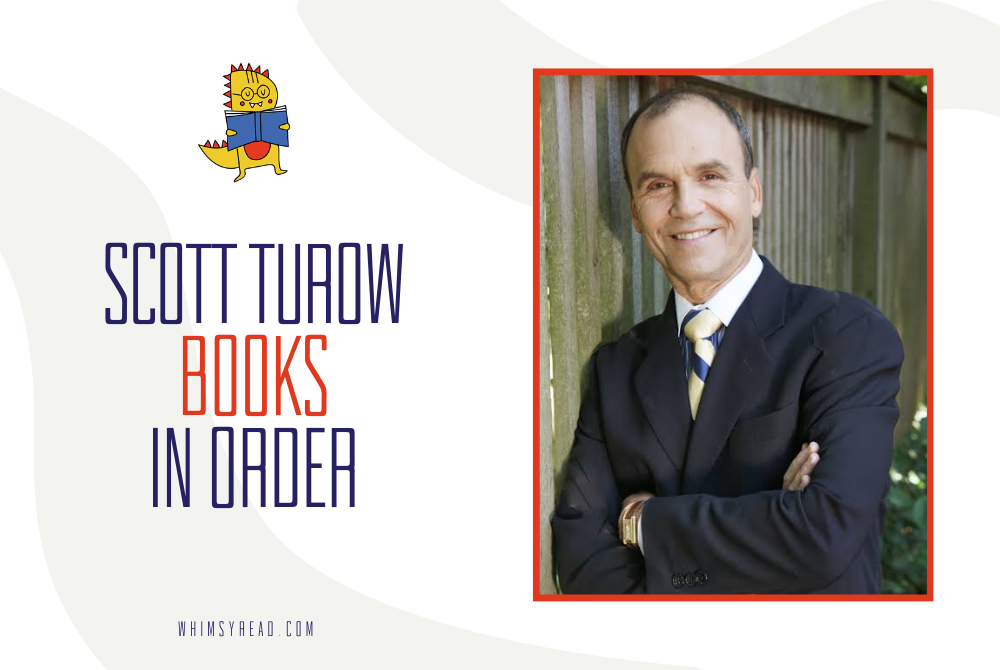
Scott Turow is one of the writers who helped turn the legal thriller into a major literary genre.
His breakthrough novel, Presumed Innocent, introduced readers to Rusty Sabich, a prosecutor caught in a murder investigation that becomes deeply personal. Published in 1987, the novel became a landmark legal thriller and eventually inspired both a major Hollywood film and the later Apple TV+ adaptation.
But Presumed Innocent is only the beginning.
Turow has built a much larger fictional world around Kindle County, a fictional Midwestern jurisdiction that resembles the Chicago area and serves as the setting for most of his legal thrillers. His bibliography now includes 13 Kindle County novels, with Presumed Guilty becoming the newest entry in 2025.
The good news for new readers is that you don’t have to figure out a complicated reading order.
If you want to experience the Kindle County books as Turow developed the world, the best approach is publication order.
However, there is one particularly important character sequence:
Presumed Innocent → Innocent → Presumed Guilty
Those three books form the central Rusty Sabich storyline.
This guide covers Scott Turow’s books in order, explains the Kindle County series, separates his standalone and nonfiction books, and shows you where to start depending on what kind of story you’re looking for.
Scott Turow Books in Order at a Glance
If you’re looking for the quickest possible answer, here is the Kindle County reading order:
- Presumed Innocent (1987)
- The Burden of Proof (1990)
- Pleading Guilty (1993)
- The Laws of Our Fathers (1996)
- Personal Injuries (1999)
- Reversible Errors (2002)
- Limitations (2006)
- Innocent (2010)
- Identical (2013)
- Testimony (2017)
- The Last Trial (2020)
- Suspect (2022)
- Presumed Guilty (2025)
This 13-book order is consistently identified as the Kindle County series order by current bibliography and library sources.
If you’re interested in all of Turow’s major books, rather than just the Kindle County novels, keep reading because his bibliography also includes One L, Ultimate Punishment, and the standalone novel Ordinary Heroes.
The Kindle County Series in Order
The Kindle County books are connected by their fictional setting, recurring characters, institutions, and legal world.
They aren’t all direct sequels.
That distinction matters.
You can pick up several of the later books without having read every previous novel, but reading the series in publication order gives you the fullest picture of how the characters and fictional legal community evolve.
1. Presumed Innocent (1987)
The book that started it all.
Rusty Sabich is a prosecutor in Kindle County.
His professional life is already demanding, but everything changes when his former colleague and lover, Carolyn Polhemus, is murdered.
The case becomes even more complicated when Rusty himself is accused of the crime.
Now he has to confront the terrifying possibility that the legal system he once trusted could turn against him.
And because Rusty knows exactly how prosecutors build murder cases, he understands something most defendants don’t:
He knows precisely how dangerous the evidence against him could become.
The novel combines courtroom drama, murder mystery, political pressure, personal betrayal, and psychological suspense.
It was Turow’s fiction debut and became the book most closely associated with his name. The official author site describes it as the novel that redefined the legal thriller.
Why start here?
Because Presumed Innocent gives you the foundation for everything that follows.
It introduces:
- Rusty Sabich
- Kindle County
- the local justice system
- the political atmosphere surrounding prosecutors and judges
- Turow’s approach to courtroom storytelling
If you’ve never read Scott Turow before, this is the book to start with.
2. The Burden of Proof (1990)
The second Kindle County novel moves away from Rusty Sabich and focuses on Alejandro “Sandy” Stern, one of Turow’s most important recurring characters.
Sandy is a brilliant defense attorney, but his professional confidence is challenged when his wife dies unexpectedly.
At first, the tragedy appears to be a personal matter.
Then questions begin to emerge.
Sandy finds himself examining his wife’s life—and his own marriage—in much the same way he would examine evidence in a courtroom.
The result is a novel that combines legal suspense with a deeply personal investigation.
What makes it different from Presumed Innocent?
Presumed Innocent is driven heavily by a murder prosecution.
The Burden of Proof is more interested in family, grief, secrets, marriage, and the search for truth.
It also expands the Kindle County world beyond Rusty.
3. Pleading Guilty (1993)
The third book takes readers deeper into the world of Kindle County lawyers and financial crime.
Mack Malloy is a lawyer who becomes involved in an investigation surrounding a missing colleague and a complicated financial scandal.
As the investigation progresses, the case becomes increasingly difficult to separate from the politics and personalities of Kindle County’s legal establishment.
The title itself points toward one of Turow’s recurring interests:
What does it really mean to admit guilt?
In Turow’s world, guilt isn’t always a simple question of whether someone committed a crime.
It can involve professional responsibility, moral compromise, loyalty, ambition, and the choices people make when nobody is watching.
4. The Laws of Our Fathers (1996)
This novel expands Turow’s exploration of race, politics, family history, and the American justice system.
A murder investigation brings together people whose lives were connected years earlier.
The case gradually exposes old relationships and long-buried tensions.
Like many of Turow’s books, the legal case isn’t simply a puzzle to solve.
The courtroom becomes a place where the characters’ personal histories, beliefs, prejudices, and ambitions collide.
Why it matters in the series
By this point, Kindle County has become more than a backdrop.
It functions almost like a character itself—a fictional legal and political ecosystem where prosecutors, defense lawyers, judges, politicians, police officers, and ordinary citizens repeatedly cross paths.
5. Personal Injuries (1999)
Personal Injuries introduces another side of Turow’s legal world: personal-injury law and professional corruption.
The central character is George Mason, a lawyer whose career becomes entangled with an investigation involving corruption and questionable legal practices.
The book explores what happens when the pursuit of money and professional success begins to undermine the principles lawyers claim to defend.
This book is also important because George Mason later appears in Limitations.
That makes these two books a small character sequence within the larger Kindle County universe. Current series databases identify Personal Injuries and Limitations as the two George Mason books.
George Mason books in order
- Personal Injuries
- Limitations
6. Reversible Errors (2002)
Reversible Errors is one of Turow’s most compelling explorations of the death penalty and wrongful conviction.
The story revolves around a death-row inmate and the legal effort surrounding his case.
The title is particularly appropriate because the novel asks a devastating question:
What if the justice system makes a mistake that cannot truly be undone?
A wrongful conviction can theoretically be reversed.
But what happens when a person has already spent years in prison—or when the punishment itself cannot be reversed?
Turow’s legal background gives this novel unusual authenticity.
His experience as a lawyer and former prosecutor is one reason his courtroom scenes tend to focus not only on dramatic arguments but also on the procedures, negotiations, evidence, and ethical dilemmas behind them.
7. Limitations (2006)
Limitations returns to George Mason, making it a direct follow-up for readers interested in that character.
Mason is now dealing with the complicated realities of aging, professional life, and a disturbing situation that forces him to examine his own behavior.
Unlike some of Turow’s sprawling courtroom novels, Limitations is relatively compact.
It is a good example of how Turow can create suspense without relying entirely on a traditional murder trial.
Should you read Personal Injuries first?
Yes, if you want George Mason’s story in character order.
Although Limitations can be understood on its own, Personal Injuries provides useful background.
8. Innocent (2010)
After more than two decades, Rusty Sabich returns.
And this time, the story is much more complicated because Rusty is older, his personal life has changed dramatically, and the past isn’t finished with him.
Rusty is now a judge.
Then his wife dies.
What initially looks like a personal tragedy begins to raise uncomfortable questions.
Soon, Rusty finds himself facing a situation eerily reminiscent of the events of Presumed Innocent.
The difference is that he’s no longer the young prosecutor at the center of his first major crisis.
He’s older.
More experienced.
And carrying decades of history.
Important reading-order note
If you want to read Innocent, read Presumed Innocent first.
The emotional impact is much stronger when you already know Rusty, Tommy Molto, and the history between them.
The official Scott Turow site describes Innocent as a sequel to Presumed Innocent that brings Rusty Sabich and Tommy Molto back together twenty years later.
9. Identical (2013)
Identical takes one of the oldest storytelling devices—twins—and places it inside Turow’s familiar world of crime, politics, family, and law.
The story centers on identical twin brothers who have taken dramatically different paths in life.
When one of them becomes involved in a murder investigation, their similarities become both fascinating and dangerous.
Because when two people look exactly alike, how certain can anyone be about what they saw?
The novel explores:
- identical twins
- family secrets
- political ambition
- murder
- identity
- sexuality
- power
- deception
It’s a particularly good choice for readers who enjoy legal thrillers but also want a more unusual mystery premise.
10. Testimony (2017)
Testimony takes Turow’s legal thriller formula outside the United States.
The story follows Kirk Donald, an American lawyer who becomes involved with the International Criminal Court in The Hague.
His investigation takes him into a complicated international case involving allegations of serious crimes in Europe.
The setting changes, but Turow’s core interests remain:
law, evidence, politics, morality, and the difficult question of justice.
This makes Testimony a particularly interesting entry for readers who want something different from the courtroom-and-prosecutor atmosphere of Kindle County.
It also demonstrates that Turow’s interest in law isn’t limited to American criminal courts.
11. The Last Trial (2020)
The Last Trial introduces Alejandro “Sandy” Stern again, now as an elderly and highly experienced defense attorney.
Stern takes on what may be the final major case of his career.
The defendant is accused of murder.
But the case is more complicated than it first appears.
As Stern works through the evidence, the novel becomes a meditation on aging, friendship, professional identity, memory, and what happens when a lawyer realizes that the career he built his entire life around may be coming to an end.
The courtroom mystery is important.
But the deeper question is:
What does a lifetime of practicing law leave behind?
The novel is part of the Kindle County sequence and is listed as Book 11 in current series catalogs.
12. Suspect (2022)
Suspect returns to Kindle County but gives readers a somewhat different perspective on the justice system.
The central mystery involves a powerful family and a suspicious death, while the investigation exposes complicated relationships between wealth, influence, law enforcement, and the courts.
As with many Turow novels, the title is deliberately simple.
Someone is a suspect.
But being a suspect isn’t the same as being guilty.
And the more the investigation reveals, the more difficult it becomes to separate fact from assumption.
Suspect is the 12th Kindle County novel in the current series order.
13. Presumed Guilty (2025)
This is the newest Scott Turow novel and one of the most important books for readers who have followed Rusty Sabich from the beginning.
Rusty returns once again—this time as an older man and defense attorney.
His fiancée’s son, Aaron, is accused of murder.
Rusty agrees to defend him.
But the case quickly becomes complicated by questions involving family, identity, race, evidence, and the limits of justice.
The novel brings Rusty Sabich back into the courtroom nearly four decades after Presumed Innocent first introduced him.
Turow has described Presumed Guilty as his return to Rusty after years away from the character. The novel is the third major Rusty Sabich story after Presumed Innocent and Innocent.
Rusty Sabich books in order
If you’re primarily interested in Rusty’s story, read:
- Presumed Innocent (1987)
- Innocent (2010)
- Presumed Guilty (2025)
This is the most important character-specific reading order in Turow’s bibliography.
Scott Turow Standalone Novel
Not every Scott Turow novel belongs to the Kindle County series.
There’s one major standalone novel that deserves its own section.
Ordinary Heroes (2005)
Ordinary Heroes is a historical novel rather than a conventional legal thriller.
The story centers on Stewart Dubinsky, a journalist who discovers something unexpected about his father’s past.
His father had apparently been a decorated World War II hero.
But the documents Stewart discovers suggest that the story is much more complicated.
He begins investigating his father’s wartime experiences and uncovers secrets involving espionage, imprisonment, and a relationship his father never discussed.
The result is a story about:
- World War II
- family secrets
- memory
- espionage
- father-son relationships
- the difference between the person we think we know and the person they really were
Although it sits outside the Kindle County series, Ordinary Heroes is important because it shows that Turow can write compelling historical fiction without relying on courtroom drama.
Current bibliography sources list it separately as his standalone novel.
Scott Turow Nonfiction Books
Turow isn’t only a novelist.
His legal career has also provided the material for several nonfiction books.
One L (1977)
Scott Turow’s first published book.
And it’s nonfiction.
One L chronicles Turow’s first year at Harvard Law School.
Rather than presenting law school as a glamorous path to a prestigious career, Turow describes the pressure, competition, uncertainty, exhaustion, and intellectual demands involved.
For anyone considering law school—or anyone curious about what it actually feels like to be a first-year law student—One L remains one of Turow’s most significant books.
It was published a decade before Presumed Innocent and helped establish Turow as a writer long before he became famous for legal fiction.
Why read it?
Read One L if you’re interested in:
- law school
- legal education
- Harvard Law
- autobiographical nonfiction
- the origins of Turow’s fascination with law
Ultimate Punishment (2003)
This nonfiction book grows out of Turow’s experiences as a lawyer working on death-penalty cases.
He examines the death penalty from the perspective of someone who has actually participated in the legal system surrounding capital punishment.
The book explores questions about:
- justice
- punishment
- morality
- wrongful convictions
- capital punishment
- the role of lawyers
- whether the death penalty can ever be fairly administered
It is particularly valuable for readers who want to understand the real-world legal issues behind the themes that appear throughout Turow’s fiction. The Innocence Project includes Ultimate Punishment in its reading list on wrongful convictions.
Surviving Justice
Surviving Justice: America’s Wrongfully Convicted and Exonerated is a collection centered on people who were wrongfully convicted and later exonerated.
Turow contributed to the project, which was compiled by Dave Eggers and Lola Vollen.
Because Turow is a contributor rather than the sole author, it’s better to list this separately from his primary books.
The subject, however, is highly relevant to Turow’s fiction because wrongful conviction and the limitations of the justice system are recurring themes throughout his work.
Scott Turow Books by Series
For readers who prefer to organize an author’s books by series rather than publication date, here’s the simplest breakdown.
| Series | Books | Reading Order |
| Kindle County | 13 | Presumed Innocent → Presumed Guilty |
| Rusty Sabich | 3 major novels | Presumed Innocent → Innocent → Presumed Guilty |
| George Mason | 2 | Personal Injuries → Limitations |
| Standalone fiction | 1 major novel | Ordinary Heroes |
| Nonfiction | Several | Best read by publication date |
The Kindle County series is currently listed at 13 books, ending with Presumed Guilty (2025).
Scott Turow Books in Publication Order
If you want a broader chronological reading experience, start with his earliest major books and move forward.
1977
One L
Nonfiction account of Turow’s first year at Harvard Law School.
1987
Presumed Innocent
The novel that launched Turow’s fiction career and the Kindle County universe.
1990
The Burden of Proof
The second Kindle County novel.
1993
Pleading Guilty
The third Kindle County novel.
1996
The Laws of Our Fathers
The fourth Kindle County novel.
1999
Personal Injuries
The fifth Kindle County novel and first George Mason story.
2002
Reversible Errors
A legal thriller dealing with wrongful conviction and capital punishment.
2003
Ultimate Punishment
Nonfiction reflections on the death penalty.
2005
Ordinary Heroes
Standalone historical novel.
2006
Limitations
Second George Mason story and seventh Kindle County book.
2010
Innocent
Rusty Sabich returns more than 20 years after Presumed Innocent.
2013
Identical
A Kindle County mystery built around identical twins.
2017
Testimony
An international legal thriller involving the International Criminal Court.
2020
The Last Trial
A late-career case for veteran lawyer Sandy Stern.
2022
Suspect
Another Kindle County legal thriller.
2025
Presumed Guilty
Rusty Sabich returns for his third major story.
This chronology is consistent with current bibliography listings, although publication dates can vary slightly between databases because some sources use copyright dates while others use release dates.
Do You Need to Read Scott Turow Books in Order?
Not always.
This is one of the most important things to understand about Scott Turow’s bibliography.
The Kindle County novels share a world, but most aren’t traditional sequels.
That means you can read Reversible Errors without necessarily having read every book before it.
However, publication order gives you the richest experience because recurring characters and the fictional legal community develop over time.
There are also smaller character connections.
For example:
George Mason
Personal Injuries → Limitations
And the most important character sequence is:
Rusty Sabich
Presumed Innocent → Innocent → Presumed Guilty
If you’re reading all of Turow’s books, simply use the full Kindle County publication order.
If you’re only interested in Rusty, use the three-book Sabich order.
Are All Scott Turow Books Legal Thrillers?
No.
That’s another common misconception.
Turow is strongly associated with legal thrillers, but his bibliography covers several types of storytelling.
Legal Thrillers
- Presumed Innocent
- The Burden of Proof
- Pleading Guilty
- The Laws of Our Fathers
- Personal Injuries
- Reversible Errors
- Limitations
- Innocent
- Identical
- Testimony
- The Last Trial
- Suspect
- Presumed Guilty
Historical Fiction
- Ordinary Heroes
Law / Memoir / Nonfiction
- One L
- Ultimate Punishment
Wrongful Conviction / Justice
- Surviving Justice — contributor
This variety is part of what makes Turow interesting.
Even within his legal thrillers, the focus changes significantly from one book to another.
Which Scott Turow Book Should You Read First?
For most readers, the answer is easy:
Start with Presumed Innocent
It’s the book that established Turow as a major legal-thriller writer.
It’s also the best introduction to Rusty Sabich and Kindle County.
And if you enjoy it, you have two excellent ways to continue.
Option 1: Follow Rusty
Read:
- Presumed Innocent
- Innocent
- Presumed Guilty
This gives you Rusty’s complete major story.
Option 2: Explore Kindle County
Read all 13 books in publication order.
This gives you the broader world, including Sandy Stern, George Mason, Stewart Dubinsky, and many other recurring figures.
Best Scott Turow Books for Different Readers
Not every reader wants the same kind of legal thriller.
So here’s a better way to choose.
Best overall: Presumed Innocent
This is the obvious starting point.
Murder, courtroom drama, political pressure, personal betrayal, and a protagonist who knows exactly how the prosecution works.
It’s the quintessential Turow experience.
Best sequel: Innocent
If you loved Rusty Sabich in Presumed Innocent, this is the natural next step.
It gives you the rare experience of meeting a famous fictional character again decades later.
Best for a complete Rusty Sabich story: Presumed Guilty
If your primary reason for reading Turow is Rusty, don’t stop at Innocent.
Presumed Guilty completes the three-book Sabich sequence.
It also gives you a much older Rusty facing a new generation and a different kind of legal and social challenge.
Best for wrongful-conviction themes: Reversible Errors
Choose this if your favorite legal thrillers are the ones that make you question whether the justice system got the right answer.
Best for an older lawyer: The Last Trial
If you enjoy stories about aging, professional legacy, and the final great case of a legendary attorney, The Last Trial is an excellent choice.
Best for historical fiction: Ordinary Heroes
This is the one to pick when you want Turow without a conventional courtroom thriller.
Best nonfiction: One L
If you’re interested in how Turow’s legal background influenced his writing, start here.
It’s essentially a window into the experience that helped shape the author who would later write Presumed Innocent.
The Rusty Sabich Books in Order
Because Rusty is Turow’s most famous character, many readers search specifically for his books.
Here’s the simple answer:
1. Presumed Innocent (1987)
Rusty Sabich is accused of murdering his former lover.
2. Innocent (2010)
Rusty returns more than two decades later, now facing another devastating personal crisis.
3. Presumed Guilty (2025)
Rusty is now a defense attorney representing his fiancée’s son in a murder case.
These three books span nearly four decades of Turow’s career.
That’s unusual in crime fiction.
The character introduced as a relatively young prosecutor in 1987 has effectively aged alongside the author and his readership.
The George Mason Books in Order
George Mason has a smaller but important role in the Kindle County universe.
Read his books in this order:
- Personal Injuries (1999)
- Limitations (2006)
Both are also part of the larger Kindle County series.
What Is Kindle County?
Kindle County is Scott Turow’s fictional legal jurisdiction.
It isn’t simply a generic imaginary town.
The setting functions as the common ground connecting many of his novels.
Lawyers, prosecutors, judges, politicians, police officers, defendants, and families move through the same legal and political environment.
The setting is generally understood as being modeled on the Chicago area, reflecting Turow’s own experience as a Chicago lawyer and former federal prosecutor.
That is one reason the Kindle County books feel interconnected even when their protagonists are different.
The case changes.
The characters change.
But the institution remains.
What Makes Scott Turow’s Legal Thrillers Different?
There are plenty of legal thriller writers.
So why does Scott Turow stand out?
One reason is his combination of legal authenticity and literary character development.
Turow isn’t simply interested in whether a defendant is guilty.
He’s interested in:
- how lawyers construct arguments
- how evidence is interpreted
- how prosecutors make decisions
- how judges exercise power
- how politics affects justice
- how professional ambition changes people
- how families react to criminal accusations
- what happens when the justice system makes mistakes
- whether legal truth and moral truth are actually the same thing
His background explains much of this.
Turow studied at Harvard Law School and later worked as an Assistant U.S. Attorney in Chicago. His legal experience became central to the subject matter that eventually defined his fiction.
That’s why his courtroom scenes often feel less like television courtroom drama and more like the complicated machinery of an actual legal case.
Scott Turow vs. Other Legal Thriller Writers
If you enjoy authors such as John Grisham, Scott Turow is an obvious author to try—but the experience isn’t exactly the same.
Grisham often emphasizes fast-moving plots, conspiracies, danger, and high-stakes legal battles.
Turow tends to spend more time exploring character psychology, professional ethics, politics, relationships, and the moral consequences of legal decisions.
His books can therefore feel more literary and reflective while still delivering mystery and suspense.
If you like legal thrillers but want something with more character depth and courtroom detail, Turow is particularly worth exploring.
Frequently Asked Questions About Scott Turow Books
How many Kindle County books are there?
There are currently 13 Kindle County novels, beginning with Presumed Innocent and ending, for now, with Presumed Guilty.
What is the first Scott Turow book?
Turow’s first published book was One L, a nonfiction account of his first year at Harvard Law School, published in 1977.
His first novel was Presumed Innocent, published in 1987.
What is Scott Turow’s most famous book?
Presumed Innocent is his best-known novel and the book that established his reputation as a major legal-thriller writer. It has also been adapted for film and television.
What is the latest Scott Turow book?
The latest published Scott Turow novel is Presumed Guilty, released in 2025. It is the 13th Kindle County book and the third major Rusty Sabich novel.
Is Presumed Guilty a sequel to Presumed Innocent?
Yes, but it is more accurate to call it the third Rusty Sabich novel.
The Rusty sequence is:
Presumed Innocent → Innocent → Presumed Guilty.
Do I need to read Innocent before Presumed Guilty?
Yes, it’s strongly recommended.
You can probably follow the basic murder case in Presumed Guilty, but reading the previous Rusty Sabich novels gives you important character and relationship context.
Is The Burden of Proof a sequel to Presumed Innocent?
No.
It is the second Kindle County novel, but it shifts the focus to Sandy Stern.
The books share the same fictional legal world rather than forming one continuous story.
Is Ordinary Heroes part of Kindle County?
No.
It is a standalone historical novel. Current bibliography sources list it separately from the Kindle County books.
Is The Last Trial part of Kindle County?
Yes.
It is Book 11 of the Kindle County series.
Is Suspect part of Kindle County?
Yes.
It is Book 12 in the series, published in 2022.
Is Personal Injuries part of a smaller series?
Yes.
It introduces George Mason, whose story continues in Limitations.
Which Scott Turow books feature Rusty Sabich?
The three major Rusty Sabich novels are:
- Presumed Innocent
- Innocent
- Presumed Guilty
Which Scott Turow book should I read first?
Presumed Innocent is the best starting point for most readers.
It’s his landmark novel, introduces Rusty Sabich, and establishes the Kindle County world.
Is Scott Turow a lawyer?
Yes.
His legal career has had a major influence on his writing. He studied law at Harvard and later worked as a federal prosecutor in Chicago.
Final Thoughts on Reading Scott Turow in Order
Scott Turow’s bibliography can look complicated at first because his books have been published across several decades, and many of them share characters and the fictional setting of Kindle County.
But the reading order is actually straightforward.
If you want the complete Kindle County experience, start with:
1. Presumed Innocent
2. The Burden of Proof
3. Pleading Guilty
4. The Laws of Our Fathers
5. Personal Injuries
6. Reversible Errors
7. Limitations
8. Innocent
9. Identical
10. Testimony
11. The Last Trial
12. Suspect
13. Presumed Guilty
That order follows the current 13-book Kindle County sequence.
But if you’re specifically interested in Rusty Sabich, there’s an even simpler path:
** Presumed Innocent → Innocent → Presumed Guilty.**
And if you’re curious about the author behind the legal thrillers, go back to One L. It gives you a fascinating look at the experience of law school that helped shape Turow’s career as both a lawyer and novelist.
Perhaps the most interesting thing about Scott Turow’s books is that the law is rarely just a mechanism for solving a mystery.
In his hands, the courtroom becomes a place where ambition, guilt, loyalty, politics, family, morality, and truth all collide.
That is what makes the Kindle County books worth reading in order—and why Presumed Innocent, despite being nearly four decades old, remains the best doorway into Scott Turow’s fictional world.

Leave a Reply