
Ruth Rendell Books in Order: Inspector Wexford, Psychological Thrillers & Barbara Vine
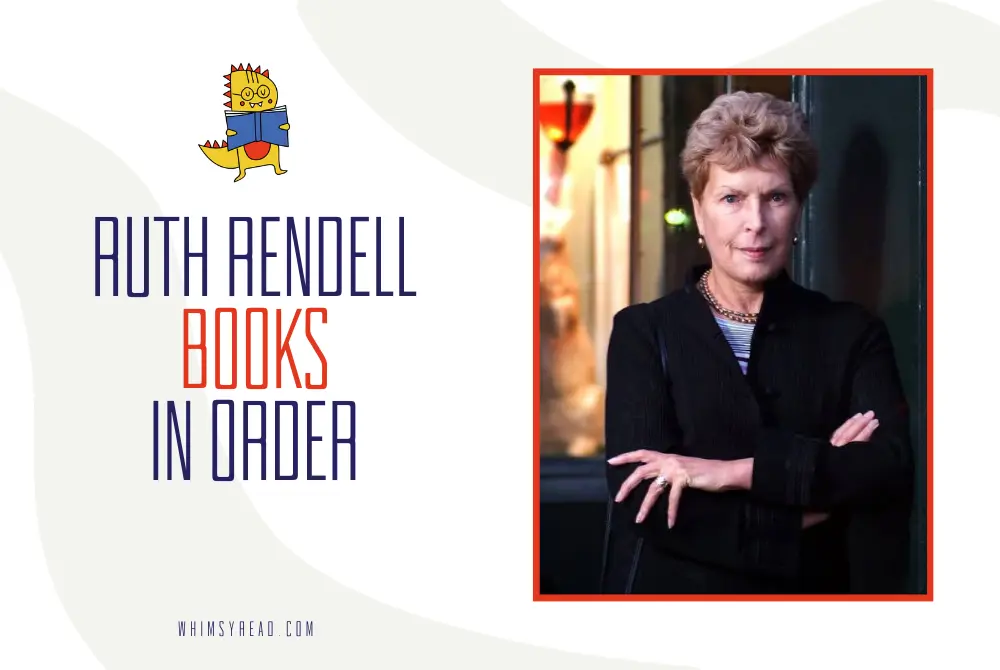
Ruth Rendell was one of Britain’s most influential crime writers, best known for Chief Inspector Reg Wexford but equally celebrated for her disturbing psychological stand-alones. Her books often focus less on simply identifying a murderer and more on the fears, obsessions, secrets, relationships, and social pressures that lead ordinary people toward crime.
If you are looking for the Ruth Rendell reading order, you do not need to read her entire bibliography chronologically. The Wexford books should be read in numbered order, while the stand-alone novels can be read independently; her Barbara Vine novels form another separate sequence under her famous pseudonym.
Inspector Wexford Books in Order
The Inspector Wexford series contains 24 novels featuring Reg Wexford, the Chief Inspector of Kingsmarkham. The series begins with From Doon with Death in 1964 and concludes with No Man’s Nightingale in 2013.
1. From Doon with Death (1964)
Ruth Rendell introduces Chief Inspector Reg Wexford as he investigates the murder of Margaret Parsons, an apparently ordinary woman whose secret life holds the key to the crime. The investigation establishes the Kingsmarkham setting and begins Wexford’s long-running career as a detective.
2. A New Lease of Death (1967)
Wexford revisits an old murder when someone begins questioning the conviction of a man who was believed to have killed an elderly woman years earlier. The case forces him to reconsider evidence from the past and examine how memory, family loyalty, and guilt can distort the truth.
American title: The Sins of the Fathers.
3. Wolf to the Slaughter (1967)
The disappearance of a young woman draws Wexford into a complicated investigation involving an apparently respectable family. As he digs deeper, the case reveals hidden relationships and motives that are very different from the surface appearance of events.
4. The Best Man to Die (1969)
A man’s death appears to be connected to a seemingly ordinary social gathering, but Wexford soon discovers that several people have reasons to conceal what happened. The investigation explores jealousy, resentment, and the dangerous consequences of secrets within seemingly conventional lives.
5. A Guilty Thing Surprised (1970)
Wexford investigates a murder in which the circumstances initially seem straightforward but quickly become more complicated. The case demonstrates Rendell’s growing interest in the psychological motives behind apparently inexplicable violence.
6. No More Dying Then (1971)
A series of disturbing events leads Wexford into a case involving a missing person and a violent crime. The investigation becomes increasingly personal as the detective attempts to understand the connections between the people involved.
7. Murder Being Once Done (1972)
Wexford investigates a murder whose circumstances are tangled with the victim’s unusual personal history. The case asks how well anyone can truly know another person and how apparently insignificant details can expose a hidden motive.
8. Some Lie and Some Die (1973)
A young woman’s death leads Wexford into the world surrounding a major rock concert, where thousands of people make the investigation unusually difficult. The novel combines crowd psychology, youth culture, deception, and murder while showing Wexford working beyond the comfortable boundaries of Kingsmarkham.
9. Shake Hands for Ever (1975)
Wexford investigates a disappearance that gradually becomes connected to a disturbing family history. The mystery explores marriage, manipulation, and the destructive consequences of people trying to control one another.
10. A Sleeping Life (1978)
Wexford investigates a murder in which the victim’s private life becomes increasingly important to understanding the crime. The novel combines conventional detective work with Rendell’s trademark examination of loneliness, relationships, and hidden obsessions.
11. Put On by Cunning (1981)
Wexford investigates a case in which deception and carefully constructed appearances make the truth particularly difficult to uncover. The novel emphasizes the gap between what people present to society and what they conceal privately.
American title: Death Notes.
12. The Speaker of Mandarin (1983)
Wexford travels outside his familiar surroundings when a holiday abroad becomes connected to a murder investigation. The international setting gives Rendell an opportunity to explore cultural assumptions, personal relationships, and the unexpected consequences of a seemingly innocent journey.
13. An Unkindness of Ravens (1985)
A murder draws Wexford toward a community where environmental activism, personal rivalries, and family tensions overlap. The case demonstrates how political and social conflicts can become deeply personal and potentially deadly.
14. The Veiled One (1988)
Wexford investigates the murder of a woman whose apparently respectable life conceals complicated relationships and secrets. The investigation becomes a study of identity, marriage, and the ways people can hide troubling truths in plain sight.
15. Kissing the Gunner’s Daughter (1992)
A brutal murder involving a wealthy family gives Wexford one of his most complicated investigations. The case examines class, family expectations, inheritance, and the tensions that can exist beneath a privileged exterior.
16. Simisola (1994)
When a young Black woman disappears, Wexford’s investigation exposes racial tensions and social divisions in his community. The novel broadens the series beyond a conventional murder mystery and examines prejudice, immigration, identity, and institutional assumptions.
17. Road Rage (1997)
A protest against a proposed road development becomes the setting for murder and escalating conflict. Wexford must investigate while navigating political activism, environmental concerns, and a community increasingly divided by anger.
18. Harm Done (1999)
Wexford investigates a violent crime involving a young girl and discovers that the truth is deeply connected to troubled family relationships. The novel explores domestic abuse, secrecy, and the difficulty of recognizing danger within seemingly ordinary homes.
19. The Babes in the Wood (2002)
The disappearance of two teenagers leads Wexford into a case involving missing children, family secrets, and disturbing criminal possibilities. The investigation tests his experience as a detective while confronting some of the most painful consequences of crime.
20. End in Tears (2005)
A shocking death involving a pregnant woman sends Wexford into a complicated investigation involving several interconnected lives. The case explores grief, jealousy, motherhood, and the destructive consequences of secrets that have been protected for too long.
21. Not in the Flesh (2007)
Wexford investigates the discovery of a body hidden for years in an apparently ordinary setting. The old crime gradually becomes connected to the present, allowing Rendell to explore how unresolved violence can continue affecting people long after the original event.
22. The Monster in the Box (2009)
Wexford becomes fascinated by a man he has suspected of murder for years but never managed to bring to justice. The case becomes an unusually personal investigation as Wexford revisits the evidence and confronts the possibility that his instincts may have been wrong.
23. The Vault (2011)
A body discovered in unusual circumstances brings Wexford back into detective work after retirement. The investigation connects the present crime with a complicated network of relationships and gives the character another opportunity to demonstrate his extraordinary understanding of human behavior.
24. No Man’s Nightingale (2013)
Wexford investigates the murder of a woman whose private life contains secrets that complicate the case. The final Wexford novel brings the long-running detective closer to the modern world while retaining the psychological depth that defined the series.
Ruth Rendell Stand-Alone Novels in Order
Rendell’s stand-alone novels are where her psychological crime writing becomes especially prominent. They do not require a specific reading sequence, but publication order provides a useful way to see how her style developed across five decades.
1. To Fear a Painted Devil (1965)
A seemingly ordinary setting becomes increasingly threatening as hidden fears and dangerous relationships emerge. Rendell uses the story to explore how apparently respectable people can become trapped by obsession and violence.
2. Vanity Dies Hard (1966)
A woman’s carefully maintained life begins to unravel when the past refuses to stay hidden. The novel examines vanity, marriage, insecurity, and the destructive consequences of secrets.
American title: In Sickness and in Health.
3. The Secret House of Death (1968)
A murder investigation develops around a house containing disturbing secrets and complicated relationships. Rendell focuses on the psychological forces that turn ordinary domestic tensions into something much darker.
4. One Across, Two Down (1971)
Stanley Manning is trapped in a miserable marriage and becomes increasingly obsessed with finding a way out of his problems. The novel follows his increasingly dangerous thinking as desperation begins to overpower ordinary moral boundaries.
5. The Face of Trespass (1974)
A successful writer becomes entangled in the aftermath of a murder connected to his complicated personal life. The novel explores jealousy, artistic ambition, relationships, and the destructive power of obsession.
6. A Demon in My View (1976)
Arthur Johnson secretly lives out his violent fantasies through carefully planned murders while maintaining an apparently respectable existence. Rendell uses his double life to examine the terrifying distance between outward normality and private obsession.
7. A Judgement in Stone (1977)
Eunice Parchman becomes a housekeeper for a wealthy family while hiding a secret that could destroy her carefully constructed identity. The novel is a chilling study of class, shame, secrecy, and the consequences of misunderstanding another person’s life.
8. Make Death Love Me (1979)
Two criminals take a woman hostage, but the situation becomes emotionally complicated as relationships develop between captor and victim. Rendell explores fear, dependence, manipulation, and the unstable boundaries between violence and intimacy.
9. The Lake of Darkness (1980)
A man unexpectedly receives a large sum of money and becomes increasingly drawn into a disturbing chain of events. The novel examines guilt, temptation, chance, and how a seemingly fortunate change in circumstances can become dangerous.
10. Master of the Moor (1982)
A young man’s fascination with the isolated moorland around his home becomes increasingly obsessive. The atmospheric novel combines landscape, sexuality, violence, and psychological instability.
11. The Killing Doll (1984)
A young woman becomes involved with a family whose relationships are shaped by manipulation and emotional dependency. Rendell builds the suspense around obsession and the dangerous consequences of people trying to possess one another.
12. The Tree of Hands (1984)
A mother’s world is transformed by a series of disturbing events surrounding her child. The novel moves between family relationships and psychological suspense while questioning how far grief and desperation can drive someone.
13. Live Flesh (1986)
A violent crime changes several people’s lives and creates connections between strangers who would otherwise never have met. Rendell explores revenge, desire, guilt, and the long-term consequences of a single act of violence.
14. Talking to Strange Men (1987)
Ordinary people become caught in a dangerous situation after messages and communications are misunderstood. The novel turns the everyday act of communication into a source of paranoia, suspense, and unexpected danger.
15. The Bridesmaid (1989)
Philip becomes fascinated by a mysterious young woman and gradually loses his ability to distinguish obsession from reality. The story becomes an unsettling exploration of romantic fixation, fantasy, and psychological instability.
16. Going Wrong (1990)
Guy Curran has remained obsessed with his childhood sweetheart, Leonora, and refuses to accept that she has moved on. His inability to let go turns romantic longing into increasingly disturbing behavior.
17. The Crocodile Bird (1993)
Liza Beck is raised in isolation by her mother, who has taught her that the outside world is dangerous. When their secluded existence begins to collapse, the novel examines fear, dependence, and the consequences of a life built around secrecy.
18. The Keys to the Street (1996)
Mary Jago becomes involved with a mysterious man while volunteering with London’s homeless community. The novel combines urban crime with questions about identity, vulnerability, relationships, and the hidden lives of people living on the margins.
19. A Sight for Sore Eyes (1998)
Two psychologically damaged people form a dangerous connection after their lives unexpectedly intersect. Rendell explores loneliness, distorted perception, violence, and the desperate human need for connection.
20. Adam and Eve and Pinch Me (2001)
Three women’s lives become connected through relationships, deception, and romantic expectations. The novel examines fantasy, loneliness, self-deception, and the ways people construct versions of reality that suit their emotional needs.
21. The Rottweiler (2003)
A serial killer begins targeting women while an apparently ordinary community continues its daily routines. Rendell balances the killer’s hidden identity with the lives of the people around him, creating suspense from the gap between appearance and reality.
22. Thirteen Steps Down (2004)
A lonely man becomes increasingly fascinated by a notorious serial killer while his own life begins to deteriorate. His obsession with violence gradually becomes entangled with an unhealthy relationship, creating a disturbing psychological portrait.
23. The Water’s Lovely (2006)
A family secret resurfaces after the discovery of a body, bringing several characters into a web of suspicion. The novel focuses on family relationships, memory, guilt, and the ways an old crime can continue shaping the present.
24. Portobello (2008)
A wealthy man’s quiet London life becomes complicated by an encounter with a young woman and a series of increasingly troubling events. The novel uses the diverse Portobello neighborhood to explore desire, addiction, class, and crime.
25. Tigerlily’s Orchids (2010)
A quiet London neighborhood is disturbed by a new arrival whose presence exposes secrets among the residents. Rendell uses the interconnected community to explore obsession, resentment, loneliness, and the hidden tensions beneath suburban respectability.
26. The Saint Zita Society (2012)
Residents of a London street form an unusual association while their supposedly peaceful community becomes increasingly unsettled. The novel examines neighborhood relationships, social divisions, secrets, and the consequences of people interfering in one another’s lives.
27. The Girl Next Door (2014)
A group of people who once shared a secret from their youth are brought back together decades later. The discovery of human remains forces them to confront memories they believed were safely buried.
28. Dark Corners (2015)
Carl Martin’s life begins to unravel after he sells prescription drugs belonging to his deceased mother. The final Ruth Rendell novel explores guilt, addiction, desperation, and the devastating consequences of one seemingly manageable mistake.
Barbara Vine Books in Order
Ruth Rendell used the name Barbara Vine for a different kind of psychological crime novel. She began the pseudonymous series with A Dark-Adapted Eye in 1986 and ultimately published 14 Barbara Vine novels, ending with The Child’s Child in 2013.
1. A Dark-Adapted Eye (1986)
A family looks back at a murder committed years earlier, gradually revealing the secrets surrounding two very different sisters. The novel explores family loyalty, memory, repression, and the dangerous consequences of keeping the truth hidden.
2. A Fatal Inversion (1987)
A group of people return to a country house where a terrible crime occurred years before. As memories resurface, the novel examines guilt, sexuality, friendship, and the consequences of actions that cannot be undone.
3. The House of Stairs (1988)
A young woman becomes involved with a mysterious older man whose past contains disturbing secrets. The story explores obsession, manipulation, family history, and the psychological damage created by buried truths.
4. Gallowglass (1990)
A lonely woman becomes fascinated by a mysterious man who draws her into an increasingly strange relationship. The novel explores control, obsession, vulnerability, and the unsettling ways people can become dependent on one another.
5. King Solomon’s Carpet (1991)
London’s Underground becomes the center of a story involving a group of people whose lives intersect through music, desire, and obsession. Rendell uses the city’s transport system as a backdrop for a complex psychological crime story.
6. Asta’s Book (1993)
A woman’s diaries provide an intimate record of her life while gradually revealing clues to a mystery surrounding her family. The novel uses documents, memory, and multiple perspectives to show how the truth can change depending on who is telling the story.
7. No Night Is Too Long (1994)
Two young men travel together before their friendship becomes entangled with jealousy, sexuality, and murder. The novel examines how an intense relationship can deteriorate when desire and fear begin competing with loyalty.
8. The Brimstone Wedding (1996)
Two women meet later in life and begin uncovering connections between their pasts that neither expected. The novel combines friendship, memory, sexuality, and family secrets in a story about the long shadows cast by earlier choices.
9. The Chimney Sweeper’s Boy (1998)
A biographer investigates the life of a celebrated writer and discovers that the official version of his history may be deeply misleading. As the investigation continues, questions about identity, authorship, family, and truth become increasingly important.
10. Grasshopper (2000)
A young woman becomes involved with a group of people living in a strange urban environment where ordinary boundaries have broken down. The novel explores obsession, freedom, sexuality, danger, and the psychological consequences of living outside conventional society.
11. The Blood Doctor (2002)
A woman researching her family history becomes fascinated by an ancestor whose involvement in medicine and crime creates disturbing questions about heredity and identity. The story moves between past and present while examining family secrets, scientific ambition, and the darker side of obsession.
12. The Minotaur (2005)
A young woman travels to Greece to become a companion to a troubled man and enters an isolated family dominated by psychological tensions. The novel draws on the myth of the Minotaur while exploring confinement, family dysfunction, fear, and manipulation.
13. The Birthday Present (2008)
A seemingly ordinary political relationship begins to unravel when a birthday gift exposes hidden connections and dangerous secrets. The novel examines political ambition, adultery, deception, and the catastrophic consequences of a secret life.
14. The Child’s Child (2013)
Two siblings discover a disturbing family story involving pregnancy, identity, and social attitudes toward women in an earlier generation. The novel contrasts past and present perspectives while exploring family secrets, sexuality, motherhood, and changing social expectations.
Ruth Rendell Short Story Collections in Order
Rendell was also an accomplished short-story writer, and her collections are worth exploring if you want to go beyond the novels. The official bibliography lists collections ranging from The Fallen Curtain in 1976 through A Spot of Folly in 2017.
- The Fallen Curtain and Other Stories — 1976
- Means of Evil and Other Stories — 1979 — Wexford stories
- The Fever Tree and Other Stories — 1982
- The New Girlfriend and Other Stories — 1985
- The Copper Peacock — 1991
- Blood Lines — 1995
- Piranha to Scurfy and Other Stories — 2000
- Collected Short Stories, Volume 1 — 2006
- Collected Short Stories, Volume 2 — 2008
- Midsummer Nights — 2009
- A Spot of Folly — 2017
Means of Evil is especially useful for Wexford readers because its five stories are explicitly presented as cases within the Kingsmarkham chronicles.
Ruth Rendell Novellas and Other Books
A few shorter works sit outside the main novel categories.
- Heartstones (1987) — a stand-alone novella.
- The Thief (2006) — a stand-alone novella later included in A Spot of Folly.
- Archie and Archie (2013) — a children’s book.
- Ruth Rendell’s Suffolk (1989) — nonfiction.
- The Reason Why: An Anthology of the Murderous Mind (1995) — nonfiction.
Ruth Rendell Books by Category
| Category | Number |
| Inspector Wexford novels | 24 |
| Stand-alone novels | 28 |
| Barbara Vine novels | 14 |
| Short-story collections | 11 |
| Stand-alone novellas | 2 |
| Children’s book | 1 |
| Major nonfiction titles | 2 |
The official Ruth Rendell bibliography separates Wexford, stand-alone works, and Barbara Vine rather than treating the entire bibliography as one continuous series.
Do You Need to Read the Ruth Rendell Books in Order?
No, not all of them. The 24 Wexford novels are best read in publication order because Wexford’s career, family life, and relationships develop over the series, but Rendell’s stand-alone novels and Barbara Vine books can generally be started independently.
If you are specifically interested in Inspector Wexford books in order, start with From Doon with Death and continue through No Man’s Nightingale. If psychological crime is your priority, you can instead choose any of the stand-alone novels or begin the Barbara Vine sequence with A Dark-Adapted Eye.
What Is the Best Ruth Rendell Book to Start With?
For the classic detective experience, start with From Doon with Death because it introduces Inspector Wexford and establishes the Kingsmarkham series. For psychological crime, A Judgement in Stone is an excellent standalone starting point, while A Dark-Adapted Eye is the natural choice if you want to explore Rendell’s Barbara Vine identity.
Ruth Rendell vs. Barbara Vine
Barbara Vine was not a separate author but Ruth Rendell writing under a pseudonym. Rendell created the name because she had stories that did not fit neatly into her established categories of police procedural and psychological crime, allowing her to explore a more literary and psychologically layered style.
The distinction is useful for readers because the Wexford books generally have a stronger detective-investigation framework, while the Barbara Vine novels tend to emphasize memory, family secrets, obsession, relationships, and the gradual revelation of disturbing truths.
Who Is Inspector Wexford?
Reg Wexford is the central detective of Rendell’s longest-running series and serves as Chief Inspector of the fictional town of Kingsmarkham. Across 24 novels, readers follow his professional investigations alongside changes in his personal life, making the series both a crime saga and a long portrait of a changing British society.
What Makes Ruth Rendell’s Books Different?
Rendell’s crime fiction is notable for its emphasis on why people commit crimes, not simply on discovering who committed them. Her stories frequently explore fear, obsession, jealousy, class, family pressure, loneliness, sexuality, prejudice, and social expectations, which is why her work is often described as psychological crime fiction as much as traditional mystery.
Her Wexford novels gradually move beyond the conventional police procedural, while her stand-alone and Barbara Vine novels often dispense with the familiar detective structure altogether. That range makes her bibliography particularly useful for readers who enjoy both classic mysteries and darker psychological thrillers.
Final Thoughts
The Ruth Rendell books in order offer three major paths through one of Britain’s richest crime-fiction careers: the 24-book Inspector Wexford series, 28 stand-alone novels, and 14 Barbara Vine novels. You can read the Wexford books chronologically for the full development of Reg Wexford, or choose individual stand-alones and Barbara Vine novels according to the kind of psychological mystery you prefer.
For a first-time reader, From Doon with Death is the best starting point for Wexford, A Judgement in Stone is an excellent introduction to Rendell’s stand-alone psychological crime, and A Dark-Adapted Eye is the ideal entry into her Barbara Vine work. Together, these three starting points show the extraordinary range that made Rendell one of the defining British crime writers of the twentieth and early twenty-first centuries.

Leave a Reply