
Roald Dahl Books in Order: From The Gremlins to Billy and the Minpins
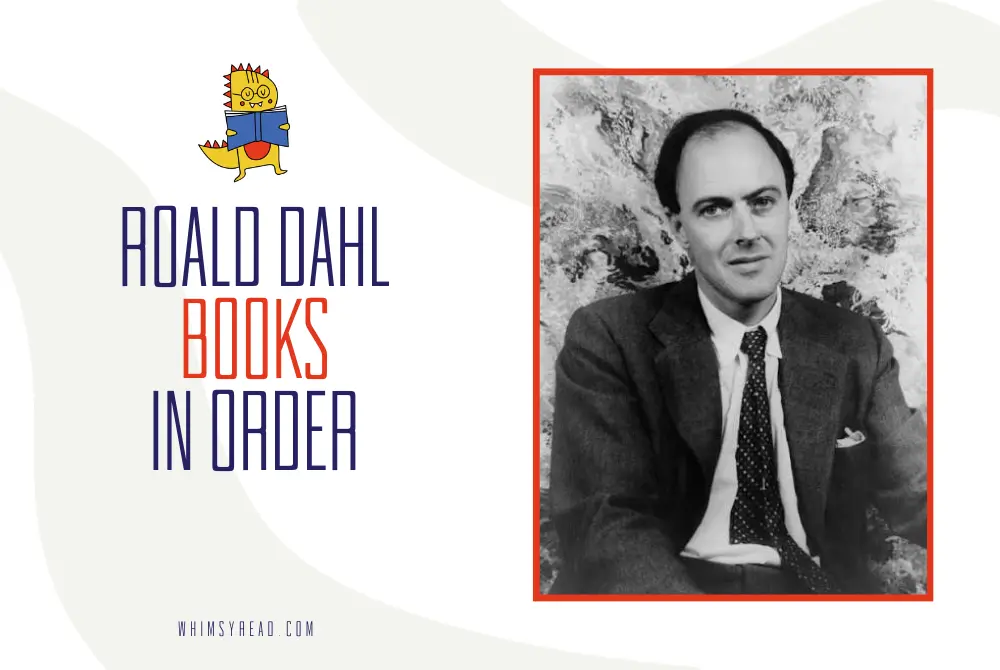
Roald Dahl did not begin his career as the children’s author most readers know today. His first published book, The Gremlins, appeared in 1943, followed by wartime stories and his adult novel Sometime Never: A Fable for Supermen. His first collection of short stories, Over to You, appeared in 1946.
His children’s fiction gradually became the defining part of his legacy. From James and the Giant Peach and Charlie and the Chocolate Factory to The BFG and Matilda, Dahl created stories filled with unusual children, eccentric adults, dark humor, fantasy, and memorable invented language. The official Roald Dahl website and museum continue to present these books as the core of his literary world.
Roald Dahl Children’s Books in Publication Order
This is the most useful reading order for someone interested primarily in Dahl’s children’s fiction.
1. The Gremlins
Published: 1943
The Gremlins was Roald Dahl’s first children’s book and his first published book. It grew out of RAF folklore about mischievous creatures supposedly responsible for problems with aircraft.
The book is particularly interesting for readers who want to see where Dahl’s fascination with strange creatures and mischievous characters began. The Roald Dahl Museum describes it as his first children’s book.
2. James and the Giant Peach
Published: 1961
After a long gap between children’s books, Dahl returned to children’s fiction with James and the Giant Peach. The story follows James Henry Trotter, whose miserable life changes after a magical peach begins growing to enormous proportions.
The book combines Dahl’s characteristic transformation of an unhappy childhood situation with fantasy, adventure, humor, and a memorable group of insect characters. The idea was partly inspired by Dahl’s observations of fruit trees at his home in Great Missenden.
3. Charlie and the Chocolate Factory
Published: 1964
Charlie and the Chocolate Factory introduces Charlie Bucket and the mysterious chocolatier Willy Wonka. Five children receive Golden Tickets that allow them to enter Wonka’s extraordinary chocolate factory.
It became one of Dahl’s defining books and eventually inspired major film adaptations. The story also established the world of Willy Wonka that Dahl returned to in his next Charlie book.
4. The Magic Finger
Published: 1966
The Magic Finger follows an unnamed eight-year-old girl with a very unusual power. When something makes her angry, she can use her magic finger to transform the situation in spectacular ways.
The book is much shorter than some of Dahl’s later novels, making it an accessible introduction for younger readers while still containing his familiar combination of humor, absurdity, and a pointed message.
5. Fantastic Mr Fox
Published: 1970
Fantastic Mr Fox centers on an ingenious fox who repeatedly outsmarts three farmers determined to catch him.
The story is a compact example of Dahl’s ability to turn an animal character into a clever, rebellious hero. The Roald Dahl Museum notes that the story was inspired by the Chiltern countryside near Dahl’s home and originally began as a picture-book idea.
6. Charlie and the Great Glass Elevator
Published: 1972
Charlie and the Great Glass Elevator is the direct sequel to Charlie and the Chocolate Factory. Charlie, Willy Wonka, and Charlie’s family continue their extraordinary journey after leaving the chocolate factory.
Unlike the first Charlie book, which focuses heavily on the factory and its unusual rooms, this sequel takes the characters into a much broader and more fantastical adventure. The Roald Dahl Museum confirms that Dahl wrote it in response to children’s requests for another Charlie story.
7. Danny the Champion of the World
Published: 1975
Danny the Champion of the World is one of Dahl’s warmer stories, focusing on the relationship between a boy and his father.
Danny lives with his father in a gypsy caravan and discovers that his father has a secret passion for pheasant poaching. The novel explores their close relationship while turning their shared adventure into an exciting battle of wits.
The story is also notable because it contains the first appearance of the BFG, years before the character received his own book.
8. The Enormous Crocodile
Published: 1978
The Enormous Crocodile was written for much younger readers than many of Dahl’s longer novels. The crocodile has one ambition: to find children to eat.
The book is short, highly visual, and built around repetition, humor, danger, and the crocodile’s increasingly ridiculous plans. It was also the first Roald Dahl book illustrated by Quentin Blake.
9. The Twits
Published: 1980
The Twits introduces Mr. and Mrs. Twit, an unpleasant couple who spend their time playing cruel tricks on each other and anyone unfortunate enough to cross their path.
The book is deliberately grotesque and mischievous, making it one of Dahl’s clearest examples of using unpleasant adults as comic villains. Its exaggerated characters and revenge-driven plot have made it particularly popular with younger readers.
10. George’s Marvellous Medicine
Published: 1981
George Kranky has a problem: his grandmother is mean, demanding, and unpleasant. When George decides to create a replacement for her medicine, he mixes together an outrageous collection of household substances.
The result is one of Dahl’s most gleefully chaotic stories. The book combines absurd experimentation with the wish-fulfillment fantasy of a child finally getting the upper hand over a difficult adult.
11. The BFG
Published: 1982
The BFG introduces Sophie, an orphan who encounters the Big Friendly Giant. Unlike the other giants, the BFG does not eat children. Instead, he collects and distributes dreams.
The book is famous for Dahl’s playful language, including the BFG’s deliberately unusual speech and invented words. The character had actually been mentioned years earlier in Danny the Champion of the World.
12. The Witches
Published: 1983
In The Witches, a young boy and his grandmother discover that witches are real and that they have a horrifying plan for children.
The story combines fantasy with genuine suspense and a darker atmosphere than many of Dahl’s children’s books. The Roald Dahl Museum notes that Dahl turned to witches after completing The BFG, wanting to explore another classic creature from folklore.
13. The Giraffe and the Pelly and Me
Published: 1985
Billy dreams of owning the abandoned Grubber, a strange old building that he hopes to turn into a sweet shop. Instead, the building becomes the home of a giraffe, a pelican, and a monkey who run an unusual window-cleaning business.
The book was written for younger readers and features the animal characters that its title promises. Dahl spent considerable time revising it, and the finished story became one of his shorter, more playful works.
14. Matilda
Published: 1988
Matilda follows an exceptionally intelligent young girl who loves books and discovers that she possesses an extraordinary ability. Her intelligence puts her at odds with her neglectful parents and the terrifying headmistress Miss Trunchbull.
Books and reading are central to Matilda’s character, making this one of Dahl’s most enduring stories for young readers. It is also among his most frequently adapted works. The Roald Dahl Museum identifies it as one of his best-loved books.
15. Esio Trot
Published: 1990
Esio Trot is a gentler romantic comedy about Mr. Hoppy, a shy older man who is secretly in love with his neighbor, Mrs. Silver.
When Mrs. Silver becomes concerned about the slow growth of her pet tortoise, Mr. Hoppy devises an unusual plan. The story is considerably softer in tone than The Witches or The Twits and shows another side of Dahl’s writing.
16. The Vicar of Nibbleswicke
Published: 1991
The Vicar of Nibbleswicke was published shortly after Dahl’s death. It follows a vicar whose speech problem creates an increasingly strange situation.
The story was specifically created to raise awareness of dyslexia, and proceeds from the book helped support the Dyslexia Institute. The Roald Dahl Museum identifies it as a posthumous publication.
17. Billy and the Minpins
Published: 1991
Billy and the Minpins was Roald Dahl’s final work of literature and was published posthumously.
Billy enters a forbidden forest and discovers that it is inhabited by tiny people called the Minpins. The story has a traditional fairy-tale quality, with a child confronting frightening creatures and discovering a hidden magical world. The original edition was illustrated by Patrick Benson; later editions were illustrated by Quentin Blake.
Charlie Bucket Books in Order
Unlike most of Dahl’s books, the Charlie novels are directly connected and should be read together.
1. Charlie and the Chocolate Factory
This is the introduction to Charlie Bucket and Willy Wonka. The Golden Ticket contest brings five children into Wonka’s extraordinary factory, where each child encounters a different kind of temptation.
2. Charlie and the Great Glass Elevator
The second book continues immediately from the events of Charlie and the Chocolate Factory. Charlie, Willy Wonka, and Charlie’s family travel in the Great Glass Elevator and become involved in a much larger adventure.
Reading order: Charlie and the Chocolate Factory → Charlie and the Great Glass Elevator
There is no third completed Charlie novel by Roald Dahl.
Roald Dahl’s Adult Novels
Dahl’s adult fiction is very different from his children’s books. It tends to feature darker themes, satire, unusual characters, and the black humor that also appears in his short stories.
1. Sometime Never: A Fable for Supermen
Published: 1948
Sometime Never was Dahl’s first adult novel. The story grew out of his experiences as a fighter pilot during World War II and presents a much darker world than the children’s books that would later make him famous.
2. My Uncle Oswald
Published: 1979
My Uncle Oswald is Dahl’s adult comic novel featuring Uncle Oswald, a character who had previously appeared in the short-story collection Switch Bitch.
It is deliberately outrageous and much more adult in subject matter than Dahl’s children’s fiction. The Roald Dahl Museum specifically identifies the connection between Oswald’s appearance in Switch Bitch and his later novel.
Roald Dahl Short-Story Collections in Order
Dahl was an accomplished short-story writer long before he became famous for children’s novels. His adult collections often have darker, more unsettling stories than his children’s fiction.
1. Over to You: Ten Stories of Flyers and Flying
Published: 1946
Dahl’s first short-story collection draws heavily on his experience as a wartime fighter pilot. The stories focus on aviation, combat, fear, and the psychological effects of war.
2. Someone Like You
Published: 1953
This collection contains some of Dahl’s best-known adult stories and establishes the darker, twist-driven style that became associated with his fiction for grown-ups.
3. Kiss Kiss
Published: 1960
Kiss Kiss contains eleven short stories and includes “The Champion of the World,” the story Dahl later reworked into Danny the Champion of the World.
4. Switch Bitch
Published: 1974
Switch Bitch is a collection written for adults with considerably more mature subject matter. It also introduces Uncle Oswald, who later became the central character of My Uncle Oswald.
5. The Wonderful Story of Henry Sugar and Six More
Published: 1977
This collection contains seven stories aimed at older children and general readers. The title story follows a wealthy man who becomes fascinated by a mysterious ability to see without using his eyes.
6. Tales of the Unexpected
Published: 1979
Tales of the Unexpected collects 16 stories selected from Someone Like You and Kiss Kiss. It is one of the books most closely associated with Dahl’s reputation for surprise endings and dark humor.
7. More Tales of the Unexpected
Published: 1980
This follow-up collection contains nine stories for adults, including several pieces that had previously appeared elsewhere.
8. Two Fables
Published: 1986
This short collection contains two stories, “Princess and the Poacher” and “Princess Mammalia.”
9. Ah, Sweet Mystery of Life
Published: 1989
Ah, Sweet Mystery of Life collects seven earlier stories about rural life, eccentric characters, and unexpected situations. The Roald Dahl Museum notes that these stories were originally published in the 1940s and 1950s.
Roald Dahl Poetry Books in Order
Dahl also wrote several collections of humorous poetry, especially for younger readers.
1. Revolting Rhymes
Published: 1982
Revolting Rhymes retells familiar fairy tales with Dahl’s own irreverent twists. Traditional stories such as Cinderella, Little Red Riding Hood, and Snow White become much darker and more mischievous in his versions.
2. Dirty Beasts
Published: 1983
Dirty Beasts is a collection of comic poems about animals. It continues the playful and slightly gruesome style established by Revolting Rhymes.
3. Rhyme Stew
Published: 1989
Rhyme Stew is Dahl’s third major collection of poetry. It was originally conceived as a continuation of Revolting Rhymes and was ultimately published as a separate collection aimed at older readers.
Roald Dahl Memoirs and Autobiographical Books
Dahl’s autobiographical writing provides useful context for readers interested in the real experiences behind some of his fiction.
1. Boy: Tales of Childhood
Published: 1984
Boy recounts Dahl’s childhood, including his experiences at school and the events that shaped his early years.
It is not a conventional autobiography covering his entire life. Instead, it focuses on childhood memories and the people and incidents that stayed with him.
2. Going Solo
Published: 1986
Going Solo continues where Boy ends. It covers Dahl’s early adulthood, beginning with his work for Shell in Africa and continuing into his experiences during World War II.
The two books therefore work as a pair and should be read in that order.
3. My Year
Published: 1991
My Year was Dahl’s final book. It takes the form of a month-by-month account of the landscape, wildlife, memories, and observations surrounding his home in Great Missenden.
The book was assembled from notes Dahl made during the last year of his life.
Other Roald Dahl Books
Not every Dahl publication fits neatly into children’s fiction, adult fiction, poetry, or autobiography.
Memories with Food at Gipsy House
Published: 1991
Written with Dahl’s second wife, Felicity, this book combines memories and recipes. It was later renamed Roald Dahl’s Cookbook.
Roald Dahl’s Guide to Railway Safety
Published: 1991
This illustrated safety guide was commissioned to encourage children to use the railway safely. It was distributed to UK primary schools following Dahl’s death.
Where Should You Start With Roald Dahl?
Start with Charlie and the Chocolate Factory
For a first introduction to Dahl, Charlie and the Chocolate Factory provides many of the qualities readers associate with his children’s fiction: imagination, eccentric adults, memorable children, humor, and a completely unpredictable setting.
Start with Matilda if you love books
Readers who enjoy stories about intelligent children and reading will probably find Matilda especially appealing. Matilda herself is one of Dahl’s most recognizable child protagonists.
Try The BFG for fantasy and invented language
The BFG is a good choice if you want a more openly magical story and enjoy Dahl’s playful manipulation of language.
Read James and the Giant Peach for an earlier classic
James and the Giant Peach offers a shorter, more traditional fantasy adventure and is one of the essential early children’s books in Dahl’s career.
Choose Boy for Dahl’s real-life story
If you are more interested in the author than the fictional worlds, begin with Boy: Tales of Childhood and then continue with Going Solo.
Do Roald Dahl Books Need to Be Read in Order?
Most of Roald Dahl’s books can be read independently. There is no single continuous story connecting his children’s novels.
The main exception is the Charlie series. Charlie and the Great Glass Elevator directly continues Charlie and the Chocolate Factory, so those two should be read in publication order.
His autobiographical books also have a natural sequence: Boy comes first and Going Solo follows it. The remaining children’s novels, poetry collections, and short-story collections can generally be read in any order.
Which Roald Dahl Books Are Connected?
The most obvious connection is between the two Charlie books:
- Charlie and the Chocolate Factory
- Charlie and the Great Glass Elevator
There is also a smaller character connection between Danny the Champion of the World and The BFG: the BFG is first mentioned in Danny before becoming the central character of his own novel.
The adult novel My Uncle Oswald also connects to Switch Bitch, where Uncle Oswald first appeared.
Roald Dahl Books by Genre
| Category | Main Books |
| Children’s novels | James and the Giant Peach, Charlie and the Chocolate Factory, Fantastic Mr Fox, The BFG, The Witches, Matilda |
| Charlie books | Charlie and the Chocolate Factory, Charlie and the Great Glass Elevator |
| Adult novels | Sometime Never, My Uncle Oswald |
| Short stories | Someone Like You, Kiss Kiss, Switch Bitch, The Wonderful Story of Henry Sugar and Six More |
| Poetry | Revolting Rhymes, Dirty Beasts, Rhyme Stew |
| Memoir | Boy, Going Solo, My Year |
| Younger readers | The Enormous Crocodile, The Giraffe and the Pelly and Me, Esio Trot |
Roald Dahl’s Final Published Works
Several books appeared around the end of Dahl’s life or shortly after his death, so publication date and writing date are worth distinguishing.
Esio Trot appeared in 1990. In 1991 came The Vicar of Nibbleswicke, Billy and the Minpins, Memories with Food at Gipsy House, Roald Dahl’s Guide to Railway Safety, and My Year. The Roald Dahl Museum identifies Billy and the Minpins as his final work of literature and My Year as his final book.
About Roald Dahl
Roald Dahl was a British author whose career crossed children’s fiction, adult fiction, short stories, poetry, memoir, and nonfiction. His early writing was strongly influenced by his experiences as a fighter pilot during World War II, while his later children’s books drew on childhood memories, the countryside around his home, and his fascination with unusual characters and situations.
His children’s books have sold more than 100 million copies worldwide, according to Penguin Random House UK, and titles such as Matilda, The BFG, and Charlie and the Chocolate Factory remain central to the publisher’s children’s catalogue.
Frequently Asked Questions About Roald Dahl Books
What was Roald Dahl’s first book?
The Gremlins, published in 1943, was Roald Dahl’s first book and his first children’s book. It was inspired by RAF folklore surrounding mischievous creatures called gremlins.
What is the correct order of the Charlie books?
Read Charlie and the Chocolate Factory first, followed by Charlie and the Great Glass Elevator. The second book continues directly from the first.
How many Roald Dahl children’s books are there?
The exact number depends on what a bibliography counts as a children’s book, because Dahl’s catalogue includes novels, picture books, poetry, short-story collections, and posthumous publications. His core children’s fiction includes The Gremlins, James and the Giant Peach, Charlie and the Chocolate Factory, The Magic Finger, Fantastic Mr Fox, Charlie and the Great Glass Elevator, Danny the Champion of the World, The Enormous Crocodile, The Twits, George’s Marvellous Medicine, The BFG, The Witches, The Giraffe and the Pelly and Me, Matilda, Esio Trot, The Vicar of Nibbleswicke, and Billy and the Minpins.
What should I read after Charlie and the Chocolate Factory?
If you want to continue Charlie’s story, read Charlie and the Great Glass Elevator. If you simply want another classic Dahl children’s novel, James and the Giant Peach, The BFG, The Witches, or Matilda are separate stories and can be read independently.
Are Boy and Going Solo connected?
Yes. Going Solo is the continuation of Boy: Tales of Childhood. Boy covers Dahl’s childhood, while Going Solo moves into his early adulthood, work in Africa, and wartime experiences.
Did Roald Dahl write books for adults?
Yes. Dahl wrote adult novels including Sometime Never: A Fable for Supermen and My Uncle Oswald, as well as several collections of adult short stories such as Someone Like You, Kiss Kiss, and Switch Bitch.
What was Roald Dahl’s last book?
My Year was Dahl’s final book, published in 1991. Billy and the Minpins, also published in 1991, was his final work of literature.
Final Thoughts
Roald Dahl’s bibliography is much bigger than the handful of children’s classics most readers know. His writing career began with wartime stories and adult fiction before expanding into the children’s books that became his lasting legacy.
For most readers, there is no reason to read every Dahl book chronologically. Start with the children’s novels that match your interests, read the two Charlie books together, and save Boy and Going Solo for when you want to understand more about the experiences that influenced the author.

Leave a Reply