
Patrick O’Brian Books in Order: A Complete Guide to the Aubrey–Maturin Series
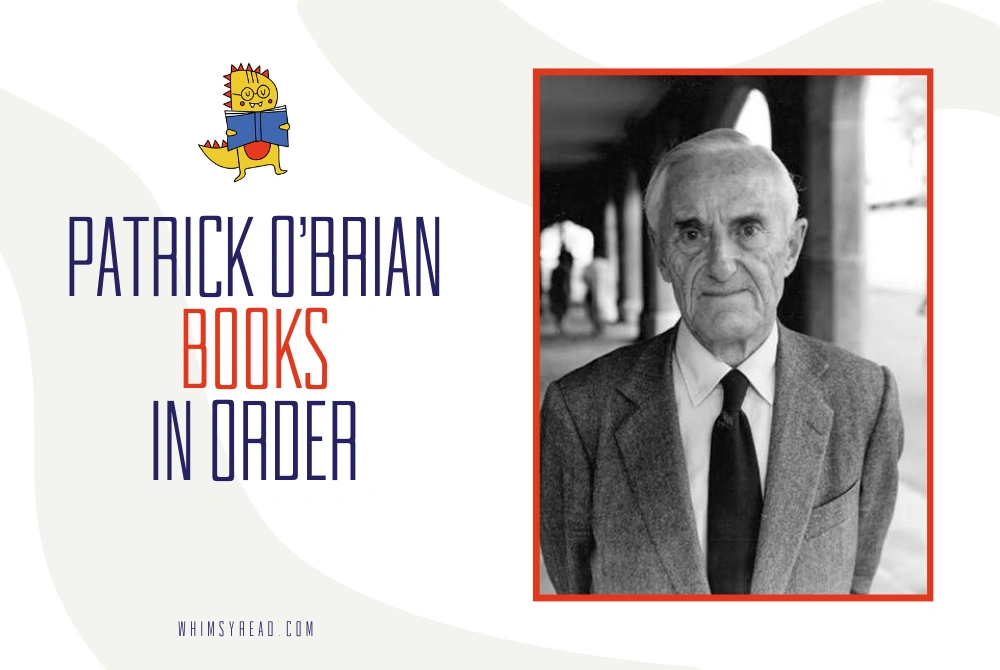
Patrick O’Brian is best known for his historical naval fiction set during the Napoleonic Wars, following Royal Navy captain Jack Aubrey and his close friend Stephen Maturin. The novels combine naval battles, maritime exploration, political intrigue, and a compelling friendship against the backdrop of early 19th-century history.
If you want to read Patrick O’Brian’s books in order, publication order is the best approach because the characters’ personal lives, naval careers, and adventures develop across the series. This guide covers all 21 Aubrey–Maturin volumes, explains the American and British title variations, and introduces other notable books by the author.
Patrick O’Brian Books in Order: The Complete Aubrey–Maturin Series
The Aubrey–Maturin series follows Captain Jack Aubrey and physician, naturalist, and intelligence agent Stephen Maturin through the Napoleonic Wars. Read the books in the following publication order to follow their developing friendship and adventures.
1. Master and Commander (1969)
The first novel introduces Jack Aubrey, a Royal Navy officer, and Stephen Maturin, a physician and naturalist, who meet in Port Mahon in 1800. Their unlikely friendship develops as Aubrey receives command of a warship and begins his naval career.
2. Post Captain (1972)
Aubrey and Maturin face professional uncertainty and personal complications as the war with France disrupts their lives. The novel combines naval action with romantic entanglements, espionage, and the challenges of maintaining a naval career.
3. H.M.S. Surprise (1973)
Aubrey receives a mission that takes him across the seas toward the Indian Ocean, while Maturin becomes increasingly involved in intelligence work. Their journey brings naval dangers, political intrigue, and important developments in their personal lives.
4. The Mauritius Command (1977)
Aubrey receives command of a squadron tasked with capturing French-held islands in the Indian Ocean. Inspired by historical naval campaigns, the novel explores strategic planning, leadership, and the difficulties of conducting military operations far from home.
5. Desolation Island (1978)
Aubrey commands a difficult voyage toward the South Pacific, where harsh weather and dangerous encounters threaten his ship and crew. The story combines survival at sea with naval warfare and the challenges of command under extreme conditions.
6. The Fortune of War (1979)
Aubrey and Maturin become caught up in the War of 1812 between Britain and the United States. Naval combat, imprisonment, and intelligence operations put their friendship and survival to the test.
7. The Surgeon’s Mate (1980)
Maturin’s intelligence work takes center stage as he and Aubrey navigate political intrigue and dangerous missions. Their journey across the Atlantic involves espionage, personal complications, and the continuing demands of naval service.
8. The Ionian Mission (1981)
Aubrey takes command of a Mediterranean mission involving British efforts against French influence in the region. The novel emphasizes naval strategy, diplomatic maneuvering, and the complicated responsibilities of a Royal Navy commander.
9. Treason’s Harbour (1983)
Aubrey and Maturin operate in the Mediterranean, where intelligence gathering and naval duties intersect with political suspicion. Their work brings them into a world of secret information, strategic uncertainty, and potentially dangerous betrayals.
10. The Far Side of the World (1984)
Aubrey commands a long voyage into the Pacific, pursuing an enemy vessel across distant waters. The expedition exposes the crew to unfamiliar environments, challenging encounters, and the isolation of prolonged naval service.
11. The Reverse of the Medal (1986)
Aubrey returns to England and becomes entangled in a financial scandal that threatens his reputation and career. Maturin attempts to help his friend as personal loyalty, public suspicion, and professional consequences collide.
12. The Letter of Marque (1988)
After losing his official standing in the Navy, Aubrey becomes a privateer operating under a letter of marque. He commands a privately financed vessel, seeking prizes and a path toward restoring his reputation while Maturin continues his intelligence work.
13. The Thirteen-Gun Salute (1989)
Aubrey and Maturin undertake a diplomatic voyage to the Malay Archipelago. Their mission combines naval responsibilities with delicate negotiations, unfamiliar cultures, and the risks of operating far from British support.
14. The Nutmeg of Consolation (1991)
Following the events of the previous voyage, Aubrey and his crew face new challenges in the East Indies. The novel follows their efforts to navigate dangerous waters, manage shipboard difficulties, and continue their naval operations.
15. The Truelove (1992) / Clarissa Oakes (1992)
This novel follows Aubrey and his crew as a young woman, Clarissa Oakes, becomes part of life aboard the ship. Her presence raises questions about relationships, shipboard discipline, and the social conventions of the period.
Title note: The book was published as Clarissa Oakes in the United Kingdom and The Truelove in the United States.
16. The Wine-Dark Sea (1993)
Aubrey and Maturin travel across the Pacific on a voyage filled with scientific interests, naval responsibilities, and political tensions. The journey brings them into contact with unfamiliar communities and dangerous developments that test their judgment.
17. The Commodore (1995)
Aubrey receives a senior command with responsibility for a squadron operating against the French. Maturin’s intelligence work continues alongside naval operations, while the story explores the increased responsibilities and pressures that come with command.
18. The Yellow Admiral (1996)
Aubrey’s naval career reaches a critical stage as professional advancement, family concerns, and political developments compete for his attention. The novel examines the uncertainties of senior naval service during a changing period in British history.
19. The Hundred Days (1998)
Aubrey and Maturin become involved in events surrounding Napoleon’s return to power in 1815. The mission unfolds against a tense European political landscape, combining intelligence operations with the possibility of renewed war.
20. Blue at the Mizzen (1999)
Aubrey commands a voyage to the Pacific during a period of political change in South America. The novel follows his naval responsibilities and Maturin’s diplomatic and intelligence activities, bringing the completed Aubrey–Maturin sequence to a natural stopping point.
21. The Final Unfinished Voyage of Jack Aubrey (2004)
Published after Patrick O’Brian’s death, this volume contains the unfinished manuscript of the next Aubrey–Maturin adventure. It offers a final glimpse of Aubrey and Maturin’s world, but it is not a completed novel.
Title note: The volume is also known as 21 in the United States.
What Is the Best Order to Read Patrick O’Brian’s Books?
The recommended reading order is publication order, beginning with Master and Commander and continuing through Blue at the Mizzen. Read The Final Unfinished Voyage of Jack Aubrey last, as an optional continuation.
The series is a connected narrative rather than a collection of entirely independent adventures. Aubrey’s professional career, Maturin’s intelligence activities, and their personal relationships evolve from one book to the next, so reading the novels in sequence gives you the fullest experience.
Can You Skip Any Books in the Aubrey–Maturin Series?
You can technically read an individual novel on its own, but skipping books may leave you unfamiliar with important developments in the characters’ lives. If you want to understand the series’ historical setting, naval hierarchy, and long-running relationships, reading all 20 completed novels in order is preferable.
Other Patrick O’Brian Books Worth Reading
Although the Aubrey–Maturin novels are his best-known works, Patrick O’Brian also wrote historical fiction outside the series.
Caesar (1930)
O’Brian’s early book, published when he was a teenager, predates his famous naval novels. It is an example of his early literary work and is of particular interest to readers exploring his career from its beginnings.
The Golden Ocean (1956)
This historical novel follows young men serving in the British Navy during the 18th century, drawing on the historical voyage of Commodore George Anson. Its maritime setting and naval adventures anticipate some of the interests that later became central to O’Brian’s best-known fiction.
The Unknown Shore (1959)
Set in the 18th century, this novel follows two young men involved in a naval expedition to the Pacific. It shares historical and maritime themes with the Aubrey–Maturin books and offers another perspective on O’Brian’s interest in exploration, friendship, and life at sea.
These standalone novels can be read independently and do not need to be inserted into the Aubrey–Maturin sequence.
About Patrick O’Brian: The Author Behind the Naval Novels
Patrick O’Brian (1914–2000) was a British novelist and translator best known for his historically detailed maritime fiction. Born Richard Patrick Russ, he adopted the name Patrick O’Brian and developed a distinctive literary style characterized by careful historical research, intricate naval detail, and complex character relationships.
His Aubrey–Maturin novels draw on the history of the Royal Navy during the Napoleonic Wars. Through Jack Aubrey’s career as a naval officer and Stephen Maturin’s work as a physician, naturalist, and intelligence agent, O’Brian explores warfare, scientific discovery, diplomacy, friendship, and the demands of life at sea.
The series is particularly admired for its treatment of sailing ships, naval tactics, period customs, and the social structure of the Royal Navy. Rather than relying solely on battles, O’Brian creates a detailed historical world in which everyday shipboard routines and personal relationships are just as important as military events.
O’Brian died in January 2000 while working on the 21st Aubrey–Maturin volume. The unfinished manuscript was subsequently published in 2004, allowing readers to see the beginning of the final adventure he had planned for Jack Aubrey.
Why Are Patrick O’Brian’s Books Popular Among Historical Fiction Readers?
Patrick O’Brian’s novels appeal to readers who enjoy historical accuracy, maritime adventure, and long-running character development.
- Historical naval warfare: The novels explore the Royal Navy’s operations during the Napoleonic Wars.
- Complex characters: Aubrey and Maturin have distinct personalities, professional responsibilities, and personal challenges.
- Detailed maritime settings: Ships, sailing techniques, naval hierarchy, and life at sea are central to the storytelling.
- Friendship and loyalty: The relationship between Aubrey and Maturin provides continuity throughout the series.
- Historical and scientific detail: Maturin’s interests in medicine, natural history, and intelligence add depth beyond naval combat.
The books can be demanding at first because they contain period-specific nautical terminology. However, readers who enjoy immersive historical fiction may appreciate the depth and authenticity that these details provide.
Frequently Asked Questions About Patrick O’Brian Books
1. How many books are in Patrick O’Brian’s Aubrey–Maturin series?
There are 20 completed novels in the Aubrey–Maturin series, plus a 21st volume containing an unfinished manuscript. The series begins with Master and Commander and the final unfinished volume was published posthumously in 2004.
2. What is the first Patrick O’Brian book in the Aubrey–Maturin series?
Master and Commander, published in 1969, is the first novel. It introduces Captain Jack Aubrey and Stephen Maturin, establishing the friendship and historical setting that continue throughout the series.
3. What is the last completed Aubrey–Maturin book?
Blue at the Mizzen (1999) is the 20th and final completed novel in the series. The next volume, The Final Unfinished Voyage of Jack Aubrey, contains an incomplete manuscript published after O’Brian’s death.
4. Should I read Patrick O’Brian’s books in order?
Yes. Publication order is recommended because the novels follow a continuing narrative, with developments in the characters’ careers, friendships, and personal lives carrying over from one book to the next.
5. Is the Aubrey–Maturin series difficult to read?
Some readers find the early chapters challenging because of the detailed nautical vocabulary and historical context. The series becomes easier to follow as readers become familiar with the characters, shipboard routines, and naval terminology.
6. Who are Jack Aubrey and Stephen Maturin?
Jack Aubrey is a Royal Navy captain whose career provides the series’ central naval narrative. Stephen Maturin is his close friend, a physician and naturalist who also works in intelligence, giving the novels a blend of military, scientific, and political perspectives.
7. Is The Truelove the same book as Clarissa Oakes?
Yes. The Truelove is the American title, while Clarissa Oakes is the British title. They refer to the same 15th novel in the Aubrey–Maturin sequence.
8. Is 21: The Final Unfinished Voyage of Jack Aubrey a complete novel?
No. It contains the unfinished manuscript O’Brian was working on when he died. It is best read after Blue at the Mizzen as an optional final fragment rather than as a fully completed novel.
9. Are Patrick O’Brian’s books based on real history?
The Aubrey–Maturin novels are fictional, but they draw extensively on the history of the Royal Navy and the Napoleonic Wars. O’Brian incorporated historical events, naval practices, and period details into the adventures of his fictional protagonists.
10. What should I read after the Aubrey–Maturin series?
Readers who enjoy O’Brian’s maritime historical fiction may want to try The Golden Ocean or The Unknown Shore. Both are standalone historical novels that explore naval life and adventure without continuing the Aubrey–Maturin storyline.
11. Did Patrick O’Brian write books other than the Aubrey–Maturin series?
Yes. O’Brian wrote standalone historical novels, biographies, translations, and other works. The Aubrey–Maturin series remains his most famous contribution to historical fiction.
12. What is the best Patrick O’Brian book for beginners?
Master and Commander is the best starting point because it introduces the main characters and establishes the series’ setting and style. Beginning with the first book also makes the subsequent naval adventures and character developments easier to understand.
Final Note: Begin Your Patrick O’Brian Reading Journey
The Aubrey–Maturin series offers an immersive journey through the Royal Navy during the Napoleonic Wars, combining naval warfare, historical detail, scientific curiosity, and an enduring friendship. Start with Master and Commander, read the 20 completed novels in publication order, and finish with the unfinished 21st volume if you want to explore O’Brian’s final manuscript.
For readers who enjoy detailed historical fiction and long-running character-driven stories, Patrick O’Brian’s books offer a rewarding reading experience.

Leave a Reply