
Octavia Butler Books in Order: Patternist, Parable, Kindred & More
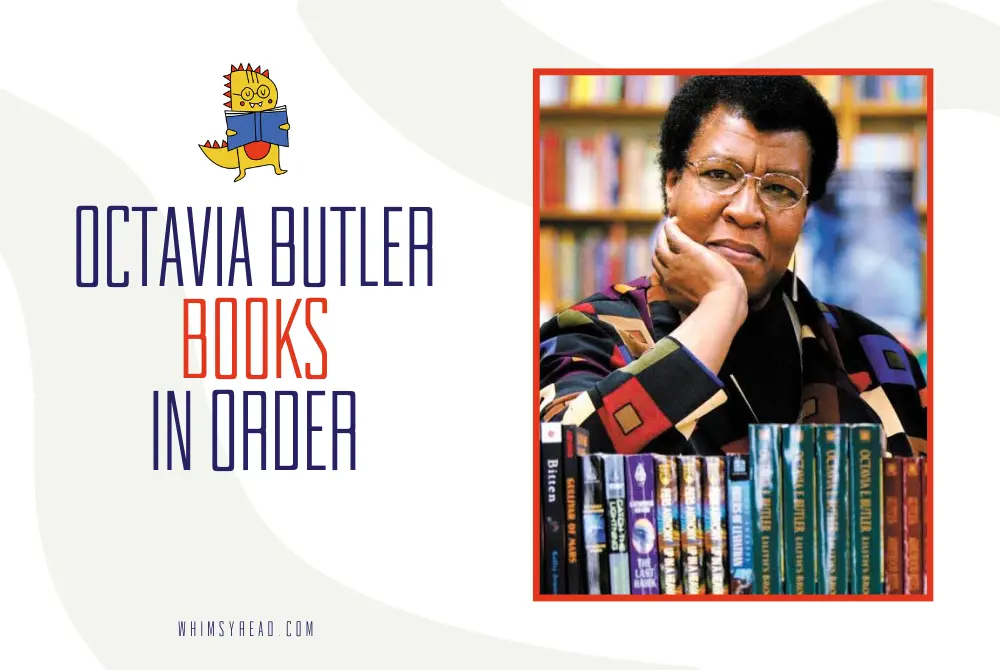
Octavia E. Butler is one of the most influential writers associated with science fiction and Afrofuturism. Her books explore race, power, survival, humanity, social change, gender, community, and the consequences of technological or biological transformation.
Her bibliography can initially seem confusing because the publication order of some Patternist books is different from their recommended reading order. This guide separates the major series and standalone novels so you can easily decide where to begin.
Octavia Butler Books in Series Order
Butler’s fiction is mainly divided into three connected series:
- Patternist Series — 5 novels
- Xenogenesis / Lilith’s Brood — 3 novels
- Parable / Earthseed Series — 2 novels
She also wrote two major standalone novels: Kindred and Fledgling.
Patternist Series in Order
The Patternist series is the trickiest Butler series when it comes to reading order. The books were not published in chronological story order. Butler’s official website recommends reading them as follows: Wild Seed, Mind of My Mind, Clay’s Ark, Patternmaster, and Survivor.
1. Wild Seed (1980)
Wild Seed introduces two extraordinarily powerful characters, Doro and Anyanwu. Doro is an immortal being who survives by moving between human bodies, while Anyanwu possesses extraordinary healing and shapeshifting abilities. Their encounter begins a story that stretches across centuries and explores power, survival, reproduction, and control.
2. Mind of My Mind (1977)
This novel continues the story of Doro’s long-term efforts to create a superhuman population. A young telepath named Mary becomes central to the emergence of a new psychic community, leading to a struggle over who will control this evolving race.
3. Clay’s Ark (1984)
A mysterious alien organism has infected a group of people, giving them powerful biological urges and abilities while also threatening to spread the infection. The story follows a doctor and his daughters after they become caught up with the infected community.
4. Patternmaster (1976)
Set in the far future of the Patternist world, Patternmaster focuses on a society dominated by telepaths. The Patternmaster controls a powerful psychic network, but a young apprentice represents a serious threat to his authority.
5. Survivor (1978)
Survivor follows Alanna, a young woman who joins a group of missionaries searching for a new home after Earth has been devastated by plague and violence. Their new world is not the peaceful refuge they expected, and Alanna must navigate two competing alien civilizations.
Important: Survivor is currently out of print, according to Butler’s official site, although used copies may be available.
Why Is the Patternist Order Confusing?
The publication dates make the series look backwards:
- Patternmaster — 1976
- Mind of My Mind — 1977
- Survivor — 1978
- Wild Seed — 1980
- Clay’s Ark — 1984
But Butler’s official reading order is Wild Seed → Mind of My Mind → Clay’s Ark → Patternmaster → Survivor.
So if this is your first time reading the Patternist books, following Butler’s recommended order is the clearest approach.
Xenogenesis / Lilith’s Brood in Order
The Xenogenesis series, later commonly published as Lilith’s Brood, is a three-book science-fiction series. Butler’s official FAQ gives the order as Dawn, Adulthood Rites, and Imago.
1. Dawn (1987)
Lilith Iyapo awakens after humanity has nearly destroyed Earth in a nuclear war. She discovers that the alien Oankali have rescued the surviving humans and are attempting to restore the planet—but their help comes with a major condition.
2. Adulthood Rites (1988)
The story moves to the next generation of humans and Oankali. Akin, the hybrid son of Lilith, grows up with extraordinary abilities and must confront the complicated future created by the genetic merging of the two species.
3. Imago (1989)
The trilogy concludes with a new stage in the human-Oankali relationship. The story explores identity, transformation, sexuality, biology, and what it means to remain human when humanity itself is changing.
The three books are sometimes sold together as Lilith’s Brood, so you may see Lilith’s Brood listed alongside the individual novels. The omnibus is a collection rather than a fourth novel.
Parable / Earthseed Series in Order
The Parable series, also known as the Earthseed series, contains two completed novels. Butler’s official website confirms the reading order as Parable of the Sower followed by Parable of the Talents.
1. Parable of the Sower (1993)
The story takes place in a future California devastated by environmental problems, economic collapse, violence, and social instability. Lauren Olamina, an 18-year-old woman with hyperempathy, leaves her destroyed community and begins searching for a way to build a different kind of future.
2. Parable of the Talents (1998)
Lauren’s story continues in a deeply divided America. Her Earthseed community faces persecution, religious extremism, political conflict, and violence. The novel is partly told through the perspective of Lauren’s daughter, creating a different view of Lauren and her ideas.
There were plans for additional books in the Earthseed universe, including Parable of the Trickster, but Butler never completed them. The two published novels therefore form the complete published Parable series.
Octavia Butler Standalone Books
Butler also wrote two novels that are not part of one of her major series.
Kindred (1979)
Kindred follows Dana, a young Black woman living in 1970s California who suddenly finds herself transported back to the antebellum American South. She becomes connected to Rufus, a white slaveholder who is also one of her ancestors, forcing her to confront the history of slavery in a deeply personal way.
Although it contains time travel and is often discussed alongside science fiction and fantasy, Kindred is also a historical and literary exploration of slavery, race, family, power, and survival.
Fledgling (2005)
Fledgling takes Butler into vampire fiction. The story begins with an apparently young girl who has lost her memory and gradually discovers that she is actually a genetically modified, 53-year-old vampire. She must uncover her past while trying to understand who attacked her and why.
The novel uses vampire mythology to explore questions about identity, dependence, power, relationships, and what makes someone human.
Octavia Butler Books in Publication Order
If you want to read Butler’s novels according to their original publication dates, rather than the recommended order within the Patternist series, this is the chronological list:
- Patternmaster (1976)
- Mind of My Mind (1977)
- Survivor (1978)
- Kindred (1979)
- Wild Seed (1980)
- Clay’s Ark (1984)
- Dawn (1987)
- Adulthood Rites (1988)
- Imago (1989)
- Parable of the Sower (1993)
- Parable of the Talents (1998)
- Fledgling (2005)
This publication chronology is different from the recommended Patternist reading order.
Where Should You Start With Octavia Butler?
There isn’t one required starting point because Butler wrote several different kinds of stories.
If you want a standalone novel, Kindred is an obvious place to begin because it tells a complete story without requiring knowledge of another Butler series.
If you’re interested in post-apocalyptic science fiction, start with Parable of the Sower, followed by Parable of the Talents.
For alien science fiction and questions about humanity and biological transformation, start with Dawn, then continue through the Xenogenesis/Lilith’s Brood trilogy.
For the largest connected story spanning centuries, begin with Wild Seed and follow Butler’s official Patternist reading order.
Octavia Butler Short Story Collections
Butler’s novels aren’t the only important part of her bibliography. She also published several short stories and novellas, including the collections Bloodchild and Other Stories and Unexpected Stories.
Bloodchild and Other Stories
First published in 1995, this collection includes Bloodchild, The Evening and the Morning and the Night, Near of Kin, Speech Sounds, Crossover, and essays including Positive Obsession and Furor Scribendi. Later editions added Amnesty and The Book of Martha.
Bloodchild itself is particularly notable: it won both the Hugo and Nebula awards, while Speech Sounds won the Hugo Award.
Unexpected Stories
Unexpected Stories collects two previously unpublished pieces: A Necessary Being and Childfinder. The former explores an alien society and its complicated leadership system, while the latter centers on a telepath trying to help a young girl understand her developing abilities.
How Many Octavia Butler Books Are There?
If you’re counting her 12 published novels, Butler’s bibliography consists of five Patternist novels, three Xenogenesis/Lilith’s Brood novels, two Parable novels, and two standalone novels.
Beyond those novels, she also published short stories, novellas, essays, and short-story collections. Bloodchild and Other Stories and Unexpected Stories are the two major collections to know.
Are the Octavia Butler Series Connected?
Not all of Butler’s books share the same universe.
The Patternist novels form one connected series, while Xenogenesis/Lilith’s Brood and Parable/Earthseed are separate series. Kindred and Fledgling are standalone novels.
That means you don’t need to read everything Butler wrote before starting Kindred, Parable of the Sower, or Dawn.
Frequently Asked Questions
What is the first Octavia Butler book?
It depends on what you mean by “first.” Patternmaster was Butler’s first published novel in 1976, but Butler’s official recommended reading order for the Patternist series begins with Wild Seed.
What is the best order to read the Patternist series?
Butler’s official website recommends Wild Seed → Mind of My Mind → Clay’s Ark → Patternmaster → Survivor.
Is Kindred part of a series?
No. Kindred is a standalone novel. It tells a complete story and does not require reading another Butler book first.
Is Lilith’s Brood the same as Xenogenesis?
Yes. Xenogenesis was the original series title, while Lilith’s Brood is the name used for later editions and collected editions. The three novels are Dawn, Adulthood Rites, and Imago.
Are there more Parable books?
Only two Parable novels were completed and published: Parable of the Sower and Parable of the Talents. Butler worked on an unfinished continuation commonly associated with Parable of the Trickster, but it was never completed.
What should I read after Kindred?
If you want another standalone, Fledgling offers a very different Butler experience. If you want to move into her series fiction, Parable of the Sower, Dawn, or Wild Seed each provide a different entry point into her work.
Final Thoughts
Octavia E. Butler’s books offer several different paths into her work, from the time-travel story of Kindred to the post-apocalyptic Earthseed novels and the expansive Patternist universe. If you want to follow a series, the official reading orders are especially useful for the Patternist books, because their publication sequence does not match the recommended reading sequence. For a first Butler novel, you can choose between a standalone experience with Kindred or begin one of her major series with Wild Seed, Dawn, or Parable of the Sower.

Leave a Reply