
Kurt Vonnegut Books in Order: Every Novel, Story Collection and Essay Book From Player Piano to Timequake
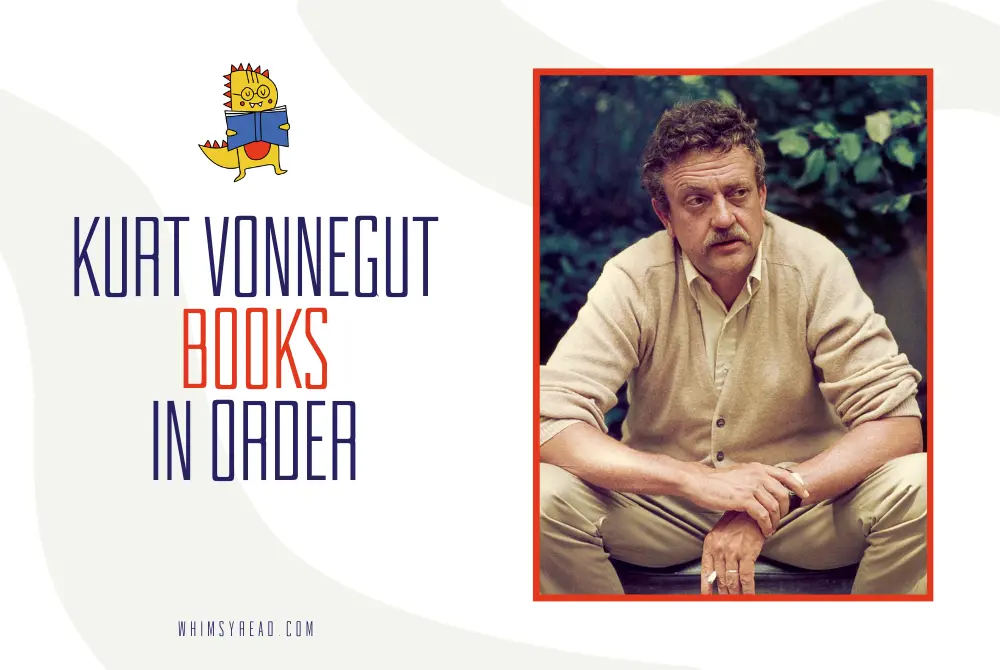
Kurt Vonnegut wrote science fiction that was never really about science, and satire that was never really about jokes. Across fourteen novels, he used time travel, aliens, nuclear paranoia and absurd little religions to ask how people stay kind in a world that often is not.
This guide lists every Vonnegut novel in order, followed by his short story collections, non-fiction and plays, with a short description of each. It also explains where to start, which books connect to each other, and how to read his work if you are new to him.
Kurt Vonnegut Novels in Order
Vonnegut’s novels are standalones, but characters like the science-fiction writer Kilgore Trout wander through several of them, so reading in publication order is rewarding.
Player Piano (1952)
Vonnegut’s debut imagines a United States run by machines and engineers, where ordinary workers have been made unnecessary. Engineer Paul Proteus begins to question the system he helps maintain. It is a sharp warning about automation that still feels current.
The Sirens of Titan (1959)
The richest man in America is swept into an interplanetary adventure that involves Mars, Mercury and Saturn’s moon Titan. Beneath the wild plot sits a funny, moving question about whether human life has any purpose. It is early Vonnegut at his most imaginative.
Mother Night (1961)
Howard W. Campbell Jr. is an American who broadcast Nazi propaganda during World War II while secretly serving as a spy. Written as a confession, it asks how much we are what we pretend to be. It is among his darkest and most morally complex books.
Cat’s Cradle (1963)
A writer researching the day the atom bomb was dropped finds himself on the island of San Lorenzo, home to a made-up religion called Bokononism and a substance called ice-nine that could end the world. It is short, funny and chilling, and a favourite entry point for new readers.
God Bless You, Mr. Rosewater (1965)
Eliot Rosewater, the heir to an enormous fortune, gives his time and money to the poor people of a small Indiana town. His relatives want him declared insane so they can take the money. It is a gentle, satirical look at wealth and kindness.
Slaughterhouse-Five (1969)
Billy Pilgrim has become “unstuck in time,” drifting between his life as an optometrist, his capture by aliens and his experience as a prisoner of war during the firebombing of Dresden. Vonnegut himself survived Dresden, and the book is his best-known answer to the horror of war. For many readers it is the one essential Vonnegut novel.
Breakfast of Champions (1973)
Struggling science-fiction writer Kilgore Trout and a car dealer named Dwayne Hoover collide in a Midwestern town. Vonnegut breaks into the story himself and fills it with drawings and commentary on American life. It is playful, strange and sad.
Slapstick (1976)
A former president of the United States, now living in the ruins of the Empire State Building, looks back on his life and on a plan to end loneliness by giving every citizen new relatives. It is a darkly comic story about family and community.
Jailbird (1979)
Walter F. Starbuck, a minor figure in the Watergate scandal, is released from prison and looks back on a lifetime of accidental involvement in the great events of the twentieth century. The novel mixes American history, labour politics and Vonnegut’s gentle irony.
Deadeye Dick (1982)
Rudy Waltz, haunted by a terrible childhood accident, tells the story of his life as a pharmacist and cook in a town marked by tragedy. It is a story about guilt, forgiveness and the strange fallout of a single act.
Galápagos (1985)
A million years in the future, the descendants of a few survivors of a catastrophe have evolved into small-brained creatures with flippers on the Galápagos Islands. The story argues that the human brain was a mistake. It is one of his funniest and most inventive books.
Bluebeard (1987)
Rabo Karabekian, an aging abstract expressionist painter, tells the story of his life and the secret hidden in his potato barn. It is a warm, character-driven novel about art, war and second chances.
Hocus Pocus (1990)
Eugene Debs Hartke, a Vietnam veteran who became a college teacher and later a prison teacher, writes his story while on trial. The book moves across a century of American history, class and conflict.
Timequake (1997)
A rift in time forces everyone to relive the previous ten years, without any ability to change what they do. Vonnegut’s final novel is part fiction, part reflection, and it ends with a message of kindness and a plea to keep going.
Kurt Vonnegut Short Story Collections in Order
Canary in a Cathouse (1961)
His first collection gathers early stories on technology, work and human absurdity, many written for magazines in the 1950s. It shows the themes he would later develop in his novels.
Welcome to the Monkey House (1968)
A large collection that includes some of his best-known short fiction, including “Harrison Bergeron.” It is a good place to sample his voice in short form, and many of the stories are only a few pages long.
Bagombo Snuff Box (1999)
A set of uncollected stories from his early career. They show the writer he was before his famous novels, with humour and a love of ordinary people.
Armageddon in Retrospect (2008)
A posthumous collection of letters, speeches and stories about war, published after his death. It includes his letter to his family after returning from the war.
Look at the Birdie (2009)
Fourteen previously unpublished short stories from the 1950s. They reflect the wit and warmth of the early Vonnegut.
While Mortals Sleep (2011)
More unpublished stories, mostly about small-town people facing everyday dilemmas. They are quieter than his novels but just as humane.
Complete Stories (2017)
A single volume that brings together his collected short fiction. It is the best option if you want everything in one place.
Kurt Vonnegut Non-Fiction, Essays and Plays
Wampeters, Foma and Granfalloons (1974)
A collection of essays, speeches and reviews that includes his thoughts on writing, politics and life in America. It is a good book for readers who enjoy his non-fiction voice.
Happy Birthday, Wanda June (1971)
His best-known play, a comedy about a returning war hero and the family he left behind. It satirises ideas of heroism and masculinity.
Palm Sunday (1981)
A self-described “autobiographical collage” of essays, speeches and sketches, with a sharp, funny look at his own life. It is a warm introduction to the man behind the novels.
Fates Worse Than Death (1991)
A second collage of essays and reflections that touches on politics, family and the way we live. Like Palm Sunday, it mixes humour with hard truths.
A Man Without a Country (2005)
His last book published in his lifetime, a short and plain-spoken set of essays about politics, humour and survival. It is angry, funny and very easy to read.
Letters (2012)
A collection of his personal letters, showing the humour, wit and conscience behind the novels. It is a good companion for readers who want to hear the author’s own voice.
Love, Kurt: The Vonnegut Love Letters, 1941 to 1945 (2020)
Letters he wrote to his future wife Jane Marie Cox during the years of the Second World War. They give a personal view of the years that shaped his writing.
Where to Start With Kurt Vonnegut
- If you want the classic: Slaughterhouse-Five.
- If you like short, funny, dark satire: Cat’s Cradle.
- If you love science fiction: The Sirens of Titan or Player Piano.
- If you want to meet the man: A Man Without a Country.
- If you prefer short stories: Welcome to the Monkey House.
Recurring Themes in Vonnegut’s Work
- The absurdity of war and the cost of violence
- Free will, fate and the idea of being “unstuck” in time
- Kindness as the only reliable response to a confusing world
- Technology, progress and the people left behind
- Invented religions and made-up words that say something true
Frequently Asked Questions About Kurt Vonnegut’s Books
What is Kurt Vonnegut’s first book?
His first novel is Player Piano, published in 1952.
What is the best Kurt Vonnegut book to start with?
Most readers start with Slaughterhouse-Five or Cat’s Cradle. Both are short, accessible and show what makes his writing distinctive.
Do I need to read Vonnegut’s books in order?
No. The novels are standalones, though a few characters, like Kilgore Trout, appear more than once. Reading in order shows how his style developed.
How many novels did Kurt Vonnegut write?
Fourteen, from Player Piano (1952) to Timequake (1997).
What is Kurt Vonnegut’s last novel?
Timequake, published in 1997. His final book published in his lifetime was the essay collection A Man Without a Country (2005).
Is Slaughterhouse-Five based on a true story?
Partly. Vonnegut was a prisoner of war in Dresden and survived the firebombing of the city in 1945, which is the event at the heart of the novel. The time travel and the aliens are fiction.
Is Kurt Vonnegut science fiction?
Many of his books use science fiction ideas, but he resisted the label. His stories are better described as satire, using fantasy to talk about real life.
Are Vonnegut’s books connected?
Loosely. Characters like Kilgore Trout, and places like Midland City, appear in several books, but each can be read on its own.
What should I read if I like Kurt Vonnegut?
Readers often move on to Joseph Heller, Douglas Adams, Terry Pratchett, Margaret Atwood and George Saunders.
About Kurt Vonnegut
Kurt Vonnegut was born in Indianapolis, Indiana, on November 11, 1922, and died on April 11, 2007. He studied at Cornell University, served in the United States Army during World War II and was captured during the Battle of the Bulge. As a prisoner of war in Dresden, he survived the Allied firebombing of the city by sheltering in an underground meat locker, an experience that shaped his best-known book.
He worked in public relations and sold short stories to magazines before becoming one of the most widely read American novelists of the twentieth century. His work is widely taught, and his plain, funny voice has influenced generations of writers.
My Take as a Reader
Vonnegut rewards a slow reading order. Start with Slaughterhouse-Five or Cat’s Cradle, follow what you enjoy, and keep the short stories for when you want something you can finish in one sitting.
Final Note
Few writers make you laugh and ache on the same page the way Kurt Vonnegut does. Use this page as a checklist, begin with the book that appeals most, and enjoy the way his small, kind sentences hold up big ideas. Bookmark it for your next reading list.

Leave a Reply