
Judy Blume Books in Order: The Complete Reading Guide
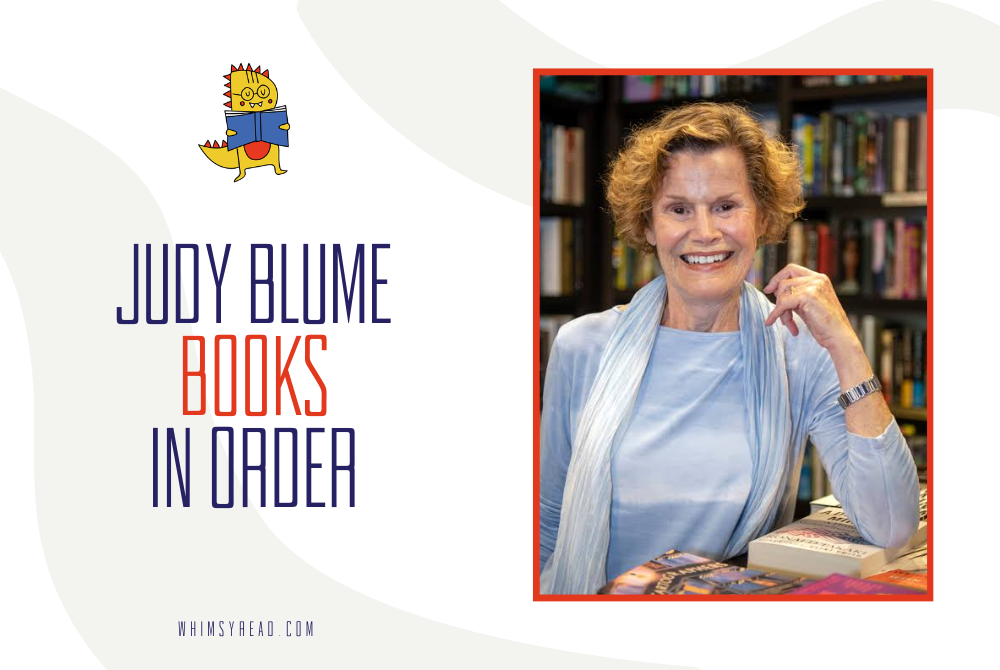
There are some authors whose books feel like products of a particular era. Then there are authors whose books somehow keep finding new readers.
Judy Blume belongs firmly in the second group.
For generations of readers, Blume has been the author who was willing to talk about the things children and teenagers were actually thinking about: friendship, embarrassment, puberty, family problems, bullying, faith, first love, divorce, growing up, and all those awkward questions nobody seemed comfortable answering out loud.
That is a big reason her books remain so memorable.
But if you’ve recently discovered Judy Blume—or you’re returning to her books after many years—you may have another problem:
Where exactly should you start?
Her bibliography stretches from picture books and middle-grade fiction to young adult novels and books for adults. She also has two distinct children’s series, the Fudge books and the Pain & the Great One books.
So I put together this complete Judy Blume reading guide to make the journey simple.
Below, you’ll find her books in publication order, the correct order for her series, recommendations based on your age or reading mood, and answers to the most common questions about Judy Blume’s books.
Judy Blume Books in Order
If you want to experience Judy Blume’s career from the beginning, publication order is the simplest way to do it.
Her official comprehensive bibliography begins with The One in the Middle Is the Green Kangaroo in 1969 and ends, for now, with In the Unlikely Event in 2015.
Here is the publication order of her 29 books:
| # | Book | Year |
| 1 | The One in the Middle Is the Green Kangaroo | 1969 |
| 2 | Iggie’s House | 1970 |
| 3 | Are You There God? It’s Me, Margaret. | 1970 |
| 4 | Then Again, Maybe I Won’t | 1971 |
| 5 | Freckle Juice | 1971 |
| 6 | It’s Not the End of the World | 1972 |
| 7 | Tales of a Fourth Grade Nothing | 1972 |
| 8 | Otherwise Known as Sheila the Great | 1972 |
| 9 | Deenie | 1973 |
| 10 | Blubber | 1974 |
| 11 | Forever | 1975 |
| 12 | Starring Sally J. Freedman as Herself | 1977 |
| 13 | Wifey | 1978 |
| 14 | Superfudge | 1980 |
| 15 | Tiger Eyes | 1981 |
| 16 | Smart Women | 1983 |
| 17 | The Pain and the Great One | 1984 |
| 18 | Letters to Judy: What Kids Wish They Could Tell You | 1986 |
| 19 | Just as Long as We’re Together | 1987 |
| 20 | Fudge-a-mania | 1990 |
| 21 | Here’s to You, Rachel Robinson | 1993 |
| 22 | Summer Sisters | 1998 |
| 23 | Places I Never Meant to Be | 1999 |
| 24 | Double Fudge | 2002 |
| 25 | Soupy Saturdays with the Pain and the Great One | 2007 |
| 26 | Cool Zone with the Pain and the Great One | 2008 |
| 27 | Going, Going, Gone! with the Pain and the Great One | 2008 |
| 28 | Friend or Fiend? with the Pain and the Great One | 2009 |
| 29 | In the Unlikely Event | 2015 |
The dates and publication sequence above are based primarily on Judy Blume’s official comprehensive bibliography.
One small bibliographical wrinkle is worth mentioning: the official reference list also includes The Judy Blume Diary, published in 1981. Judy Blume’s main books page does not include it among the 29 books it currently categorizes as her books, which is why it isn’t included in the 29-book reading list above.
The Judy Blume Books Series in Order
You don’t necessarily need to read Judy Blume’s entire bibliography chronologically.
In fact, if you’re specifically interested in her series, there are two places where reading order really matters:
- The Fudge series
- The Pain & the Great One series
Let’s look at both.
1. Fudge Books in Order
The Fudge series is probably the best place to start if you’re looking for the classic Judy Blume experience with humor, family chaos, and unforgettable childhood characters.
There are five books:
1. Tales of a Fourth Grade Nothing (1972)
Meet Peter Hatcher and his little brother, Farley Drexel Hatcher—better known as Fudge.
Peter is nine years old, and being the older brother sounds easy enough until Fudge starts getting attention for all the wrong reasons.
This is where the Fudge story begins, and it establishes the family dynamics that continue throughout the series.
2. Superfudge (1980)
Peter’s life gets even more complicated when his family moves to Princeton, New Jersey.
And, naturally, Fudge continues being Fudge.
The second book expands the world beyond Peter’s familiar New York surroundings while keeping the same sibling rivalry and family comedy that made the first book so memorable.
3. Fudge-a-mania (1990)
The Hatcher family heads to Maine for the summer.
Peter is hoping for a relaxing vacation.
Fudge has other plans.
The family holiday becomes another wonderfully chaotic adventure, with Peter trying to survive his little brother’s antics while dealing with his own growing-up problems.
4. Double Fudge (2002)
Fudge is older, but that doesn’t necessarily mean he’s calmer.
This time, Peter’s younger brother becomes fascinated by money and business, creating yet another round of trouble for the Hatcher family.
It’s a particularly fun entry for readers who have followed Fudge from the beginning because you can see how the characters have changed.
5. Otherwise Known as Sheila the Great — A Connected Fudge World Book
Here’s where readers sometimes get confused.
Judy Blume’s official site lists Otherwise Known as Sheila the Great among the Fudge books, although its protagonist is Sheila Tubman rather than Peter Hatcher.
So if you’re following the official Fudge books category, you’ll see:
- Tales of a Fourth Grade Nothing
- Otherwise Known as Sheila the Great
- Superfudge
- Fudge-a-mania
- Double Fudge
For the strongest Peter-and-Fudge narrative, however, I’d personally read the Peter-centered books first:
Tales of a Fourth Grade Nothing → Superfudge → Fudge-a-mania → Double Fudge
Then read Otherwise Known as Sheila the Great as a related Judy Blume classic.
2. Pain & the Great One Books in Order
This series takes a different approach.
Instead of following one continuous adventure, the books explore the sibling relationship between Jake and his older sister Abigail, nicknamed “The Great One.”
The official Judy Blume site lists five books in this collection.
1. The Pain and the Great One (1984)
This is where Jake and Abigail’s sibling rivalry begins.
The clever part is that the story lets readers see family life from both children’s perspectives.
2. Soupy Saturdays with the Pain and the Great One (2007)
The siblings return in a collection of everyday adventures and family moments.
3. Cool Zone with the Pain and the Great One (2008)
More sibling adventures, disagreements, and the kind of small family moments that feel enormous when you’re a child.
4. Going, Going, Gone! with the Pain and the Great One (2008)
Another collection following Jake and Abigail as they navigate school, family, and their constantly evolving relationship.
5. Friend or Fiend? with the Pain and the Great One (2009)
The final book in the series continues exploring friendship, sibling rivalry, and growing up.
Best reading order: simply follow the publication order above.
Judy Blume Books by Age Group
One of the reasons Judy Blume’s bibliography can feel confusing is that she didn’t write for just one age group.
Her official site divides her books into picture/story books, the Pain & the Great One series, the Fudge books, middle grade, young adult, and adult fiction.
Here’s a simpler way to think about them.
For Younger Readers
Try:
- The One in the Middle Is the Green Kangaroo
- Freckle Juice
- The Pain and the Great One
- The Fudge books
These are great choices if you want Judy Blume’s humor and observations about childhood without jumping immediately into her more mature themes.
For Middle-Grade Readers
Consider:
- Tales of a Fourth Grade Nothing
- Otherwise Known as Sheila the Great
- Superfudge
- Fudge-a-mania
- Double Fudge
- Blubber
- Iggie’s House
- Starring Sally J. Freedman as Herself
- It’s Not the End of the World
- Just as Long as We’re Together
- Here’s to You, Rachel Robinson
For Teen Readers
Some of the most notable choices include:
- Are You There God? It’s Me, Margaret.
- Then Again, Maybe I Won’t
- Deenie
- Forever
- Tiger Eyes
- Just as Long as We’re Together
Several of these books deal directly with adolescence, identity, relationships, family, sexuality, body image, and the complicated process of growing up. Judy Blume’s official site places several of these titles in its Young Adult category.
For Adult Readers
Judy Blume didn’t stop writing when her readers grew up.
Her adult fiction includes:
- Wifey (1978)
- Smart Women (1983)
- Summer Sisters (1998)
- In the Unlikely Event (2015)
These books are very different from the Fudge novels, so if you’re discovering Blume as an adult, don’t assume her entire bibliography is children’s literature.
What Judy Blume Book Should You Read First?
This is probably the question that matters more than the complete publication list.
And honestly, there isn’t one universal answer.
It depends on what kind of reader you are.
Start with Are You There God? It’s Me, Margaret. if…
You want the Judy Blume book that best captures her ability to make ordinary growing-up questions feel important, funny, awkward, and deeply personal.
Margaret’s questions about puberty, friendship, family, and religion are what make the novel such an enduring coming-of-age story.
Start with Tales of a Fourth Grade Nothing if…
You want something funny.
Peter Hatcher’s struggle with his little brother Fudge is an ideal introduction to Blume’s lighter, more playful side.
Start with Forever if…
You’re looking specifically for Judy Blume’s young adult fiction and are comfortable with a more mature coming-of-age story.
Start with Summer Sisters if…
You’re an adult reader interested in friendship, complicated relationships, growing up, and the messiness of adulthood.
Start with Tiger Eyes if…
You want something more emotional and serious.
This is a very different experience from Fudge and shows another side of Blume’s writing.
Start with Wifey if…
You want to see Judy Blume writing explicitly for adults.
Do You Need to Read Judy Blume’s Books in Order?
No—not all of them.
That’s one of the easiest things to get wrong when searching for a Judy Blume reading order.
Most of her books are standalone stories. You can read Are You There God? It’s Me, Margaret., Blubber, Tiger Eyes, Forever, or Summer Sisters without having read her earlier books.
The exception is her series and connected books.
For the Fudge books, reading in publication order gives you the clearest sense of how Peter, Fudge, and their family develop.
The Pain & the Great One books are also easiest to follow chronologically from the original 1984 book through the later picture/chapter-book installments.
So my recommendation is simple:
Standalone Judy Blume book? Read it whenever you want.
Series? Start with Book 1.
Judy Blume’s Most Famous Books
If you don’t have time to work through her entire bibliography, these are the titles I’d put near the top of your reading list:
Are You There God? It’s Me, Margaret.
Probably her most culturally recognizable coming-of-age novel.
Tales of a Fourth Grade Nothing
The book that introduces readers to Peter Hatcher and Fudge.
Forever
One of Blume’s best-known young adult novels and a landmark title in discussions of teenage relationships and sexuality.
Blubber
A powerful story about bullying and the way cruelty can spread through a group.
Deenie
A thoughtful coming-of-age story involving body image, expectations, and identity.
Tiger Eyes
A more serious and emotional novel about grief and finding a way forward.
Summer Sisters
A sweeping story of female friendship that moves beyond Blume’s children’s and teen fiction into adult storytelling.
These titles also help explain why Blume has remained such an influential figure across multiple generations. Her official biography notes that her books have sold more than 93 million copies in 40 languages.
Why Judy Blume’s Books Still Matter
There is something unusual about Judy Blume’s writing.
She doesn’t seem interested in talking down to young readers.
Instead, she writes about the things they are already thinking about.
That might be the anxiety of getting your period, wondering whether you’re normal, dealing with a difficult sibling, being bullied at school, having a crush, questioning religion, navigating divorce, or trying to understand why your parents behave the way they do.
And she doesn’t always make those experiences neat.
That’s part of the appeal.
Blume has also spent decades at the center of conversations about censorship and challenged books. Her official biography notes that the American Library Association has consistently placed her among the authors most frequently banned or challenged.
For some readers, that’s exactly why her books remain important.
They don’t pretend growing up is simple.
They let young people see complicated feelings on the page and realize:
I’m not the only person who feels this way.
Judy Blume Books in Order: My Recommended Reading Path
If I were introducing someone to Judy Blume today, I wouldn’t necessarily hand them the complete bibliography and say, “Good luck.”
I’d build a little reading journey instead.
Step 1: Start with the classic
Are You There God? It’s Me, Margaret.
This gives you a taste of what makes Blume so special.
Step 2: Have some fun
Tales of a Fourth Grade Nothing
Meet Peter and Fudge and experience Blume’s wonderfully funny family storytelling.
Step 3: Go deeper
Blubber
This shows how effectively Blume can tackle difficult social issues without turning a children’s novel into a lecture.
Step 4: Try her young adult work
Forever or Tiger Eyes
Now you can see how her writing changes when she moves into more mature territory.
Step 5: Visit adult Judy Blume
Summer Sisters
It’s a fascinating way to discover how the author who understood teenagers so well writes about women, friendship, memory, and adulthood.
And if you find yourself wanting more?
That’s when I’d go back and work through the bibliography chronologically.
Frequently Asked Questions About Judy Blume Books
How many books has Judy Blume written?
Judy Blume’s official website currently describes her as the author of 29 books, spanning picture books, children’s fiction, young adult fiction, and adult novels.
Her detailed reference bibliography also separately lists The Judy Blume Diary from 1981, which is why some online lists can show a different total depending on what they count as a book.
What is the first Judy Blume book?
Judy Blume’s first published book was The One in the Middle Is the Green Kangaroo, published in 1969.
It tells the story of Freddy Dissel, a middle child who feels overlooked between his older brother and younger sister.
What is the most popular Judy Blume book?
There isn’t one objective answer because popularity depends on the generation and audience.
However, Are You There God? It’s Me, Margaret., Tales of a Fourth Grade Nothing, Forever, Blubber, and Summer Sisters are among the books most strongly associated with Blume’s career.
What is the order of the Judy Blume Fudge books?
The Fudge books are:
- Tales of a Fourth Grade Nothing
- Otherwise Known as Sheila the Great
- Superfudge
- Fudge-a-mania
- Double Fudge
This is the order presented on Judy Blume’s official books page.
What is the order of the Pain & the Great One books?
Read them in this order:
- The Pain and the Great One
- Soupy Saturdays with the Pain and the Great One
- Cool Zone with the Pain and the Great One
- Going, Going, Gone! with the Pain and the Great One
- Friend or Fiend? with the Pain and the Great One
The titles and series grouping come directly from Judy Blume’s official bibliography.
Are Judy Blume’s books connected?
Some are, but most aren’t.
The Fudge books are connected through recurring characters and family relationships. The Pain & the Great One books are also connected.
Many of Blume’s other novels are standalone stories with their own characters and settings.
Is Are You There God? It’s Me, Margaret. part of a series?
No. It is a standalone coming-of-age novel.
You can read it without knowing anything about Judy Blume’s other books.
What age are Judy Blume books for?
It depends on the title.
Blume wrote books for younger children, middle-grade readers, teenagers, and adults. Her official site separates her work into categories including picture/story books, middle grade, young adult, and adult fiction.
Parents and younger readers should therefore check the individual book rather than assuming every Judy Blume title is appropriate for the same age.
What Judy Blume book should I read first as an adult?
I’d suggest Are You There God? It’s Me, Margaret. if you want to understand her influence, or Summer Sisters if you’d rather begin with her adult fiction.
If you want something fun and nostalgic, go with Tales of a Fourth Grade Nothing.
Final Verdict
Judy Blume’s bibliography is much more varied than the phrase “children’s author” might suggest.
Yes, there is Fudge.
Yes, there are funny stories about siblings, school, and childhood.
But there are also novels about puberty, religion, sexuality, grief, bullying, family breakdown, friendship, adulthood, and the complicated process of figuring out who you are.
That’s what makes reading Judy Blume’s books in order so interesting.
You aren’t simply watching one author produce one type of story for decades. You’re watching her move between childhood, adolescence, and adulthood—and seeing how her understanding of people changes with each stage.
If you’re completely new to Judy Blume, start with Are You There God? It’s Me, Margaret. or Tales of a Fourth Grade Nothing.
If you’re already a fan, try reading her books chronologically. You may be surprised by how clearly you can see the evolution of her voice.
And if you’re returning to a Judy Blume book you loved as a kid?
Well, that’s probably the best reading order of all.
Sometimes the most interesting thing about an old favorite isn’t the story you remember.
It’s the person you have become since you first read it.

Leave a Reply