
John le Carré Books in Order: From George Smiley to His Final Spy Stories
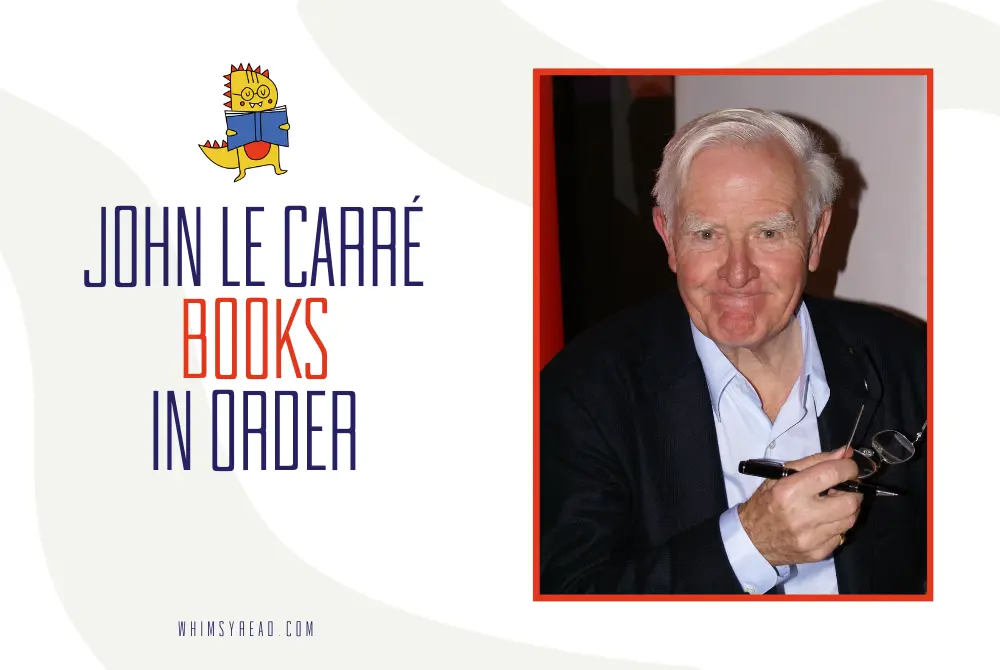
John le Carré was one of the defining writers of modern espionage fiction, best known for replacing glamorous spies with morally complicated intelligence officers, political intrigue, betrayal, surveillance, and the uncomfortable realities of Cold War espionage.
His bibliography can look intimidating because it spans nearly six decades and includes the famous George Smiley novels, standalone spy thrillers, post-Cold War political fiction, and his memoir The Pigeon Tunnel.
Unlike many long-running mystery series, le Carré’s books don’t all belong to one continuous storyline. Some are closely connected through characters and the British intelligence world, while others stand completely on their own. For that reason, publication order is the safest overall reading order, while the Smiley novels can also be read as a focused sequence.
George Smiley Books in Order
George Smiley is John le Carré’s most famous fictional character: an understated, highly intelligent British intelligence officer whose investigations depend more on patience, deduction, relationships, and psychological insight than physical action.
The Smiley novels are best read in publication order because the character’s career and personal life develop across the books.
1. Call for the Dead (1963)
Call for the Dead introduces George Smiley as a British intelligence officer investigating the suspicious death of a suspected agent. What begins as a seemingly routine security matter gradually exposes questions about loyalty, betrayal, and the reliability of intelligence work.
Publication Year: 1963
Reading Position: George Smiley #1
Key Themes: Espionage, betrayal, intelligence, Cold War, investigation
2. A Murder of Quality (1962)
Although published before many of le Carré’s major spy novels, A Murder of Quality is a Smiley mystery in which the intelligence officer investigates a murder at an elite boarding school.
Publication Year: 1962
Reading Position: George Smiley novel
Key Themes: Murder, class, boarding schools, secrets, investigation
Reading note: If you’re following strict publication order, read this before The Spy Who Came in from the Cold. It is also frequently treated separately because its plot is closer to a traditional murder mystery than a full-scale espionage novel.
3. The Spy Who Came in from the Cold (1963)
Alec Leamas, a weary British intelligence officer, is sent on one final dangerous mission during the Cold War. The novel examines the moral compromises of espionage and established le Carré as a major voice in serious spy fiction.
Publication Year: 1963
Reading Position: George Smiley universe
Key Themes: Cold War, espionage, betrayal, moral ambiguity, intelligence
4. The Looking Glass War (1965)
British intelligence attempts an ambitious operation against East Germany, but the people running it are increasingly detached from the realities faced by the agents on the ground.
Publication Year: 1965
Reading Position: George Smiley universe
Key Themes: Cold War, intelligence operations, bureaucracy, deception, failure
5. Tinker Tailor Soldier Spy (1974)
Smiley is brought out of retirement to uncover a Soviet mole operating inside British intelligence. The investigation forces him to examine the people he once trusted while navigating layers of secrecy and betrayal.
Publication Year: 1974
Reading Position: Smiley #2
Key Themes: Soviet espionage, betrayal, intelligence mole, Cold War, loyalty
6. The Honourable Schoolboy (1977)
After the events of Tinker Tailor Soldier Spy, Smiley takes charge of British intelligence and sends Jerry Westerby to Asia to investigate a complicated network involving money, politics, and Soviet interests.
Publication Year: 1977
Reading Position: Smiley #3
Key Themes: Espionage, Asia, politics, money, intelligence
7. Smiley’s People (1979)
Smiley returns to the center of the action after the apparent murder of a former intelligence asset. His investigation leads him back toward his old Soviet adversary, Karla.
Publication Year: 1979
Reading Position: Smiley #4
Key Themes: Espionage, revenge, Soviet intelligence, betrayal, Cold War
8. The Secret Pilgrim (1990)
George Smiley appears as a retired intelligence officer reflecting on his career while a new generation of spies listens to stories about past operations and the lessons of espionage.
Publication Year: 1990
Reading Position: Smiley #5
Key Themes: Intelligence, espionage, memory, Cold War, morality
John le Carré Books in Publication Order
If you want to read John le Carré’s novels chronologically, this is the more useful route.
1. Call for the Dead (1961/1963)
A George Smiley investigation begins with a suspicious death inside British intelligence.
Publication Year: 1963
Key Themes: Espionage, investigation, betrayal
2. A Murder of Quality (1962)
Smiley investigates a murder at an elite English boarding school.
Publication Year: 1962
Key Themes: Murder, class, secrets
3. The Spy Who Came in from the Cold (1963)
A British agent undertakes a dangerous Cold War mission involving East Germany.
Publication Year: 1963
Key Themes: Cold War, espionage, betrayal
4. The Looking Glass War (1965)
An intelligence operation becomes increasingly dangerous as British officials underestimate their opponent.
Publication Year: 1965
Key Themes: Espionage, bureaucracy, deception
5. A Small Town in Germany (1968)
A British diplomat investigates a disappearance in West Germany against a backdrop of political unrest and Cold War tensions.
Publication Year: 1968
Key Themes: Cold War, diplomacy, political intrigue
6. The Naïve & Sentimental Lover (1971)
A literary and romantic novel rather than a conventional spy thriller, exploring relationships, obsession, and emotional uncertainty.
Publication Year: 1971
Key Themes: Romance, relationships, obsession, identity
7. Tinker Tailor Soldier Spy (1974)
Smiley searches for a Soviet mole hidden within the highest levels of British intelligence.
Publication Year: 1974
Key Themes: Espionage, betrayal, Cold War, intelligence
8. The Honourable Schoolboy (1977)
Smiley’s intelligence operation moves into Asia as Jerry Westerby investigates a complex web of money and espionage.
Publication Year: 1977
Key Themes: Espionage, Asia, politics, intelligence
9. Smiley’s People (1979)
Smiley investigates a murder that may be connected to his old Soviet adversary.
Publication Year: 1979
Key Themes: Espionage, revenge, Soviet intelligence, betrayal
10. The Little Drummer Girl (1983)
An actress is recruited by Israeli intelligence for a dangerous undercover operation targeting Palestinian militants.
Publication Year: 1983
Key Themes: Espionage, terrorism, identity, deception, politics
11. A Perfect Spy (1986)
Magnus Pym disappears, leaving intelligence services trying to determine whether he is a loyal British agent or a traitor. The novel moves between his childhood, relationships, and espionage career.
Publication Year: 1986
Key Themes: Espionage, identity, betrayal, family, memory
12. The Russia House (1989)
A British publisher becomes unexpectedly involved with Western intelligence after receiving a mysterious manuscript containing sensitive information about the Soviet Union.
Publication Year: 1989
Key Themes: Cold War, Soviet Union, publishing, espionage, romance
13. The Secret Pilgrim (1990)
A retired Smiley reflects on espionage and the lessons of his career while speaking to a younger generation of intelligence officers.
Publication Year: 1990
Key Themes: Espionage, memory, morality, intelligence
14. The Night Manager (1993)
Jonathan Pine, a former soldier and hotel manager, is recruited to infiltrate the organization of a powerful international arms dealer.
Publication Year: 1993
Key Themes: Arms dealing, espionage, undercover operations, revenge
15. Our Game (1995)
A former intelligence officer becomes involved in a mysterious disappearance and a complicated international conspiracy connected to Russia and the Caucasus.
Publication Year: 1995
Key Themes: Espionage, Russia, political conflict, betrayal
16. The Tailor of Panama (1996)
A British spy recruits a Panamanian tailor who begins inventing intelligence reports to satisfy his handler, creating consequences far beyond what either man anticipated.
Publication Year: 1996
Key Themes: Intelligence, deception, political satire, corruption
17. Single & Single (1999)
A British intelligence investigation uncovers an international financial operation involving a powerful family and dangerous criminal networks.
Publication Year: 1999
Key Themes: Financial crime, espionage, family, corruption
18. The Constant Gardener (2001)
After the murder of a British diplomat’s wife in Kenya, her husband begins investigating what she had discovered about pharmaceutical companies and international corruption.
Publication Year: 2001
Key Themes: Corporate corruption, Kenya, pharmaceuticals, politics, justice
19. Absolute Friends (2003)
Two politically disillusioned friends find themselves drawn back into the world of international intrigue after years of separation.
Publication Year: 2003
Key Themes: Politics, friendship, espionage, idealism, betrayal
20. The Mission Song (2006)
A professional interpreter becomes involved in a secret political operation involving the Congo and competing international interests.
Publication Year: 2006
Key Themes: Congo, politics, espionage, interpretation, power
21. A Most Wanted Man (2008)
A young Muslim immigrant arrives in Hamburg carrying a mysterious past, attracting the attention of German and American intelligence agencies.
Publication Year: 2008
Key Themes: Terrorism, immigration, intelligence, surveillance, morality
22. Our Kind of Traitor (2010)
A British couple on holiday become involved with a Russian oligarch who wants to defect and offers information about an international criminal network.
Publication Year: 2010
Key Themes: Russian crime, espionage, betrayal, corruption
23. A Delicate Truth (2013)
A secret British operation goes catastrophically wrong, leaving a government official questioning what really happened and who was responsible.
Publication Year: 2013
Key Themes: Government secrecy, espionage, political corruption, morality
24. A Legacy of Spies (2017)
Peter Guillam, a former British intelligence officer, is brought back into an investigation concerning events from the Cold War era. The novel revisits characters and events from le Carré’s earlier books, making it especially rewarding for longtime readers.
Publication Year: 2017
Reading Position: Smiley universe
Key Themes: Cold War, espionage, memory, accountability, betrayal
25. Agent Running in the Field (2019)
An aging British intelligence officer is drawn into a new operation involving Russia and political tensions inside Britain.
Publication Year: 2019
Key Themes: Russia, espionage, politics, Brexit-era Britain, loyalty
26. Silverview (2021)
A retired intelligence officer living quietly in a coastal English town becomes involved with a mysterious former spy whose past raises uncomfortable questions about loyalty and betrayal.
Publication Year: 2021
Key Themes: Espionage, retirement, betrayal, intelligence, morality
Silverview was published after le Carré’s death and became his final novel.
John le Carré Books in Simple Reading Order
If you want the novels in a straightforward chronological sequence, start here:
- A Murder of Quality — 1962
- Call for the Dead — 1963
- The Spy Who Came in from the Cold — 1963
- The Looking Glass War — 1965
- A Small Town in Germany — 1968
- The Naïve & Sentimental Lover — 1971
- Tinker Tailor Soldier Spy — 1974
- The Honourable Schoolboy — 1977
- Smiley’s People — 1979
- The Little Drummer Girl — 1983
- A Perfect Spy — 1986
- The Russia House — 1989
- The Secret Pilgrim — 1990
- The Night Manager — 1993
- Our Game — 1995
- The Tailor of Panama — 1996
- Single & Single — 1999
- The Constant Gardener — 2001
- Absolute Friends — 2003
- The Mission Song — 2006
- A Most Wanted Man — 2008
- Our Kind of Traitor — 2010
- A Delicate Truth — 2013
- A Legacy of Spies — 2017
- Agent Running in the Field — 2019
- Silverview — 2021
Important: Call for the Dead was first published in 1961 in the UK, while some bibliographies list 1963 based on its U.S. publication. For an SEO article, it is worth being consistent about which publication date your source uses.
What Is the Best John le Carré Series to Start With?
If you want the classic George Smiley experience, start with:
- Call for the Dead
- A Murder of Quality
- Tinker Tailor Soldier Spy
- The Honourable Schoolboy
- Smiley’s People
- The Secret Pilgrim
However, you don’t necessarily need to read all of le Carré’s early novels before starting Tinker Tailor Soldier Spy. Many readers begin there because it is the book that most famously defines the Smiley character and le Carré’s approach to espionage.
If you’re completely new to the author, The Spy Who Came in from the Cold is arguably the strongest introduction to his style.
What Is the Smiley Trilogy?
The best-known George Smiley sequence is often called the Karla Trilogy:
1. Tinker Tailor Soldier Spy
Smiley searches for a Soviet mole within British intelligence.
2. The Honourable Schoolboy
Smiley takes control of the intelligence service and launches an operation in Asia.
3. Smiley’s People
Smiley returns to investigate a murder connected to his longtime Soviet adversary.
These three novels form the central arc of Smiley’s confrontation with Soviet intelligence and are best read together.
Do John le Carré Books Need to Be Read in Order?
Not all of them.
Most of le Carré’s novels work as independent stories. However, the George Smiley books are better read in sequence, especially Tinker Tailor Soldier Spy, The Honourable Schoolboy, and Smiley’s People.
The Legacy of Spies is particularly dependent on the earlier Smiley books because it revisits characters and events from the Cold War novels.
For the rest of the bibliography, publication order is useful but not essential.
Which John le Carré Book Should You Read First?
For a first-time reader, I’d choose based on what kind of spy story you enjoy.
For classic Cold War espionage: The Spy Who Came in from the Cold
For intricate intelligence intrigue: Tinker Tailor Soldier Spy
For a character-driven spy novel: A Perfect Spy
For modern international espionage: The Night Manager
For political and corporate corruption: The Constant Gardener
For a late-career le Carré novel: Agent Running in the Field
What Makes John le Carré Different From Other Spy Writers?
Le Carré’s spies rarely resemble the glamorous action heroes found in conventional espionage fiction.
His characters are more likely to be bureaucrats, intelligence officers, diplomats, informants, analysts, interpreters, or reluctant civilians caught inside complicated political systems.
His novels frequently explore:
- Cold War espionage
- British intelligence
- Soviet intelligence
- Double agents
- Political betrayal
- Surveillance
- Moral ambiguity
- Government secrecy
- International corruption
- Loyalty and deception
- The psychological cost of espionage
That emphasis on character, bureaucracy, psychology, and moral uncertainty is what makes his work distinctive.
About John le Carré
John le Carré was the pen name of British author David John Moore Cornwell, one of the most influential writers of modern espionage fiction.
Before becoming a full-time writer, Cornwell worked for British intelligence, an experience that helped shape his detailed understanding of espionage and the bureaucracy surrounding intelligence operations.
His breakthrough came with The Spy Who Came in from the Cold, which established him as a major literary figure in the spy genre.
Over the following decades, he wrote internationally acclaimed novels including Tinker Tailor Soldier Spy, The Honourable Schoolboy, Smiley’s People, The Night Manager, and The Constant Gardener.
He died in December 2020, and Silverview was published posthumously in 2021 as his final novel.
Frequently Asked Questions About John le Carré Books
What is the correct order to read John le Carré books?
There is no single required order for every John le Carré novel because most are standalone stories. For the complete bibliography, publication order is the easiest approach, beginning with A Murder of Quality and Call for the Dead and ending with Silverview. The George Smiley books should be read in their narrative sequence.
How many John le Carré books are there?
John le Carré published more than 20 novels, along with nonfiction, memoir, and other works. His major fiction bibliography includes the George Smiley novels, standalone espionage thrillers, and later political novels such as A Delicate Truth and Agent Running in the Field.
What is the first John le Carré book?
A Murder of Quality and Call for the Dead are among le Carré’s earliest published novels. Call for the Dead introduces George Smiley and is generally regarded as the first Smiley novel.
What is the best John le Carré book to start with?
For most new readers, The Spy Who Came in from the Cold is an excellent starting point because it is relatively self-contained and demonstrates le Carré’s signature combination of espionage, betrayal, moral ambiguity, and psychological tension.
What are the George Smiley books in order?
The core Smiley sequence is Call for the Dead, A Murder of Quality, Tinker Tailor Soldier Spy, The Honourable Schoolboy, Smiley’s People, and The Secret Pilgrim. A Legacy of Spies later returns to the world and characters of the Smiley novels.
Is Tinker Tailor Soldier Spy the first book?
No. Tinker Tailor Soldier Spy is not the first George Smiley novel. It was published in 1974 and follows earlier Smiley appearances. However, it can be read independently and is one of the most popular entry points into le Carré’s fiction.
What is the Karla trilogy?
The Karla trilogy consists of Tinker Tailor Soldier Spy, The Honourable Schoolboy, and Smiley’s People. The three books follow George Smiley’s long-running struggle against the Soviet intelligence officer known as Karla.
What is John le Carré’s last book?
Silverview is John le Carré’s final novel. It was published posthumously in 2021 after the author’s death in 2020.
Are John le Carré books difficult to read?
Some can be demanding because le Carré often uses subtle dialogue, complex intelligence operations, shifting loyalties, and large casts of characters rather than straightforward action. If you’re new to his work, The Spy Who Came in from the Cold is a relatively accessible starting point.
Are John le Carré books based on real events?
Le Carré’s novels are fictional, but his professional experience in British intelligence strongly influenced his understanding of espionage. Many books also draw on real geopolitical tensions and political events without simply retelling specific historical operations.
Is John le Carré a good author for fans of spy thrillers?
Absolutely. He is particularly suited to readers who prefer intelligent, realistic, morally complex espionage over action-heavy spy fiction. His books focus heavily on human relationships, political consequences, deception, and the psychological cost of intelligence work.
Final Verdict
If you’re exploring John le Carré books in order, don’t feel that you have to tackle the entire bibliography immediately. Start with The Spy Who Came in from the Cold for the classic le Carré experience, or begin the George Smiley journey with Call for the Dead.
For the deepest character arc, follow Tinker Tailor Soldier Spy → The Honourable Schoolboy → Smiley’s People, then return to The Secret Pilgrim and eventually A Legacy of Spies.
What makes le Carré worth reading decades after the Cold War is that his books aren’t really about gadgets, car chases, or glamorous spies. They’re about trust, betrayal, political power, loyalty, and what people are willing to sacrifice for the institutions they serve.

Leave a Reply