
Joel C. Rosenberg Books in Order: The Last Jihad, Marcus Ryker, and His Complete Thriller Bibliography
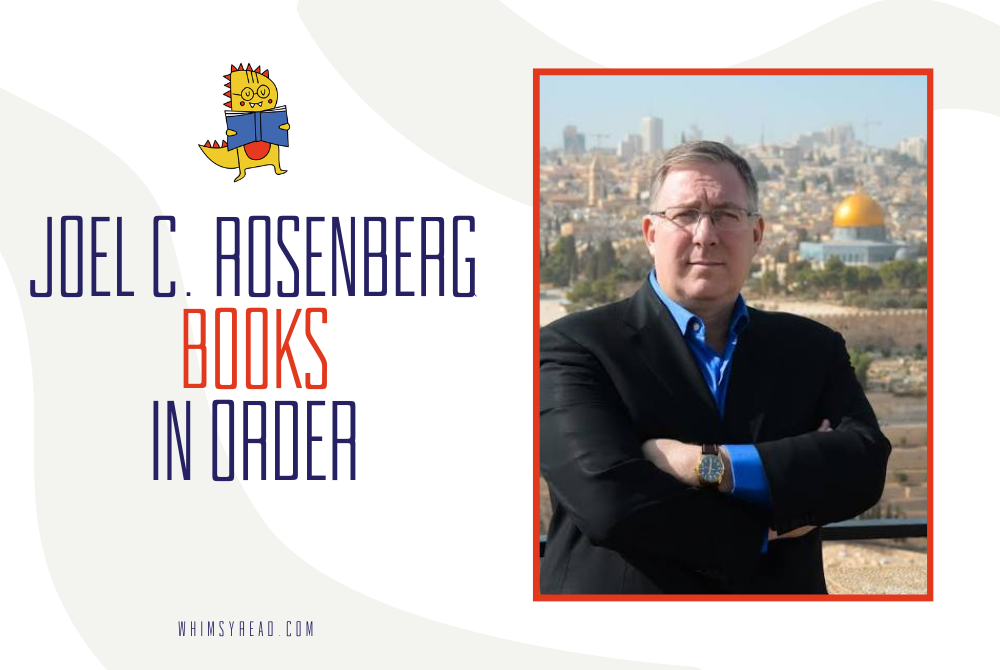
Joel C. Rosenberg writes political and military thrillers built around terrorism, espionage, international conflict, Middle Eastern geopolitics, and Christian themes. His novels frequently place fictional characters inside recognizable geopolitical situations, which gives the books a distinctly contemporary feel.
His bibliography can be confusing because some databases use different names for the same series. For example, the three books featuring CIA analyst David Shirazi are sometimes called the Twelfth Imam series, while others call them the David Shirazi series. They are the same three books, and the publication order is straightforward.
Joel C. Rosenberg Books in Publication Order
Here is the fiction publication order:
| # | Book | Year | Series |
| 1 | The Last Jihad | 2002 | The Last Jihad #1 |
| 2 | The Last Days | 2003 | The Last Jihad #2 |
| 3 | The Ezekiel Option | 2005 | The Last Jihad #3 |
| 4 | The Copper Scroll | 2006 | The Last Jihad #4 |
| 5 | Dead Heat | 2008 | The Last Jihad #5 |
| 6 | The Twelfth Imam | 2010 | David Shirazi #1 |
| 7 | The Tehran Initiative | 2011 | David Shirazi #2 |
| 8 | Damascus Countdown | 2013 | David Shirazi #3 |
| 9 | The Auschwitz Escape | 2014 | Standalone |
| 10 | The Third Target | 2015 | J. B. Collins #1 |
| 11 | The First Hostage | 2016 | J. B. Collins #2 |
| 12 | Without Warning | 2017 | J. B. Collins #3 |
| 13 | The Kremlin Conspiracy | 2018 | Marcus Ryker #1 |
| 14 | The Persian Gamble | 2019 | Marcus Ryker #2 |
| 15 | The Jerusalem Assassin | 2020 | Marcus Ryker #3 |
| 16 | The Beirut Protocol | 2021 | Marcus Ryker #4 |
| 17 | The Libyan Diversion | 2023 | Marcus Ryker #5 |
| 18 | The Beijing Betrayal | 2025 | Marcus Ryker #6 |
This 18-book fiction bibliography is consistent across current bibliographic listings, while Tyndale’s current Joel Rosenberg collection confirms the major titles and series, including The Beijing Betrayal.
The Last Jihad Series in Order
The Last Jihad series launched Rosenberg’s fiction career and established many of the themes that would continue throughout his later thrillers. The books combine terrorism, international politics, Middle Eastern conflict, biblical prophecy, and the possibility of catastrophic events.
1. The Last Jihad (2002)
The Last Jihad introduces President MacPherson and journalist Erin McCoy as an international crisis begins to unfold. A devastating terrorist event and escalating conflict in the Middle East draw the United States toward a confrontation with potentially enormous consequences.
The novel is particularly notable because Rosenberg conceived the basic story before the September 11, 2001 attacks. Its publication shortly afterward made its fictional treatment of terrorism and Middle Eastern geopolitics especially striking to readers.
2. The Last Days (2003)
The Last Days continues the story begun in The Last Jihad as the geopolitical crisis grows. Rosenberg expands the scope from terrorism into international military and political confrontation.
The book develops the prophetic and geopolitical ideas introduced in the first novel while increasing the scale of the threat facing Israel, the United States, and the wider Middle East.
3. The Ezekiel Option (2005)
The Ezekiel Option moves more directly into biblical prophecy and the question of how ancient predictions might intersect with modern geopolitics.
The novel combines intelligence operations, international alliances, and an escalating threat against Israel. It is one of the books that most clearly established Rosenberg’s signature approach of blending political thriller fiction with his interpretation of biblical prophecy.
4. The Copper Scroll (2006)
The Copper Scroll continues the larger story while introducing another mystery connected to an ancient biblical artifact.
The novel combines archaeology, intelligence operations, terrorism, and international intrigue. The result is a thriller that moves between ancient history and contemporary geopolitical conflict.
5. Dead Heat (2008)
Dead Heat concludes the original five-book Last Jihad sequence. The story brings the series’ major geopolitical and prophetic threads toward a conclusion while maintaining Rosenberg’s focus on terrorism, Israel, and the United States.
For readers interested in Rosenberg’s earliest work, the five books should definitely be read in order because the characters and larger storyline develop across the series.
David Shirazi Books in Order
The next major series follows David Shirazi, a CIA operative and Iran specialist. These books are sometimes labeled the Twelfth Imam series, after the first novel, but David Shirazi is the central recurring character.
1. The Twelfth Imam (2010)
The Twelfth Imam introduces David Shirazi, a CIA operative tasked with confronting a dangerous Iranian nuclear threat.
The novel combines espionage, terrorism, Iran’s nuclear ambitions, and religious prophecy. It begins a three-book storyline that becomes increasingly urgent as Shirazi attempts to prevent a catastrophic conflict.
2. The Tehran Initiative (2011)
The Tehran Initiative continues directly from the events of The Twelfth Imam. Shirazi faces an increasingly dangerous situation as the Iranian threat becomes more immediate.
The novel expands the political and military dimensions of the first book while keeping Shirazi at the center of the action.
3. Damascus Countdown (2013)
Damascus Countdown concludes the David Shirazi trilogy.
The title reflects the novel’s increasingly urgent geopolitical situation as conflict involving Iran, Israel, Syria, and the United States moves toward a potential catastrophe. The three books work best as a continuous story rather than independent thrillers.
The Auschwitz Escape
The Auschwitz Escape (2014)
The Auschwitz Escape is a standalone historical thriller rather than part of one of Rosenberg’s modern geopolitical series.
Set during World War II, the novel follows characters caught within the Nazi concentration-camp system and focuses on the possibility of escape from Auschwitz. Rosenberg drew heavily on historical research for the setting, making this book quite different in tone from his contemporary political thrillers.
It is a good choice for readers who want Rosenberg’s storytelling without committing to one of his multi-book geopolitical series.
J. B. Collins Books in Order
The J. B. Collins trilogy follows an American journalist caught in the middle of escalating Middle Eastern crises. The books move between journalism, terrorism, political instability, and international conflict.
1. The Third Target (2015)
The Third Target introduces J. B. Collins, a journalist who becomes involved in a dangerous investigation while covering events in the Middle East.
The story quickly develops from a journalistic assignment into a race against a potentially catastrophic terrorist threat. Collins’ profession gives the series a different perspective from the CIA-centered David Shirazi novels.
2. The First Hostage (2016)
The First Hostage continues J. B. Collins’ story as another international crisis develops.
The novel combines terrorism, hostage situations, Middle Eastern politics, and the race to uncover the truth before events spiral out of control.
3. Without Warning (2017)
Without Warning concludes the J. B. Collins trilogy. Collins again finds himself caught between journalism and a rapidly developing international crisis.
The three books are best read consecutively because the character and geopolitical storyline develop across the trilogy. Tyndale currently offers all three together as The J. B. Collins Collection.
Marcus Ryker Books in Order
The Marcus Ryker series is Rosenberg’s longest-running series and shifts the emphasis toward military action, espionage, intelligence operations, and major-power conflict.
The series currently contains six novels, ending with The Beijing Betrayal in 2025.
1. The Kremlin Conspiracy (2018)
The Kremlin Conspiracy introduces Marcus Ryker, a highly trained former Marine and intelligence operative.
When a dangerous conspiracy involving Russia threatens the United States, Ryker is pulled into an operation that requires both military expertise and intelligence skills. The novel establishes the series’ focus on Russia, terrorism, political power, and international security.
2. The Persian Gamble (2019)
The Persian Gamble moves the action toward Iran and the Middle East.
Ryker faces a complicated geopolitical situation involving Iran, nuclear ambitions, and the possibility of a devastating international confrontation. The book expands the series beyond the Russian focus of the first installment.
3. The Jerusalem Assassin (2020)
The Jerusalem Assassin places Israel and the Middle East at the center of the story.
Ryker becomes involved in a dangerous operation surrounding an assassination threat with consequences far beyond Jerusalem. The book combines military action with intelligence and geopolitical intrigue.
4. The Beirut Protocol (2021)
The Beirut Protocol continues Marcus Ryker’s international missions.
The story moves through Lebanon and the wider Middle East as Ryker confronts another threat involving terrorism and international security. The book maintains the series’ combination of military action and geopolitical thriller elements.
5. The Libyan Diversion (2023)
The Libyan Diversion takes Ryker into another international crisis, this time involving Libya and the wider strategic interests of global powers.
The novel expands the geographical reach of the series while continuing the character’s role as an unconventional operative working against threats to American and international security. Tyndale lists the book as part of its current Rosenberg collection.
6. The Beijing Betrayal (2025)
The Beijing Betrayal is currently the sixth and latest Marcus Ryker novel.
The story turns the series toward China and a major geopolitical confrontation. With Beijing at the center of the threat, Ryker once again becomes involved in an operation where military strategy, intelligence, and international politics intersect.
Published in 2025, it is currently the newest novel in Rosenberg’s bibliography.
What Is the Best Order to Read Joel C. Rosenberg?
There are two good approaches.
Best for the Complete Fiction Journey
If you want to experience Rosenberg’s career chronologically, use publication order:
- The Last Jihad
- The Last Days
- The Ezekiel Option
- The Copper Scroll
- Dead Heat
- The Twelfth Imam
- The Tehran Initiative
- Damascus Countdown
- The Auschwitz Escape
- The Third Target
- The First Hostage
- Without Warning
- The Kremlin Conspiracy
- The Persian Gamble
- The Jerusalem Assassin
- The Beirut Protocol
- The Libyan Diversion
- The Beijing Betrayal
Best for New Readers
If you are primarily interested in Rosenberg’s modern military thrillers, I recommend starting with The Marcus Ryker series:
- The Kremlin Conspiracy
- The Persian Gamble
- The Jerusalem Assassin
- The Beirut Protocol
- The Libyan Diversion
- The Beijing Betrayal
If you prefer biblical prophecy and Middle Eastern geopolitical thrillers, start with The Last Jihad instead.
Are Joel C. Rosenberg’s Series Connected?
The series are best treated as separate storylines rather than one continuous universe.
The Last Jihad follows its own characters and overarching narrative. The David Shirazi trilogy and J. B. Collins trilogy likewise have their own protagonists and story arcs. Marcus Ryker begins a separate series centered on a military/intelligence protagonist.
That means you do not need to read The Last Jihad before The Kremlin Conspiracy. Starting with Marcus Ryker is perfectly reasonable if military espionage is your preferred genre.
Joel C. Rosenberg’s Writing and Real-World Background
Rosenberg’s fiction is closely connected to his interest in Middle Eastern affairs, Israel, terrorism, and biblical prophecy. He has spent years researching these subjects and has written extensively about the intersection of current events and biblical prophecy.
He is also the founder of The Joshua Fund, a nonprofit organization he and his wife, Lynn, established to bless Israel and its neighbors through humanitarian aid and ministry. The organization describes Rosenberg as its founder and chairman/president in its published material.
His nonfiction and ministry work are relevant to understanding the perspective behind his fiction. In interviews and teaching materials, Rosenberg has discussed his long-running research into biblical prophecy and Middle Eastern geopolitics.
This is also why his novels should be understood as faith-informed political thrillers, rather than purely secular geopolitical thrillers. His interpretation of biblical prophecy is part of the fictional framework, particularly in The Last Jihad and the David Shirazi books.
Joel C. Rosenberg Nonfiction Books
Rosenberg has also written several nonfiction books dealing with Israel, biblical prophecy, Christianity, and Middle Eastern affairs.
| Book | Year |
| Epicenter | 2006 |
| Epicenter 2.0 | 2008 |
| Inside the Revolution | 2009 |
| Epicenter Study Guide | 2009 |
| Inside the Revival | 2010 |
| Implosion | 2012 |
| The Invested Life | 2012 |
| Israel at War | 2012 |
| Enemies and Allies | 2021 |
The Invested Life was co-authored with T. E. Koshy, while the other books listed here are Rosenberg’s nonfiction works or study materials. Tyndale’s current collection includes several of these titles alongside his novels.
Epicenter (2006)
Epicenter examines Rosenberg’s interpretation of biblical prophecy and its relationship to Israel and the modern Middle East.
The book provides useful background for readers who encounter prophetic themes throughout his novels. It is nonfiction rather than another installment of The Last Jihad.
Inside the Revolution (2009)
Inside the Revolution examines the political and religious forces Rosenberg believes are shaping the Middle East.
It expands on many of the subjects that appear in his fiction, particularly Israel, Iran, Islamic extremism, and the role of Christian theology in understanding the region.
Implosion (2012)
Implosion turns more attention toward the United States, examining political, economic, and cultural questions through Rosenberg’s Christian worldview.
Enemies and Allies (2021)
Enemies and Allies examines contemporary Middle Eastern geopolitics and the relationships among Israel, the United States, Iran, and other regional and global powers.
It is nonfiction and should not be confused with the fictional Marcus Ryker series, even though readers interested in the same geopolitical subjects may find the two bodies of work complementary.
Frequently Asked Questions
What is the first Joel C. Rosenberg book?
The Last Jihad, published in 2002, is Joel C. Rosenberg’s first novel and the first book in The Last Jihad series.
How many Joel C. Rosenberg novels are there?
There are currently 18 published novels: five Last Jihad books, three David Shirazi books, three J. B. Collins books, six Marcus Ryker books, and the standalone The Auschwitz Escape.
What is the latest Joel C. Rosenberg book?
The latest published novel is The Beijing Betrayal, released in 2025. It is the sixth Marcus Ryker novel.
What should I read first by Joel C. Rosenberg?
Start with The Last Jihad if you want his books in publication order. If you prefer modern military and espionage thrillers, The Kremlin Conspiracy is an excellent entry point because it begins the Marcus Ryker series.
Is The Twelfth Imam part of The Last Jihad series?
No. The Twelfth Imam begins a separate three-book series centered on David Shirazi. Some databases call it the Twelfth Imam series, while others call it the David Shirazi series. Both labels refer to the same trilogy.
Is The Auschwitz Escape part of a series?
No. The Auschwitz Escape is a standalone historical thriller published between the David Shirazi and J. B. Collins series.
How many Marcus Ryker books are there?
There are currently six Marcus Ryker books: The Kremlin Conspiracy, The Persian Gamble, The Jerusalem Assassin, The Beirut Protocol, The Libyan Diversion, and The Beijing Betrayal.
Are Joel C. Rosenberg’s books Christian fiction?
His novels are generally categorized as Christian or faith-based political thrillers. Biblical prophecy, Israel, Christianity, terrorism, and Middle Eastern geopolitics are recurring elements, particularly in The Last Jihad and David Shirazi books.
Final Verdict
For readers who enjoy political thrillers with military action, espionage, Middle Eastern geopolitics, terrorism, and biblical themes, Joel C. Rosenberg offers several distinct series rather than one enormous continuous saga.
For the complete experience, begin with The Last Jihad and work forward through publication order. For readers who want a faster entry into his modern military thrillers, the Marcus Ryker series is the strongest starting point, beginning with The Kremlin Conspiracy and continuing through The Beijing Betrayal.
The most important distinction is between Joel C. Rosenberg and Joel Rosenberg. The latter was a different science-fiction and fantasy author who wrote Guardians of the Flame and other series. The bibliography above is specifically for Joel C. Rosenberg, the bestselling political-thriller author.

Leave a Reply