
Gregory Maguire Books in Order: The Complete Wicked and Fairy-Tale Reading Guide
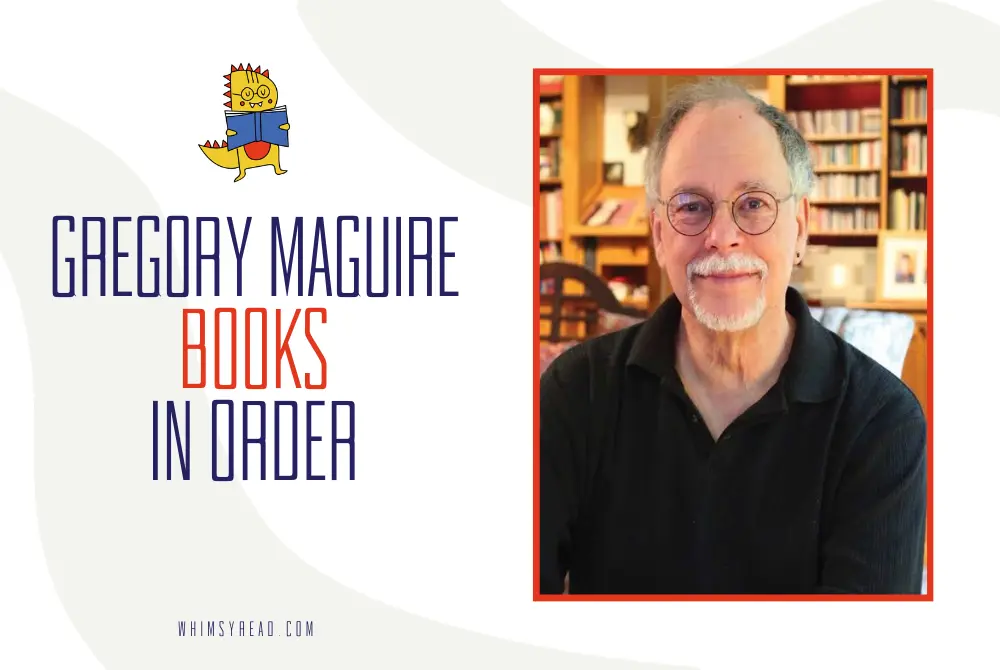
Gregory Maguire has built a distinctive career by asking what happens when familiar fairy tales are told from a different character’s perspective. His best-known novel, Wicked, gives the Wicked Witch of the West a complicated history and a voice of her own, transforming a familiar fantasy world into a story about prejudice, power, politics, and identity.
But there is much more to his bibliography than Oz. Maguire has written novels inspired by Cinderella, Snow White, Alice in Wonderland, and the Nutcracker, along with children’s books, picture books, and nonfiction about writing. This guide organizes his major works by series and publication order so you can find the right starting point without mixing unrelated stories together.
The Wicked Years Books in Order
The Wicked Years is Maguire’s best-known fantasy series, reimagining the Land of Oz through the lives of Elphaba, her family, and the people around her. The four main novels form a continuous story and should be read in publication order.
1. Wicked: The Life and Times of the Wicked Witch of the West (1995)
This is the novel that inspired the hugely successful stage musical Wicked. It tells the story of Elphaba, the green-skinned girl who grows up to become the Wicked Witch of the West, exploring her childhood, education, political awakening, and conflict with the Wizard. Rather than simply retelling The Wizard of Oz, Maguire questions who gets to be called wicked and how power shapes public perception.
2. Son of a Witch (2005)
The sequel follows Liir, who may be Elphaba’s son, as he struggles to understand his identity after the events of the first novel. His journey takes him through a politically unsettled Oz, where the consequences of Elphaba’s actions continue to affect the people around him. The novel expands the series beyond Elphaba and examines inheritance, belonging, and the burden of a complicated family legacy.
3. A Lion Among Men (2008)
The third main novel focuses on Brrr, the character known to readers of the original Oz stories as the Cowardly Lion. As he recounts his past, the story connects his life with the wider political and personal upheavals of Oz. Maguire uses the Lion’s perspective to explore fear, memory, courage, and the stories people tell about themselves.
4. Out of Oz (2011)
The fourth novel follows Rain, Elphaba’s granddaughter, as Oz faces political unrest and the possibility of war. Familiar characters and long-running conflicts return, bringing the central story toward its conclusion. Readers who have followed Elphaba and Liir will find that this novel draws together several generations of the family’s history.
Recommended reading order: Wicked → Son of a Witch → A Lion Among Men → Out of Oz.
Additional Wicked Years Books
These works expand the Oz setting but are not numbered among the four main novels.
5. Tales Told in Oz (2012)
This short-story collection explores the folklore, characters, and corners of Oz through several additional tales. It offers more of the imaginative world Maguire developed in the main novels. Readers will get the most from it after becoming familiar with the original series.
6. Elphie: A Wicked Childhood (2025)
This prequel explores Elphaba’s childhood before the events of Wicked. It gives readers a closer look at the experiences that help shape her personality and her place in Oz. For a first-time reader, publication order is still the best way to preserve the revelations of the original novel.
7. Galinda: A Charmed Childhood (2026)
This companion prequel turns its attention to Galinda, the character who becomes Glinda the Good. It explores her early life before the events of Wicked, offering a new perspective on a character whose public image contrasts with Elphaba’s. Readers interested in both witches can use this book to broaden their understanding of the characters’ backgrounds.
Note on order: For the original story, read the four main novels in publication order. The prequels Elphie and Galinda can be read afterward, even though their events take place earlier in the characters’ lives.
The Another Day Trilogy in Order
The Another Day trilogy continues the Oz story after The Wicked Years. It follows Rain, Elphaba’s granddaughter, beyond the familiar Land of Oz and into a new setting.
1. The Brides of Maracoor (2021)
Rain finds herself in Maracoor, a strange land with unfamiliar customs and communities. Her journey introduces a new world while continuing the family story established in The Wicked Years. The novel combines fantasy adventure with questions of identity, belonging, and the meaning of home.
2. The Oracle of Maracoor (2022)
The second book continues Rain’s experiences in Maracoor as she encounters new challenges and develops a deeper understanding of the people and forces shaping the land. The story expands the trilogy’s mythology and builds on the relationships introduced in the opening novel.
3. The Witch of Maracoor (2023)
The concluding installment brings Rain’s journey toward its resolution. The novel continues the trilogy’s exploration of power, identity, and the complicated legacy of Oz while giving the Maracoor storyline its own conclusion.
Recommended reading order: The Brides of Maracoor → The Oracle of Maracoor → The Witch of Maracoor.
For the strongest continuity, read The Wicked Years before starting Another Day.
The Hamlet Chronicles Books in Order
The Hamlet Chronicles is a seven-book series for younger readers. These books have a different tone from Maguire’s adult fantasy novels, using playful titles, magical situations, and imaginative adventures.
1. Seven Spiders Spinning (1994)
The first book introduces the unusual world of Hamlet, where strange and sometimes magical events disrupt ordinary life. It establishes the playful storytelling style and setting that continue throughout the series.
2. Six Haunted Hairdos (1997)
The second installment continues the series’ mix of humor, odd happenings, and supernatural surprises. Its title hints at the playful approach to everyday objects and situations that makes the books distinctive.
3. Five Alien Elves (1998)
The third book adds another unusual adventure to the Hamlet world, mixing fantasy elements with comic situations. It continues the series’ focus on young readers who enjoy imaginative characters and unexpected turns.
4. Four Stupid Cupids (2000)
The fourth installment plays with the familiar idea of Cupid and the complications associated with love and matchmaking. As in the earlier books, Maguire uses an absurd premise to create a lighthearted fantasy adventure.
5. Three Rotten Eggs (2002)
The fifth book continues the series with another playful title and an imaginative situation involving the children and their world. It is best read after the earlier installments to follow the series in order.
6. A Couple of April Fools (2004)
The sixth book draws on the tradition of April Fools’ Day for a story built around mischief and comic surprises. It continues the series’ accessible, humorous style.
7. One Final Firecracker (2005)
The seventh book completes the Hamlet Chronicles. It brings the series’ collection of whimsical adventures to a close and is the natural final stop for readers following the books from the beginning.
Recommended reading order: Read all seven books in publication order, starting with Seven Spiders Spinning.
Gregory Maguire Standalone Novels in Order
Maguire’s standalone novels revisit familiar fairy tales, historical settings, and literary worlds without requiring readers to follow a larger series. They can be read independently, so choose the story that interests you most.
1. The Lightning Time (1978)
One of Maguire’s early children’s novels, this story introduces his interest in imaginative worlds and unusual adventures. It belongs to the earlier part of his career, before the adult fantasy novels that made him widely known.
2. The Daughter of the Moon (1980)
This early children’s novel continues Maguire’s exploration of fantasy and storytelling for younger readers. It is a useful title for readers interested in tracing his career from children’s literature to adult fantasy.
3. Lights on the Lake (1981)
Another early children’s work, this book belongs to the formative stage of Maguire’s writing career. It offers a way to explore the range of his early fiction beyond the later Oz novels.
4. The Dream Stealer (1983)
This children’s fantasy explores the idea of dreams as something that can be taken, threatened, or transformed. Its imaginative premise reflects the fairy-tale sensibility that would become a recurring feature of Maguire’s writing.
5. Oasis (1984)
This early novel continues Maguire’s work in children’s and young-adult fiction. Readers exploring his full bibliography can use it to see how his themes and storytelling developed before his adult novels.
6. I Feel Like the Morning Star (1989)
This novel is part of Maguire’s earlier work for younger readers and explores personal experience through a story shaped by its characters and setting. It predates his best-known revisionist fairy tales.
7. Missing Sisters (1994)
This novel explores family relationships and the complications surrounding missing or separated people. It belongs to the period when Maguire was moving toward the more mature and complex fiction that would define his adult career.
8. The Good Liar (1996)
This standalone novel explores deception and the complicated relationships that emerge when people conceal their intentions. It provides an early example of Maguire’s interest in the darker motivations behind seemingly ordinary behavior.
9. Confessions of an Ugly Stepsister (1999)
This novel retells Cinderella from the perspective of one of the stepsisters, Iris, whose experiences complicate the traditional fairy tale. Set in seventeenth-century Holland, the story examines beauty, class, family, and the difference between how people appear and who they really are.
10. Lost (2001)
This novel brings a contemporary character into a story shaped by ghosts, literature, and the lingering power of the past. It uses a literary mystery to explore grief, memory, and the ways stories can influence people’s lives.
11. Mirror Mirror (2003)
Maguire reimagines Snow White against the backdrop of Renaissance Italy. The story brings together Lucrezia Borgia, political intrigue, and a dark version of the familiar fairy tale, turning the traditional story into a historical fantasy about beauty, power, and jealousy.
12. What-the-Dickens (2007)
This imaginative novel offers a playful origin story for a Christmas fairy, blending folklore and fantasy with a mystery about the unseen creatures that influence human life. It is a good choice for readers who enjoy whimsical stories with a darker edge.
13. The Next Queen of Heaven (2010)
This novel follows a group of characters whose lives intersect in a contemporary setting shaped by family, religion, and personal upheaval. It moves away from fairy-tale retellings while retaining Maguire’s interest in complicated relationships and unexpected connections.
14. Matchless: A Christmas Story (2009)
This short illustrated story reimagines the world of The Nutcracker through a tale of a young boy and a treasured gift. It is a compact seasonal read rather than a full-length novel and works well for readers looking for a holiday-themed fantasy.
15. Egg & Spoon (2014)
Set in Russia during a period of social change, this novel follows two girls from very different circumstances whose lives become intertwined. Folklore, magic, and questions of class shape their adventure, giving the story a rich blend of historical setting and fantasy.
16. After Alice (2015)
This novel reimagines Lewis Carroll’s Alice’s Adventures in Wonderland by focusing on what happens after Alice disappears down the rabbit hole. Through Ada, Alice’s friend, and other characters, Maguire explores Victorian society, childhood, and the strange logic of Wonderland.
17. Hiddensee (2017)
Inspired by the story of the Nutcracker, this novel follows Dirk Drosselmeier, the man associated with the creation of the famous wooden toy. Maguire imagines his life from childhood onward, combining folklore, history, and fantasy to explore the origins of a familiar Christmas figure.
18. A Wild Winter Swan (2020)
Set in New York City in 1960, this novel follows a teenage girl named Laura as she encounters a mysterious young man whose damaged wings suggest a connection to the world of fairy tales. The story draws on Hans Christian Andersen’s The Wild Swans while exploring adolescence, family, and the uncertainty of growing up.
Gregory Maguire Picture Books and Children’s Books
Maguire has written picture books as well as longer children’s novels. These titles are separate from the Hamlet Chronicles and the adult fantasy series.
1. Crabby Cratchitt (1980)
This picture book offers a humorous character-driven story for younger readers. It reflects Maguire’s early work in children’s literature before his adult novels became his most recognizable books.
2. The Peace and Quiet Diner (1988)
This children’s book centers on an unusual diner and the people or events associated with it. It belongs to Maguire’s picture-book work, which uses accessible storytelling and imaginative situations for younger audiences.
3. Lucas Fishbone (1990)
This picture book tells a story designed for younger readers, adding another example of Maguire’s work outside adult fantasy. It is worth including for readers who want a broader picture of his career.
4. Cress Watercress (2022)
Illustrated by David Litchfield, this children’s book follows Cress, a young rabbit whose life changes after she and her family move into a new home. The story explores family, friendship, community, and the challenges of adapting to change.
Gregory Maguire Nonfiction Books in Order
Maguire has also written nonfiction about storytelling, literature, and children’s books.
1. Origins of Story: On Writing for Children (1999)
Co-written with Barbara Harrison, this book explores children’s literature and the craft of writing stories for younger audiences. It offers insight into how stories develop, why they matter, and what writers consider when creating books for children.
2. Making Mischief: A Maurice Sendak Appreciation (2009)
This work celebrates the life and creative legacy of Maurice Sendak, the influential author and illustrator best known for Where the Wild Things Are. Maguire reflects on Sendak’s artistic importance and the ways his work expanded the possibilities of children’s literature.
Gregory Maguire Books by Publication Order: A Practical Reading Plan
Because Maguire writes across several genres, there is no need to read every book in one continuous sequence. The best approach depends on whether you want to explore Oz, his fairy-tale retellings, or his work for younger readers.
For readers who want the main Oz story, follow this sequence:
- Wicked (1995)
- Son of a Witch (2005)
- A Lion Among Men (2008)
- Out of Oz (2011)
- The Brides of Maracoor (2021)
- The Oracle of Maracoor (2022)
- The Witch of Maracoor (2023)
After the main story, read Tales Told in Oz, Elphie, and Galinda for additional perspectives on the world and its characters.
If you prefer standalone stories, begin with Confessions of an Ugly Stepsister for a Cinderella retelling, Mirror Mirror for a Snow White-inspired historical fantasy, or After Alice for a literary reimagining of Wonderland.
About Gregory Maguire
Gregory Maguire is an American novelist best known for revisionist fairy tales and fantasy that challenge the familiar versions of well-known stories. His 1995 novel Wicked became the foundation for the acclaimed Broadway musical and later screen adaptations, introducing generations of readers to a more complicated version of the Wicked Witch of the West.
Maguire’s wider bibliography includes adult novels, children’s fiction, picture books, short-story collections, and nonfiction. Across these forms, he often explores the difference between public reputation and private reality, inviting readers to reconsider characters they thought they already knew.
Frequently Asked Questions
What is Gregory Maguire’s first book?
The Lightning Time, published in 1978, is generally listed as his first book. His first adult novel was Wicked, published in 1995.
How many books has Gregory Maguire written?
The total depends on whether the count includes picture books, short-story collections, contributed anthologies, graphic-novel adaptations, and new editions. His bibliography includes dozens of books across adult fiction, children’s literature, fantasy, and nonfiction.
What is the correct order of the Wicked books?
The four main Wicked Years novels are Wicked, Son of a Witch, A Lion Among Men, and Out of Oz. The wider Oz bibliography also includes Tales Told in Oz, the prequels Elphie and Galinda, and the Another Day trilogy.
Do I need to read Wicked before The Brides of Maracoor?
Yes, it is strongly recommended. The Brides of Maracoor continues the story of Rain, who is connected to the characters and events of The Wicked Years. Reading the original series first provides important context.
Is Confessions of an Ugly Stepsister part of the Wicked series?
No. Confessions of an Ugly Stepsister is a standalone retelling of Cinderella. It shares Maguire’s interest in reinterpreting familiar stories but is not connected to the Oz novels.
Are Gregory Maguire’s books suitable for children?
Some are written specifically for children, including the Hamlet Chronicles, picture books, and other children’s novels. However, Wicked and many of his standalone novels are intended for adult readers and may include mature themes.
What should I read after Wicked?
If you want to continue Elphaba’s story, read Son of a Witch, followed by A Lion Among Men and Out of Oz. If you want to continue exploring Oz after the original four novels, move on to the Another Day trilogy.
What is Gregory Maguire’s newest Oz book?
Galinda: A Charmed Childhood was published in 2026 and explores Glinda’s early life. Elphie: A Wicked Childhood (2025) is its companion prequel focused on Elphaba.
Final Note
Gregory Maguire’s books are ideal for readers who enjoy seeing familiar stories from unexpected angles. His Oz novels offer a connected fantasy world, while his standalone retellings give Cinderella, Snow White, Alice, and other familiar figures new histories and motivations. Start with Wicked if you want to understand his most famous creation, or choose a standalone novel if you prefer a complete story in a single book.

Leave a Reply