
Frederick Forsyth Books in Order: All Novels, Short Stories, and Memoirs
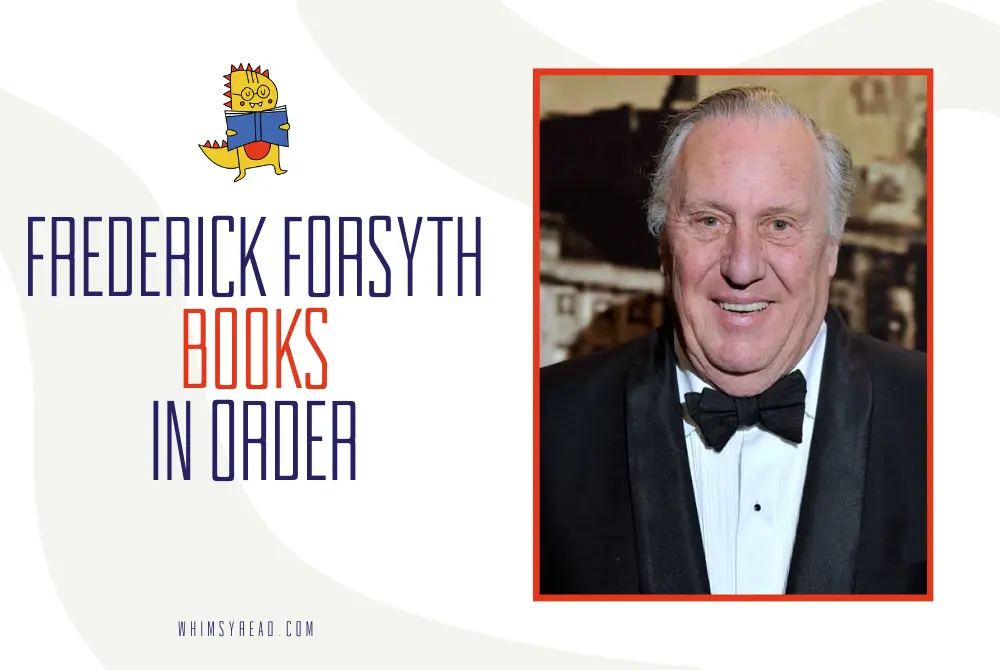
Frederick Forsyth was a British thriller writer known for detailed research, international conspiracies, political intrigue, espionage, and high-stakes operations. His novels often begin with a seemingly impossible mission or a secret plot, then follow the people trying to carry it out—or stop it.
Forsyth’s books generally feature different characters and self-contained plots, so you don’t need to read every novel to understand the next one. However, publication order is a useful way to experience how his storytelling developed, from the precision of his early assassination thriller to the modern intelligence and cyberwarfare themes of his later work.
This guide lists his novels in publication order, separates the connected Odessa books from his standalone thrillers, and includes short-story collections, novellas, and nonfiction.
1. Frederick Forsyth Novels in Publication Order
Most of Forsyth’s novels can be read independently. The main exception is the Odessa storyline, which has a later continuation written with Tony Kent. The following list follows the original publication sequence of his major novels.
1. The Day of the Jackal (1971)
Forsyth’s debut novel follows a professional assassin hired to kill French president Charles de Gaulle. The assassin’s identity is carefully concealed, and French authorities must uncover his plan before he can carry it out.
The book is famous for its meticulous procedural detail, suspense, and almost documentary-like style. It remains one of the strongest starting points for readers new to Forsyth.
2. The Odessa File (1972)
A young German journalist investigates the suicide of a Holocaust survivor and uncovers evidence of a secret organization protecting former Nazi officials. His investigation draws him into a dangerous search for the truth behind a powerful network.
The novel blends historical background with fictional suspense and explores how the past can continue to influence politics and justice. It is also the first book in the Odessa storyline.
3. The Dogs of War (1974)
A British businessman hires a group of mercenaries to overthrow the government of a small African country. The operation requires money, weapons, intelligence, careful planning, and the ability to keep the real objective hidden.
Forsyth builds much of the tension through the practical details of organizing a coup. Readers who enjoy military strategy, mercenary operations, and political intrigue will find this one particularly appealing.
4. The Devil’s Alternative (1979)
This political thriller centers on a crisis involving the Soviet Union, Western governments, and a dangerous international confrontation. A series of events threatens to push powerful nations toward a conflict that could have devastating consequences.
The novel combines political negotiations, intelligence work, and difficult decisions made under pressure. It is a good choice for readers who enjoy large-scale geopolitical thrillers rather than stories focused on a single criminal.
5. The Fourth Protocol (1984)
British intelligence discovers signs of a secret Soviet operation designed to destabilize the United Kingdom. The plot involves covert agents, political manipulation, and a plan that could change the country’s future without a conventional military attack.
The novel is one of Forsyth’s best-known espionage thrillers because it makes the danger feel grounded in real-world intelligence methods. Its central tension comes from whether the authorities can identify the operation before it is too late.
6. The Negotiator (1989)
When the son of the American president is kidnapped, the crisis becomes a matter of national security as well as a personal tragedy. A skilled negotiator is brought into the situation, but the kidnapping is more complicated than it first appears.
The story explores hostage negotiations, political pressure, and the motives hidden behind an apparently straightforward crime. It is a strong pick for readers who like thrillers in which communication and strategy matter as much as physical action.
7. The Deceiver (1991)
This espionage novel follows Sam McCready, a British intelligence officer whose career is examined through a series of cases and investigations. The structure reveals different aspects of his work and the difficult choices that come with operating in the intelligence world.
Rather than relying on one simple mission, the novel explores deception, loyalty, and the uncertain line between duty and personal judgment. Readers who enjoy character-driven spy fiction may appreciate its broader view of intelligence work.
8. The Fist of God (1994)
Set during the Gulf War, the novel follows intelligence efforts to uncover Iraq’s hidden military capabilities and understand the threat posed by its secret weapons programs. The investigation brings together military personnel, intelligence operatives, and specialists working under intense pressure.
Forsyth combines the scale of a military thriller with the detailed research that defines his work. The book is particularly suited to readers interested in modern warfare, intelligence gathering, and the decisions made behind the front lines.
9. Icon (1996)
A political crisis in post-Soviet Russia threatens to put an extremist leader in power. Western intelligence agencies become involved in an effort to prevent a dangerous shift in the country’s political future.
The story explores how elections, propaganda, secret operations, and political ambition can intersect. It is a fast-moving thriller for readers who enjoy international conspiracies and plots involving the balance of global power.
10. The Phantom of Manhattan (1999)
This novel reimagines the world associated with The Phantom of the Opera and explores what might have happened to the Phantom after the original story. Forsyth moves away from his usual contemporary political thriller format to tell a more romantic and theatrical tale.
The book stands apart from his espionage novels because it draws on an established literary world and its dramatic characters. Readers who know the Phantom story may find it an interesting change of pace.
11. Avenger (2003)
A wealthy American seeks justice for his murdered grandson, and the case leads to a hunt for a man accused of committing atrocities during the Bosnian conflict. A skilled investigator becomes involved in a pursuit that crosses borders and brings dangerous secrets to the surface.
The novel combines personal revenge with the aftermath of war and the challenge of holding powerful criminals accountable. It is a good choice for readers who enjoy investigative thrillers with an international setting.
12. The Afghan (2006)
Western intelligence agencies uncover a potential terrorist plot and devise an extraordinary plan to learn what is being prepared. A former British soldier with the right background is recruited for an undercover mission that takes him into a dangerous extremist network.
The suspense comes from the risks of maintaining a false identity while trying to discover the truth. The novel also explores intelligence gathering, counterterrorism, and the difficult judgments involved in preventing an attack.
13. The Cobra (2010)
An international effort is launched to disrupt the cocaine trade by targeting the organizations and supply networks that keep it running. The plan involves intelligence, coordinated operations, and unconventional methods intended to strike at the business behind the drug trade.
Forsyth uses the novel to explore the scale and organization of international crime. Readers who like complex operations and stories about institutions attempting to dismantle powerful criminal networks may enjoy it.
14. The Kill List (2013)
A secret intelligence unit hunts a terrorist known as the Preacher, whose online messages inspire acts of violence. The investigation brings together surveillance, digital communication, and a covert effort to identify and stop the man behind the threat.
The novel reflects the changing nature of espionage in an era of online propaganda and international terrorism. It is a natural choice for readers who prefer modern intelligence thrillers with fast-moving investigations.
15. The Fox (2018)
A young British hacker with extraordinary abilities becomes involved in an intelligence operation after discovering that his skills can be used against hostile governments and criminal networks. British intelligence sees an opportunity to exploit digital weaknesses rather than relying solely on traditional espionage methods.
The novel explores cyberwarfare, digital security, and the growing role of technology in international conflict. It is among Forsyth’s later thrillers and offers a contemporary contrast to the physical surveillance and field operations of his earlier books.
16. Revenge of Odessa (2025, with Tony Kent)
This continuation of The Odessa File was published after Forsyth’s death and written with thriller author Tony Kent. It revisits the legacy of the secret organization associated with the earlier novel and brings its history into a new generation.
For readers who remember The Odessa File, the sequel offers a return to a world shaped by concealed identities, historical crimes, and the lasting consequences of extremist networks. Read the original novel first to understand the background and significance of the story.
2. The Odessa Books in Order
The Odessa books are the main connected storyline in Forsyth’s bibliography. Unlike most of his novels, these two titles are linked directly, making reading order especially important.
1. The Odessa File (1972)
A journalist investigating a Holocaust survivor’s death discovers a secret organization connected to former Nazi officials. His search for answers becomes a dangerous investigation into a network determined to protect its members.
2. Revenge of Odessa (2025)
Co-written with Tony Kent, this sequel returns to the legacy of the organization introduced in the original novel. It extends the story into a later period, exploring how an old network and its secrets can continue to create danger.
Recommended order: Read The Odessa File first, followed by Revenge of Odessa. The other Forsyth novels can generally be enjoyed separately.
3. Frederick Forsyth Short Stories and Novellas in Order
Forsyth also wrote shorter works that demonstrate his ability to build suspense without the length of a full novel. Some are collected in his short-story books, while others were published separately or later included in collections.
The Shepherd (1975)
This novella follows a Royal Air Force pilot who encounters a frightening problem while flying home on Christmas Eve. When his aircraft develops a serious malfunction over the North Sea, he must find a way to reach safety.
The story is notable for its restrained writing and strong atmosphere rather than political conspiracy or international espionage. It is an excellent choice for readers who want a short, self-contained Forsyth story.
The Emperor (1982)
This shorter work draws on Forsyth’s interest in political power and unusual real-world situations. It provides a different reading experience from the long operational thrillers that made him famous.
It is often encountered in collections and bibliographies of his shorter fiction. Check the contents of a particular edition, as publication and reprint details can vary.
The Citizen (2000)
This short story is one of the pieces associated with Forsyth’s collection The Veteran and Other Stories. It offers a compact thriller experience for readers who enjoy his shorter work.
Rather than requiring a long commitment, it allows readers to experience Forsyth’s concise storytelling and his interest in ordinary people caught up in unusual circumstances.
Whispering Wind (2000)
Another of Forsyth’s shorter works, Whispering Wind is included in bibliographies of his short fiction. It is suitable for readers who want to explore beyond the major novels.
As with other short stories, its appeal is in the compact form: the story can develop an idea and build tension without the extensive background of a full-length thriller.
The Miracle (2000)
This story belongs to Forsyth’s shorter fiction and is associated with The Veteran and Other Stories. It gives readers another opportunity to explore his work in a format different from his longer espionage novels.
If you are collecting Forsyth’s complete bibliography, look for it within the appropriate short-story collection rather than assuming every story was issued as an independent book.
The Art of the Matter (2001)
This short work is also associated with Forsyth’s short-fiction bibliography. It is an additional read for those who want to explore the author’s shorter stories after finishing his novels.
For the most convenient reading experience, seek out the collection The Veteran and Other Stories, which brings several of these shorter works together.
4. Frederick Forsyth Short-Story Collections in Order
1. No Comebacks (1982)
This collection brings together short thrillers built around crime, deception, revenge, and unexpected consequences. The stories show that Forsyth could create tension and surprising turns without relying on the elaborate international plots of his novels.
It is a good choice for readers who want several self-contained stories rather than one long narrative. You can read the stories individually without following a continuing series.
2. The Veteran and Other Stories (2001; later editions and reissues vary)
This collection gathers shorter fiction, including stories such as The Veteran, The Art of the Matter, The Miracle, The Citizen, and Whispering Wind. The stories explore different situations and characters, offering a broader look at Forsyth’s range.
It works well for readers who already know his major novels and want to discover his shorter storytelling. Because editions may use different publication dates or subtitles, check the edition details when building a collection.
5. Frederick Forsyth Nonfiction Books in Order
Forsyth’s nonfiction draws on his experiences as a journalist, his interest in international affairs, and his work investigating real events. These books are especially interesting for readers who want to understand the background behind the realistic details in his thrillers.
1. The Biafra Story: The Making of an African Legend (1969)
This book examines the Biafran War and the attempt by the southeastern region of Nigeria to establish an independent state. Forsyth reported from the region as a journalist, and his experience gave him firsthand insight into the conflict.
The book offers a historical and political account rather than a fictional thriller. It is a useful starting point for readers interested in Forsyth’s journalism and his early understanding of international conflict.
2. Emeka (1991)
This biography examines the life of Chukwuemeka Odumegwu Ojukwu, the Nigerian military officer and political leader who became the head of the breakaway Republic of Biafra. It provides background on the man at the center of one of the major events that influenced Forsyth’s early career.
Readers interested in African history and the Biafran conflict may find it particularly valuable. It also offers context for understanding Forsyth’s interest in political struggles and military affairs.
3. Used in Evidence (2005)
Used in Evidence is a collection associated with Forsyth’s short-form writing and investigative interests. Readers should check the specific edition because bibliographies and publishers may categorize it differently from his full-length nonfiction works.
It is best considered alongside his shorter fiction and collected writing when exploring material beyond his major novels.
4. The Outsider: My Life in Intrigue (2015)
This memoir recounts Forsyth’s life as a journalist, author, and participant in the world of intelligence. He reflects on his reporting experiences and the events that shaped his interest in espionage, international politics, and covert operations.
For readers curious about how Forsyth developed his realistic thriller style, this is one of the most relevant books to read after his novels. It also provides insight into the experiences behind some of the themes that recur throughout his fiction.
6. Where Should You Start with Frederick Forsyth?
The best starting point depends on the type of thriller you enjoy most.
- For a classic assassination thriller: Start with The Day of the Jackal. Its carefully planned pursuit and procedural detail make it an ideal introduction to Forsyth’s style.
- For historical intrigue: Choose The Odessa File. It combines a journalist’s investigation with the pursuit of former Nazi officials.
- For military operations: Read The Dogs of War. Its focus on mercenaries, planning, and a covert coup makes it a strong choice for readers who enjoy military strategy.
- For traditional espionage: Try The Fourth Protocol. It centers on a covert operation and the intelligence officers attempting to uncover it.
- For modern cyberthrillers: Start with The Fox, which explores the use of digital skills and technology in intelligence operations.
- For shorter reading sessions: Pick up No Comebacks or The Veteran and Other Stories. These collections allow you to enjoy several self-contained stories without committing to a full-length novel.
- For the real-life background: Read The Outsider: My Life in Intrigue to learn about Forsyth’s experiences as a journalist and his interest in the world of intelligence.
My recommendation is to start with The Day of the Jackal, then read The Odessa File and The Dogs of War. Those three books provide a strong introduction to the investigative detail, political intrigue, and operational suspense that made Forsyth a leading thriller writer.
Frequently Asked Questions
How many novels did Frederick Forsyth write?
Forsyth wrote numerous novels across a career spanning several decades. The exact total depends on whether a list includes the posthumously published Revenge of Odessa, co-written with Tony Kent, as well as shorter fiction, novellas, and works that are categorized differently by bibliographies.
What is Frederick Forsyth’s most famous book?
The Day of the Jackal is generally regarded as his signature novel. It follows a professional assassin hired to kill French president Charles de Gaulle and the investigators attempting to stop him.
Do Frederick Forsyth’s books need to be read in order?
Most of his novels are standalone stories, so you can read them in any order. The main exception is the connected Odessa storyline, for which you should read The Odessa File before Revenge of Odessa.
Is The Odessa File part of a series?
Yes. The Odessa File is the first book in the Odessa storyline, followed by Revenge of Odessa, written with Tony Kent and published in 2025. The rest of Forsyth’s novels can generally be read independently.
What was Frederick Forsyth’s last book?
Revenge of Odessa, co-written with Tony Kent, was published in 2025 after Forsyth’s death in June of that year. It continues the story associated with his earlier novel The Odessa File.
Did Frederick Forsyth write nonfiction?
Yes. His nonfiction includes The Biafra Story: The Making of an African Legend, Emeka, and his memoir The Outsider: My Life in Intrigue. These books explore real historical events, political figures, journalism, and his own experiences.
What should I read after The Day of the Jackal?
If you want another classic Forsyth thriller, The Odessa File is an excellent next choice. If you prefer military operations, read The Dogs of War; for an espionage story focused on a covert plot, try The Fourth Protocol.
Final Thoughts
Frederick Forsyth’s books offer a distinctive combination of suspense, detailed research, political intrigue, and realistic operations. His novels range from assassination plots and mercenary missions to intelligence investigations and cyberwarfare, so readers can choose stories that match their interests without needing to follow one continuous series. Start with The Day of the Jackal for a classic introduction, read The Odessa File before its sequel, and explore his short-story collections if you want to experience his writing in a shorter format. For a fuller understanding of the author behind the thrillers, The Outsider: My Life in Intrigue provides an additional perspective on his remarkable career.

Leave a Reply