
Edith Wharton Books in Order: A Reader’s Map of Her Novels, Novellas, and Stories
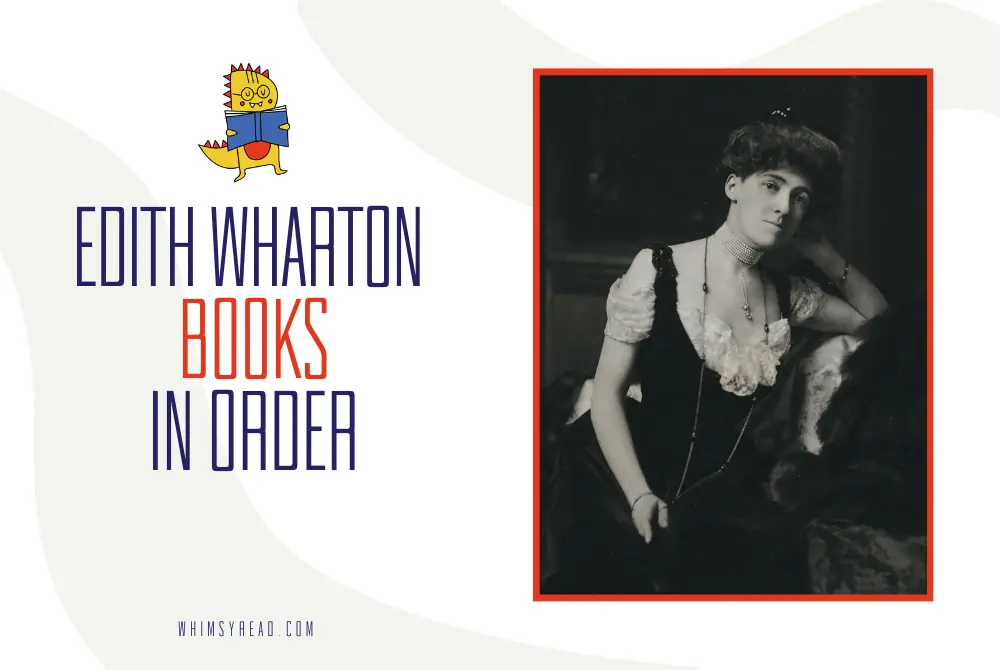
Edith Wharton (1862–1937) was an American novelist and short-story writer whose fiction scrutinized the expectations, privileges, and punishments built into upper-class society. Often associated with Gilded Age New York and Old New York families, her work also ranges through rural New England, European travel, war, marriage, artistic ambition, and supernatural unease.
Wharton’s books are not one long fictional saga. A useful guide needs to distinguish full-length novels from novellas such as Ethan Frome, four interrelated Old New York novellas, story collections, and major nonfiction. It must also distinguish original publication dates from later editions, especially for her unfinished final novel and a very early manuscript published posthumously.
Edith Wharton’s Full-Length Novels in Publication Order
These are the core longer novels. The final entry is unfinished, and two late novels follow the same characters in sequence.
1. The Valley of Decision (1902)
Wharton’s first full-length novel takes readers to eighteenth-century Italy, following Odo Valsecca amid court politics, revolutionary ideas, and personal obligations. Its historical setting differs sharply from the New York social novels that later defined her reputation, making it revealing as an early work but not the easiest beginner’s choice.
2. The House of Mirth (1905)
Lily Bart is a beautiful but financially insecure woman moving within New York society, where suitable marriage appears to be her clearest route to survival. Her attempts to preserve independence while negotiating money, gossip, and reputation give the novel its powerful critique of social rules.
3. The Fruit of the Tree (1907)
Factory conditions, labor relations, and a difficult moral decision challenge the lives of characters connected to an industrial enterprise. By placing ethical principles against private loyalties, Wharton expands beyond drawing-room society into questions of work, suffering, and reform.
4. The Reef (1912)
American diplomat George Darrow becomes involved in an impulsive relationship while traveling toward a reunion with the woman he hopes to marry. Misunderstanding and the consequences of earlier choices create a tightly controlled study of trust, desire, and how much people owe one another the truth.
5. The Custom of the Country (1913)
Ambitious Undine Spragg pursues social position and financial security across American and European high society, repeatedly reshaping her life to fit each new opportunity. Her relentless appetite for advancement makes this one of Wharton’s sharpest novels about wealth, marriage, and the treatment of other people as stepping-stones.
6. Summer (1917)
Charity Royall grows up in a small Massachusetts town feeling trapped by the limited future others imagine for her. A romance with a young architect awakens possibilities but brings questions of class, sexuality, and economic dependence; the book is frequently paired with Ethan Frome because both confront New England conventions.
7. The Age of Innocence (1920)
Newland Archer expects a conventional marriage to May Welland until her cousin Countess Ellen Olenska unsettles his understanding of duty and desire. Set amid the codes of wealthy 1870s New York, the novel won the 1921 Pulitzer Prize for the Novel and remains one of Wharton’s most approachable masterpieces.
8. The Glimpses of the Moon (1922)
Nick Lansing and Susy Branch marry with a practical arrangement designed to preserve the comfortable lives they enjoy despite limited funds. Their scheme exposes how money and social patronage shape intimacy, while genuine affection begins undermining the convenient rules they have set.
9. A Son at the Front (1923)
During the First World War, American portrait painter John Campton confronts the terrifying prospect of his son George going to the front. The novel examines parenthood, divided national loyalties, artistic identity, and the human cost of war rather than treating military history as background scenery.
10. The Mother’s Recompense (1925)
Kate Clephane returns to New York after years abroad and attempts to reconnect with the daughter she left behind. A complicated romantic situation tests whether an older woman can regain both family and freedom in a social world quick to judge her past.
11. Twilight Sleep (1927)
Pauline Manford embraces fashionable therapies, self-improvement programs, and fashionable causes in an attempt to keep life efficient and pleasant. Behind the busy surface, family relationships become increasingly fragile, allowing Wharton to satirize 1920s social fads and emotional avoidance.
12. The Children (1928)
Martin Boyne becomes involved with a large, neglected group of children traveling through Europe amid their wealthy parents’ shifting romantic arrangements. His attachment to the eldest child, Judith, reveals the unsettling consequences of adult freedom when younger people bear its cost.
13. Hudson River Bracketed (1929)
Young writer Vance Weston seeks a literary future while discovering the limitations of inherited values, fashionable circles, and his own ambition. This is the first part of a two-novel artistic development story, so readers who want the complete Vance Weston arc should continue to The Gods Arrive.
14. The Gods Arrive (1932)
Vance Weston’s pursuit of writing and love continues as his artistic identity faces further tests and relationships grow more difficult. It directly follows Hudson River Bracketed and is the clearest example in Wharton’s novels of why a particular reading order is necessary.
15. The Buccaneers (1938)
American young women seek husbands and social acceptance within the English aristocracy, exposing the contrast between inherited privilege and New World wealth. Published after Wharton’s death in unfinished form, it has appeared in later completed or adapted editions; readers should check which text they are buying.
Novellas and Shorter Fiction That Deserve Their Own Order
Several of Wharton’s best-known works are short novels or novellas, not full-length series installments. This grouping keeps form and first-publication history clear.
1. The Touchstone (1900)
Stephen Glennard possesses private letters from a deceased woman who loved him and considers selling them to relieve his financial difficulties. The resulting moral compromise turns a seemingly small act of betrayal into a study of memory, shame, and the price of comfort.
2. Sanctuary (1903)
Kate Orme learns something disturbing about the man she plans to marry and must decide how to respond before their life together begins. The novella explores ethical responsibility and the possibility that a choice postponed by one generation will return in another.
3. Madame de Treymes (1907)
American John Durham hopes to marry Fanny de Malrive, but the powerful French family connected to her first marriage controls the obstacles they face. Conversations with the sophisticated Madame de Treymes expose differences between American expectations of openness and entrenched European social codes.
4. Ethan Frome (1911)
In a bleak Massachusetts winter, farmer Ethan Frome is trapped by obligation to his sickly wife Zeena while developing feelings for her cousin Mattie Silver. The spare rural setting and atmosphere of frustrated longing make this an excellent short introduction to Wharton’s tragic fiction.
5. Bunner Sisters (1916)
Sisters Ann Eliza and Evelina run a modest shop in New York, maintaining a fragile livelihood through discipline and sacrifice. A seemingly promising acquaintance disrupts their relationship and prospects; the novella was written much earlier than its 1916 book appearance, an important bibliographic distinction.
6. The Marne (1918)
An American boy with strong attachments to France experiences the First World War through a changing understanding of patriotism and sacrifice. Written close to the events themselves, this brief wartime story is quite different in tone and purpose from Wharton’s New York marriage novels.
7. Old New York: False Dawn (1924)
In the first of four linked period novellas, a young man’s pursuit of art collides with his family’s expectations and conventional definitions of taste. The 1840s setting begins Wharton’s deliberately structured tour of a changing elite society across several decades.
8. Old New York: The Old Maid (1924)
A private family secret threatens the accepted roles of two women in nineteenth-century New York, making motherhood and respectability difficult to disentangle. This is the best-known of the Old New York quartet and works on its own, although reading all four reveals Wharton’s larger social design.
9. Old New York: The Spark (1924)
A seemingly unremarkable gentleman’s reactions to cruelty invite an observer to rethink what courage and moral seriousness look like. Set in the 1860s, the story is less concerned with scandal than with the difference between fashionable polish and private conscience.
10. Old New York: New Year’s Day (1924)
A woman’s apparent violation of social expectations becomes the subject of harsh judgments by people who do not know her full circumstances. In the quartet’s 1870s setting, Wharton examines how quickly public reputation can flatten complex personal motives.
11. Fast and Loose (1977)
Wharton drafted this early novelette as a teenager in the 1870s, but it did not receive its modern scholarly publication until 1977. It is most useful as a curiosity about her beginnings, not as a final novel written after The Buccaneers; some bibliographies attach a 1938 date to later manuscript histories.
Selected Short-Story Collections in Original Publication Order
For collections, the descriptions explain the kind of material inside rather than pretending each volume is a single plotted novel.
1. The Greater Inclination (1899)
Wharton’s first major fiction collection considers art, relationships, and social behavior through a series of short stories. It is a useful starting point for readers who want to watch the concerns of her later novels take shape in compressed form.
2. Crucial Instances (1901)
These stories turn on decisive moments when personal desire or social expectations reveal a character’s deeper loyalties. The collection belongs to Wharton’s early fiction and rewards readers who like psychological observation without committing to a full-length novel.
3. The Descent of Man and Other Stories (1904)
The title story and its companions explore irony, intellectual vanity, relationships, and the mismatch between what people claim and what they do. Several pieces anticipate the cool social scrutiny of The House of Mirth, published the following year.
4. The Hermit and the Wild Woman and Other Stories (1908)
This varied collection moves beyond modern New York drawing rooms into historical, symbolic, and sometimes fantastic material. It shows that Wharton’s short fiction could be adventurous in setting even while maintaining close attention to moral consequence.
5. Tales of Men and Ghosts (1910)
Supernatural suggestion and psychological disturbance sit beside stories of social ambition and personal betrayal. Readers drawn to Wharton’s ghost fiction can start here while remembering that the volume is not exclusively a horror collection.
6. Xingu and Other Stories (1916)
The famous title story lampoons a pretentious women’s reading group and their anxious relationship to cultural prestige. The collection is an especially accessible introduction to Wharton’s comic timing, which is often overlooked by readers familiar only with her tragic novels.
7. Here and Beyond (1926)
This later collection includes stories with spiritual, psychological, and occasionally supernatural overtones. It displays the continuing range of Wharton’s short fiction even after her greatest socially focused novels were already established.
8. Certain People (1930)
The stories examine recognizable social types and the private compromises behind apparently settled lives. Readers who enjoy Wharton’s observational precision may appreciate these mature, comparatively understated pieces.
9. Human Nature (1933)
Wharton returns to the contradictions of behavior, especially the ways people justify selfish or fearful choices. The late collection allows readers to sample her mature style without following the chronology of the novels.
10. The World Over (1936)
This late group of stories draws from travel, relationships, and the unexpectedly difficult moments that expose character. Its international range reflects Wharton’s long residence in Europe and her interest in societies beyond New York.
11. Ghosts (1937)
Issued near the end of her life, Ghosts collects uncanny fiction in which memory, isolation, and unresolved history create unease. It is the most direct choice for readers who want to explore her supernatural reputation alongside better-known stories such as Afterward.
Important Edith Wharton Nonfiction
These are independent books, not numbered fiction sequels, but they reveal the expertise behind her landscapes, interiors, and social commentary.
1. The Decoration of Houses (1897)
Coauthored with architect Ogden Codman Jr., this influential study criticizes cluttered Victorian interiors and argues for coherent architectural design. It offers unusually direct context for the houses, rooms, and social display that play important roles in Wharton’s novels.
2. Italian Villas and Their Gardens (1904)
Wharton examines Italian landscape design and the relationship between formal gardens, buildings, and terrain. Readers interested in her eye for material culture will discover that her descriptive precision was informed by serious study.
3. Italian Backgrounds (1905)
These essays record travel and observation in Italy, from architecture to cultural atmosphere. The book helps explain why Italian settings and historical sensibilities appear with such confidence in Wharton’s wider writing.
4. A Motor-Flight Through France (1908)
Traveling by automobile, Wharton describes French towns, landscapes, architecture, and the experience of moving outside conventional tourist routes. It is a period travel narrative rather than a fictional adventure.
5. Fighting France, from Dunkerque to Belfort (1915)
Wharton reports on wartime France during the First World War, combining eyewitness impressions with an urgent sense of national peril. Her charitable and wartime activities make this a particularly relevant piece of firsthand nonfiction.
6. In Morocco (1920)
Wharton’s account of travel in Morocco records landscapes, architecture, and her responses to the region during the colonial period. Modern readers should approach it with awareness of its historical perspective and the limits of an outsider’s observations.
7. The Writing of Fiction (1925)
These essays discuss craft, narrative form, and the demands of effective storytelling from the viewpoint of an established novelist. For students and writers, this is the most directly useful Wharton book outside her creative fiction.
8. A Backward Glance (1934)
Wharton’s autobiography revisits her family background, friendships, travel, and literary career. It provides valuable self-representation, but as with any memoir, her recollections and emphases are not a substitute for independent biographical research.
An approachable three-book route
For a newcomer, The House of Mirth demonstrates Wharton’s criticism of wealth and female vulnerability; Ethan Frome shows her concise and devastating rural mode; The Age of Innocence adds historical breadth and an intimate conflict between private desire and public duty. Those three reveal the variety of her achievement without requiring chronological reading.
Two works that actually should be read consecutively
Hudson River Bracketed (1929) introduces Vance Weston, whose artistic and romantic development continues in The Gods Arrive (1932). That is a genuine sequel relationship. The four Old New York novellas, meanwhile, are connected by historical design rather than by one continuing protagonist.
Understanding adaptations and edition confusion
The Age of Innocence and The House of Mirth have prominent screen adaptations, while The Buccaneers has inspired television interpretations. Adaptations should not be treated as substitutes for the source texts. The Buccaneers was left unfinished, and later editions differ in whether another writer supplied a conclusion; the teenager-written Fast and Loose was published much later than its composition.
What literary recognition means here
The Age of Innocence won the Pulitzer Prize for the Novel in 1921, making Wharton the first woman to receive that prize in the category. That award is directly attributable to one novel, not to every title in her bibliography, and the distinction helps explain its continuing role as an accessible entry point.
Frequently Asked Questions
What was Edith Wharton’s first novel?
The Valley of Decision (1902) was her first full-length published novel. She had previously published fiction including The Touchstone (1900), a novella, and short-story collections.
Which Edith Wharton book should I read first?
The Age of Innocence is ideal for readers interested in historical New York and forbidden attraction; The House of Mirth suits those who prefer devastating social criticism; Ethan Frome is a manageable introduction in a much shorter form.
Do The House of Mirth and The Age of Innocence share characters?
No. Both examine upper-class social rules, but they are separate novels with different characters and historical settings, not two books in a numbered series.
How does Old New York work?
It is one 1924 volume containing four linked novellas: False Dawn, The Old Maid, The Spark, and New Year’s Day. The quartet follows successive decades of nineteenth-century New York rather than one protagonist.
Was The Buccaneers finished by Edith Wharton?
No. Wharton died in 1937, and the unfinished novel appeared in 1938. Some later editions contain a continuation or completion by another writer, so the edition matters.
Is Ethan Frome a novel or novella?
It is often called a short novel, though academic bibliographies differ in classification. The distinction does not affect reading order; it is a standalone work published in 1911.
Which Wharton books are linked as a sequel pair?
Hudson River Bracketed (1929) is followed by The Gods Arrive (1932), both centered on Vance Weston. Reading them in sequence gives the clearest character development.
Did Edith Wharton write ghost stories?
Yes. She wrote supernatural and uncanny fiction throughout her career, and a collection titled Ghosts appeared in 1937. Her ghost stories also appear in other collections and later edited anthologies.
Can I legally find old Wharton texts online?
Many original works are in the public domain in the United States and are available from established digital libraries. Readers should check the copyright status of modern introductions, annotations, translations, and completed editions separately.
What does Fast and Loose’s date mean?
She composed it in her youth, but the scholarly edition appeared in 1977. A late publication date does not imply it was written at the end of her career.
Final Thoughts
Edith Wharton rewards thematic rather than purely chronological reading. Choose The House of Mirth, Ethan Frome, or The Age of Innocence for your first encounter, save the Vance Weston pair for sequential reading, and treat novellas, original story collections, and posthumous editions as distinct bibliographic categories.

Leave a Reply