
Ed McBain Books in Order: The 87th Precinct, Matthew Hope, and Beyond
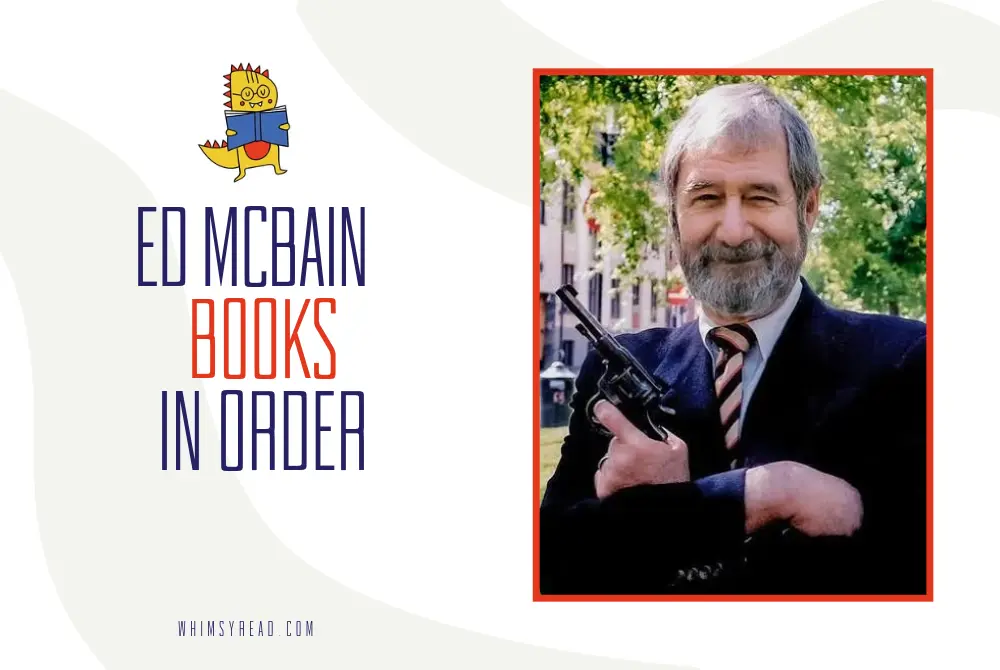
Ed McBain was the pen name of American novelist Evan Hunter, born Salvatore Lombino. He became one of the most recognized names in crime fiction through the 87th Precinct novels, a long-running police procedural series set in the fictional city of Isola, inspired by New York City. His stories often focus on the detectives, their investigations, and the everyday pressures of police work.
But limiting his bibliography to the 87th Precinct would leave out a significant part of his writing career. McBain also created the Matthew Hope mystery series, wrote standalone crime novels, and published fiction under several other names. This guide separates those works so you can find the right reading order without accidentally treating a pseudonym title as a separate series.
87th Precinct Books in Order
The 87th Precinct is Ed McBain’s most famous series. It follows a group of police detectives working in Isola, a fictional city modeled on New York. Detective Steve Carella and his colleagues appear throughout the series, although individual books often focus on different crimes and investigations.
The series contains 55 main novels. Publication order is the best way to read them because the recurring detectives, their relationships, and their working lives develop across the books.
1. Cop Hater (1956)
Cop Hater introduces the 87th Precinct and its police detectives. It establishes the fictional city of Isola and the police procedural style that defines the series.
This is the essential starting point for anyone planning to read all 55 novels. It introduces the world that McBain would continue developing over nearly five decades.
2. The Mugger (1956)
The Mugger is the second 87th Precinct novel. It continues the series’ focus on police investigations and the challenges faced by detectives working in Isola.
Read it after Cop Hater to follow the original publication sequence. It is one of the early novels that helped establish the series.
3. The Pusher (1956)
The Pusher is the third book in the 87th Precinct series. It continues McBain’s exploration of crime and police work in the fictional city.
The novel belongs near the beginning of the series, before the later stories introduce decades of additional cases and character developments.
4. The Con Man (1957)
The Con Man is the fourth installment. It adds another investigation to the growing collection of 87th Precinct stories.
Readers should keep it after The Pusher. The series is built around recurring detectives rather than one continuous mystery, so publication order provides a natural reading experience.
5. Killer’s Choice (1957)
Killer’s Choice is the fifth novel in the series. It continues the crime-focused storytelling and the work of the 87th Precinct detectives.
This is another early entry that helps establish the range of cases McBain would explore throughout the series.
6. Killer’s Payoff (1958)
Killer’s Payoff is the sixth book. It continues the police procedural format and the connected world of the 87th Precinct.
Read it after Killer’s Choice to maintain publication order.
7. Lady Killer (1958)
Lady Killer is the seventh 87th Precinct novel. Like the earlier titles, it centers on crime and the detectives responsible for investigating it.
It is part of the original run of books that established McBain as a major crime-fiction writer.
8. Killer’s Wedge (1958)
Killer’s Wedge is the eighth book in the series. It continues the investigations and character-driven police storytelling associated with the 87th Precinct.
Some bibliographies place Killer’s Wedge before Killer’s Payoff, but the Bookreporter bibliography lists it after Killer’s Payoff. This guide follows that publication sequence.
9. ‘Til Death (1959)
‘Til Death is the ninth installment. It continues the series’ focus on crime, investigation, and the personal and professional lives of the detectives.
Read it after Killer’s Wedge for the recommended sequence.
10. King’s Ransom (1959)
King’s Ransom is the tenth 87th Precinct novel. It adds another case to the long-running police procedural collection.
The title is also known to readers through its connection with the Japanese film High and Low, directed by Akira Kurosawa and based on the novel.
11. Give the Boys a Great Big Hand (1960)
Give the Boys a Great Big Hand is the eleventh book in the series. It continues the investigations of the 87th Precinct detectives.
The title belongs to the early 1960s part of the series, when McBain was steadily expanding the fictional world of Isola.
12. The Heckler (1960)
The Heckler is the twelfth installment. It adds another police case to the series and continues the recurring detective-centered storytelling.
Read it after Give the Boys a Great Big Hand.
13. See Them Die (1960)
See Them Die is the thirteenth 87th Precinct novel. It continues the crime and investigation themes that run throughout the series.
It is part of the early collection of books that readers should follow before moving into the later 1960s titles.
14. Lady, Lady, I Did It! (1961)
Lady, Lady, I Did It! is the fourteenth novel. It continues the series’ use of individual crime cases to explore the work of the detectives.
Keep it after See Them Die when following the publication order.
15. The Empty Hours (1962)
The Empty Hours is the fifteenth book in the 87th Precinct series. It continues McBain’s police procedural approach and the wider story world of Isola.
It marks another step in the series’ development during the early 1960s.
16. Like Love (1962)
Like Love is the sixteenth installment. It is part of the same connected police procedural series, with the familiar detectives and city setting.
Read it after The Empty Hours to keep the novels in publication order.
17. Ten Plus One (1963)
Ten Plus One is the seventeenth 87th Precinct novel. It continues McBain’s exploration of criminal investigations through the perspectives of the police officers handling them.
The book belongs after Like Love. It is one of the notable titles from the series’ 1960s period.
18. Ax (1964)
Ax is the eighteenth book in the series. It continues the crime-focused storytelling and the recurring world of the 87th Precinct.
Some editions use the alternate spelling Axe. Both titles refer to the same novel, so readers should avoid treating them as separate books.
19. He Who Hesitates (1964)
He Who Hesitates is the nineteenth installment. It continues the series’ police investigations and the everyday work of the detectives.
Read it after Ax in the publication sequence.
20. Doll (1965)
Doll is the twentieth 87th Precinct novel. It adds another mystery to the series and continues McBain’s focus on the detectives and their cases.
It belongs after He Who Hesitates.
21. Eighty Million Eyes (1966)
Eighty Million Eyes is the twenty-first book. The novel continues the series’ crime and investigation themes, with the familiar Isola setting.
Readers following the complete collection should place it after Doll.
22. Fuzz (1968)
Fuzz is the twenty-second 87th Precinct novel. It is one of the best-known titles in the series and was later adapted into a feature film.
The book is a useful example of McBain’s ability to combine police procedural storytelling with dark humor and a busy urban setting.
23. Shotgun (1969)
Shotgun is the twenty-third installment. It continues the series’ collection of crime cases and police investigations.
Read it after Fuzz to follow the original publication order.
24. Jigsaw (1970)
Jigsaw is the twenty-fourth book in the series. It continues the stories of the 87th Precinct detectives as they investigate crimes in Isola.
The title belongs at the beginning of the 1970s section of the series.
25. Hail, Hail, the Gang’s All Here! (1971)
Hail, Hail, the Gang’s All Here! is the twenty-fifth novel. It continues the long-running police procedural collection and its recurring cast of detectives.
Some bibliographies use slightly different punctuation in the title. It is the same novel, not a separate entry.
26. Sadie When She Died (1972)
Sadie When She Died is the twenty-sixth book in the 87th Precinct series. It continues McBain’s focus on crime investigations and the people affected by them.
Read it after Hail, Hail, the Gang’s All Here!.
27. Let’s Hear It for the Deaf Man (1972)
Let’s Hear It for the Deaf Man is the twenty-seventh installment. The Deaf Man is an important recurring adversary in the 87th Precinct world, making this title particularly interesting to readers following the wider series.
It belongs after Sadie When She Died in the publication sequence.
28. Hail to the Chief (1973)
Hail to the Chief is the twenty-eighth novel. It continues the police investigations and recurring character stories that make the series more than a collection of unrelated mysteries.
Read it after Let’s Hear It for the Deaf Man.
29. Bread (1974)
Bread is the twenty-ninth 87th Precinct book. It adds another case to the series and continues McBain’s portrayal of the fictional city and its police department.
It belongs in the middle of the long-running sequence, after Hail to the Chief.
30. Blood Relatives (1975)
Blood Relatives is the thirtieth novel in the series. It continues the crime and police procedural storytelling that has defined the 87th Precinct from the beginning.
The title has also appeared as Blood Relative in some listings. These are alternate title forms, not two separate novels.
31. So Long as You Both Shall Live (1976)
So Long as You Both Shall Live is the thirty-first installment. It continues the connected world of the 87th Precinct and its detectives.
Read it after Blood Relatives to maintain the publication sequence.
32. Long Time No See (1977)
Long Time No See is the thirty-second novel. It is another entry in McBain’s long-running exploration of police work, crime, and city life.
The book follows So Long as You Both Shall Live.
33. Calypso (1979)
Calypso is the thirty-third 87th Precinct novel. It continues the series after a short gap in the publication timeline.
Readers should place it after Long Time No See.
34. Ghosts (1980)
Ghosts is the thirty-fourth installment. It continues the police procedural stories set in Isola and follows the detectives through another investigation.
The title belongs after Calypso in the recommended order.
35. Heat (1981)
Heat is the thirty-fifth book. It continues the familiar mix of crime, police work, and character development that runs through the 87th Precinct novels.
Read it after Ghosts.
36. Ice (1983)
Ice is the thirty-sixth installment. It continues the series’ exploration of criminal cases and the detectives who investigate them.
It belongs after Heat in publication order.
37. Lightning (1984)
Lightning is the thirty-seventh 87th Precinct novel. It adds another investigation to the series and continues the familiar Isola setting.
Read it after Ice.
38. Eight Black Horses (1985)
Eight Black Horses is the thirty-eighth book. It continues the series’ police procedural format and the recurring stories of the 87th Precinct detectives.
It belongs after Lightning.
39. Poison (1987)
Poison is the thirty-ninth installment. It continues McBain’s crime-fiction world and the investigations handled by the 87th Precinct.
Readers should place it after Eight Black Horses.
40. Tricks (1987)
Tricks is the fortieth book in the series. It adds another case to the long-running collection and continues the familiar police procedural approach.
Read it after Poison.
41. Lullaby (1989)
Lullaby is the forty-first installment. It continues the 87th Precinct novels into the late 1980s.
The book belongs after Tricks in publication order.
42. Vespers (1990)
Vespers is the forty-second novel. It continues the series’ focus on crime and the detectives working in Isola.
Read it after Lullaby.
43. Widows (1991)
Widows is the forty-third book. It is another entry in McBain’s long-running police procedural series, with the recurring detectives and city setting.
It follows Vespers in the publication sequence.
44. Kiss (1992)
Kiss is the forty-fourth installment. It continues the 87th Precinct stories as the series moves into the 1990s.
Readers should place it after Widows.
45. Mischief (1993)
Mischief is the forty-fifth book. It continues the investigations and character-driven storytelling associated with the series.
Read it after Kiss.
46. And All Through the House (1994)
And All Through the House is the forty-sixth 87th Precinct novel. It continues the series’ crime and police investigation themes.
It belongs after Mischief in publication order.
47. Romance (1995)
Romance is the forty-seventh installment. It continues the fictional world of Isola and the recurring detectives who have carried the series across decades.
Read it after And All Through the House.
48. Nocturne (1997)
Nocturne is the forty-eighth book in the series. It continues McBain’s police procedural storytelling and the work of the 87th Precinct.
It belongs after Romance.
49. The Big Bad City (1999)
The Big Bad City is the forty-ninth installment. Its title reflects the urban crime setting that has been central to the 87th Precinct novels since the beginning.
Read it after Nocturne.
50. The Last Dance (2000)
The Last Dance is the fiftieth book. Reaching this milestone shows the remarkable length of McBain’s police procedural series.
It continues the recurring characters and investigations that make the 87th Precinct such a substantial crime-fiction collection.
51. Money, Money, Money (2001)
Money, Money, Money is the fifty-first installment. It continues the series into the new millennium while retaining the familiar police procedural format.
Read it after The Last Dance.
52. Fat Ollie’s Book (2003)
Fat Ollie’s Book is the fifty-second 87th Precinct novel. The title puts Fat Ollie Weeks, a recurring character in the series, in the spotlight.
It is an important late entry for readers who have followed the 87th Precinct characters over the years.
53. The Frumious Bandersnatch (2004)
The Frumious Bandersnatch is the fifty-third book. It continues the late-period 87th Precinct stories and the recurring world of McBain’s detectives.
Read it after Fat Ollie’s Book.
54. Hark! (2004)
Hark! is the fifty-fourth installment. It is one of the final novels in the series and continues McBain’s long-running crime-fiction tradition.
It belongs immediately before Fiddlers.
55. Fiddlers (2005)
Fiddlers is the fifty-fifth and final 87th Precinct novel. Published in 2005, it brings the long-running series to its conclusion.
Readers who have followed the detectives from Cop Hater can finish their journey here. It is also one of the last major Ed McBain novels published before his death in July 2005.
Matthew Hope Books in Order
Matthew Hope is Ed McBain’s other major mystery series. Unlike the 87th Precinct books, which focus on a police team, this series follows a Florida attorney who becomes involved in criminal investigations.
The titles are inspired by familiar fairy tales and children’s stories. There are 13 novels, and publication order is the simplest way to follow Matthew Hope’s cases.
1. Goldilocks (1977)
Goldilocks introduces Matthew Hope, a lawyer based in Florida. It begins the series of mysteries that follows his involvement in unusual and complicated cases.
Start here if you want to read all 13 Matthew Hope novels. It establishes the central character and the series’ distinctive approach to mystery storytelling.
2. Rumpelstiltskin (1981)
Rumpelstiltskin is the second Matthew Hope novel. Its title draws on the familiar fairy tale, continuing the naming pattern McBain uses throughout the series.
Read it after Goldilocks to follow the attorney’s cases in publication order.
3. Beauty and the Beast (1982)
Beauty and the Beast is the third book. Like the other Matthew Hope novels, it uses a fairy-tale title for a crime mystery.
It continues the series with another case involving the central character. Readers should place it after Rumpelstiltskin.
4. Jack and the Beanstalk (1984)
Jack and the Beanstalk is the fourth Matthew Hope mystery. The title continues the series’ connection with well-known children’s stories.
Read it after Beauty and the Beast.
5. Snow White and Rose Red (1985)
Snow White and Rose Red is the fifth installment. Its title comes from a traditional fairy tale and follows the naming style of the earlier books.
It belongs after Jack and the Beanstalk in the series sequence.
6. Cinderella (1986)
Cinderella is the sixth Matthew Hope novel. It continues McBain’s use of fairy-tale titles for his Florida-based mystery series.
Readers should place it after Snow White and Rose Red.
7. Puss in Boots (1987)
Puss in Boots is the seventh book. It continues the Matthew Hope mysteries and the distinctive title pattern that connects the novels.
Read it after Cinderella.
8. The House That Jack Built (1988)
The House That Jack Built is the eighth installment. The title draws on a traditional nursery rhyme and continues the series’ literary references.
It belongs after Puss in Boots.
9. Three Blind Mice (1990)
Three Blind Mice is the ninth Matthew Hope novel. It continues the series with another mystery featuring the Florida attorney.
Read it after The House That Jack Built.
10. Mary, Mary (1992)
Mary, Mary is the tenth installment. The title is another familiar nursery-rhyme reference in a series known for its playful naming choices.
It follows Three Blind Mice in publication order.
11. There Was a Little Girl (1994)
There Was a Little Girl is the eleventh Matthew Hope book. It continues the mystery series and its recognizable fairy-tale and nursery-rhyme naming approach.
Read it after Mary, Mary.
12. Gladly the Cross-Eyed Bear (1996)
Gladly the Cross-Eyed Bear is the twelfth novel. Its unusual title is a playful phrase that fits the series’ distinctive naming tradition.
It belongs near the end of the Matthew Hope sequence, immediately before the final book.
13. The Last Best Hope (1998)
The Last Best Hope is the thirteenth and final Matthew Hope novel. It completes the series after more than two decades of publication.
Finish with this title if you want to read all of McBain’s Matthew Hope mysteries.
Other Novels Published as Ed McBain
Ed McBain wrote several novels outside the 87th Precinct and Matthew Hope series. These are standalone works or separate collaborations, so they do not require a series reading order.
The Big Fix (1952)
The Big Fix is one of McBain’s early novels, published before the 87th Precinct series began. It offers a look at his crime-fiction writing before he became widely known as Ed McBain.
It can be read independently of his later series.
The April Robin Murders (1958)
The April Robin Murders was written with mystery author Craig Rice. It is a collaborative mystery rather than an installment in either of McBain’s major series.
Readers interested in his work beyond the 87th Precinct may want to include it.
The Sentries (1965)
The Sentries is a standalone novel published under the Ed McBain name. It is separate from the police procedural and Matthew Hope books.
You can read it at any point without following a series sequence.
Where There’s Smoke (1975)
Where There’s Smoke is another standalone Ed McBain novel. It belongs to his wider bibliography rather than either of his main mystery series.
It is a useful choice for readers who want to explore his work outside the familiar 87th Precinct setting.
Guns (1976)
Guns is a standalone novel from the mid-1970s. It is separate from the Matthew Hope series, which began around the same period.
Readers can approach it independently.
Another Part of the City (1986)
Another Part of the City is a standalone novel published under Ed McBain’s best-known pen name. It offers another example of his writing beyond the two major series.
There is no required reading order for this title.
Downtown (1991)
Downtown is a standalone Ed McBain novel. It is not part of the 87th Precinct or Matthew Hope sequences.
Read it whenever you want to explore another side of his crime and mystery writing.
Driving Lessons (2000)
Driving Lessons is a later standalone novel. It belongs to McBain’s independent works rather than his long-running series.
It can be read without any background knowledge of his other books.
Alice in Jeopardy (2005)
Alice in Jeopardy is one of the final novels published under the Ed McBain name. It is a standalone thriller and does not belong to the 87th Precinct or Matthew Hope series.
It is a good addition for readers who want to explore his later independent fiction.
Evan Hunter Books in Order
Ed McBain and Evan Hunter were the same writer, but the names were used for different kinds of fiction. Hunter generally published mainstream and literary novels under his own name, while McBain became especially associated with crime and police procedural fiction.
If you want to explore his complete writing career, these are some of the major Evan Hunter novels in publication order.
1. The Blackboard Jungle (1954)
The Blackboard Jungle is one of Evan Hunter’s best-known novels. It explores life in an urban high school and the challenges faced by teachers working with troubled students.
The book became especially famous after its film adaptation. It is an important starting point for readers interested in Hunter’s work outside crime fiction.
2. Second Ending (1956)
Second Ending is an early Evan Hunter novel published after The Blackboard Jungle. It is separate from the 87th Precinct series.
Readers exploring Hunter’s literary bibliography can continue with this title.
3. Strangers When We Meet (1958)
Strangers When We Meet is a novel about relationships and personal choices in suburban life. It was later adapted into a film.
It shows a different side of Hunter’s writing from the police procedural stories published as Ed McBain.
4. A Matter of Conviction (1959)
A Matter of Conviction is another Evan Hunter novel from the late 1950s. It belongs to his independent fiction rather than a numbered series.
It can be read on its own.
5. Mothers and Daughters (1961)
Mothers and Daughters is a standalone novel published under the Evan Hunter name. It explores family relationships and belongs to his non-series bibliography.
Readers can include it after A Matter of Conviction when following publication order.
6. Buddwing (1964)
Buddwing is one of Hunter’s notable novels from the 1960s. It follows a man who wakes up with no memory of his identity and tries to discover who he is.
It was later adapted for film. The novel is a strong choice for readers interested in Hunter’s psychological fiction.
7. The Paper Dragon (1966)
The Paper Dragon is a standalone Evan Hunter novel. It continues his work outside the Ed McBain police procedural series.
Read it after Buddwing for publication order.
8. A Horse’s Head (1967)
A Horse’s Head is another independent novel by Hunter. It belongs to his broader literary bibliography rather than a recurring detective series.
It can be read without any knowledge of his other books.
9. Last Summer (1968)
Last Summer is an Evan Hunter novel that explores young people, relationships, and difficult experiences. It was also adapted into a film.
It is one of the titles that demonstrate the range of subjects Hunter explored under his own name.
10. Sons (1969)
Sons is a standalone novel published under Evan Hunter. It continues his exploration of family and personal relationships.
Readers following his non-series books can place it after Last Summer.
11. Nobody Knew They Were There (1971)
Nobody Knew They Were There is another Evan Hunter novel. It is separate from the Ed McBain crime series and can be read independently.
It belongs to the early 1970s part of his publication history.
12. Every Little Crook and Nanny (1972)
Every Little Crook and Nanny is a standalone novel published under Hunter’s own name. It adds another title to his varied collection of fiction.
Read it after Nobody Knew They Were There if following publication order.
13. Come Winter (1973)
Come Winter is an Evan Hunter novel from the 1970s. It is not connected to the 87th Precinct or Matthew Hope stories.
It can be read as an independent work.
14. Streets of Gold (1974)
Streets of Gold is another standalone novel by Hunter. It continues his work exploring subjects beyond crime fiction.
Readers can place it after Come Winter.
15. The Chisholms (1976)
The Chisholms is a historical family novel about a family’s journey west. It later became the basis for a television miniseries.
It is a different kind of story from the urban crime novels for which McBain became famous.
16. Walk Proud (1979)
Walk Proud is listed among Hunter’s works and is also associated with a film project. It is not part of either of his major book series.
Readers interested in his broader writing career can include it here.
17. Love, Dad (1981)
Love, Dad is a standalone Evan Hunter novel. It continues his non-series writing and can be read independently.
It belongs after Walk Proud in the publication sequence.
18. Far from the Sea (1983)
Far from the Sea is another novel published under the Evan Hunter name. It is separate from his Ed McBain mystery series.
Read it after Love, Dad if you are following the author’s publication history.
19. Lizzie (1984)
Lizzie is a standalone novel by Hunter. It adds to his varied body of work outside the 87th Precinct and Matthew Hope books.
It can be read independently.
20. Criminal Conversation (1994)
Criminal Conversation is a later Evan Hunter novel. It is separate from the Ed McBain police procedural books, despite the crime-related sound of its title.
Readers exploring his later fiction can place it after Lizzie.
21. Privileged Conversation (1996)
Privileged Conversation is another standalone novel published under Hunter’s own name. It belongs near the end of his independent novel bibliography.
It can be read after Criminal Conversation.
22. The Moment She Was Gone (2002)
The Moment She Was Gone is a later Evan Hunter novel. It is separate from the 87th Precinct series and forms part of his final period of fiction writing.
Readers following the Evan Hunter novels in publication order can finish this section with this title.
Candyland (2001): A Shared-Name Novel
Candyland is a special case because it was written jointly under the names Evan Hunter and Ed McBain. The novel is divided between the two writing identities, making it a distinctive part of his bibliography.
It is best treated as a standalone collaboration rather than an installment in either major series.
Books Published Under Ed McBain’s Other Pen Names
Evan Hunter used several pseudonyms during his writing career, particularly in his earlier years. Some of these titles are crime and suspense novels that later readers may encounter while searching for Ed McBain’s complete bibliography.
They are not additional 87th Precinct or Matthew Hope books.
| Pen name | Books |
| Richard Marsten | Rocket to Luna, Danger: Dinosaurs!, Runaway Black, Murder in the Navy, Vanishing Ladies, The Spiked Heel, Even the Wicked, Big Man |
| Curt Cannon | I Like ‘Em Tough, I’m Cannon – For Hire |
| Hunt Collins | Cut Me In, Tomorrow and Tomorrow |
| John Abbott | Scimitar |
| Ezra Hannon | Doors |
A few titles have alternate publication names. For example, Murder in the Navy was later published as Death of a Nurse. Similarly, Runaway Black is also listed as Runaway in some bibliographies.
Which Ed McBain Books Should You Read First?
You do not need to read every book in McBain’s bibliography to enjoy his writing. Your starting point depends on whether you prefer police procedurals, traditional mysteries, or standalone fiction.
- For classic police procedural fiction: Start with Cop Hater, the first 87th Precinct novel.
- For a long-running detective series: Read the 87th Precinct books in publication order.
- For a private investigator-style mystery: Begin with Goldilocks, the first Matthew Hope novel.
- For standalone crime fiction: Try The Big Fix or Alice in Jeopardy.
- For literary fiction: Start with The Blackboard Jungle under the Evan Hunter name.
- For psychological fiction: Consider Buddwing.
If you are new to Ed McBain, Cop Hater is the strongest starting point because it introduces the series that made him famous. Once you finish the 87th Precinct novels, you can move to Matthew Hope and his standalone books.
Frequently Asked Questions About Ed McBain Books
How many 87th Precinct books did Ed McBain write?
Ed McBain wrote 55 main 87th Precinct novels. The series begins with Cop Hater (1956) and ends with Fiddlers (2005).
What is the first Ed McBain book?
The Big Fix was published in 1952 under the Ed McBain name and is listed among his other novels. However, Cop Hater (1956) is the first 87th Precinct novel and the best starting point for readers interested in his famous police procedural series.
What is the correct order of the Matthew Hope books?
The Matthew Hope series begins with Goldilocks (1977) and ends with The Last Best Hope (1998). There are 13 novels, and publication order is the recommended way to read them.
Was Ed McBain the same person as Evan Hunter?
Yes. Ed McBain was the best-known pen name of Evan Hunter, whose birth name was Salvatore Lombino. He used different names for different types of fiction throughout his career.
Should I read the 87th Precinct books in order?
Yes, publication order is a good choice. Although many novels feature individual investigations, recurring characters and their relationships develop throughout the series.
Is The Blackboard Jungle an Ed McBain book?
The Blackboard Jungle was published under the name Evan Hunter, not Ed McBain. Both names refer to the same author, so it belongs in a complete guide to his writing career but not in the 87th Precinct series.
What is Ed McBain’s last 87th Precinct book?
Fiddlers (2005) is the fifty-fifth and final 87th Precinct novel. It was published in the year of McBain’s death.
Did Ed McBain write books under other pen names?
Yes. In addition to Evan Hunter and Ed McBain, he used Richard Marsten, Curt Cannon, Hunt Collins, John Abbott, and Ezra Hannon. Several early crime and suspense novels were published under these names.
Final Thoughts: Exploring Ed McBain’s Crime Fiction Legacy
Ed McBain’s bibliography is much larger than one detective series. The 87th Precinct novels offer an extended look at police work in a fictional American city, while the Matthew Hope books provide a different kind of mystery through a Florida attorney. His standalone novels and Evan Hunter works show that he was equally interested in family, relationships, social issues, and psychological storytelling.
For most crime-fiction readers, Cop Hater is the natural place to begin. If you enjoy the characters and the world of Isola, you have 54 more novels to explore before reaching Fiddlers. After that, the Matthew Hope series and his independent books offer plenty of reasons to keep reading one of the most prolific writers in modern crime fiction.

Leave a Reply