
The Master of American Memory: The Complete Guide to David McCullough’s Books in Order
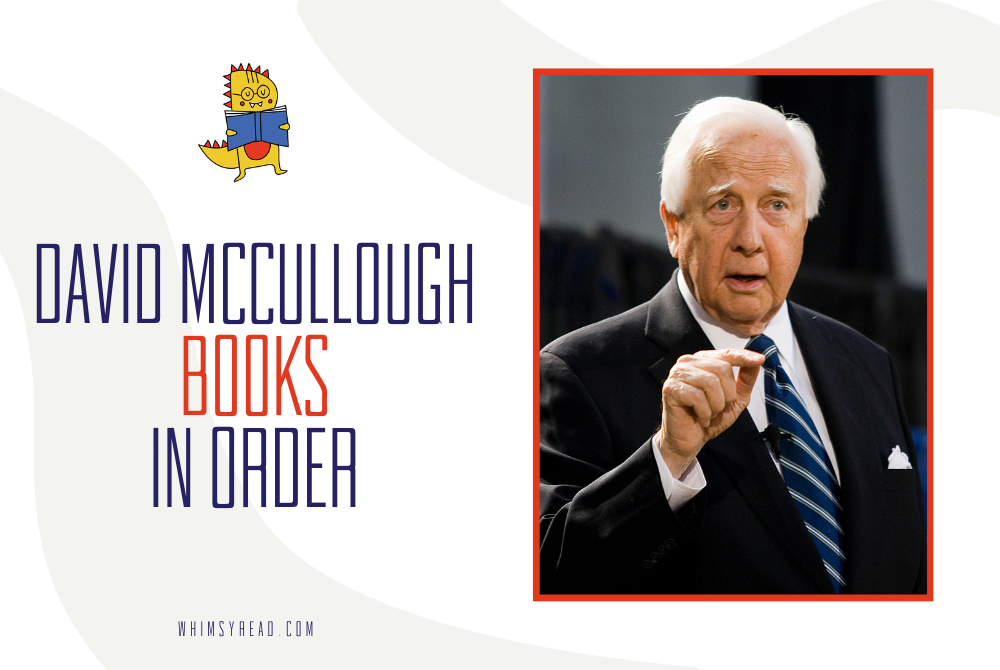
When David McCullough passed away in 2022, American literature lost its chief architect of public memory. Over a career spanning more than five decades, McCullough did something rare in academic history: he brought archival research into mainstream bestseller lists without sacrificing scholarly rigor. He didn’t merely record history—he humanized it.
Reading McCullough’s bibliography feels like taking a grand tour of human ambition. Whether he is dissecting the political maneuvering of Founding Fathers, tracking the mechanical brilliance of two brothers in a Dayton bicycle shop, or describing the sheer grit required to dig a canal through a deadly jungle, his writing treats history not as a set of dates, but as a series of decisions made by real, flawed people under pressure.
If you are looking to dive into McCullough’s work, understanding how his catalog fits together—and where to start based on your personal reading tastes—will help you get the most out of his monumental legacy.
Chronological Publication Order: The Complete Bibliography
To appreciate how McCullough transformed from a magazine editor at American Heritage into the nation’s foremost historian, exploring his works in the order he wrote them is the most rewarding path.
[1968–1977: The Great Engineering Epics]
│
▼
[1981–2001: Award-Winning Presidential Biographies]
│
▼
[2005–2019: Founding Eras, Innovators, & Cultural History]
1. The Johnstown Flood (1968)
McCullough’s debut book established his signature style: blending technical detail with intense human drama. He examines the horrific 1889 dam failure in Johnstown, Pennsylvania, which unleashed 20 million tons of water and claimed over 2,200 lives. McCullough reveals how corporate arrogance, neglected infrastructure, and class dynamics directly caused one of the worst disasters in U.S. history.
2. The Great Bridge: The Epic Story of the Building of the Brooklyn Bridge (1972)
Moving from disaster to human achievement, McCullough chronicles the fourteen-year heroic struggle to build the Brooklyn Bridge. The narrative focuses on chief engineer John A. Roebling, his son Washington Roebling (who was bedridden by the bends during construction), and Washington’s wife Emily Warren Roebling, whose unsung technical leadership kept the project alive.
3. The Path Between the Seas: The Creation of the Panama Canal, 1870–1914 (1977)
Winner of the National Book Award and the Francis Parkman Prize.
Widely considered one of the finest non-fiction works ever written, this sweeping chronicle details the geopolitical intrigues, medical breakthroughs against yellow fever, and monumental engineering feats that connected the Atlantic and Pacific oceans.
4. Mornings on Horseback (1981)
Winner of the National Book Award.
Before he was a Rough Rider or President, Theodore Roosevelt was a frail, asthmatic boy raised in a wealthy, loving Victorian family. McCullough focuses on seventeen formative years (1869–1886), illustrating how personal tragedy and family devotion forged TR’s extraordinary character.
5. Brave Companions: Portraits in History (1991)
A rich collection of seventeen biographical essays celebrating remarkable figures who shaped the modern world. Subjects range from natural scientist Alexander von Humboldt and author Harriet Beecher Stowe to aviator Charles Lindbergh and painter Frederic Remington.
6. Truman (1992)
Winner of the Pulitzer Prize for Biography.
This 1,000-page masterpiece redefined how Americans view Harry S. Truman. McCullough details Truman’s journey from an impoverished Missouri farm boy and failed haberdasher to the nation’s chief executive during the dawn of the Atomic Age, the Marshall Plan, and the Korean War.
7. John Adams (2001)
Winner of the Pulitzer Prize for Biography.
Perhaps McCullough’s most famous work, this volume rescued America’s second president from the historical shadows of George Washington and Thomas Jefferson. The book highlights Adams’ fierce independence, his crucial role in pushing for independence in 1776, and his enduring intellectual partnership with his wife, Abigail Adams.
8. The Course of Human Events (2004)
A published version of McCullough’s 2003 Jefferson Lecture in the Humanities. This concise text examines the personal character, moral conviction, and shared ideals of the leadership generation that forged the American Republic.
9. 1776 (2005)
Published as a narrative companion to John Adams, this military history focuses tightly on a single, harrowing year in the Revolutionary War. McCullough paints a gritty, unvarnished picture of George Washington’s fledgling army as they faced defeat after defeat before orchestrating the miraculous crossing of the Delaware.
10. In the Dark Streets Shineth: A 1941 Christmas Eve Story (2010)
A short, illustrated historical narrative capturing the pivotal White House meeting between Franklin D. Roosevelt and Winston Churchill in December 1941, just days after the attack on Pearl Harbor, as they forged the Allied strategy for World War II.
11. The Greater Journey: Americans in Paris (2011)
McCullough turns his lens toward 19th-century cultural history, following ambitious American artists, writers, doctors, and inventors—including Oliver Wendell Holmes, Mark Twain, Mary Cassatt, and Samuel Morse—who moved to Paris between 1830 and 1900 to master their crafts.
12. The Wright Brothers (2015)
A dual biography exploring how Wilbur and Orville Wright—two modest brothers with no college education, no federal grants, and little financial backing—solved the problem of human flight through sheer obsession, systematic testing, and family support in Dayton, Ohio.
13. The American Spirit: Who We Are and What We Stand For (2017)
A curated collection of McCullough’s most inspiring speeches delivered over several decades at historic sites, university commencements, and joint sessions of Congress, emphasizing civic duty, historical literacy, and core national values.
14. The Pioneers: The Heroic Story of the Settlers Who Brought the American Ideal West (2019)
McCullough’s final book details the settlement of the Northwest Territory (present-day Ohio) following the Revolutionary War, following five key historical figures who established communities based on civil liberties, public education, and the explicit prohibition of slavery.
Recommended Reading Paths: Where Should You Start?
Because McCullough’s catalog spans multiple eras, technical disciplines, and narrative formats, choosing the right starting point depends on your personal reading preferences.
| Reader Profile | Recommended Starting Book | Why It Works |
| The Political & Presidential Buff | John Adams (2001) or Truman (1992) | Sweeping, Pulitzer Prize-winning character studies that read like immersive novels. |
| The Military & Revolutionary War Fan | 1776 (2005) | A fast-paced, intensely focused 300-page narrative on Washington’s darkest hour. |
| The Engineering & Science Enthusiast | The Path Between the Seas (1977) | An epic breakdown of human ingenuity triumphing over impossible geography. |
| The Quick-Read / Short Narrative Seeker | The Wright Brothers (2015) | An inspiring, highly readable double biography under 350 pages. |
The McCullough Craft: Why His Writing Resonates
What made David McCullough a dominant force in American non-fiction was not merely his subject matter, but his distinct philosophy toward historical research and prose.
- Character Over Cynicism: While many modern historians focus heavily on deconstruction, McCullough focused on empathy. He sought to understand why historical figures made their choices given what they knew at the time, rather than judging them solely through a modern lens.
- Meticulous Primary Research: McCullough spent years in primary archives, reading personal diaries, hand-written letters, and obscure receipts. In John Adams, his heavy use of the correspondence between John and Abigail Adams gives the narrative an intimate, conversational heartbeat.
- Sensory Storytelling: McCullough wrote history with a novelist’s eye for physical detail. He frequently described the smell of coal smoke, the texture of wool uniforms, the sound of river ice, or the physical toll of yellow fever, bringing long-dead eras into vivid color.
Frequently Asked Questions
What is David McCullough’s most famous book?
John Adams (2001) is widely considered his most famous and commercially successful work. It sold millions of copies, won the Pulitzer Prize for Biography, and was adapted into an Emmy Award-winning HBO miniseries starring Paul Giamatti.
Did David McCullough win any Pulitzer Prizes?
Yes. McCullough won two Pulitzer Prizes for Biography: first in 1993 for Truman, and second in 2002 for John Adams.
Are David McCullough’s books historically accurate?
Yes. McCullough was renowned for his academic precision and reliance on primary sources. While he writes in an accessible narrative style, his works are heavily footnoted, rigorously peer-reviewed, and widely respected by academic historians.
Which David McCullough books were adapted for television?
Both Truman (adapted into a 1995 HBO original movie starring Gary Sinise) and John Adams (adapted into a 2008 seven-part HBO miniseries) received widespread critical acclaim and major awards. McCullough also served as the iconic voice and narrator for Ken Burns’ legendary PBS documentary series The Civil War (1990).
What was David McCullough’s final published book?
His final full-length narrative history was The Pioneers: The Heroic Story of the Settlers Who Brought the American Ideal West, published in 2019.
Final Verdict: Building Your McCullough Library
David McCullough’s catalog is more than a list of historical books; it is a monument to human capability and democratic ideals. Whether you choose to trace his career from the tragic waters of The Johnstown Flood to the frontier settlement of The Pioneers, or simply pick up The Wright Brothers for an afternoon of inspiration, McCullough’s prose guarantees a masterclass in American storytelling.

Leave a Reply