
Carlos Castaneda’s Complete Catalog: The Definitive Reading Guide
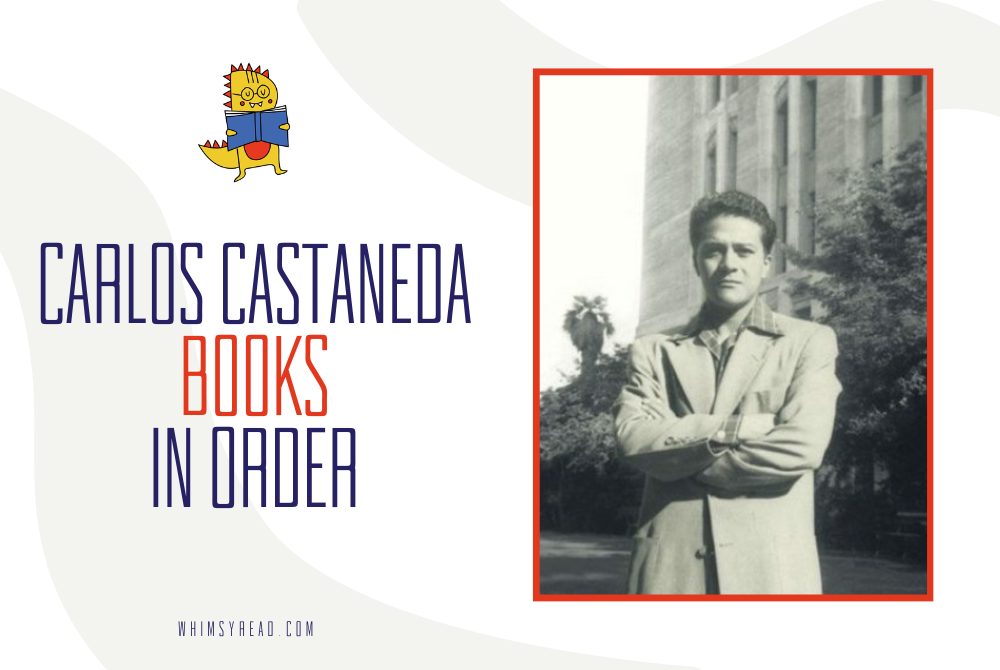
Few authors have disrupted the boundaries between academic anthropology, counterculture mysticism, and pure fiction quite like Carlos Castaneda. His books recount a decade-long spiritual journey into ancient Mexican sorcery, utilizing altered states of consciousness to pierce the veil of ordinary perception.
Whether viewed as literal ethnographic field research or brilliantly crafted allegories, his twelve books form a massive, continuous narrative arc. Below is the complete roadmap to his works, including descriptions of the metaphysical stages explored in each installment.
The Core Don Juan Teachings (The Classic Trilogy)
The first three books were famously written while Castaneda was an anthropology student at UCLA and laid the groundwork for his global fame.
1. The Teachings of Don Juan: A Yaqui Way of Knowledge (1968)
Castaneda’s breakout debut introduces his initial encounters with Don Juan Matus in the Southwest desert. To break his rigid, academic worldview, the shaman introduces Carlos to psychotropic plants—like peyote and jimson weed—triggering intense, mind-shattering experiences aimed at achieving a “non-ordinary reality”.
2. A Separate Reality: Further Conversations with Don Juan (1971)
Returning to Mexico, Carlos attempts to bridge the gap between his rational mind and the sorcerer’s world. Don Juan shifts the focus from hallucinogens to internal discipline, teaching Carlos the art of “seeing” energy as it flows through the universe rather than just looking at physical objects.
3. Journey to Ixtlan: The Lessons of Don Juan (1972)
Often considered his most grounded and deeply personal work, this book reevaluates his early training. Don Juan reveals that the psychotropic plants were merely temporary crutches; the true path of knowledge requires stopping the world, erasing personal history, losing self-importance, and adopting the absolute discipline of a spiritual “warrior”.
The Structural Mechanics of Sorcery
As the narrative advances, the teachings shift entirely away from plant-induced altered states and move toward complex, rigorous cosmic frameworks.
4. Tales of Power (1974)
This book brings the first major phase of Castaneda’s apprenticeship to a dramatic, mind-bending conclusion. Don Juan and his counterpart, Don Genaro, unveil the ultimate concepts of the Tonal (the orderly, social world of the intellect) and the Nagual (the infinite, unknowable realm of spiritual energy), culminating in a literal leap off a canyon cliff.
5. The Second Ring of Power (1977)
Left alone following the physical departure of his master, Carlos returns to Mexico and finds himself under psychological siege by Don Juan’s remaining female apprentices. He must fight to claim his rightful, inherited role as the new Nagual leader while testing his newfound spiritual defenses.
6. The Eagle’s Gift (1981)
Carlos details his struggles to hold his fractured, volatile team of fellow apprentices together. Through intense memory recollection, he introduces the core cosmic myth of “The Eagle”—the supreme consuming force of the universe—and outlines the precise energetic maneuvers required for a human soul to escape its grasp and attain true immortality.
Deepening the Abstract Cores
The later works review and recontextualize the original training, diving straight into pure, multi-dimensional physics and ancient Toltec heritage.
7. The Fire From Within (1984)
Carlos provides a brilliant, comprehensive review of Don Juan’s most advanced instructions regarding the “Second Attention”. The text explains the universe as an infinite web of glowing energetic filaments and describes how a sorcerer shifts their internal “assemblage point” to perceive entirely different worlds.
8. The Power of Silence: Further Lessons of Don Juan (1987)
Focusing on the “Abstract Cores” of sorcery, this volume strips away external rituals to highlight the raw power of intent. Through a series of parabolic teaching stories from Don Juan’s own past, Carlos illustrates how total inner silence allows a warrior to manifest direct universal knowledge.
9. The Art of Dreaming: The Parables of Don Juan (1993)
This text serves as a specialized manual for navigating the landscape of sleep. Castaneda maps out the specific “gates of dreaming,” teaching readers how to find their hands in a dream, stabilize the astral environment, and safely interact with inorganic beings from alternate dimensions.
Final Teachings & Practical Systems
In his final years, Castaneda focused on translating the abstract concepts of sorcery into accessible, physical movements for modern seekers.
10. Magical Passes: The Practical Wisdom of the Shamans of Ancient Mexico (1998)
This heavily illustrated book introduces Tensegrity—a modernized system of physical body movements and breathing techniques allegedly passed down through generations of shamans. The exercises are designed to redeploy stagnant energy back into the vital organs to break normal sensory boundaries.
11. The Wheel of Time: The Shamans of Mexico (1998)
A beautifully curated retrospective compilation featuring selected quotes and profound philosophical passages pulled from his first eight books. Carlos embeds each quote with fresh commentary, illustrating the cyclical nature of his master’s overarching vision.
12. The Active Side of Infinity (1998)
Published right around the time of his death, Castaneda’s final narrative book acts as a spiritual autobiography. Under Don Juan’s original guidance, Carlos compiles an album of the most life-altering, memorable events of his life to prepare his consciousness for its ultimate journey into infinity.
About the Author: Carlos Castaneda
Carlos Castaneda (1925–1998) was a Peruvian-born anthropologist and author who became an international bestseller and a massive cornerstone of the New Age movement. Moving to the United States in the early 1950s, he earned his Ph.D. in anthropology from UCLA based on the radical field notes compiled in his early books.
Castaneda was a notoriously enigmatic figure who intensely guarded his privacy. He routinely gave contradictory accounts of his own early life, fiercely refused to be photographed or recorded, and eventually founded Cleargreen, an organization dedicated to promoting his Tensegrity practices. Despite ongoing, rigorous academic criticism regarding the authentic existence of Don Juan, his books remain celebrated for their immense literary impact and world-building power.
Frequently Asked Questions
Was Don Juan Matus a real person?
This remains one of the greatest debates in modern literary history. While Castaneda always maintained that Don Juan was a real Yaqui shaman, subsequent investigations by anthropologists and journalists uncovered heavy textual inconsistencies and a lack of supporting demographic evidence. Most modern researchers view Don Juan as a brilliant, multi-layered composite character used to deliver deep philosophical truths.
Where should a beginner start with Castaneda’s work?
Without question, beginners should start directly with The Teachings of Don Juan (1968). Reading the books in their exact order of publication is the only way to experience the organic transition from traditional, plant-based psychedelic trips into the sweeping, structural quantum sorcery of his later years.
Verdicts and Recommendations
The Final Verdict: For an iconic, perspective-shifting journey into the heart of counterculture spiritual warfare and shamanism, follow the path chronologically from The Teachings of Don Juan.
This catalog is a perfect match for: Readers fascinated by the works of Aldous Huxley, Timothy Leary, or Ram Dass, and anyone searching for a masterfully written, epic deep-dive into the nature of human perception and alternative realities.

Leave a Reply