
Beverly Cleary Books in Order: Ramona, Henry Huggins, Ralph S. Mouse and More
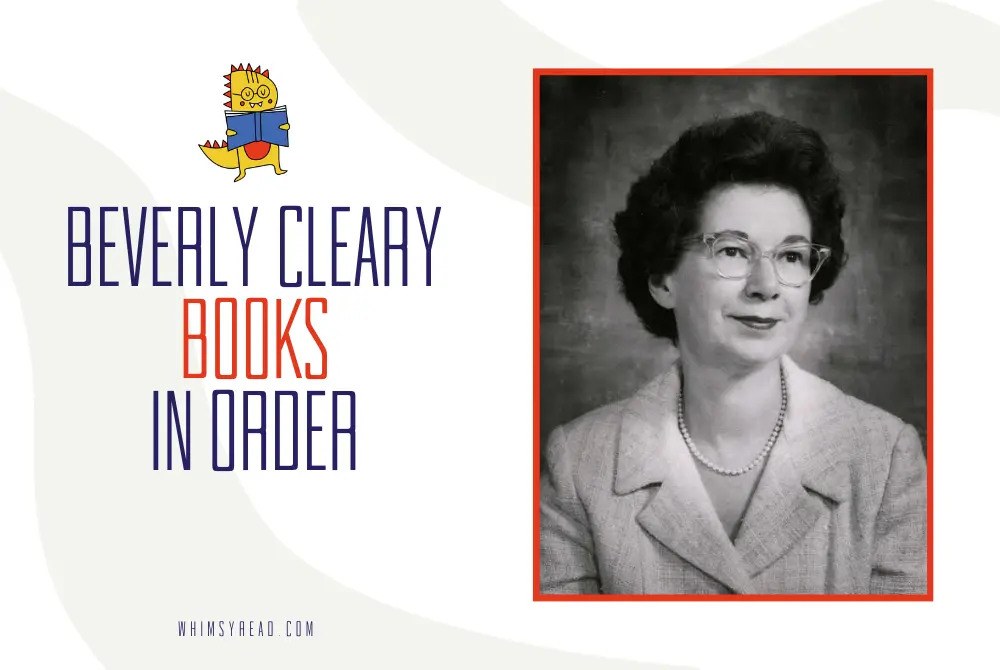
Beverly Cleary spent more than five decades writing about children whose problems felt ordinary, recognizable, and surprisingly important. Her books explore friendship, school, family tensions, growing independence, embarrassment, responsibility, first love, and the everyday misunderstandings between children and adults. Her first published novel, Henry Huggins,
appeared in 1950.
Although Cleary is best known for Ramona Quimby, her bibliography is much broader. Henry Huggins, Beezus, Ralph S. Mouse, Leigh Botts, Ellen Tebbits, and several teenage characters all have their own stories. Some books share the same Portland neighborhood without belonging to the same formal series, so reading them in character or series order is usually more useful than following Cleary’s entire publication history.
Beverly Cleary Books in Order at a Glance
| Series or character group | Books | Best starting point |
| Henry Huggins | 6 | Henry Huggins |
| Ellen & Otis | 2 | Ellen Tebbits |
| Ramona Quimby | 8 | Beezus and Ramona |
| Ralph S. Mouse | 3 | The Mouse and the Motorcycle |
| First Love / Teen Fiction | 4 | Fifteen |
| Leigh Botts | 2 | Dear Mr. Henshaw |
| Other novels and books | Several | Depends on the reader |
The major series groupings above are consistent across current bibliography references, while the official Beverly Cleary teaching materials specifically identify the eight Ramona chapter books as a connected six-year story of Ramona’s childhood.
Henry Huggins Books in Order
The Henry Huggins books were Beverly Cleary’s first major series and introduced readers to the Portland neighborhood that would become the setting for many of her best-known characters.
Henry is an ordinary boy dealing with school, friends, money-making schemes, pets, and the sometimes confusing rules imposed by adults. Ramona and Beezus also appear in this world before Ramona eventually becomes the central character of her own series.
The recommended reading order is the original publication order.
1. Henry Huggins (1950)
Publication year: 1950
Reading position: Henry Huggins #1
Key themes: Friendship, pets, childhood independence, neighborhood life
Henry Huggins is an ordinary boy whose life becomes much more interesting when he brings home a stray dog named Ribsy. What begins as a simple attempt to keep the dog quickly turns into a series of neighborhood adventures.
The book established Cleary’s signature approach to children’s fiction: instead of giving Henry an extraordinary fantasy life, she makes the ordinary problems of childhood feel important, funny, and genuinely exciting.
2. Henry and Beezus (1952)
Publication year: 1952
Reading position: Henry Huggins #2
Key themes: Friendship, siblings, neighborhood relationships, responsibility
Henry’s friendship with Beezus Quimby becomes more prominent in this installment, bringing readers further into the interconnected Portland neighborhood.
Beezus is especially important because she is Ramona’s older sister, and Ramona’s tendency to interfere with the older children’s activities helps establish the character who would later become one of children’s literature’s most recognizable personalities.
3. Henry and Ribsy (1953)
Publication year: 1953
Reading position: Henry Huggins #3
Key themes: Pets, responsibility, friendship, family
Henry and his dog Ribsy take center stage as their everyday adventures become increasingly complicated.
Ribsy is not simply a comic pet; his presence gives Henry opportunities to learn about responsibility, loyalty, and the consequences of trying to solve problems on his own.
4. Henry and the Paper Route (1957)
Publication year: 1957
Reading position: Henry Huggins #4
Key themes: Work, money, independence, childhood responsibility
Henry takes on a paper route, hoping to earn money and become more independent.
As usual in a Beverly Cleary story, a seemingly straightforward childhood ambition creates a collection of practical problems. The book captures the excitement and frustration of having a first real responsibility while still being a child.
5. Henry and the Clubhouse (1962)
Publication year: 1962
Reading position: Henry Huggins #5
Key themes: Friendship, belonging, neighborhood adventures, independence
Henry and his friends become involved with a clubhouse project, giving them another opportunity to create their own small world away from adults.
The story explores the importance children place on having a space and community of their own, while maintaining Cleary’s humorous treatment of neighborhood friendships.
6. Ribsy (1964)
Publication year: 1964
Reading position: Henry Huggins #6
Key themes: Pets, adventure, belonging, family
Ribsy finally gets a story of his own when the adventurous dog becomes separated from Henry and finds himself navigating unfamiliar surroundings.
The book works as both a continuation of the Henry Huggins world and an entertaining animal adventure. It also demonstrates Cleary’s ability to tell a children’s story from a perspective slightly removed from the usual child protagonist.
Ellen Tebbits and Otis Spofford Books in Order
Ellen Tebbits and Otis Spofford are companion books set within the same broader neighborhood world as Cleary’s other Portland stories.
They are not necessary to understand the Ramona books, but they are worth reading if you want to explore the larger community of children Cleary created.
1. Ellen Tebbits (1951)
Publication year: 1951
Reading position: Ellen & Otis #1
Key themes: Friendship, embarrassment, trust, childhood secrets
Ellen Tebbits is embarrassed by a secret she believes she must keep from everyone until she discovers that another girl, Austine, has exactly the same problem.
Their shared secret becomes the beginning of a close friendship, but childhood friendships can change quickly when misunderstandings and hurt feelings enter the picture.
2. Otis Spofford (1953)
Publication year: 1953
Reading position: Ellen & Otis #2
Key themes: Mischief, school, friendship, consequences
Otis Spofford has a talent for turning ordinary classroom situations into chaos.
His teasing of Ellen and his constant search for mischief make him an entertaining troublemaker, but Cleary also shows the emotional consequences of going too far and discovering that other children have feelings that cannot simply be laughed away.
Ramona Quimby Books in Order
The Ramona Quimby books are Beverly Cleary’s most famous series and the natural starting point for many readers searching for her books.
The series follows Ramona from age four through the early years of elementary school and ultimately brings her childhood story full circle. The official Beverly Cleary teaching guide describes the eight books as covering approximately six years of Ramona’s life.
The correct reading order is:
- Beezus and Ramona
- Ramona the Pest
- Ramona the Brave
- Ramona and Her Father
- Ramona and Her Mother
- Ramona Quimby, Age 8
- Ramona Forever
- Ramona’s World
1. Beezus and Ramona (1955)
Publication year: 1955
Reading position: Ramona #1
Key themes: Sibling relationships, jealousy, family, childhood imagination
Ramona is only four years old, but she already has an enormous personality. Her older sister Beezus loves her, yet constantly finds herself frustrated by Ramona’s unpredictable behavior.
From an unplanned party to damaged birthday cakes, Ramona’s actions test Beezus’s patience. The story is ultimately about the complicated love between sisters and the challenge of being the responsible older child.
2. Ramona the Pest (1968)
Publication year: 1968
Reading position: Ramona #2
Key themes: Kindergarten, school, friendship, independence
Ramona starts kindergarten and quickly discovers that school does not work quite the way she expected.
She wants to be good, but her curiosity and impulsiveness repeatedly get her into trouble. Her fascination with Susan’s springy curls becomes one of the book’s memorable episodes, while her experiences at school show why Cleary’s books continue to resonate with young readers.
3. Ramona the Brave (1975)
Publication year: 1975
Reading position: Ramona #3
Key themes: Fear, courage, school, growing independence
Ramona enters first grade determined to be brave, but courage is easier to talk about than practice.
She has to deal with a new bedroom, teasing from classmates, changes at home, and the frightening experience of sleeping alone. School also brings an important breakthrough when Ramona begins learning to read.
4. Ramona and Her Father (1977)
Publication year: 1977
Reading position: Ramona #4
Key themes: Unemployment, family stress, responsibility, childhood anxiety
Ramona’s family faces financial uncertainty after her father loses his job.
Ramona does not fully understand the adult pressures surrounding unemployment, but she understands that her father is unhappy and that the atmosphere at home has changed. Her determination to help her family shows how children often take on emotional responsibilities they are not really expected to carry.
The book was also recognized as a Newbery Honor Book.
5. Ramona and Her Mother (1979)
Publication year: 1979
Reading position: Ramona #5
Key themes: Mother-daughter relationships, work, jealousy, family
Ramona wants to feel special to her mother, especially because she believes Beezus receives a different kind of attention.
Her mother’s work and the family’s changing circumstances make Ramona feel uncertain about her place in the family. Her attempt to run away reflects a very childlike but emotionally serious desire to know that she matters.
The official teaching guide highlights Ramona’s longing for her mother’s attention as one of the central emotional threads of the story.
6. Ramona Quimby, Age 8 (1981)
Publication year: 1981
Reading position: Ramona #6
Key themes: School, responsibility, embarrassment, family, growing up
Ramona is eight and beginning third grade, a stage when she wants to be treated as mature but is still very much a child.
She rides the school bus across town, deals with classmates and a new teacher, worries about her father’s career, and tries to manage responsibilities at home. The novel was a Newbery Honor Book and remains one of the most widely discussed Ramona books.
7. Ramona Forever (1984)
Publication year: 1984
Reading position: Ramona #7
Key themes: Family change, marriage, siblings, growing up
Ramona’s family continues to change as relatives make major life decisions and the Quimby family prepares for the arrival of another baby.
Ramona’s feelings about growing up, family responsibilities, and relationships with adults become more complicated. The book is particularly important in the overall series because it shows how much Ramona and her family have changed since Beezus and Ramona.
8. Ramona’s World (1999)
Publication year: 1999
Reading position: Ramona #8
Key themes: Growing up, family, sibling relationships, new beginnings
Ramona’s World brings Ramona’s childhood story full circle.
Ramona is now an older sister herself, while Beezus has reached high school. The arrival of baby Roberta changes the family dynamic again, and Ramona begins to see herself in a new role.
The official teaching guide describes the book as bringing Ramona’s life full circle, with Ramona now the same age Beezus was in the first book.
Ralph S. Mouse Books in Order
The Ralph S. Mouse trilogy is one of Beverly Cleary’s most distinctive creations because it introduces a small element of fantasy into her otherwise realistic children’s fiction.
The three books follow Ralph, a mouse who lives at the Mountain View Inn and discovers that he can operate a miniature motorcycle.
1. The Mouse and the Motorcycle (1965)
Publication year: 1965
Reading position: Ralph S. Mouse #1
Key themes: Adventure, friendship, independence, imagination
Ralph is an adventurous mouse who discovers that a toy motorcycle can become much more than a toy when he learns how to ride it.
His encounters with Keith, a human boy staying at the hotel, create an unusual friendship between two very different characters. The book combines realistic childhood emotions with a playful fantasy premise.
2. Runaway Ralph (1970)
Publication year: 1970
Reading position: Ralph S. Mouse #2
Key themes: Independence, consequences, friendship, adventure
Ralph decides that life at the Mountain View Inn has become too restrictive and runs away on his motorcycle.
His journey gives him freedom, but it also introduces problems he did not anticipate. The story explores the difference between wanting independence and being ready for everything independence requires.
3. Ralph S. Mouse (1982)
Publication year: 1982
Reading position: Ralph S. Mouse #3
Key themes: School, friendship, identity, independence
Ralph’s adventures continue when he becomes connected with a school environment and experiences life alongside children in a new way.
The final book expands the series beyond its original hotel setting and gives Ralph another opportunity to understand friendship, responsibility, and the human world.
First Love Books in Order
Beverly Cleary also wrote several novels aimed at older children and teenagers, particularly stories about friendship and first romantic experiences.
The commonly grouped First Love books are:
- Fifteen
- The Luckiest Girl
- Jean and Johnny
- Sister of the Bride
These books do not follow one continuous protagonist in the way the Ramona series does, so they can be read independently.
1. Fifteen (1956)
Publication year: 1956
Reading position: First Love #1
Key themes: First love, adolescence, insecurity, friendship
Jane Purdy is fifteen and deeply aware of how awkward adolescence can feel.
When she meets Stan Crandall, she experiences the excitement and uncertainty of a first serious crush. Cleary captures teenage insecurity without making Jane’s emotions seem trivial.
2. The Luckiest Girl (1958)
Publication year: 1958
Reading position: First Love #2
Key themes: New beginnings, friendship, adolescence, belonging
Shelley moves from Oregon to a private school in California, entering a very different social environment.
The story explores the experience of trying to fit into an unfamiliar community while discovering that popularity, friendship, and happiness are more complicated than they initially appear.
3. Jean and Johnny (1959)
Publication year: 1959
Reading position: First Love #3
Key themes: Teenage romance, jealousy, friendship, growing up
Jean and Johnny navigate the excitement and complications of teenage romance.
As with Fifteen, Cleary focuses less on dramatic romance and more on the ordinary emotional confusion of adolescence: insecurity, jealousy, attraction, and the desire to be taken seriously.
4. Sister of the Bride (1963)
Publication year: 1963
Reading position: First Love #4
Key themes: Family, marriage, adolescence, changing relationships
Barbara’s older sister announces that she is getting married, forcing Barbara to confront how quickly family relationships can change.
The story looks at marriage and adulthood from the perspective of a younger sister who is not quite ready to see her family—and herself—in a new way.
Leigh Botts Books in Order
The Leigh Botts books are among Cleary’s most emotionally thoughtful works.
1. Dear Mr. Henshaw (1983)
Publication year: 1983
Reading position: Leigh Botts #1
Key themes: Divorce, loneliness, writing, school, friendship
Leigh Botts begins writing to the author Mr. Henshaw as part of a school assignment, but his letters gradually become a way for him to process the difficulties in his life.
His parents are divorced, his father is often absent, and school is not easy. Through writing, Leigh begins to understand his feelings and find his own voice.
The novel won the Newbery Medal, making it one of Cleary’s most important books for older middle-grade readers.
2. Strider (1991)
Publication year: 1991
Reading position: Leigh Botts #2
Key themes: Friendship, family, responsibility, dogs, change
Leigh continues his story while dealing with changes in his family and a dog named Strider.
The book maintains the emotional realism of Dear Mr. Henshaw while showing Leigh becoming more independent and capable of handling difficult situations.
Beverly Cleary Standalone and Other Books
Not every Beverly Cleary book belongs neatly to one of the major character series.
Her broader bibliography includes children’s novels, picture books, young adult fiction, memoir, and books connected to existing characters. Current bibliography sources list titles such as Emily’s Runaway Imagination, Mitch and Amy, Socks, Muggie Maggie, A Girl from Yamhill, and My Own Two Feet among her other works.
Emily’s Runaway Imagination (1961)
Publication year: 1961
Key themes: Imagination, family, rural childhood, reading
Emily is a young girl growing up in rural Oregon whose imagination turns ordinary circumstances into adventures.
The novel has a particularly interesting connection to Cleary’s own childhood because its setting reflects the author’s experiences growing up in Oregon.
Mitch and Amy (1967)
Publication year: 1967
Key themes: Siblings, family, friendship, childhood
Mitch and Amy are siblings who approach life from very different perspectives.
Their story focuses on the everyday friction and affection between brothers and sisters, another area where Cleary consistently found humor and emotional truth.
Socks (1973)
Publication year: 1973
Key themes: Pets, family, belonging, change
Socks tells the story of a cat whose comfortable life changes when a new baby enters the household.
The story explores jealousy and adjustment from the pet’s perspective, giving young readers a humorous way to think about what it feels like when a family suddenly changes.
Muggie Maggie (1990)
Publication year: 1990
Key themes: School, reading, independence, confidence
Maggie is a third-grade girl who does not want to learn cursive writing.
Her resistance turns an apparently ordinary school assignment into a larger story about independence and the ways children react when adults insist that something is important.
A Girl from Yamhill (1988)
Publication year: 1988
Key themes: Childhood, family, Oregon, memoir
A Girl from Yamhill is Beverly Cleary’s memoir of her early life.
Unlike her children’s novels, this book is autobiographical and gives readers valuable context for the childhood experiences, places, and observations that later influenced her fiction.
My Own Two Feet (1995)
Publication year: 1995
Key themes: Adulthood, independence, career, memoir
My Own Two Feet continues Cleary’s memoir, covering her life after the childhood years described in A Girl from Yamhill.
It offers insight into her education, work, marriage, and eventual development as a writer, making it particularly worthwhile for readers interested in the person behind the novels.
Should You Read Beverly Cleary’s Books in Publication Order?
Not necessarily.
A complete publication-order reading would give you a fascinating picture of Cleary’s development as an author, but it is not the most practical way to experience her fiction.
For most readers, series order is better:
- Want Ramona? Start with Beezus and Ramona.
- Want Henry? Start with Henry Huggins.
- Want Ralph? Start with The Mouse and the Motorcycle.
- Want a more mature middle-grade story? Start with Dear Mr. Henshaw.
- Want teenage romance? Start with Fifteen.
- Want Cleary’s own life story? Start with A Girl from Yamhill.
This approach also prevents an important misconception: the Henry Huggins, Ramona, Ellen & Otis, and other neighborhood books share a broader fictional world, but they are not all one continuous series.
Are the Ramona and Henry Huggins Books Connected?
Yes, very much so.
Ramona first appeared in Beezus and Ramona, but her world had already been developing through the Henry Huggins books.
Beezus is Henry’s friend, while Ramona is her younger sister. Other neighborhood children and families also move between the stories.
That means readers who start with Henry Huggins can see the neighborhood from Henry’s perspective before following Ramona as she becomes the central character.
However, you do not need to read the Henry books before the Ramona books. The Ramona series stands on its own.
What Makes Beverly Cleary’s Books So Enduring?
Everyday childhood feels important
Cleary rarely needed elaborate plots to make a story compelling.
A bad day at school, a family argument, a difficult teacher, a new sibling, an embarrassing moment, or a problem with a friend can feel enormous when you are a child. Cleary understood that emotional scale.
Her children are imperfect
Her characters make mistakes, become jealous, misunderstand adults, behave selfishly, and occasionally make situations worse.
That realism is one reason generations of readers have continued to recognize themselves in her books.
Family problems are treated honestly
Cleary did not avoid difficult subjects simply because she was writing for children.
Her stories include unemployment, divorce, financial anxiety, family conflict, changing relationships, and loneliness. The National Women’s History Museum notes that her books reflected real issues children experienced, including parental job loss, divorce, loss of pets, and bullying.
The humor never requires children to be perfect
Ramona’s mistakes are often funny, but Cleary does not treat her as a “bad child.”
Instead, she shows why Ramona behaves as she does and allows readers to understand her perspective. That combination of humor and empathy is central to Cleary’s appeal.
What Is the Best Beverly Cleary Book to Start With?
The best starting point depends on the reader.
For younger readers: Beezus and Ramona is the natural introduction to Ramona and her family.
For neighborhood adventures: Henry Huggins introduces the broader Portland setting and several recurring characters.
For animal lovers: The Mouse and the Motorcycle offers the most playful premise in Cleary’s bibliography.
For older middle-grade readers: Dear Mr. Henshaw is an excellent choice because its themes are more emotionally complex.
For teenagers: Fifteen provides a classic Cleary story about first love and adolescent uncertainty.
For adults interested in Cleary herself: A Girl from Yamhill followed by My Own Two Feet provides the clearest path into her life and career.
About Beverly Cleary
Beverly Cleary was an American children’s author whose career transformed realistic children’s fiction.
Born in Oregon in 1916, Cleary later worked as a librarian and noticed that young readers were often looking for books about children who felt more like themselves. That observation helped shape the kind of fiction she would eventually write.
Her first published book, Henry Huggins, appeared in 1950. She went on to create some of the most enduring characters in American children’s literature, including Ramona Quimby, Beezus Quimby, Henry Huggins, and Ralph S. Mouse.
Her writing was recognized with major honors including the Newbery Medal, Newbery Honors, and other children’s literature awards. Her work has also been adapted for television and film, including the Ramona stories and Ralph S. Mouse books.
Cleary died in 2021 at the age of 104, leaving behind a body of work that continues to introduce new generations of readers to the humor, frustrations, and emotional complexity of childhood.
Frequently Asked Questions About Beverly Cleary Books
What is the correct order to read the Beverly Cleary books?
There is no single required order for Beverly Cleary’s entire bibliography because her books belong to several character groups and series. The best approach is to read each connected group in publication order, such as the eight Ramona books, six Henry Huggins books, three Ralph S. Mouse books, and two Leigh Botts books.
If you want to experience her career broadly, you can instead read her novels in overall publication order, beginning with Henry Huggins in 1950.
What Beverly Cleary book should I read first?
For most readers, Beezus and Ramona is the best starting point because it introduces Ramona, her sister Beezus, and the family relationships that become central to the most famous Beverly Cleary series.
If you prefer a boy-centered story, start with Henry Huggins. If you want fantasy, choose The Mouse and the Motorcycle.
How many Ramona books did Beverly Cleary write?
Beverly Cleary wrote eight main Ramona chapter books, beginning with Beezus and Ramona and ending with Ramona’s World. The official Beverly Cleary teaching guide describes these eight books as covering six years of Ramona’s life.
The eight books should be read in publication order because Ramona grows older and her family circumstances change from one installment to the next.
Should I read Henry Huggins before Ramona?
You can, but you do not have to.
The Henry Huggins books provide useful background because Beezus is one of Henry’s friends and Ramona appears in the same neighborhood. However, Beezus and Ramona works perfectly well as the beginning of Ramona’s own story.
If you want the broadest experience of Cleary’s Portland neighborhood, reading Henry first is worthwhile.
Are Beverly Cleary’s books connected?
Many of them are.
The Henry Huggins, Ramona, Ellen & Otis, and other neighborhood stories overlap through characters, families, schools, and locations. However, they are better understood as interconnected character groups rather than one enormous series with a single reading order.
The Ralph S. Mouse and Leigh Botts books form their own more clearly defined sequences.
What is the order of the Ralph S. Mouse books?
The correct order is:
- The Mouse and the Motorcycle (1965)
- Runaway Ralph (1970)
- Ralph S. Mouse (1982)
The books follow Ralph’s adventures from the Mountain View Inn into increasingly independent experiences, so publication order is the best reading order.
Which Beverly Cleary book won the Newbery Medal?
Dear Mr. Henshaw won the 1984 Newbery Medal.
Cleary also received Newbery Honor recognition for Ramona and Her Father and Ramona Quimby, Age 8. The latter is specifically identified as a Newbery Honor Book in its publisher’s reading guide.
What age group are Beverly Cleary’s books for?
The answer depends on the book.
The Ramona and Henry Huggins books are generally associated with elementary and middle-grade readers, while Dear Mr. Henshaw and Strider are suited to somewhat older middle-grade readers. Cleary’s teenage novels such as Fifteen and The Luckiest Girl were written for adolescent readers.
Adults can also enjoy her books, particularly because the seemingly simple childhood stories often contain thoughtful observations about family, work, money, relationships, and growing up.
Did Beverly Cleary write books about her own life?
Yes.
Her two major memoirs are A Girl from Yamhill and My Own Two Feet.
A Girl from Yamhill focuses on her childhood, while My Own Two Feet continues into her adult life, education, career, marriage, and development as an author. Together, they provide useful context for understanding the experiences that influenced her children’s fiction.
Final Verdict
If you are looking for Beverly Cleary books in order, do not feel that you need to force her entire bibliography into one giant reading list. Her work is much easier to understand through the characters and series that made her famous.
For the classic Beverly Cleary experience, start with Beezus and Ramona and read the eight Ramona books in order. If you want to explore the world that came before Ramona, go back to Henry Huggins and follow Henry’s six-book series. For something more adventurous, choose The Mouse and the Motorcycle, while older readers may find Dear Mr. Henshaw to be Cleary’s most emotionally substantial starting point.
What makes Cleary’s books exceptional is not complicated world-building or elaborate plots. It is her ability to make ordinary childhood feel worthy of a story. School embarrassment, sibling jealousy, a parent’s job loss, a new baby, a difficult friendship, or the desire to be treated like a grown-up can all become meaningful because Cleary understood that these seemingly small experiences can feel enormous when you are living through them.
That is why her books have remained relevant long after their original publication: the world around children changes, but the emotions of childhood do not.

Leave a Reply