
Amy Tan Books in Order: From The Joy Luck Club to The Backyard Bird Chronicles
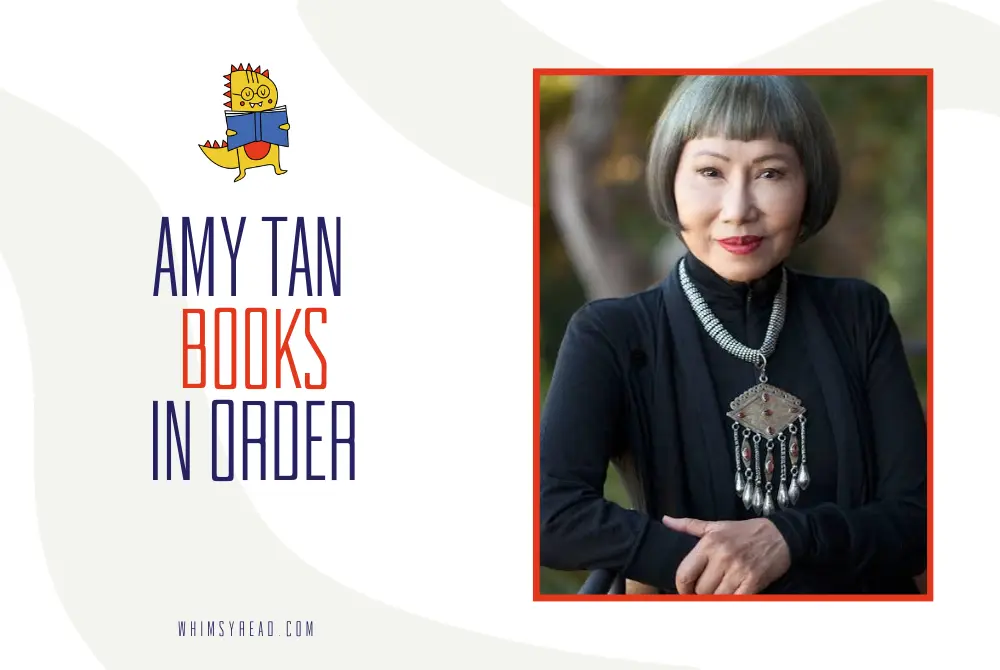
Amy Tan is often associated with stories about mothers and daughters, but her writing covers more than one kind of relationship or experience. Her books explore the distance between generations, the stories families keep hidden, the tension between cultural expectations and individual choices, and the ways memory can change how people understand their past.
Her best-known novel, The Joy Luck Club, established many of these themes, but it is not the beginning of a continuing series. Each of Tan’s six adult novels stands on its own, with different characters and settings.
For readers who want the simplest route through her fiction, the list below follows the novels’ original publication years. The later sections cover her memoirs, children’s books, short fiction, and nature-focused publications, including newer releases through October 2026.
Amy Tan’s Six Novels, in Publication Order
These six novels form the core of Tan’s fiction bibliography. None requires you to read another first.
1. The Joy Luck Club (1989)
Four Chinese immigrant women in San Francisco meet regularly to play mahjong, share food, and tell stories about their lives. Their American-born daughters struggle to understand the experiences that shaped their mothers, while the older generation tries to make sense of the women their daughters have become.
The novel moves between different voices and generations, revealing how cultural expectations, painful memories, and unspoken sacrifices affect family relationships. Rather than presenting one mother-daughter relationship as the whole story, Tan creates a connected portrait of four families.
Start here if: You want the book that introduced Tan to a wide audience and captures many of her central themes.
2. The Kitchen God’s Wife (1991)
Winnie Louie has spent decades keeping parts of her past from her daughter, Pearl. When family circumstances push Winnie to tell her story, Pearl learns about her mother’s difficult experiences in China, including marriage, war, survival, and the journey that eventually brought her to America.
The novel shifts between past and present, showing how secrets can shape a family long after the events themselves have ended. It also examines the resilience required to survive circumstances in which women have limited control over their own lives.
Read this next if: The mother-daughter relationships in The Joy Luck Club interest you and you want a longer, more sustained personal history.
3. The Hundred Secret Senses (1995)
Olivia Bishop has a complicated relationship with her older half-sister, Kwan, who believes she can see ghosts and remember previous lives. Olivia is skeptical of Kwan’s beliefs, but their relationship forces her to confront assumptions about culture, history, and what can be known about another person’s experience.
The story moves between contemporary California and historical China, blending family tension with spiritual beliefs and stories of earlier lives. It is one of Tan’s more playful and imaginative novels, while still examining belonging, memory, and the ways people interpret the world differently.
Choose this one if: You enjoy family fiction that leaves room for ghosts, folklore, and questions that cannot be answered through logic alone.
4. The Bonesetter’s Daughter (2001)
Ruth Young has a difficult relationship with her mother, LuLing, whose memory is beginning to fail. When Ruth discovers her mother’s written account of her early life in China, she begins to understand the history and grief that LuLing has struggled to communicate.
The narrative connects modern San Francisco with a remote Chinese village and follows the consequences of family secrets across generations. As Ruth learns more about LuLing’s childhood and the woman who helped raise her, she begins to see her mother in a different light.
Why it stands out: The novel brings together Tan’s recurring interest in family history with the painful realities of aging, memory loss, and the difficulty of expressing love.
5. Saving Fish from Drowning (2005)
Bibi Chen, a San Francisco art patron, organizes a journey through Burma for a group of American travelers. After Bibi dies unexpectedly, she continues to observe the trip from beyond the grave as the group encounters cultural misunderstandings, dangerous situations, and events far beyond the itinerary.
The novel has a different tone from Tan’s earlier family dramas. Its supernatural narrator gives Tan room to satirize tourism, good intentions, cultural assumptions, and the gap between what people believe about themselves and how their actions affect others.
Best for: Readers who want something more adventurous and satirical than a conventional family saga.
6. The Valley of Amazement (2013)
Set across the late nineteenth and early twentieth centuries, this novel follows Violet Minturn, an American girl who grows up in a Shanghai courtesan house run by her mother. When political and personal upheaval separates them, Violet must make her way through a society shaped by class, gender, money, and competing cultural expectations.
The story explores the lives of women whose choices are restricted by the circumstances into which they are born. It also examines the relationships between mothers and daughters, the search for belonging, and the ways a person’s identity can be shaped by secrets and misunderstandings.
Read this when: You’re ready for a sweeping historical novel with multiple layers of family history and a more expansive setting.
A Quick Novel Reading Map
| Book | Year | A good choice for readers interested in… |
| The Joy Luck Club | 1989 | Mothers, daughters, and cultural identity |
| The Kitchen God’s Wife | 1991 | Survival, marriage, and hidden histories |
| The Hundred Secret Senses | 1995 | Sisterhood, folklore, and spiritual beliefs |
| The Bonesetter’s Daughter | 2001 | Memory, aging, and family secrets |
| Saving Fish from Drowning | 2005 | Satire, travel, and cultural misunderstandings |
| The Valley of Amazement | 2013 | Historical fiction and women’s lives |
Publication order is the clearest way to read these novels, but you can start with whichever premise appeals to you most. Their shared themes make them feel related without making them a single continuous story.
Amy Tan’s Nonfiction: Memoirs and Personal Reflections
Tan’s nonfiction offers a different way to understand her interests in memory, storytelling, family, and the experiences that shape a writer. These books are independent of her novels.
The Opposite of Fate: A Book of Musings (2003)
This collection of personal essays reflects on Tan’s childhood, family, career, and experiences as a writer. She considers the roles of chance and choice in life, combining serious reflections with humor and candid observations.
It is a useful companion to her fiction because it gives readers a more direct sense of the questions and experiences that have informed her work. It is not a novel and does not need to be read alongside any particular story.
Where the Past Begins: A Writer’s Memoir (2017)
In this memoir, Tan looks closely at the relationship between imagination, memory, and the act of writing. She discusses her creative process, personal history, family relationships, and the experiences that have shaped her as an author.
Readers who want to understand how Tan approaches fiction may find this especially interesting. Rather than serving as a conventional chronological autobiography, it explores the ways stories develop from memories, feelings, and fragments of lived experience.
Children’s Books by Amy Tan
Tan has also written two children’s books that introduce young readers to folklore and imaginative storytelling. They can be read independently and are separate from her adult novels.
The Moon Lady (1992)
Illustrated by Gretchen Schields, this picture book follows three sisters whose grandmother tells them a story about the Moon Lady during a rainy afternoon. The tale introduces a world of wishes, imagination, and Chinese cultural traditions.
It is a good choice for families looking for a story that combines a warm family setting with folklore.
Sagwa, the Chinese Siamese Cat (1994)
This children’s book follows Sagwa, a Siamese cat living in the household of a Chinese magistrate. A playful incident involving ink changes the way the magistrate sees his cats and leads to consequences for the household.
The story draws on a historical Chinese setting and explores fairness, pride, and the unexpected results of a small act. It also inspired the animated children’s television series of the same name.
Children’s reading order: Read The Moon Lady first if you want to follow publication order, then continue with Sagwa, the Chinese Siamese Cat. They are unrelated stories.
Short Fiction Worth Knowing
Not all of Tan’s fiction is published as a full-length novel. Her early short stories helped establish her reputation, and some later works offer a more compact way to experience her storytelling.
Rules for Virgins (2012)
This novella is set in Shanghai in the early twentieth century and follows a young woman working as a courtesan’s assistant. Through the narrator’s observations and lessons, the story explores power, desire, social position, and the difficult choices available to women in that world.
Readers interested in the historical setting of The Valley of Amazement may appreciate this shorter work. It offers a focused story rather than another full-length novel.
Other notable short stories
Tan’s early fiction includes “Rules of the Game,” “Two Kinds,” and “Fish Cheeks.” These stories explore family expectations, cultural identity, childhood, and the complicated feelings that can arise between parents and children.
“Rules of the Game” helped bring her work to wider attention before The Joy Luck Club was published. Some of her short fiction is available in collections or educational anthologies, so the publication details can differ depending on the edition.
Amy Tan’s Newer Nature Books
A reader who knows Tan only for her novels may be surprised by her more recent work. Birdwatching, drawing, and close observation of the natural world have become an important part of her creative life.
The Backyard Bird Chronicles (2024)
Part journal, part nature book, and part illustrated record, The Backyard Bird Chronicles documents Tan’s growing interest in the birds that visit her yard. It combines diary entries, observations, questions, and her own drawings to capture the behavior and personalities of the birds around her.
The book is less about identifying every bird in a formal field-guide style and more about learning to pay attention. Tan shows how watching wildlife can create a sense of curiosity and calm, even during difficult periods.
The Backyard Bird Journal (2025)
This companion publication gives readers space to record their own observations, sketches, and experiences with nature. It is intended as a practical journal rather than a second narrative book.
You do not need to read The Backyard Bird Chronicles first, but the earlier book offers context for Tan’s approach to watching and drawing birds.
The Backyard Bird Deck (2026)
This set of affirmation cards draws on the themes of nature, attention, and living more deeply. It is a different format from Tan’s fiction and memoirs, designed for reflection rather than continuous reading.
The Backyard Bird Planner (2026)
Published in September 2026, this undated planner extends the Backyard Bird collection into an everyday planning format. It is best considered a companion product for readers who enjoy Tan’s nature-focused work, not a new novel.
A note on the newer releases: The Backyard Bird Journal, Deck, and Planner are related to Tan’s nature-journaling work, but they are not sequels to her novels. The special-edition Backyard Bird Collection is a boxed set, not a separate literary work.
Which Amy Tan Book Should You Start With?
There’s no required reading order, so let your interests decide.
- Want to read her most famous work? Choose The Joy Luck Club.
- Interested in a mother-daughter story with a painful family history? Try The Kitchen God’s Wife or The Bonesetter’s Daughter.
- Prefer folklore and spiritual elements? Start with The Hundred Secret Senses.
- Looking for historical fiction? Read The Valley of Amazement.
- Want a different tone, with satire and a supernatural narrator? Pick up Saving Fish from Drowning.
- Curious about the writer herself? Begin with The Opposite of Fate or Where the Past Begins.
- Want a nature book rather than a novel? Start with The Backyard Bird Chronicles.
For a first-time reader, The Joy Luck Club remains the most natural introduction. If you have already read it, The Bonesetter’s Daughter is a strong next choice because it develops many of the same themes through a different family and narrative structure.
Frequently Asked Questions
Do Amy Tan’s novels have to be read in order?
No. All six of her adult novels are standalone works with different characters and storylines. Publication order is useful for seeing how her writing developed, but it is not necessary for understanding the plots.
What was Amy Tan’s first book?
The Joy Luck Club, published in 1989, was her debut novel. It grew out of connected stories and explores the relationships between four Chinese immigrant mothers and their American-born daughters.
What is Amy Tan’s most famous book?
The Joy Luck Club is generally considered her signature work. Its portrayal of mother-daughter relationships and Chinese American identity brought her wide recognition and was later adapted into a feature film.
How many novels has Amy Tan written?
Amy Tan has published six full-length novels: The Joy Luck Club, The Kitchen God’s Wife, The Hundred Secret Senses, The Bonesetter’s Daughter, Saving Fish from Drowning, and The Valley of Amazement.
Is The Backyard Bird Chronicles a novel?
No. It is an illustrated nature journal that combines personal observations, diary entries, and Tan’s drawings of birds. It reflects her interest in birdwatching rather than continuing the stories in her fiction.
What is Amy Tan’s latest book?
As of October 2026, The Backyard Bird Planner, released in September 2026, is among her newest publications. Her recent nature-related releases also include The Backyard Bird Deck (2026) and The Backyard Bird Journal (2025).
Did Amy Tan write books for children?
Yes. Her children’s books include The Moon Lady (1992) and Sagwa, the Chinese Siamese Cat (1994). Both can be read independently of her adult fiction.
What themes appear throughout Amy Tan’s books?
Her writing often explores family secrets, relationships between mothers and daughters, cultural identity, migration, memory, and the conflict between inherited expectations and personal freedom. The nature books explore a different subject, focusing on observation, curiosity, and the natural world.
About Amy Tan
Amy Tan is an American writer known for novels that explore Chinese American identity, family relationships, cultural expectations, and the stories passed between generations. Her debut novel, The Joy Luck Club, became an international success and established her as an important voice in contemporary American literature.
Beyond fiction, Tan has written memoirs, children’s books, short stories, essays, and illustrated nature publications. Her recent birdwatching work reveals another side of her creativity, one rooted in observation, drawing, and a sustained interest in the natural world.
Final Note
If you’re reading Amy Tan for the first time, begin with The Joy Luck Club and continue through her six novels in publication order. Then explore her memoirs for a closer look at the writer behind the stories, or turn to The Backyard Bird Chronicles to discover her more recent interest in nature and illustration.
Her novels are not a series, so you can always choose the story that speaks to you. What connects them is Tan’s attention to the hidden histories people carry, the ways families misunderstand one another, and the possibility of seeing an old story differently once more of the truth comes to light.

Leave a Reply