
Donald Goines Books in Order: All 16 Urban Fiction Novels and the Kenyatta Series
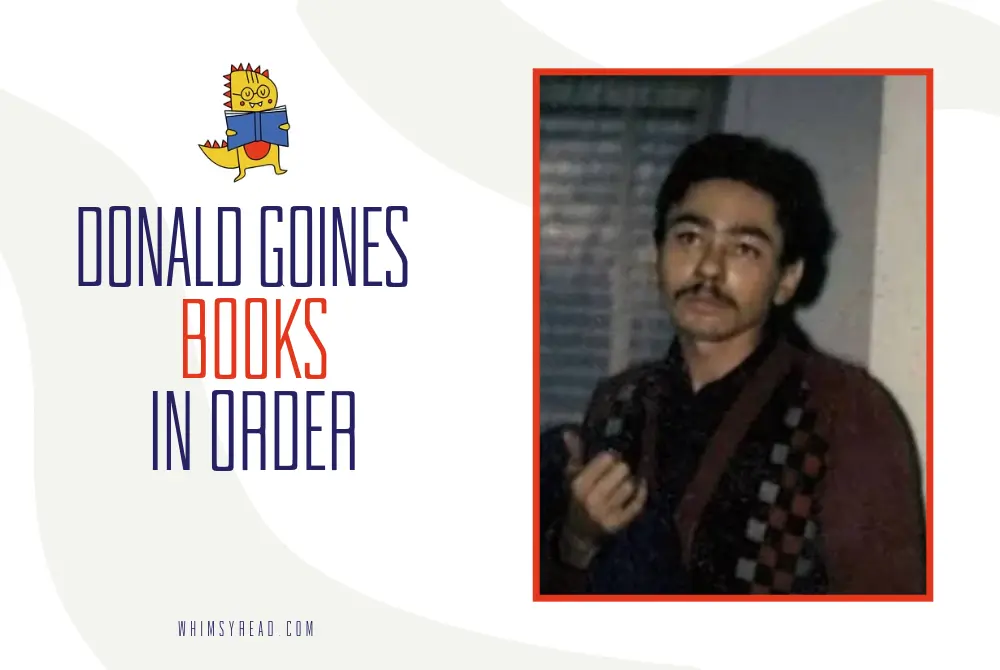
Donald Goines wrote with extraordinary urgency, producing a body of Black urban crime fiction that has continued to influence street literature and hip-hop culture long after his death. His novels confront addiction, prostitution, gang conflict, imprisonment, violence, and the ways economic hardship and predatory power shape choices. They are often disturbing; they are also sharply focused on characters who understand that the streets carry rules of their own.
Born in Detroit in 1937, Goines served in the Air Force and spent time in prison before becoming a published novelist. His firsthand experiences informed his depiction of criminal worlds, although individual plots should not be mistaken for direct autobiography. Because the original books appeared in a short period and have been reissued repeatedly by Holloway House and Kensington, a reliable reading guide must distinguish original novels from new covers and print dates.
Donald Goines Books in Publication Order
Goines’s 16 novels appeared in an unusually compressed period. Exact within-year order varies among bibliographies, especially for titles issued close together in 1974 and the posthumous 1975 publications; the table therefore groups books by their commonly cited original years rather than claiming a definitive month-by-month sequence.
| Book | Original year commonly listed | Reading category |
| Dopefiend | 1971 | Standalone |
| Whoreson | 1972 | Standalone |
| Black Gangster | 1972 | Standalone |
| Street Players | 1973 | Standalone |
| White Man’s Justice, Black Man’s Grief | 1973 | Standalone |
| Black Girl Lost | 1973–1974 | Standalone |
| Crime Partners | 1974 | Kenyatta #1 |
| Death List | 1974 | Kenyatta #2 |
| Kenyatta’s Escape | 1974 | Kenyatta #3 |
| Kenyatta’s Last Hit | 1975 | Kenyatta #4 |
| Eldorado Red | 1974 | Standalone |
| Swamp Man | 1974 | Standalone |
| Never Die Alone | 1974 | Standalone |
| Daddy Cool | 1974 | Standalone |
| Cry Revenge | 1974 | Standalone, sometimes grouped with Kenyatta |
| Inner City Hoodlum | 1975 | Standalone, posthumous |
Publication lists may put Dopefiend in 1972 and Black Girl Lost in either 1973 or 1974. A retailer’s 2000s or 2020s reissue year is not proof that Goines wrote a new novel then. For the four-book Kenyatta plot, use the numbered sequence below rather than the mixed year-grouped table.
Donald Goines Standalone Novels
Dopefiend (1971)
Teddy and Terry are a young couple whose promise and affection collapse as heroin dependence draws them into exploitation and desperate choices. The novel traces addiction not as glamorous rebellion but as a brutal cycle affecting relationships, dignity, and survival. Its unflinching depiction of drug use makes it an important Goines starting point, although readers should expect distressing material.
Whoreson (1972)
Born to a sex worker and raised in a harsh Detroit environment, Whoreson Jones learns the rules of exploitation and manipulation from an early age. As he grows into a ruthless pimp, the lessons he absorbs from figures such as Big Mama and Fast Black reshape his understanding of masculinity and success. Though published after Dopefiend, the novel is often identified as the first book Goines wrote.
Black Gangster (1972)
A man known as Prince begins shaping plans for criminal power while imprisoned, determined to build an organization that can dominate the streets when he is free. With Ruby playing an important role in his ambitions, he discovers that authority built on intimidation can create dangerous enemies. The novel offers a concentrated look at power, leadership, and the cost of treating crime as a business empire.
Street Players (1973)
Earl the Black Pearl rises through Detroit’s dangerous underworld and believes his reputation and business keep him beyond the reach of rivals. When people close to him are targeted, his confidence turns into a fight for control and survival. Readers who enjoy crime stories about the fragility of status will recognize why this is one of Goines’s memorable street-world portraits.
White Man’s Justice, Black Man’s Grief (1973)
Chester Hines faces economic hardship and the lure of crime before entering a prison system where survival becomes a daily struggle. The book follows the relationships and indignities of incarceration, presenting institutional brutality as central to the experience rather than as background scenery. It is especially relevant to readers interested in prison fiction, racial inequality, and the pressures surrounding crime and punishment.
Black Girl Lost (1973–1974)
Sandra grows up largely without protection and learns to survive through petty theft and drug dealing on Detroit’s streets. Her relationship with Chink seems to promise affection and security, but the world surrounding them remains dangerous and exploitative. This is a particularly painful novel about vulnerability, poverty, and the ways people seeking love can become trapped in violence.
Eldorado Red (1974)
Eldorado Red has wealth and influence within Detroit’s numbers racket, yet his control becomes threatened by betrayal from someone in his own family. His son Buddy’s actions set off a dangerous conflict between loyalty, fear, and the street’s expectations of retaliation. The book is a compact family-and-crime tragedy about what happens when private attachments challenge a public reputation.
Swamp Man (1974)
George Jackson grows up in the Mississippi swamps, far removed from the Detroit streets of many Goines novels, until a brutal assault on his sister changes his life. He responds by pursuing the men responsible, transforming the landscape of his childhood into the setting for a ruthless revenge story. The distinct rural atmosphere and personal motive make it an unusual entry in the author’s catalog.
Never Die Alone (1974)
Drug dealer King David returns to New York after years of ruthless dealing and betrayal, believing wealth and status can separate him from the violence of his past. Instead, old grievances and the people he harmed close in around him. The novel’s focus on consequences and false invincibility makes it one of Goines’s most recognizable crime stories; it inspired the 2004 film starring DMX.
Daddy Cool (1974)
Larry Jackson, known as Daddy Cool, works as a professional killer and keeps his professional ruthlessness separate from the family life he wants to control. When he fears his daughter’s relationship could drag her into the same exploitation he profits from, that division collapses. The resulting conflict gives the violent thriller an unusually personal and troubling center.
Cry Revenge (1974)
Curtis Carson’s involvement in gambling and drug-world conflict has devastating consequences for his brother, whose hopes for a basketball future are destroyed. Curtis responds to the violence with a determination to strike back, drawing him into a cycle of retaliation. The novel was issued under the name Al C. Clark and is sometimes listed alongside the Kenyatta books, but its Curtis-centered story deserves a separate description.
Inner City Hoodlum (1975)
Teenager Johnny Washington survives by stealing from Los Angeles freight yards with friends Josh and Buddy until a deadly confrontation forces them toward a local crime boss. The exploitation of Johnny’s sister helps turn an already dangerous hustle into a personal vendetta. Published posthumously, it is generally regarded as Goines’s final novel and portrays younger characters facing limited options and escalating violence.
The Kenyatta Series in Order
This is the main connected criminal saga within Goines’s body of work. For its core story, the publisher’s numbered editions identify the following four books, which follow the same armed organization, conflicts with drug sellers, and police pursuit. Readers will get more from them in sequence than by jumping between random reissues.
1. Crime Partners (1974)
Former prison companions Billy Good and Jackie Walker make their way through street crime before being recruited into Kenyatta’s organization, which claims it wants to challenge drug sellers and corrupt police. The group’s promise of purpose soon collides with its ruthless methods and a world in which loyalty can turn into betrayal. This is the necessary introduction to Kenyatta, his circle, and the violence that defines the continuing storyline.
2. Death List (1974)
Kenyatta expands his campaign against the drug trade, pushing his armed followers into conflict with powerful dealers and the authorities. Detectives Benson and Ryan become increasingly important as the novel follows competing efforts to control the streets. Reading Crime Partners first clarifies why the characters’ earlier alliances and decisions matter.
3. Kenyatta’s Escape (1974)
Kenyatta’s hideout is discovered by police, turning his already dangerous campaign into an immediate fight to evade capture. With his followers heavily armed and determined to resist, the confrontation raises the stakes of the continuing saga. This installment is best treated as the next chapter of his conflict rather than an independent stand-alone thriller.
4. Kenyatta’s Last Hit (1975)
Kenyatta strengthens his forces for a final phase of his violent struggle against the drug trade, and his pursuit of an enemy leads toward Las Vegas. The confrontations bring the series’ central conflict to a dangerous conclusion, with police and criminal rivals closing in. It is the proper ending to the four-book core sequence and should be saved until after the earlier installments.
Why Some Lists Include Five Kenyatta Books
A number of secondary book-order databases list Cry Revenge between other Kenyatta titles, creating a five-book sequence. However, Kensington and Penguin Random House’s numbered Kenyatta editions identify Crime Partners as book one, Death List as book two, Kenyatta’s Escape as book three, and Kenyatta’s Last Hit as book four. Cry Revenge is an Al C. Clark novel, but its central Curtis Carson story does not make it a required chapter of that publisher-numbered arc.
For most readers, the four numbered editions provide the clearest continuous story. Readers aiming for Goines’s complete bibliography should still read Cry Revenge—simply as an additional novel rather than assuming its placement is universally agreed upon.
What Makes Donald Goines Important to Urban Fiction?
A forceful, confrontational depiction of street life
Goines wrote about Detroit and other American settings from within a world of addiction, poverty, and criminal power. His prose can be rapid, graphic, and deliberately uncomfortable, centering on characters whose choices are shaped by fear, ambition, and constrained opportunity. Describing the work merely as entertainment would miss its attention to social conditions, although the novels also function as fast-paced pulp crime fiction.
A literary influence with a long cultural afterlife
His books have remained in circulation through decades of reprinting and have been recognized as influential in hip-hop and later urban fiction. The impact does not mean every violent act in the books is endorsed by the author. Readers can examine the work’s social criticism, exploitative systems, moral contradictions, and language without romanticizing its criminal protagonists.
Explicit content and expectations for new readers
These are not cozy mysteries. They include serious drug addiction, sexual exploitation, violence, racist treatment, imprisonment, and traumatic harm, sometimes in graphic terms. Readers who want a representative starting point might choose Black Gangster for crime power struggles or Never Die Alone for a downfall narrative, while those interested in harsher social realism may begin with Dopefiend or Black Girl Lost.
A Practical Guide to Choosing Your First Donald Goines Novel
| Interest | Book to start with | What distinguishes it |
| Addiction and social realism | Dopefiend | The destructive effects of heroin on a young couple |
| Crime and ambition | Black Gangster | Prince’s bid to create a criminal empire |
| Revenge and consequence | Never Die Alone | King David’s return and the grievances awaiting him |
| Connected crime saga | Crime Partners | Introduction to the core Kenyatta sequence |
| Prison narrative | White Man’s Justice, Black Man’s Grief | Institutional brutality and inmate survival |
| Rural revenge drama | Swamp Man | Mississippi setting and George Jackson’s personal quest |
Frequently Asked Questions About Donald Goines Books
How many novels did Donald Goines write?
Donald Goines is generally credited with 16 novels, written in a remarkably short career and issued between the early 1970s and 1975. This count includes titles published after he was killed in 1974. Reissues with new covers, later paperback dates, and the Al C. Clark pen name can make retail catalogs appear much larger than the original bibliography.
What was Donald Goines’s first book?
Dopefiend is commonly listed as his first published book, appearing in 1971 or 1972 depending on the bibliography. Whoreson is often identified as the first novel he wrote while in prison, although its publication followed. Distinguishing writing chronology from publishing chronology resolves much of the confusion surrounding his debut.
What is Donald Goines’s last novel?
Inner City Hoodlum, generally dated 1975, is considered his final novel and appeared after his death. Its story follows Johnny Washington and other young people surviving through freight-yard theft and dangerous dealings with a local crime boss. Goines died in 1974, so later reprints are not evidence of new manuscripts published during his lifetime.
What order should I read the Kenyatta series?
Use the four-book core sequence shown in the publisher’s numbered editions: Crime Partners, Death List, Kenyatta’s Escape, and Kenyatta’s Last Hit. Each builds on the same conflict and recurring figures, so publication/series order is worthwhile. Cry Revenge is sometimes listed as another installment by third-party catalogs, but the publisher’s series numbering treats it separately.
Did Donald Goines write under another name?
Yes. He used the pen name Al C. Clark, notably in connection with the Kenyatta books and Cry Revenge. This can cause libraries and book-order websites to split or duplicate his works, especially when later editions show Donald Goines prominently. A complete reading guide should count the story once, regardless of the name on the original cover.
Are Donald Goines books based on his real life?
His own experiences with addiction, crime, and incarceration deeply influenced his subject matter, and the harsh settings reflect problems he knew about firsthand. Nevertheless, his novels are fiction, not reliable memoirs of particular crimes or personal relationships. Readers should distinguish social realism and lived influences from the claim that a named plot or character is a factual record.
Which Donald Goines book is best for beginners?
Black Gangster is a relatively direct introduction to his interest in criminal ambition and power, while Never Die Alone works well for readers who want a self-contained crime downfall story. Choose Crime Partners if you plan to follow the continuing Kenyatta saga. Dopefiend is influential but especially bleak, so readers sensitive to addiction-related material may want to begin elsewhere.
Did Donald Goines’s books inspire any movies?
Never Die Alone inspired the 2004 film starring DMX, and Goines’s work has influenced later crime storytelling in multiple media. A film adaptation is not an additional novel, and screen versions may change characters or story emphasis. Readers wanting his original voice should choose the novel rather than relying on an adaptation as a substitute.
Why are some original publication years inconsistent?
Goines produced books rapidly, several were released close together, and publishers have repeatedly repackaged the backlist. Some catalogs record original dates, while others emphasize a specific paperback release decades later. That is why a guide should treat dates from the early 1970s as original-publication markers and avoid claiming a precise within-year sequence where bibliographic records disagree.
Are Donald Goines books suitable for teenagers?
They are generally adult urban crime novels containing graphic violence, addiction, sexual exploitation, and other disturbing material. Suitability depends on the individual reader and the context of reading, but they should not be treated like young adult mysteries. Adults introducing the works in a classroom or reading group should be prepared to discuss the historical setting and the difference between depiction and endorsement.
Final Thoughts
Donald Goines’s 16 novels form a forceful and influential body of urban crime writing, but most do not demand a fixed order. Start with a standalone that matches your interests, then use Crime Partners as the beginning of the four-book publisher-numbered Kenyatta sequence. With the pen name and reissue confusion clarified, readers can explore the books as works of fiction shaped by the social realities of their time rather than as an endlessly expanding franchise.

Leave a Reply