
Joan Didion Books in Order: Her Novels, Essays, and Memoirs
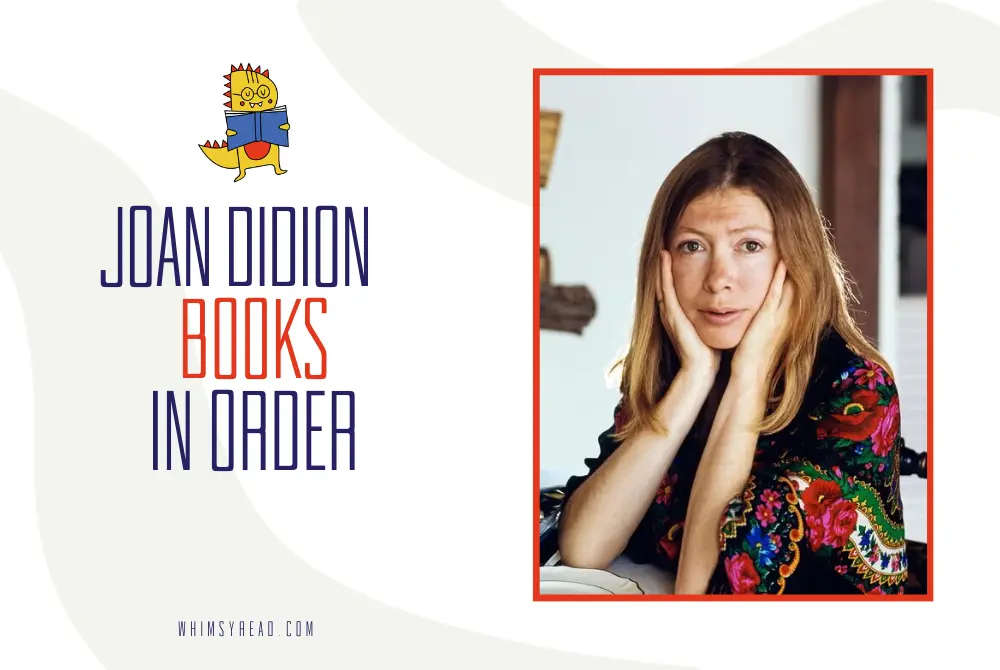
Unlike authors who write connected series, Didion’s books are independent works. The best approach is to read them in publication order if you want to follow the development of her writing, or choose a starting point based on whether you prefer literary fiction, cultural criticism, political essays, or memoir.
Joan Didion remains one of the most influential American writers of the twentieth century. Her work examines California, American identity, politics, family, grief, and the difficulty of understanding events while living through them. Her distinctive prose is often restrained and precise, yet it can communicate considerable emotional intensity through small details and careful observations.
This guide covers her novels, nonfiction books, memoirs, essay collections, and significant posthumous publications. It also explains the difference between original books and collected editions, so readers do not accidentally count the same essays or stories multiple times.
Joan Didion Books in Publication Order
Joan Didion’s bibliography is best divided into fiction and nonfiction because she worked in both forms throughout much of her career. Her novels explore individual lives and relationships, while her nonfiction examines American society, politics, personal experience, and historical change.
Joan Didion Novels in Order
Didion published five novels during her lifetime. They are all standalone literary works, so there is no character or plot continuity between them. Reading them chronologically, however, provides a useful view of how her fiction developed.
Run River (1963)
Run River was Joan Didion’s debut novel. Set in California’s Sacramento Valley, it follows a family whose history is tied to a declining ranch and the changing social landscape of the American West.
Through the experiences of its characters, Didion explores marriage, family loyalty, violence, memory, and the fading world of California’s established ranching families. The novel already shows her interest in the gap between how people remember their lives and what actually happened. It is an important starting point for readers interested in the origins of her literary career.
Play It as It Lays (1970)
Play It as It Lays is one of Didion’s best-known novels. The story follows Maria Wyeth, an actress living in the troubled world of Hollywood and Los Angeles, whose life becomes increasingly disconnected from the people and expectations surrounding her.
The novel examines emotional isolation, the entertainment industry, mental health, and the emptiness that can exist beneath a seemingly glamorous lifestyle. Its fragmented structure and controlled prose reflect Maria’s increasingly disoriented experience. Readers interested in Didion’s sharp observations of California culture should consider this one of her essential works.
A Book of Common Prayer (1977)
A Book of Common Prayer takes place in the fictional Central American country of Boca Grande. The novel is narrated by Grace Strasser-Mendana, an American woman who becomes involved in the life of Charlotte Douglas, another American living abroad.
Charlotte’s personal history, political circumstances, and complicated family relationships gradually become central to the story. Through these characters, Didion explores political instability, identity, motherhood, privilege, and the difficulty of understanding a country from the position of an outsider.
Democracy (1984)
Democracy is a politically engaged novel that moves between personal relationships and international events. Its central character, Inez Victor, is married to a prominent American politician whose career places her in the public eye.
The story also follows Jack Lovett, a man connected to Inez’s life, and explores the relationship between private decisions and the larger forces of international politics. Set partly against the background of American involvement in Southeast Asia, the novel questions how power, ambition, and personal desire shape what people call democracy.
The Last Thing He Wanted (1996)
The Last Thing He Wanted is Didion’s fifth and final novel. It follows Elena McMahon, a journalist who leaves her reporting assignment in Central America to help her ailing father, only to become entangled in a dangerous political and international situation.
The novel explores journalism, political deception, family obligations, and the uncertainty surrounding official narratives. Its complicated structure reflects the confusion of a world in which information is incomplete and people cannot always distinguish truth from manipulation. It is particularly interesting for readers who enjoy political thrillers written with a literary rather than conventional suspense style.
Joan Didion Nonfiction Books in Order
Didion’s nonfiction is central to her reputation. Her essays combine personal observation, cultural criticism, political reporting, and reflections on American life.
The following books are arranged by their original publication dates. Collected editions and later reprints are explained separately to avoid counting previously published material as entirely new work.
Slouching Towards Bethlehem (1968)
Slouching Towards Bethlehem is Didion’s first major essay collection and one of the defining works of American nonfiction from the 1960s. It brings together essays about California, American culture, social change, and the people and communities Didion encountered as a journalist.
The title essay examines the counterculture in San Francisco during the 1960s, particularly the experiences of young people living outside conventional social structures. Other pieces explore personal identity, politics, and the changing American landscape. This is an excellent starting point for anyone interested in Didion’s reporting and cultural criticism.
The White Album (1979)
The White Album is one of Didion’s most influential essay collections. Its title essay reflects on the cultural and political instability of the late 1960s, drawing on the author’s experiences in California and her encounters with people and events that came to define the period.
The collection includes essays on music, politics, the media, California, and American life. Didion’s famous opening observation about telling ourselves stories to live captures a central concern of her writing: people create narratives to make sense of a world that often resists explanation.
Salvador (1983)
Salvador is a work of political reporting based on Didion’s experiences in El Salvador during the early 1980s. She examines the country’s political violence, military conflict, human rights abuses, and the role of the United States in the region.
Rather than presenting the conflict as a simple contest between opposing political groups, Didion focuses on the people affected by violence and the difficulty of establishing what is happening amid competing accounts. The book is particularly relevant to readers interested in Central American history, foreign policy, and political journalism.
Miami (1987)
Miami examines the Cuban American community in Miami and the political relationships that shaped the city during the Cold War era. Didion explores exile, immigration, anti-communism, American foreign policy, and the influence of Cuban American politics.
The book is not simply a portrait of one city. It also examines how political identity and historical memory can shape communities far beyond their geographical boundaries. Readers interested in American politics and the relationship between the United States and Cuba will find it especially valuable.
After Henry (1992)
After Henry is a collection of essays written during a period of significant political and cultural change in the United States. The pieces cover subjects including American institutions, political figures, journalism, and the stories people tell about public life.
The collection demonstrates Didion’s ability to examine large political and social questions through specific events and individual experiences. It is a useful book for readers who want to understand her approach to political commentary and long-form journalism.
Political Fictions (2001)
Political Fictions examines American political culture, elections, politicians, media narratives, and the relationship between public image and political reality. Didion questions the language and assumptions that shape how Americans understand their political system.
Her essays are especially interested in the difference between political presentation and what actually happens behind the scenes. The book remains an important part of her nonfiction bibliography for readers interested in American elections, political communication, and journalism.
Where I Was From (2003)
Where I Was From is a personal and historical examination of California. Didion revisits the stories she grew up hearing about her home state and questions whether those stories accurately reflect its history.
The book combines memoir, family history, regional identity, and social criticism. It considers the mythology of California as a place of opportunity and reinvention while examining the economic and historical realities beneath that image. It is an especially valuable read for anyone interested in the relationship between personal memory and regional history.
The Year of Magical Thinking (2005)
The Year of Magical Thinking is Didion’s celebrated memoir about grief following the sudden death of her husband, writer John Gregory Dunne, in December 2003. Their daughter, Quintana Roo Dunne, was also seriously ill during this period, making the experience of loss even more difficult.
Didion examines the psychological and emotional processes of bereavement, including the ways a grieving person can struggle to accept that someone is gone. The book combines personal memories, medical details, reflections on marriage, and observations about the human mind. It won the 2005 National Book Award for Nonfiction and is one of the most widely read works of her career.
We Tell Ourselves Stories in Order to Live (2006)
We Tell Ourselves Stories in Order to Live: Collected Nonfiction is a major collection of Didion’s earlier nonfiction writing. It brings together several of her previously published books and essays, allowing readers to explore a substantial portion of her work in one volume.
This is a collected edition rather than a completely new book of original essays. It is particularly useful for readers who want a broad overview of Didion’s nonfiction career, from her early observations of California and American culture to her political reporting.
Blue Nights (2011)
Blue Nights is Didion’s second major memoir and a companion in subject matter to The Year of Magical Thinking. This time, she focuses on the death of her daughter, Quintana Roo Dunne, and reflects on motherhood, aging, memory, and the fragility of family relationships.
The book moves between recollections of Quintana’s life and Didion’s thoughts about her own aging and mortality. Its title refers to a period of the year when daylight lingers, creating an atmosphere that connects with the memoir’s reflections on time and loss. Readers who found The Year of Magical Thinking moving will likely want to read Blue Nights as well.
South and West: From a Notebook (2017)
South and West: From a Notebook draws on notes Didion made during a 1970 road trip through the American South. The material offers observations about regional culture, race, politics, class, and the social divisions she encountered.
The book also includes reflections and research connected to California. Rather than presenting a fully developed travel narrative, it gives readers access to Didion’s working notes and the beginnings of ideas that interested her as a writer.
Let Me Tell You What I Mean (2021)
Let Me Tell You What I Mean is a collection of twelve essays written by Didion across different periods of her career. The pieces cover subjects such as writing, journalism, politics, culture, and the people and institutions that shaped American life.
The collection offers another opportunity to experience her concise prose and distinctive way of examining public events. It is also a useful introduction for readers who want a relatively short collection rather than one of her larger essay volumes.
Notes to John (2025)
Notes to John was published posthumously in 2025. The book draws on private notes Didion wrote to her psychiatrist, Dr. James D. Ketchum, during the final years of her daughter Quintana’s life and the period surrounding her husband’s death.
The material offers an intimate look at Didion’s thoughts about family, grief, emotional strain, and her attempts to understand difficult experiences. Unlike her carefully shaped published essays, these notes provide a more personal and immediate perspective. It is an important addition for readers interested in her private writing and the experiences behind her later memoirs.
Other Joan Didion Books, Collections, and Special Publications
Didion’s bibliography includes several collections, reprints, and shorter publications that are sometimes counted as separate books by online catalogues. They can be useful to readers, but it is important to understand what each one contains.
Vintage Didion (2004)
Vintage Didion is a selection of Didion’s nonfiction writing, bringing together material from earlier books and essays. It offers a convenient introduction to her work without requiring readers to purchase several individual collections.
It is a selected collection rather than a new original essay volume. Readers who already own her major essay books may find that some material overlaps.
Live and Learn (2005)
Live and Learn is another collected edition of Didion’s writing. It brings together material from Slouching Towards Bethlehem, The White Album, and After Henry.
The book is useful for readers who want a selection of her essays in one volume. However, it should not be treated as a new standalone work in her original publication sequence.
Fixed Ideas: America Since 9.11 (2003)
Fixed Ideas: America Since 9.11 is a shorter political publication built around Didion’s writing about the aftermath of the September 11 attacks. It examines the political narratives and assumptions that emerged in the United States after the attacks.
The piece is related to her broader interest in American political culture and the stories institutions tell about national events. It is a useful additional title for readers studying her political commentary, although it is not a full-length book comparable to Political Fictions.
Insider Baseball (2016)
Insider Baseball is a short publication drawn from Didion’s political writing. It revisits her observations about American political culture and the relationship between political insiders, media coverage, and public perception.
It is best understood as a shorter excerpt or reissue rather than a new full-length nonfiction book. Readers interested in her political essays may enjoy it as supplementary material.
I Write to Find Out What I Am Thinking (2025)
I Write to Find Out What I Am Thinking: Collected Nonfiction is a substantial posthumous collection published in 2025. It gathers Didion’s nonfiction writing from the later part of her career, offering readers another way to explore her essays and reporting.
The title reflects one of her best-known descriptions of the writing process: writing as a way of discovering what she thinks. Like other collected editions, it should not be counted as an entirely new set of original essays.
Joan Didion: The 1960s & 70s (2019)
Published by the Library of America, this volume brings together Didion’s major writing from the 1960s and 1970s. It offers a carefully edited collection of work from the period when she established her reputation as a novelist and essayist.
It is particularly useful for readers, students, and researchers who want to study her early literary development in a single authoritative edition.
Joan Didion: The 1980s & 90s (2021)
This Library of America volume collects writing from the 1980s and 1990s. It includes work from a period when Didion increasingly explored political reporting, American institutions, and the relationship between personal experience and public events.
It complements The 1960s & 70s and provides a broader view of her development as a nonfiction writer.
Joan Didion: Memoirs & Later Writings (2024)
Joan Didion: Memoirs & Later Writings is another Library of America collection. It brings together her later memoirs and selected nonfiction, offering readers a substantial volume focused on the final stages of her writing career.
For readers who want to explore her reflections on grief, family, memory, and aging, this is a valuable companion to The Year of Magical Thinking and Blue Nights.
Joan Didion’s Books Based on Genre
Didion did not write a conventional book series, but readers can choose a path through her bibliography based on their interests.
| Genre or subject | Recommended starting book |
| Literary fiction | Play It as It Lays |
| California and American culture | Slouching Towards Bethlehem |
| Political journalism | Political Fictions |
| International politics | Salvador |
| American regional history | Where I Was From |
| Grief and bereavement | The Year of Magical Thinking |
| Motherhood and loss | Blue Nights |
| Personal essays | Let Me Tell You What I Mean |
| Private writing and family history | Notes to John |
Did Joan Didion Write Any Screenplays?
Yes. Joan Didion also worked as a screenwriter, often collaborating with her husband, writer John Gregory Dunne. Their work brought her literary interests into film, and several projects were adaptations of existing novels or stories.
Some notable screenwriting credits include:
- The Panic in Needle Park (1971), co-written with John Gregory Dunne and based on James Mills’s novel.
- Play It as It Lays (1972), the film adaptation of Didion’s own novel, written with Dunne.
- A Star Is Born (1976), co-written with Dunne and Frank Pierson.
- True Confessions (1981), adapted from John Gregory Dunne’s novel and written with him.
These are screenplays and film projects, not books in her literary bibliography. They are worth exploring for readers interested in the full range of Didion’s creative work.
Where Should You Start Reading Joan Didion?
There is no single required starting point for Joan Didion because her novels, essays, and memoirs are independent. The right first book depends on what you want to experience.
- For her most influential essays: Start with Slouching Towards Bethlehem. It introduces her approach to American culture, California, and social change.
- For her best-known novel: Read Play It as It Lays. Its portrayal of Hollywood, isolation, and emotional disconnection remains one of her most recognizable works.
- For political writing: Choose Political Fictions. It offers a sharp examination of American politics and the narratives surrounding public life.
- For her personal writing: Begin with The Year of Magical Thinking. It is an intimate account of grief and one of her most widely acclaimed books.
- For motherhood and loss: Read Blue Nights. It explores the death of her daughter and the complicated memories surrounding their relationship.
- For her latest posthumous writing: Choose Notes to John. It offers a more private perspective on her family life and emotional experiences.
If you want to understand Didion’s writing as a whole, a particularly rewarding path is Slouching Towards Bethlehem, Play It as It Lays, The White Album, The Year of Magical Thinking, and Blue Nights. This selection moves from her observations of American society to her fiction and deeply personal memoirs.
About Joan Didion
Joan Didion was an American novelist, essayist, journalist, and screenwriter born on December 5, 1934, in Sacramento, California. She graduated from the University of California, Berkeley, in 1956 and later moved to New York, where she began working for Vogue magazine.
Her early journalism helped establish her distinctive approach to writing. She became known for observing the details of American life and examining how people construct stories to explain their experiences. Her work frequently addressed California, politics, cultural change, family, and the relationship between public events and private emotions.
Didion’s career included five novels, numerous nonfiction books, essays, memoirs, and screenplays. Her 2005 memoir The Year of Magical Thinking won the National Book Award for Nonfiction. She also received the National Book Foundation’s Medal for Distinguished Contribution to American Letters in 2007 and the National Medal of Arts and Humanities in 2013.
She was married to writer John Gregory Dunne, with whom she collaborated on several screenplays. Their daughter, Quintana Roo Dunne, died in 2005. Didion’s later memoirs, particularly The Year of Magical Thinking and Blue Nights, explore the impact of these losses.
Joan Didion died on December 23, 2021, in New York City. Her writing continues to be studied for its influence on American literature, journalism, cultural criticism, and personal nonfiction.
Frequently Asked Questions About Joan Didion Books
How many books did Joan Didion write?
Joan Didion published five novels and numerous nonfiction books, essay collections, and memoirs. Her bibliography also includes collected editions, shorter publications, and posthumous books. The total number depends on whether reprints, anthologies, and collected works are counted as separate titles.
What was Joan Didion’s first book?
Run River, published in 1963, was Joan Didion’s first novel and her debut book. It is set in California’s Sacramento Valley and explores family relationships, memory, and the decline of a ranching family.
What was Joan Didion’s last novel?
The Last Thing He Wanted, published in 1996, was Joan Didion’s fifth and final novel. She continued writing nonfiction, memoirs, and essays after its publication.
What is Joan Didion’s most famous book?
The Year of Magical Thinking is widely regarded as one of Joan Didion’s most famous books. The memoir explores grief after the sudden death of her husband, John Gregory Dunne, and won the 2005 National Book Award for Nonfiction.
Slouching Towards Bethlehem, The White Album, and Play It as It Lays are also among her best-known works.
Are Joan Didion’s books part of a series?
No. Joan Didion did not write a conventional fiction series. Her five novels are standalone works, and her essay collections and memoirs can generally be read independently.
Should I read The Year of Magical Thinking before Blue Nights?
Yes, reading The Year of Magical Thinking before Blue Nights is a good approach. The first memoir focuses on the death of Didion’s husband, while the second explores the death of her daughter and reflects further on motherhood, aging, and grief.
They are not a formal series, but reading them in publication order helps readers understand the progression of her personal writing.
What is Joan Didion’s best book for beginners?
Slouching Towards Bethlehem is an excellent starting point for readers interested in her essays and cultural criticism. If you prefer fiction, Play It as It Lays is a strong introduction to her novels. Readers interested in memoir can begin with The Year of Magical Thinking.
What is Notes to John about?
Notes to John is a posthumously published collection of private notes Didion wrote to her psychiatrist. The material reflects on her family, grief, emotional experiences, and the difficult years surrounding the deaths of her husband and daughter.
What is the difference between We Tell Ourselves Stories in Order to Live and I Write to Find Out What I Am Thinking?
Both are collected nonfiction editions rather than entirely new books of original essays. We Tell Ourselves Stories in Order to Live gathers much of Didion’s earlier nonfiction, while I Write to Find Out What I Am Thinking collects writing from the later part of her career.
Did Joan Didion win any major literary awards?
Yes. The Year of Magical Thinking won the 2005 National Book Award for Nonfiction. Didion also received the National Book Foundation’s Medal for Distinguished Contribution to American Letters in 2007 and the National Medal of Arts and Humanities in 2013.
Final Thoughts: The Best Way to Explore Joan Didion’s Books
Joan Didion’s bibliography offers more than one way into her writing. Her novels reveal her interest in identity, relationships, and the contradictions of American life, while her essays and memoirs show how closely she examined politics, culture, family, and personal loss.
For a first-time reader, Slouching Towards Bethlehem is a strong introduction to her nonfiction, while Play It as It Lays provides an excellent entry into her fiction. The Year of Magical Thinking and Blue Nights offer a more intimate understanding of her later writing.
There is no need to follow a strict reading sequence because her books are independent. However, exploring them in publication order gives readers a rewarding view of how Didion’s writing evolved over six decades, from her early California observations to the deeply personal reflections published near and after the end of her life.

Leave a Reply