
Alan Furst Books in Order: The Definitive Night Soldiers Reading Guide
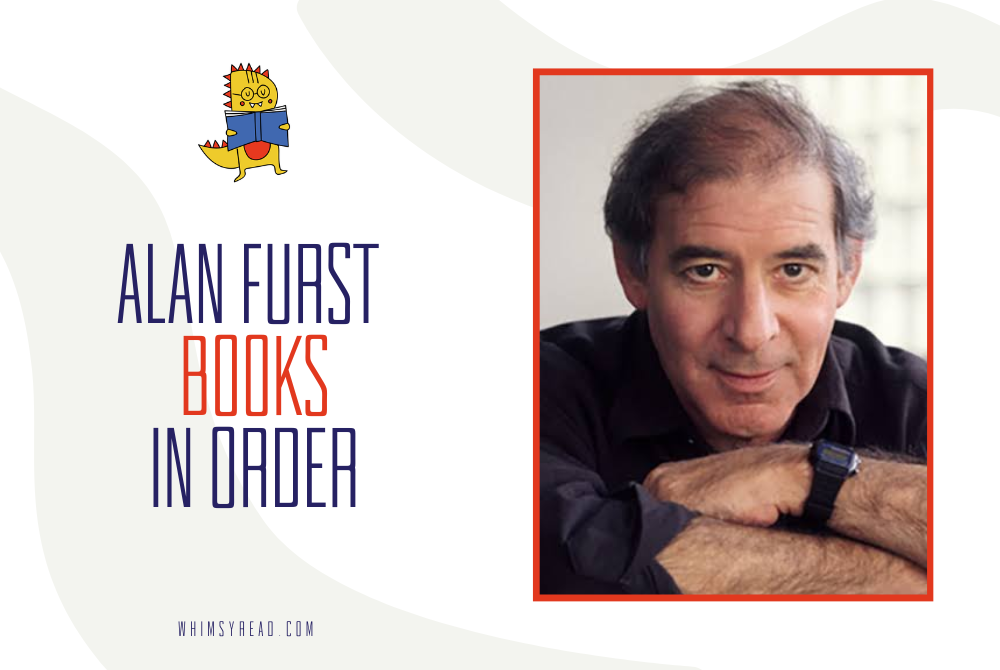
Alan Furst is widely regarded as the modern master of the historical spy novel, crafting a specific style often termed “atmosphere noir.” His signature Night Soldiers universe maps the claustrophobic, terrifying landscape of Europe from 1933 through the darkest years of World War II.
Unlike flashy contemporary thrillers, Furst captures a world of quiet heroism, desperate compromises, and ordinary civilians—journalists, diplomats, actors, and writers—dragged into the clandestine fight against fascism. Reading his works chronologically by publication allows you to witness the gradual, historical darkening of the European continent as it marches toward war, offering unparalleled structural continuity.
The Night Soldiers Series in Publication Order
Night Soldiers (1988)
- The Synopsis: In 1934 Bulgaria, a young man named Khristo Stoianev is recruited by the Soviet NKVD after his brother is murdered by local fascists. He is trained in Moscow as a shadow operative, only to be swept into the brutal chaos of the Spanish Civil War and the French Resistance.
- Core Setting: Bulgaria, Moscow, Spain, and Paris (1934–1945).
Dark Star (1991)
- The Synopsis: André Szara, a foreign correspondent for Pravda, is drawn into the dangerous world of Soviet intelligence on the eve of WWII. As he travels between Paris, Prague, and Berlin, he discovers the horrifying reality of the secret pacts shaping the continent.
- Core Setting: Russia, Germany, and Poland (1937–1939).
The Polish Officer (2000)
- The Synopsis: Following the fall of Warsaw in 1939, Captain Alexander de Milja is recruited into the underground Polish resistance. His high-stakes assignments take him from the underbelly of occupied Paris to the freezing, dangerous borders of Ukraine.
- Core Setting: Poland, France, and Eastern Europe (1939–1941).
The World at Night (1996)
- The Synopsis: Jean Casson, a wealthy Parisian film producer, attempts to live an ordinary life under the shadow of the German occupation. However, his romantic entanglements and professional ties quickly force him into a high-risk compromise with British intelligence.
- Core Setting: Occupied Paris (1940–1941).
Red Gold (1999)
- The Synopsis: Picking up immediately after The World at Night, a broken Jean Casson is hiding in the French countryside. He is drawn back into the shadows of Paris to secure weapons for the highly fragmented, dangerous factions of the French Resistance.
- Core Setting: France under the Vichy regime (1941–1942).
Kingdom of Shadows (2000)
- The Synopsis: Nicholas Morath, a wealthy Hungarian expatriate living in Paris, conducts covert, anti-Nazi political operations at the request of his diplomat uncle. His missions carry him deep into the dangerous, unstable territory of the Balkans.
- Core Setting: Paris, Budapest, and Vienna (1938–1939).
Blood of Victory (2002)
- The Synopsis: A Russian émigré journalist joins a British-backed conspiracy to block the flow of Romanian oil to the German war machine. The operation shifts across European waterways, navigating a web of double agents and brutal sabotage.
- Core Setting: The Danube River, Istanbul, and Bucharest (1940–1941).
Dark Voyage (2004)
- The Synopsis: The captain of a Dutch tramp freighter accepts a secret mission to carry out clandestine transport operations for the Allied war effort. Painting his ship under false flags, he balances maritime perils with lethal Axis naval patrols.
- Core Setting: The Baltic, Mediterranean, and Atlantic seas (1941).
The Foreign Correspondent (2006)
- The Synopsis: Carlo Weisz, an exiled Italian journalist working in Paris, writes for an underground anti-Fascist newspaper. Following the assassination of his editor, he becomes the primary target of Mussolini’s secret police.
- Core Setting: Paris and Berlin (1938–1939).
The Spies of Warsaw (2008)
- The Synopsis: Colonel Jean-François Mercier, a decorated French military attaché stationed in Poland, runs a shadow network of informants. He uncovers German tactical plans for an invasion, navigating high-society salons and gritty back alleys.
- Core Setting: Warsaw and Paris (1937–1938).
Mission to Paris (2012)
- The Synopsis: A charismatic Hollywood actor arrives in Paris in 1938 to film a European movie. He is targeted by Nazi propaganda agents who intend to use his international celebrity status to manipulate French political alignment.
- Core Setting: Pre-war Paris (1938).
Midnight in Europe (2014)
- The Synopsis: A Spanish lawyer living in Paris is recruited to orchestrate an underground arms-buying operation for the Spanish Republican forces. He travels through the shadows of New York, Berlin, and Istanbul to secure weapons.
- Core Setting: Paris and Spain (1937–1938).
A Hero of France (2016)
- The Synopsis: A dedicated leader of a French Resistance network in Paris coordinates the rescue and evacuation of downed Allied fighter pilots. His cell must constantly outmaneuver the brutal vigilance of the Gestapo.
- Core Setting: Occupied Paris (1941).
Under Occupation (2019)
- The Synopsis: A quiet French novelist is handed a document containing top-secret Nazi submarine blueprints by a dying resistance fighter. He is instantly thrust into the heart of a dangerous industrial espionage ring.
- Core Setting: Occupied France (1942).
Early Standalone Novels
Before establishing his definitive Night Soldiers style, Furst wrote four distinct contemporary standalone thrillers. These books explore disparate political landscapes and are entirely separate from his famous historical universe.
- Your Day in the Barrel (1976): A fast-paced, contemporary crime caper set in the American counter-culture era.
- The Sabbatical (1981): A tense psychological thriller mapping a college professor’s dangerous intersection with intelligence agencies.
- Shadow Trade (1983): A deep look into the world of private corporate espionage and contract surveillance.
- Caribbean (1986): A political thriller focusing on regional corruption and island revolutionary movements.
Affiliate Disclosure: As an Amazon Associate, I earn from qualifying purchases
About the Author: Alan Furst
Alan Furst is a highly respected American author celebrated for reinventing the historical spy novel. Born in New York City, he earned an English degree and worked as a journalist, travel writer, and magazine columnist before dedicating himself fully to long-form fiction.
Furst lived in Paris for years, completely immersing himself in the geography, historical archives, and cultural memory of pre-war Europe. His incredible dedication to period-accurate detail, coupled with his lyrical, melancholic prose style, has earned him comparisons to legendary espionage authors like Graham Greene and Eric Ambler.
Frequently Asked Questions
Do you need to read Alan Furst’s Night Soldiers books in order?
No, it is not mandatory. Each novel features a distinct, self-contained protagonist and a fully completed storyline. However, reading them in publication order lets you experience the chronological degradation of Europe as historical events unfold from 1933 to 1945, while enjoying subtle cameos from recurring characters.
What is Alan Furst’s signature writing style?
Furst writes atmospheric historical fiction, often called “historical noir.” His books focus heavily on sensory details, psychological tension, period-accurate geopolitics, and ordinary people facing extraordinary moral choices, rather than action-packed gadgets or explosions.
Is Alan Furst still writing new books?
Furst’s most recent novel is Under Occupation, published in 2019. The author has stepped away from active publication timelines, leaving behind an extraordinary 14-book historical tapestry.
What are the recurring elements in Furst’s books?
His novels consistently feature the iconic Brasserie Heininger in Paris—a fictional restaurant where spies, diplomats, and expatriates from various books gather. You will also notice recurring minor characters, such as the mysterious Polish diplomat Count Janos.
What authors write books similar to Alan Furst?
Readers who love Furst’s historical depth and realistic espionage will thoroughly enjoy the works of John le Carré, Philip Kerr (Bernie Gunther series), Joseph Kanon, and Eric Ambler.
Final Verdict
Alan Furst’s Night Soldiers series stands as an unparalleled achievement in historical espionage fiction. By choosing gritty realism and deep atmospheric tension over cinematic action tropes, he breathes genuine life into the forgotten heroes of the European underground.
If you are ready to explore the rain-slicked boulevards, crowded train compartments, and high-stakes safehouses of a vanished Europe, starting your journey with Night Soldiers (1988) will give you an unforgettable literary experience.

Leave a Reply