

5 Best Books for College Students: My Honest Personal Picks (2026 Updated)

I still remember packing for my first shared apartment — the energy identical to a dorm room even if the name was different. An oversized suitcase stuffed with clothes I barely wore. What I did not pack enough of were books. Not the heavy textbooks that made my back ache, but the kind of books that guide you through life’s twists, keep you honest with yourself, and just keep you company on a lonely night when the city feels enormous and you feel very small in it.
Now, as someone who has been through nine years in banking, career shifts into content and SEO strategy, cricket teams, theater stages, and three kids at different life stages, I look back at the college years differently than I did when I was inside them. The academic content mostly fades. What stays is the person you became during those years — the habits you built or failed to build, the way you learned to think about failure, the books that shaped how you saw yourself and the world.
Here are the five books I would hand to any college student — not for academic survival, but for life.
Why These Five Books Specifically
Before the reviews, a quick note on how I chose this list. These are not the books that appear on every “college reading list” roundup. They are the five that cover the specific dimensions of college life that textbooks and professors never address directly: how to find direction when you have none, how to build habits that compound over years, how to understand failure before it breaks your confidence, how to feed your intellectual hunger with genuinely great fiction, and how to navigate the chaotic practical reality of living with strangers and building adult independence from scratch.
A college student who reads all five will enter their working life with advantages that most of their peers do not have — not because the books are secret, but because most people never make the time.
5 Best Books for College Students
1. The Alchemist — Paulo Coelho
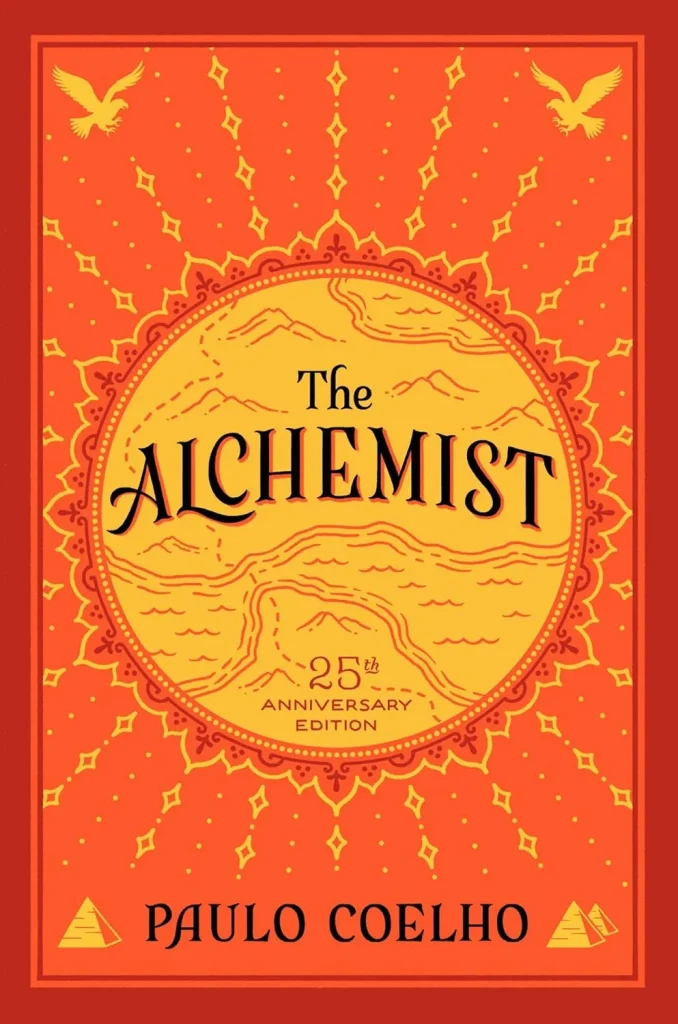
Best for: Finding direction when you have no idea what you are supposed to be doing
Published: 1988 (English translation: 1993)
When my teenage daughter asked me for a book to help her stay positive during a difficult stretch, I did not even blink. I handed her The Alchemist. This book has been with me for years, almost like a quiet mentor — the kind that does not give you answers but makes you more confident in the process of finding them yourself.
On the surface the story is simple: Santiago, a shepherd boy in Andalusia, decides to follow a recurring dream about treasure near the Egyptian pyramids. He sells his flock, crosses the Sahara, faces setbacks that would break most people’s resolve, and keeps going. The plot is a fable. What Coelho is really writing about is the psychology of commitment — what it costs to follow something you believe in when every practical consideration argues against it.
For a college student, this book matters at a specific moment: when you are surrounded by peers who seem to know exactly what they want while you are circling, trying things, unsure whether the uncertainty itself is a problem to solve or a phase to move through. The Alchemist is quiet and absolute on this question: the uncertainty is not a problem. The listening is the work.
What the book actually teaches: The concept of a Personal Legend — not a mystical destiny but the thing you knew you wanted before the world started telling you what was practical. The idea that the universe conspires to help those who pursue it seriously. The recognition that most setbacks on the path toward something meaningful are not signs to stop but tests of whether you mean it.
What makes it work as a novel: Coelho writes in a register that is simultaneously simple and resonant — the kind of prose that does not call attention to itself but stays with you. The story is brief, the chapters short, and the whole thing can be read in a single sitting. The brevity is the point — it does not argue with you, it simply presents a way of seeing and trusts you to do something with it.
A personal note: I wish I had read this when I was wrestling with whether to stay in banking or follow the creative and analytical path that eventually led me to where I am now. The book would not have given me the answer — but it would have made the wrestling feel less like failure and more like the process.
Who this is for: Every college student, but particularly those who feel pressure to have a clear direction and do not yet. Also excellent for students changing majors, questioning their field, or simply looking for permission to take the less obvious path.
2. The Power of Habit — Charles Duhigg
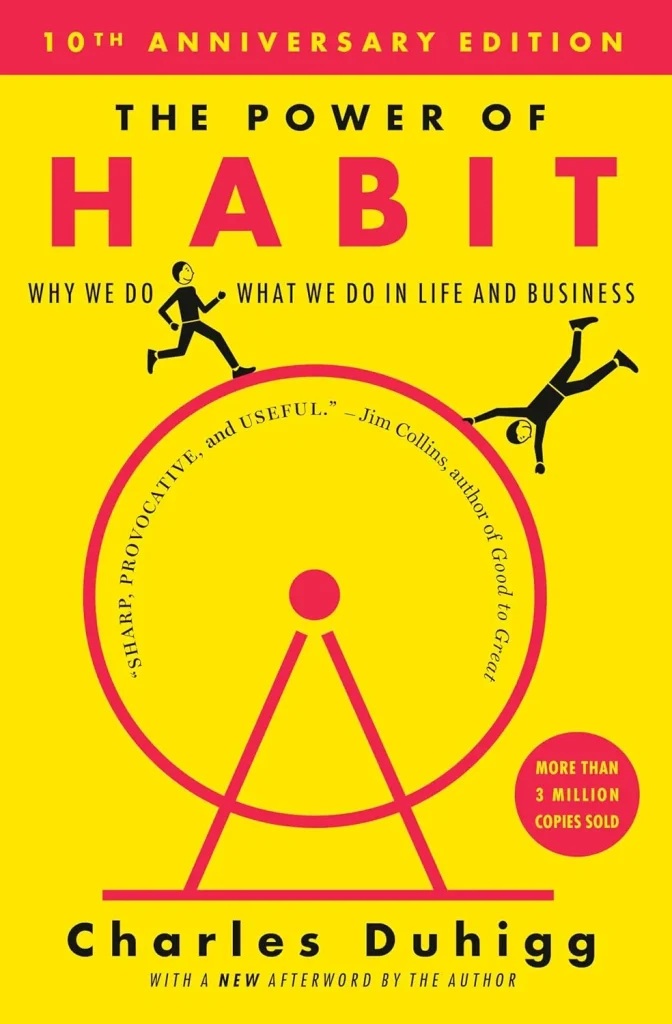
Best for: Understanding why you do what you do — and how to change it
Published: 2012
Habits are sneaky things. I learned that firsthand during cricket training as a teenager — skip practice once and suddenly “rest days” became a habit before I noticed what had happened. The same pattern played out in banking, in content work, in parenting. The behaviors that compound over time are almost never the ones you make conscious decisions about. They are the ones that run on automatic.
Charles Duhigg’s The Power of Habit is the clearest explanation I have encountered of why that happens and what to do about it. The core framework is straightforward: habits operate as three-part loops — a cue that triggers the routine, the routine itself, and the reward that reinforces it. Once you can identify each component you can intervene. You can change the routine while keeping the cue and the reward, which is far more effective than trying to eliminate the habit entirely through willpower.
For a college student this framework is immediately and practically applicable in ways that almost no other book can match. Procrastination is a habit loop — there is a cue (the uncomfortable feeling of starting something difficult), a routine (checking your phone, going for snacks, reorganizing your desk), and a reward (temporary relief from the discomfort). Knowing this does not eliminate the loop, but it gives you the tools to redesign it deliberately rather than struggling against it blindly.
What the book actually covers: The neuroscience of habit formation in genuinely accessible language, including the role of the basal ganglia in automating repeated behaviors. Real case studies from Alcoholics Anonymous, Procter and Gamble, the NFL, and the civil rights movement demonstrating how habit change works at individual and institutional scales. A practical methodology for identifying and redesigning the habit loops in your own life.
The chapter that matters most for students: The section on “keystone habits” — the specific habits that trigger cascading positive changes in other areas of life. Exercise is the most documented keystone habit: people who establish a regular exercise routine consistently report improvements in diet, productivity, sleep quality, and emotional regulation without consciously targeting those areas. For a college student trying to build structure in an unstructured environment, identifying your own keystone habit is the single most high-leverage action available.
What Duhigg does particularly well: He connects scientific research to recognizable human experiences without oversimplifying either. Every claim is grounded in studies or documented cases. The book reads like good journalism — which makes sense, since Duhigg was a Pulitzer Prize-winning reporter at the New York Times before writing it.
From my experience: I used Duhigg’s framework to redesign my morning routine after my third child was born and my previous schedule became impossible. The insight that transformed it was identifying the cue — not the alarm, but the first cup of tea — as the trigger for my writing routine rather than trying to manufacture discipline from scratch every morning. Small redesign, significant compound effect.
Who this is for: Students who struggle with procrastination, inconsistent study habits, or the gap between knowing what they should do and actually doing it. Also valuable for anyone building a new skill or trying to establish routine in an unstructured environment.
3. The Secret History — Donna Tartt
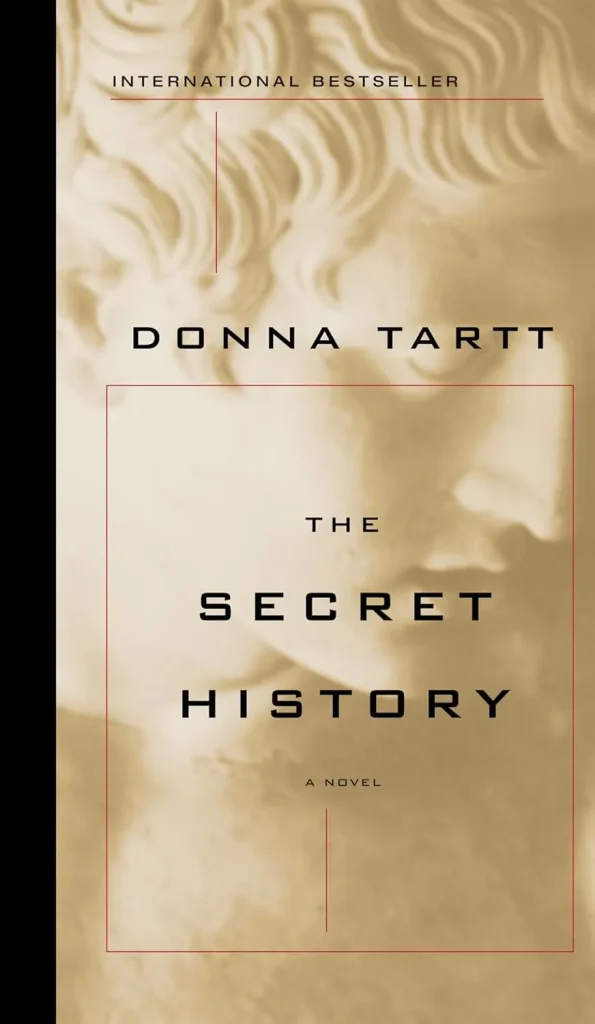
Best for: The best novel you will read in college — dark, brilliant, and unforgettable
Published: 1992
Every college student needs at least one novel on their reading list that is not assigned — one they choose for themselves, read because they want to, and talk about because they cannot help it. The Secret History is that novel.
It is a dark academia thriller set at a small liberal arts college in Vermont. The narrator Richard Papen tells us on the first page that his friends murdered one of their own, then spends five hundred pages explaining how they got there. The story unfolds in reverse — not as a mystery of who did it, but as a psychological excavation of why, and how a group of brilliant, aesthetically obsessive students could convince themselves that what they did was necessary.
I read The Secret History during my theater years, and it resonated in a specific way that I did not fully understand at the time: the characters’ obsession with beauty, with exclusivity, with the idea that their group existed somehow outside ordinary moral frameworks — I recognized those feelings from the intense creative communities I had been part of. Intensity and ambition in creative environments can blur into something darker when left unexamined. Tartt’s novel examines it without mercy.
What makes the novel extraordinary: The prose. Donna Tartt writes with a richness and control that is genuinely unusual in contemporary fiction. Every scene is precise. The atmosphere of the Vermont campus — the cold, the library, the Greek tutorial — is so completely realized that you feel it physically. The characters are vivid and complicated in ways that make their choices comprehensible even when they are horrifying.
What college students specifically take from it: The novel is a study of what happens when intelligence becomes untethered from empathy, when the desire to be exceptional curdles into the belief that you are exempt. For students navigating competitive academic environments, elite social circles, and the particular pressure to be interesting, original, and destined for something — this book is both a pleasure and a warning.
The reading experience itself: The Secret History is the kind of novel that makes you cancel plans to finish it. It is long — around five hundred pages — but it does not feel long. Tartt’s pacing is masterful. Most readers report finishing it in two or three sittings and then feeling slightly bereft when it is done.
Who this is for: Every college student who loves reading, but particularly those drawn to literature, philosophy, classics, or the arts. Also essential for anyone who has ever been part of an intensely close social group and wondered about its dynamics. The novel will make you think about your own circles differently.
4. Mindset: The New Psychology of Success — Carol Dweck
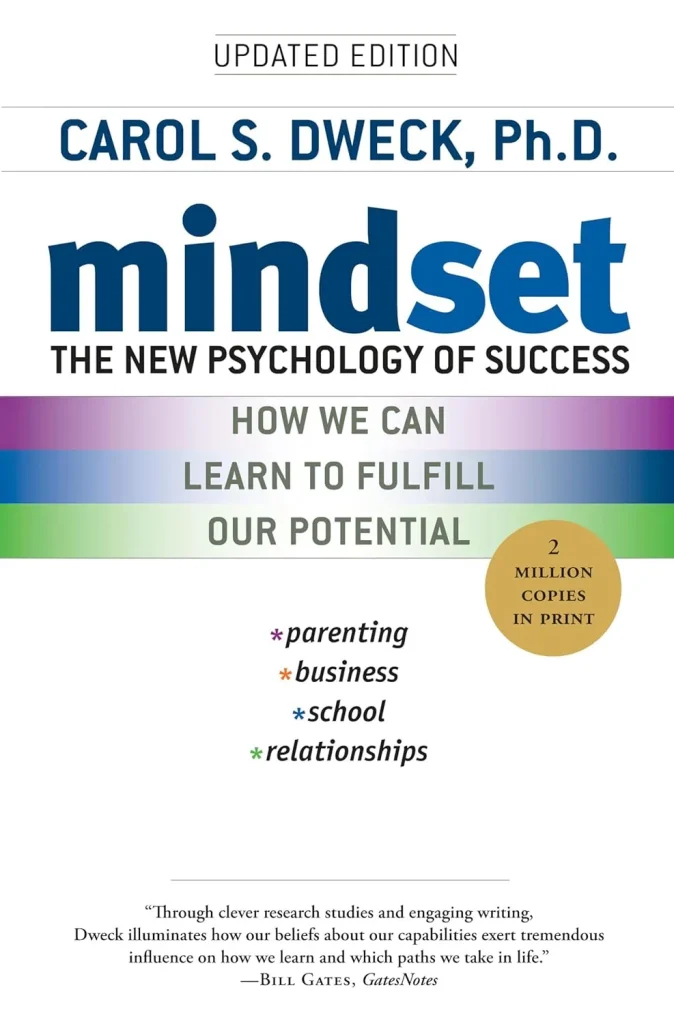
Best for: Reframing failure before your first major setback breaks your confidence
Published: 2006 (Updated edition: 2016)
Here is the book I most wish someone had handed me before my first major failure. Not because it would have prevented the failure — nothing does that — but because it would have changed what I did with it.
Carol Dweck is a professor of psychology at Stanford University who has spent decades studying achievement and success. Her central discovery is deceptively simple: the beliefs people hold about their own abilities determine how they respond to difficulty. People who believe their abilities are fixed — that intelligence, talent, and personality are innate traits you either have or do not have — tend to avoid challenges, hide failures, and plateau early. People who believe their abilities can be developed through effort, strategy, and learning from others — who have what Dweck calls a growth mindset — tend to embrace challenge, persist through setbacks, and achieve more over time.
The research behind this is extensive and the book presents it clearly. But what gives the book its staying power is Dweck’s honesty about how insidious the fixed mindset is. It is not something only low achievers experience. High-achieving students are often among the most vulnerable — because they have learned that being seen as smart is important, which means failure becomes a threat to their identity rather than information about their learning.
What the book actually teaches: How to identify fixed-mindset responses in yourself — the urge to avoid challenges, the defensiveness about criticism, the tendency to feel threatened by others’ success. Specific strategies for developing a growth mindset in practice, not just as a concept. Applications across education, sports, business, and relationships. And critically: why praising children and students for being “smart” rather than for effort is one of the most reliable ways to inadvertently develop a fixed mindset in them.
The section that hits hardest: Dweck’s discussion of elite athletes and how they respond to failure versus how fixed-mindset high achievers do. Michael Jordan was cut from his high school basketball team. He used it as information. Fixed-mindset students who get a bad grade often respond by deciding the subject is not for them, or that the professor was unfair — anything that protects the self-image rather than updating the approach.
From my experience: This book clicked for me most powerfully as a parent. When my son struggles with a subject I now hear myself say things that would have sounded strange before reading Dweck — “the fact that it’s hard means you’re learning something you couldn’t do before” rather than “you’re smart, you’ll get it.” The shift in how he approaches difficulty is visible. That is the book working.
Who this is for: Every college student, but particularly high achievers who have built their identity around being good at things and who are encountering for the first time an environment where everyone is good at things. The first year of a competitive university is often the first time academically strong students experience genuine academic challenge — and how they respond to that challenge is largely determined by which mindset they bring to it.
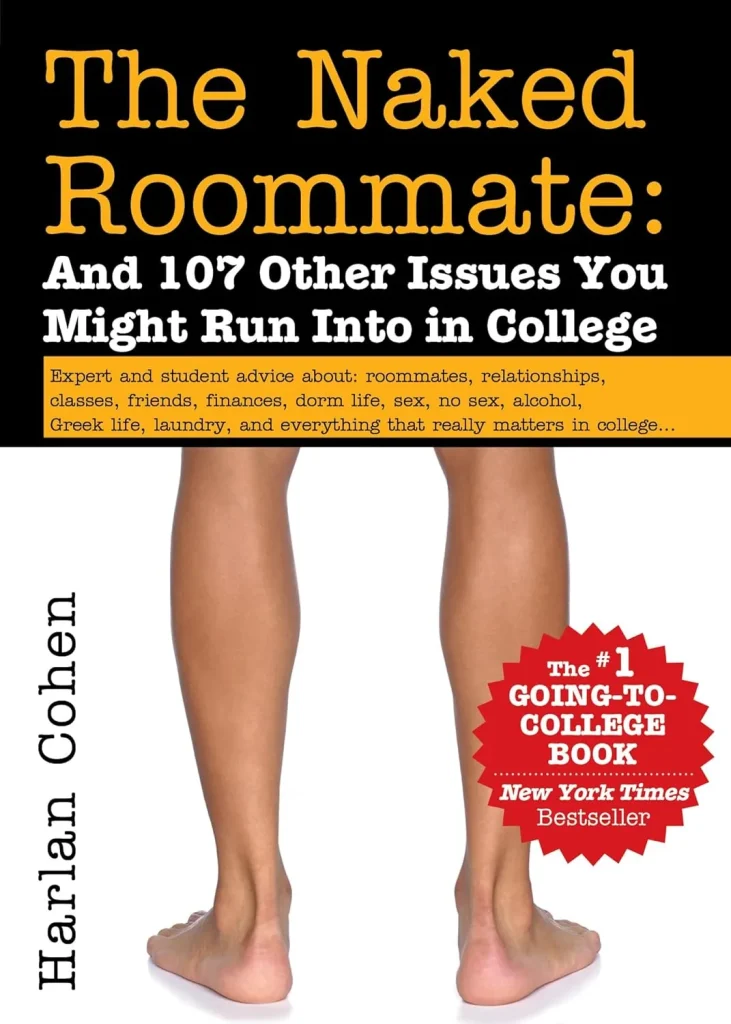
5. The Naked Roommate: And 107 Other Issues You Might Run Into in College — Harlan Cohen
Best for: The practical guide to everything college life throws at you that nobody prepares you for
Published: 2005 (7th edition: most current)
Let’s get real. College is not just about growth and literature and intellectual development. It is also about figuring out how to live with strangers, manage money badly, survive the dining hall, navigate the social dynamics of a dormitory floor, and handle the first genuine heartbreak without your parents nearby to absorb the impact.
Harlan Cohen’s The Naked Roommate is the book that covers all of that — the unglamorous, practical, often hilarious reality of first-year college life that no one tells you about in advance because they assume you will figure it out. You will eventually. But having a guide makes the figuring-out considerably less chaotic.
Cohen spent years collecting stories from college students, recent graduates, and administrators across hundreds of campuses. The book is built from those stories — real situations, real resolutions, real honesty about the things that trip students up that have nothing to do with their academic preparation.
What the book actually covers: Roommate conflicts — how to handle them before they become disasters, how to have the conversations that feel impossible, how to request a room change without it feeling like defeat. Navigating the social landscape of the first weeks — the pressure to immediately find your people, the fear of missing out, the loneliness that nobody admits to. Managing money when nobody has taught you how. Relationships and dating in environments where everyone lives ten doors apart. Academic pressure, imposter syndrome, the feeling of being the only person who does not know what they are doing. Mental health — when to get help, where to find it, how to talk about it.
What makes it work: Cohen writes like the older sibling you wish you had — honest, funny, and completely free of condescension. He does not pretend college is easy or that everyone figures it out quickly. He normalizes the struggle while giving you tools to navigate it.
A personal note: Flipping through this book reminded me of specific memories — burnt noodles at midnight, the awkward silence with a stranger who became a close friend three months later, the first time I had to manage money entirely by myself and did it predictably badly. Cohen captures those experiences with a warmth that makes you laugh at yourself rather than cringe.
The chapter that matters most: The one on loneliness. Cohen is direct about the fact that the first weeks of college are among the loneliest many students have ever experienced — and that this is both normal and temporary. For students who arrive expecting the social life of a montage and find instead the reality of not knowing anyone, that chapter alone is worth the price of the book.
Who this is for: Every incoming college student, particularly first-generation students who do not have older siblings or parents with college experience to draw on. Also excellent for parents who want to understand what their student is actually navigating — and for anyone returning to education as a mature student encountering a campus environment for the first time.
Affiliate Disclosure: As an Amazon Associate, I earn from qualifying purchases
How to Choose Which Book to Read First
Not everyone needs all five at the same moment. Here is a practical guide based on where you are in your college journey:
If you are about to start college and feel lost about direction: Start with The Alchemist. It will not give you a major or a career plan — but it will make the uncertainty feel purposeful rather than frightening.
If you are struggling with procrastination or inconsistent habits: Start with The Power of Habit. The framework it provides is immediately applicable and will compound in value across every year that follows.
If you have just experienced your first major academic setback: Start with Mindset. Read it before you decide what the failure means about you.
If you want a novel that will remind you why reading matters: Start with The Secret History. Clear your weekend first.
If you are in your first semester and the practical reality of independence is overwhelming: Start with The Naked Roommate. It will make you feel less alone and more equipped at the same time.
What These Five Books Have in Common
What ties this list together is not a theme — it is a quality. Each book takes the reader seriously. None of them condescend. None of them pretend that the years between eighteen and twenty-two are simple or that the right attitude is all you need. They offer genuine insight, genuine honesty, and genuine respect for the intelligence of the person reading them.
The balance across the five is intentional: dreaming big with The Alchemist, building discipline with The Power of Habit, understanding failure with Mindset, feeding your intellectual hunger with The Secret History, and laughing through the chaos with The Naked Roommate. That balance — aspiration, discipline, resilience, intellectual life, and practical humility — is what the college years are actually about, underneath the grades and the deadlines and the pressure to figure everything out at once.
Frequently Asked Questions
What are the best books for college students to read?
The five best books for college students covering different essential dimensions are The Alchemist by Paulo Coelho (purpose and direction), The Power of Habit by Charles Duhigg (building disciplines that compound), Mindset by Carol Dweck (reframing failure and growth), The Secret History by Donna Tartt (the best novel for literary readers), and The Naked Roommate by Harlan Cohen (practical campus life guide). Together they address the personal, academic, intellectual, and practical dimensions of college that textbooks do not.
What book should every college student read?
Mindset by Carol Dweck is the single book most consistently recommended by educators, coaches, and successful people across fields. Its framework for understanding how beliefs about ability determine responses to challenge is directly applicable to every aspect of college life — and the rest of life that follows.
Is The Alchemist a good book for college students?
Yes — particularly for students who feel uncertain about their direction or who are questioning the path they are on. The Alchemist is not a self-help book in the conventional sense but a fable about the courage required to follow what genuinely matters to you, told in language that is simple, warm, and surprisingly lasting.
What is The Power of Habit about and why should college students read it?
The Power of Habit by Charles Duhigg explains the three-part loop — cue, routine, reward — that drives all habitual behavior, and provides a practical methodology for redesigning habits deliberately. For college students navigating an unstructured environment for the first time, understanding the mechanics of habit formation is one of the highest-leverage skills available. The habits built in the first year of college often persist for decades.
Is The Secret History appropriate for college students?
Yes. The Secret History is a literary thriller for adult readers — it deals with mature themes including moral ambiguity, obsession, and violence — but these themes are handled with intelligence and craft rather than gratuitously. It is exactly the kind of novel that college-level readers are ready for and that younger readers often miss the full weight of.
What books help with the social and practical side of college?
The Naked Roommate by Harlan Cohen is the most comprehensive and honest guide to the practical and social dimensions of college life — roommate conflicts, money, relationships, loneliness, mental health, and the unglamorous realities of first-year independence. It complements the more conceptual books on this list by addressing the lived experience directly.
Are there books specifically for college freshmen?
All five books on this list are appropriate for freshmen. The Naked Roommate is the most specifically targeted at the first-year experience. Mindset is particularly valuable before the first major academic setback. The Power of Habit is most useful in the first semester when new routines are being established — either deliberately or by default.
What should I read after these five books?
For deeper habit science: Atomic Habits by James Clear covers complementary ground to The Power of Habit with a slightly different emphasis on identity-based change. For more dark academia fiction: The Rules of Magic by Alice Hoffman and A Little Life by Hanya Yanagihara both reward readers who loved The Secret History. For more on mindset and psychological growth: Grit by Angela Duckworth extends Dweck’s work with a focus on the role of passion and persistence in long-term achievement.
Final Verdict
If I could go back and hand my younger self five books before the shared apartment, the burnt noodles, the awkward silences, and the career decisions that felt enormous and permanent at the time — these are the five I would choose.
Not because they would have solved anything. College does not get solved. But because they would have given me better tools for the uncertainty, better language for the failures, better company for the lonely nights, and a clearer sense that the messy, unpredictable years of becoming an adult are not a problem to be fixed but a story to be lived — messiness and all.
Pick whichever one calls to you. Dive in. Let it be a companion for wherever you are.

Leave a Reply