
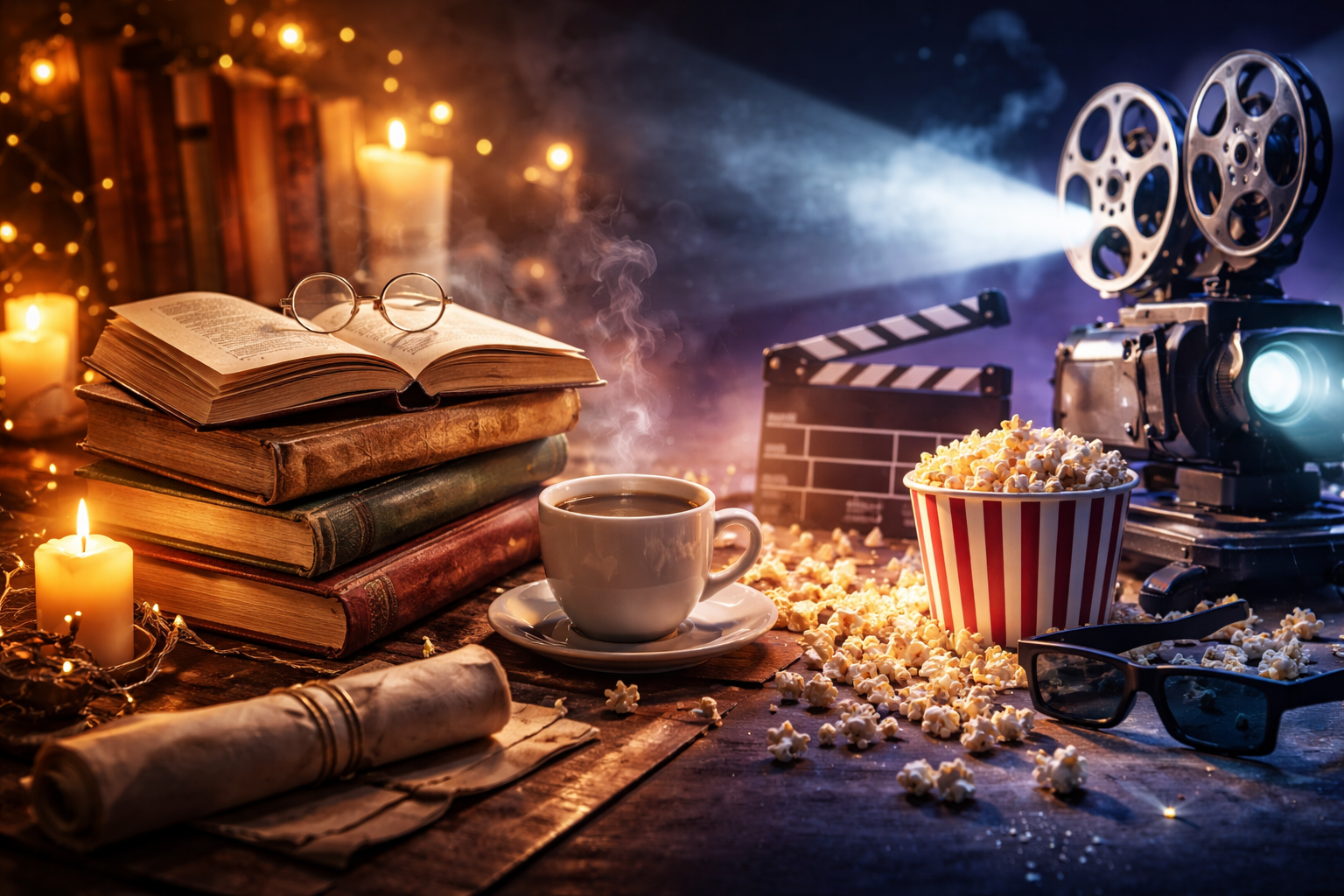
The debate is as old as cinema itself: Was the book actually better?
For the literary purist, a film is often viewed as a diluted or even “mutilated” version of a masterpiece. For the modern consumer, cinema offers a gateway to worlds they might never have the time to traverse via the written word.
As a lifelong bibliophile, I’ve often felt the sting of a beloved character being miscast or a pivotal plot point being edited for “pacing”. But when we step away from personal bias and look at the hard data, a fascinating, and sometimes contradictory, picture emerges.
This article explores raw statistics, psychological studies, and educational shifts that define our current relationship with books and their movie counterparts.
1. The Preference Gap: What the Public Actually Thinks
While the “book is always better” mantra is common, survey data suggests a nuanced split in audience behavior and preference.
- The 67% Majority: A survey of 2,000 American readers conducted by ThriftBooks found that 67% of respondents preferred the book version to its film adaptation.
- The Knowledge Gap: Interestingly, there is a significant lack of awareness regarding literary origins. 70% of those polled were unaware that cult classics like Mean Girls (adapted from Queen Bees and Wannabes) and Die Hard (adapted from Nothing Lasts Forever) were originally books.
- The Order of Consumption: Even when books are preferred, convenience often wins. Half of the surveyed readers admitted they prefer to watch the movie first before deciding to pick up the original source material.
- The “Nuisance” Threshold: Readers are generally forgiving of changes—until they aren’t. Deviating more than 23% from the source material is considered a “nuisance” by most. The biggest gripes? Character misrepresentation (bothersome to 52%) and changing the book’s ending (hated by 27%).
2. The Academic Shift: Literature Students and the “Fast-Moving World”
One might assume that English literature students would be the fiercest defenders of the page. However, recent research suggests that even this demographic is increasingly succumbing to the “moving image”.
- The 58% Shift: A 2023 study published in the Journal of Education Culture and Society analyzed English literature students at the University of Mazandaran. Surprisingly, results showed a higher tendency toward movie watching (58%) over reading the original literary books.
- The Gender and Age Factor: Among these students, the average age was 19, with a demographic split often showing more female participants (75%) than male (25%) in certain literary studies.
- Why the Decline? The primary reason cited by students was time constraints, with 91.4% of those preferring movies stating that they “save a lot of time” compared to reading. In an era of globalization and rapid technological advancement, students are increasingly “attuned to the moving image and less patient with mere words on a page”.
- The Lost Art of Inference: This shift has significant pedagogical implications. Scholars note that critical reading, the ability to question, evaluate, and draw inferences, is a skill developed through the cognitive process of reading, not passive watching.
3. The Cognitive Battlefield: Brain Benefits of Books vs. Movies
The “experience” of a story changes depending on the medium, not just emotionally, but neurologically.
| Feature | The Book Experience | The Movie Experience |
| Brain Activation | Stimulates the somatosensory cortex, the area responsible for processing physical sensations like movement and pain. | Often relies on blue light, which can lead to headaches, vision issues, and sleep disruption. |
| Stress Reduction | Just 30 minutes of reading is shown to lower blood pressure, heart rate, and psychological distress. | High-frequency screen time can increase feelings of psychological distress in some demographics. |
| Imagination | Readers create their own “mental movie reel,” interpreting character tone personally. | Provides a visual “blueprint,” which can help clarify complex plots but limits individual interpretation. |
4. The Persuasive Power of Film: A Behavioral Science Perspective
While books may hold the edge in cognitive depth, movies possess a unique power for social transformation.
- Social Impact: Research in Behavioral Sciences (2020) highlights that films are potent tools for individual and social transformation. They can successfully shift attitudes toward topical issues like gender stereotypes, ethnic tolerance, and climate change.
- The “Marigold” Effect: In a study using the film The Best Exotic Marigold Hotel, researchers found that watching the movie significantly shifted young people’s attitudes toward the elderly on 12 out of 25 semantic scales. Participants viewed the elderly as more “purposeful,” “active,” and having a “desire to learn new skills” after viewing.
- Individual Differences: Interestingly, the effect of movies is mediated by the viewer’s background. In the same study, postgraduate students (average age 24) showed positive shifts, while undergraduate students’ negative assessments sometimes worsened if they already held biased views.
- Sustainability of Change: A major finding was that a single movie viewing does not have a lasting effect. Most attitude changes detected immediately after the film did not remain after two weeks, suggesting that while movies are powerful, they require repeated reinforcement to create permanent shifts.
5. Educational Synergy: A Resource for Teachers and Bloggers
Is it a zero-sum game? Not necessarily.
The most effective modern educational strategies treat books and movies as complementary rather than competitive.
- Visual Facilitation: Studies suggest that using movie adaptations as a “supporting tool” can improve reading comprehension. Visuals provide “background knowledge” that helps students decode complex texts.
- Critical Thinking vs. Engagement: While 74% of literature students acknowledge that books are more effective for improving critical thinking , the motivation to watch movies remains higher due to engagement levels.
- The “Blueprint” Theory: No matter how successful a film is, the book remains the blueprint. A book typically contains 70,000+ words where every word is intentional ; a movie must cut these details for time.
A Personal Reflection: Why the Page Still Wins
As much as I enjoy the spectacle of a blockbuster, the data confirms what my heart has always known: reading is a deeper communion. When you read, you aren’t just a spectator; you are the co-creator. You decide the shade of the protagonist’s eyes and the exact tremor in their voice.
The statistics show that while technology is making us faster and more visual, it is also making us more impatient. We are trading the “artistry of the author’s intent” for the efficiency of the “two-hour feature”.
The Verdict: While movies are indispensable for social empathy and visual storytelling, the book remains the only medium that allows you to truly live another life from the inside out. For the editors, teachers, and bloggers reading this: use the movie to hook them, but use the book to change them.
References and Citations
* Journal of Education Culture and Society (2023) – Analysis of English Literature Student Preferences.
* Baines & Dial (1995) – On student impatience with the written word.
* Behavioral Sciences (2020) – Impact of Films on Young People’s Attitudes.
* Kubrak (2020) – Sustainability and individual differences in media effects.
* SuperSummary & PubMed Data (2023) – Cognitive and physical impacts of media.
* Loh (2015) & Chen et al. (2017) – Critical reading vs. passive watching.
Know Your Author

Hi, I’m Emon
I’m the voice and heart behind Whimsy Read. After nine years in the world of banking, I followed my passion for storytelling into the world of SEO and content strategy. Now, I blend that analytical eye with a deep love for literature to bring you book reviews that are thoughtful, honest, and always focused on the stories that stay with you.
When I’m not reading or writing, you’ll find me enjoying joyful chaos with my wife and three kids, getting lost in a new series, or revisiting my old loves: theater, music, and gaming. At the end of the day, I believe great books are meant to be shared, and I’m so glad you’re here to share them with me.

Leave a Reply