
Michael Lewis Books in Order: From Liar’s Poker to Blockers
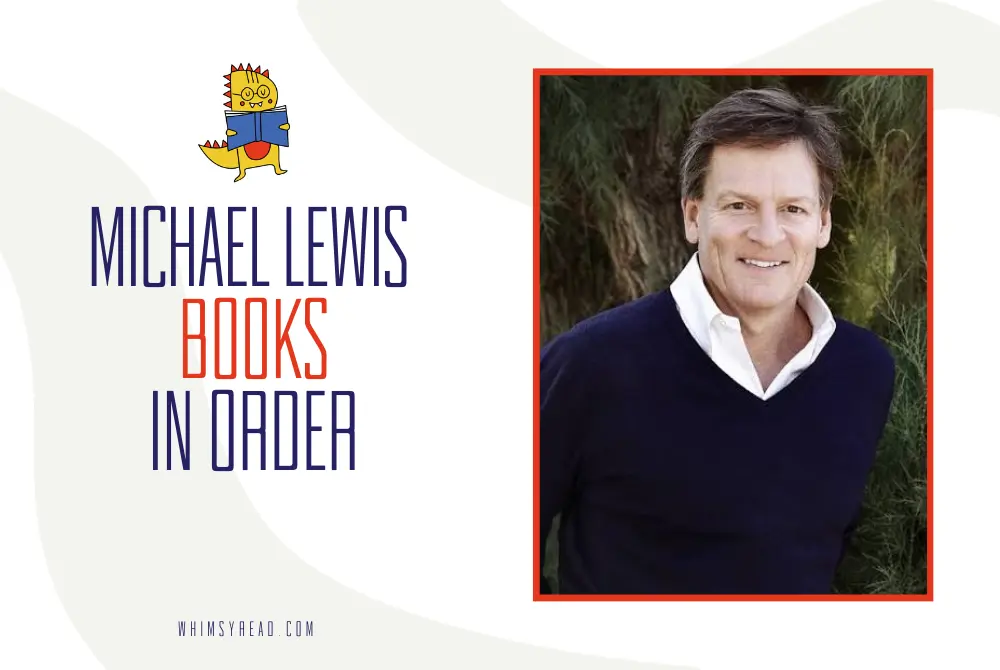
Michael Lewis is an American journalist and narrative nonfiction author known for following unusual characters into systems that outsiders rarely understand. His books reveal how incentives, numbers, personalities, and institutional habits shape Wall Street, professional sports, technology, medicine, politics, and other fields. The writing is story-driven rather than a sequence of technical lessons, making difficult subjects accessible without treating them as simple.
A practical reading guide should separate Lewis’s solo-authored reported books from anthologies he edited, alternate titles, and dubious database entries belonging to other writers with the same name. It should also distinguish what the books claim from the fact that their claims may be contested: Going Infinite, for example, offers a reported portrait of Sam Bankman-Fried, not the only possible interpretation of the FTX collapse. The list below uses original book years wherever possible.
Michael Lewis Books in Publication Order
1. Liar’s Poker: Rising Through the Wreckage on Wall Street (1989)
Lewis recounts joining Salomon Brothers and learning the culture of bond trading during Wall Street’s turbulent 1980s. He introduces traders, salesmen, and managers whose huge incentives and competitive games expose the absurdities of a booming financial industry. This is the ideal beginning for readers who want to understand the lived culture behind later Lewis books about market failures.
2. The Money Culture (1991)
A collection of Lewis’s journalism and essays about finance, celebrity, dealmaking, and the habits produced by wealth. Rather than building one book-length narrative around a single institution, it presents sharply observed episodes from the financial world. Read it after Liar’s Poker if you want more of his early satirical voice.
3. Pacific Rift: Why Americans and Japanese Don’t Understand Each Other (1991)
Lewis investigates contrasts between American and Japanese economic culture during a period when Japan’s commercial success inspired both fascination and anxiety in the United States. The slim book focuses on business assumptions and how people misunderstand another country’s institutions. Its historical moment is important: it should be read as a portrait of early-1990s perceptions, not a timeless account of either nation.
4. Trail Fever (1997; later published as Losers)
Following the 1996 U.S. presidential campaign, Lewis profiles candidates, staff, and campaign eccentrics who rarely control the national narrative. The book is less about the eventual winner than about the strange machinery of seeking office and failing in public. Losers: The Road to Everyplace but the White House is a later title for the same underlying book, not a separate 1998 publication to count twice.
5. The New New Thing: A Silicon Valley Story (1999)
Entrepreneur Jim Clark, associated with Silicon Graphics and Netscape, becomes Lewis’s guide to Silicon Valley’s extreme optimism and risk-taking. The book examines the making of fortunes, the allure of the next breakthrough, and the personality of someone continually searching for a new market. It is especially valuable as a contemporary record of late-1990s technology culture before the dot-com crash.
6. Next: The Future Just Happened (2001)
Lewis looks at how the internet unsettles established experts, companies, and ideas of authority. Young and unexpected figures use new networks to bypass traditional gatekeepers, making the future seem to arrive in ordinary people’s hands. Read it alongside The New New Thing to compare the promise of early internet disruption with what later actually occurred.
7. Moneyball: The Art of Winning an Unfair Game (2003)
Oakland Athletics general manager Billy Beane seeks competitive advantage despite a baseball budget far smaller than those of richer teams. Lewis follows the rise of statistical evaluation and the challenge it posed to traditional scouting assumptions. This is the most approachable starting point for readers interested in evidence-based decisions, organizational resistance, and sports analytics.
8. Coach: Lessons on the Game of Life (2005)
Lewis reflects on a demanding former baseball coach and the lasting influence a tough teacher can have on young athletes. The book is short and personal rather than a sweeping investigation of an industry. Its focus on discipline, gratitude, and formative mentorship offers a different side of the author from the finance and technology books.
9. The Blind Side: Evolution of a Game (2006)
Lewis connects changes in professional football strategy with the life of Michael Oher, a talented young player whose opportunities are shaped by family, education, and race. The book alternates the evolution of the left tackle’s importance with Oher’s personal story. Readers should distinguish Lewis’s original account from later public disputes about the real-life relationships depicted and from the film adaptation.
10. Home Game: An Accidental Guide to Fatherhood (2009)
A collection of candid reflections on becoming a parent and discovering that domestic life seldom obeys a thoughtful plan. Lewis treats the disorientation, affection, and compromises of fatherhood with the humor familiar from his professional reporting. It is an accessible choice for readers who want a more personal book rather than an account of markets or institutions.
11. The Big Short: Inside the Doomsday Machine (2010)
As the U.S. housing market becomes saturated with risky mortgage products, a small group of investors recognizes vulnerabilities that major institutions seem unable or unwilling to confront. Lewis follows characters such as Michael Burry and Steve Eisman to explain credit-default swaps, mortgage securities, and the financial crisis through human choices. Start here if you want the narrative behind the 2007–2008 collapse, while remembering that the real crisis had more causes than any single book can cover.
12. Boomerang: Travels in the New Third World (2011)
Lewis travels through countries affected by the aftermath of the financial crisis, including Iceland, Greece, Ireland, and Germany, to examine how national habits intersected with debt and risk. The resulting portraits are witty and memorable, but their sweeping cultural characterizations should be read critically. It makes a useful companion to The Big Short by broadening the focus beyond U.S. banks and mortgages.
13. Flash Boys: A Wall Street Revolt (2014)
Lewis follows traders and technologists, including Brad Katsuyama, who suspect that the structure of modern equity markets gives some participants unfair advantages through speed. High-frequency trading, exchange design, and market data become parts of a surprisingly accessible narrative. The book’s claims sparked public debate, so readers interested in financial market design should also seek perspectives from practitioners and regulators.
14. The Undoing Project: A Friendship That Changed Our Minds (2016)
Psychologists Daniel Kahneman and Amos Tversky develop influential research into judgment, decision-making, and the predictable ways human intuition can mislead. Lewis tells the story through their unusual intellectual friendship, including both collaboration and tension. For readers who liked Moneyball, it explains some of the behavioral-science thinking behind challenging expert intuition.
15. The Fifth Risk: Undoing Democracy (2018)
Lewis examines what federal departments actually do and the knowledge that can be lost when political leadership changes. Through government employees and essential but overlooked functions, he emphasizes the practical stakes of institutional competence. It is a reported work about public administration and a particular transition period, rather than a neutral instruction manual about all governments.
16. The Premonition: A Pandemic Story (2021)
The early COVID-19 response becomes the setting for a story about scientists, health officials, data, and fragmented decision-making. Lewis follows people who recognized risks and encountered obstacles while attempting to influence policy. Because pandemic decisions and interpretations remain contested, read it as a focused reported account and supplement it with later public-health evaluations if you want a broader analysis.
17. Going Infinite: The Rise and Fall of a New Tycoon (2023)
Lewis reports on Sam Bankman-Fried, the cryptocurrency exchange FTX, and the rapid ascent of a celebrated young financial figure whose empire collapsed. The book examines ambition, effective-altruism rhetoric, unusual management choices, and the difficulty of knowing what powerful insiders are doing. Its sympathetic access to the subject sparked debate, making it especially important to distinguish the book’s portrait from subsequent legal findings and other investigative reporting.
18. Blockers: Rebels in the Deep State (2026)
Published October 6, 2026, Blockers follows six U.S. federal public servants who faced pressure during the early months of the Department of Government Efficiency initiative. Their jobs include protecting sensitive data and maintaining functions the public may rarely notice. Lewis frames their experiences around the value and vulnerability of public service; readers should recognize the book’s reported perspective and distinguish it from a comprehensive assessment of every policy dispute.
Michael Lewis Books He Edited or Curated
The Real Price of Everything: Rediscovering the Six Classics of Economics (2007, editor)
Lewis introduces and assembles a selection of foundational writings in economics. The principal texts are classics by other authors, not six new essays originally written by Lewis. It is best for readers who want historical economic ideas alongside modern commentary, not another plot-driven investigation like Moneyball.
Panic!: The Story of Modern Financial Insanity (2008, editor)
This anthology brings together journalism and historical accounts of financial panic, showing how fear and speculation recur across different eras. Lewis’s editorial framework links the contributions, but he did not author every piece. The collection is a useful bridge between his earlier Wall Street interests and the later crisis narrative of The Big Short.
Who Is Government? The Untold Story of Public Service (2025, editor)
Lewis recruited writers including Casey Cep, Sarah Vowell, Geraldine Brooks, John Lanchester, and others to profile people doing little-known work for the U.S. government. The resulting collection presents varied narrative voices and specific public-service roles rather than one continuous Lewis-authored investigation. It was originally published in 2025; its 2026 paperback is a new edition, not another distinct work.
Which Michael Lewis Books Should You Read Together?
Finance arc: Liar’s Poker → The Big Short → Flash Boys → Going Infinite reveals different vulnerabilities in trading cultures, risk management, market structure, and crypto. Evidence and performance: Moneyball → The Undoing Project shows how measurement and behavioral science can challenge inherited expertise. Public institutions: The Fifth Risk → Who Is Government? → Blockers offers a progression from the responsibilities of agencies to the people performing those duties and the conflicts they faced in 2025.
Those are thematic paths, not fictional series. Events have changed since some books were published, so pair the author’s compelling narratives with independent reporting when making claims about economics, public policy, or living individuals.
Why ‘Books in Order’ Is Different for Narrative Nonfiction
Lewis’s books are not numbered installments and rarely require a previous title. Reading in publication order reveals his shift from 1980s trading floors to Silicon Valley, behavioral science, and public institutions. Reading by subject is usually faster and more rewarding if you only want one topic. Beware of bibliographies that mistake the separate title Losers for another book after Trail Fever, or mix in unrelated academic textbooks written by people who share the name Michael Lewis.
Frequently Asked Questions on Michael Lewis
What is Michael Lewis’s first book?
Liar’s Poker (1989) is his debut and the foundation of his reputation as a narrative journalist. It describes his experience inside Salomon Brothers and remains an influential depiction of 1980s bond trading.
What is the latest Michael Lewis book in 2026?
Blockers: Rebels in the Deep State was published in October 2026. It followed Who Is Government?, which Lewis edited in 2025 rather than writing alone. The distinction matters when identifying his newest solo-authored book.
Are Trail Fever and Losers the same book?
Yes. Trail Fever was the original title of his account of the 1996 presidential campaign, subsequently reissued as Losers. Do not count the two titles as separate works when building a bibliography.
Should I read The Big Short before Flash Boys?
There is no narrative dependency. The Big Short explains the housing and structured-credit crisis, while Flash Boys concerns market microstructure and high-frequency trading. Reading The Big Short first can make the general critique of financial incentives easier to follow.
Which Michael Lewis book is best for non-finance readers?
Moneyball is an engaging entry point because baseball decisions make the stakes of statistics and organizational resistance concrete. The Undoing Project is excellent for psychology and human judgment, and Home Game offers a much more personal, humorous read.
Is Moneyball fiction?
No. It is narrative nonfiction centered on real people and the Oakland Athletics. The subsequent film dramatized the material; the movie and book do not reproduce every detail in the same way.
Does Michael Lewis write about cryptocurrency?
Yes. Going Infinite examines Sam Bankman-Fried and FTX. Because major facts and interpretations surrounding the company have been investigated through court proceedings and other reporting, readers should use the book alongside additional sources when evaluating disputed claims.
Which books deal with government and politics?
Trail Fever/Losers reports on a presidential campaign; The Fifth Risk explores federal agency work; The Premonition examines pandemic response; Who Is Government? profiles public workers; and Blockers focuses on employees facing the DOGE-era restructuring. They address different aspects of government, rather than forming a numbered series.
Conclusion
The best Michael Lewis reading order follows your curiosity. Publication order reveals his evolving subjects, but selecting a small thematic group is often the better way to understand the stories and the institutions behind them. Remember to distinguish solo work, edited collections, and retitled editions before counting the books.

Leave a Reply