
5 Christmas Advent Books for Adults to Make December More Meaningful
December has a way of filling up before we even realize it. There are presents to buy, meals to plan, family commitments, and a long list of things that somehow need to be finished before Christmas arrives.
Advent offers a different way to approach those weeks. Instead of treating December as a countdown to one busy day, it creates space to reflect on the story of Christ’s coming and what that means for everyday life.
I think that’s what makes Advent books particularly worthwhile for adults. They don’t have to be read in one sitting, and they don’t need to become another task on an already crowded holiday schedule. A few pages in the morning, a thoughtful reading before bed, or a discussion with family can be enough to make the season feel different.
The five books below offer several ways to do that. Some follow a structured daily reading plan, others bring together the voices of Christian writers from different generations, and one challenges the way we approach Christmas altogether.
Daily Advent Devotionals for a More Reflective December
If you enjoy having something specific to read each day, these are good places to begin. They provide a structure for the weeks leading up to Christmas without requiring you to create your own reading plan.
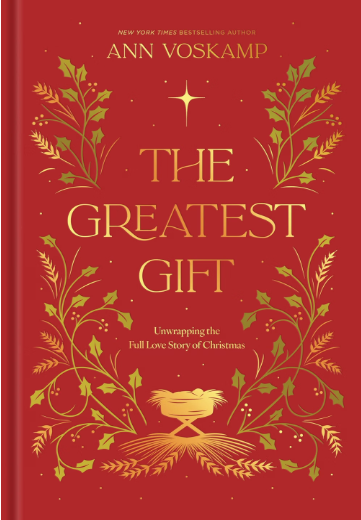
1. The Greatest Gift: Unwrapping the Full Love Story of Christmas by Ann Voskamp
A beautiful choice for: Readers who enjoy reflective devotional writing and want to explore the biblical story behind Christmas.
What if you could trace the story of Christmas all the way back to the beginning of the Bible?
That’s the idea behind Ann Voskamp’s The Greatest Gift. Rather than focusing only on the familiar events surrounding Jesus’ birth, Voskamp takes readers through the biblical family line leading to Christ, using the Jesse Tree tradition as her guide.
The readings begin with Jesse, the father of David, and move through the larger story of Scripture, connecting the Old Testament promises with the arrival of Jesus.
Each daily reflection includes Scripture, personal application, journaling prompts, and inspirational quotations. Voskamp’s writing is also distinctive. It’s poetic, personal, and often contemplative, making the book feel more like an invitation to slow down than a conventional Bible study.
I particularly like the Jesse Tree approach because it gives readers a broader understanding of Christmas. Instead of viewing the Nativity as an isolated event, the devotional helps connect it to the larger story of God’s promises and redemption.
How to use it: Read one reflection each day throughout Advent. Keep a journal nearby if you enjoy writing down thoughts, prayers, or personal responses to the readings.
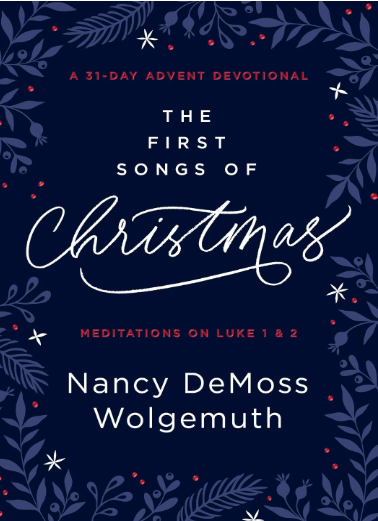
2. The First Songs of Christmas by Nancy DeMoss Wolgemuth
A beautiful choice for: Adults who want to spend more time studying the biblical accounts of the first Christmas.
We hear Christmas songs everywhere in December. Some are traditional hymns, others are familiar carols, and many have become part of the background music of the season.
But what about the songs that appear in the original Christmas story?
Nancy DeMoss Wolgemuth builds The First Songs of Christmas around the first two chapters of Luke’s Gospel. This 31-day Advent devotional explores the words and responses of Elizabeth, Mary, Zechariah, the angels, and Simeon.
Rather than simply retelling the Nativity, the book examines what these biblical songs reveal about God’s character, His promises, and the significance of Jesus’ arrival.
One of the interesting things about this approach is that it gives familiar passages a little more room. You aren’t simply reading the Christmas story again. You’re spending time with the people who experienced its extraordinary events and considering the meaning behind their words.
The 31-day format also makes it flexible. You can start at the beginning of December and follow the readings throughout the month, rather than trying to fit everything into the traditional 24-day Advent calendar.
How to use it: Read a section each morning alongside the corresponding Bible passage. It’s especially suitable for readers who prefer a Scripture-focused devotional rather than general Christmas reflections.
Advent Reading Beyond the Daily Devotional
Some readers prefer a more varied experience. Rather than following one author’s reflections every day, they enjoy reading different perspectives on the Christmas story, including theology, history, poetry, and personal reflections.
The next two books offer that kind of variety.
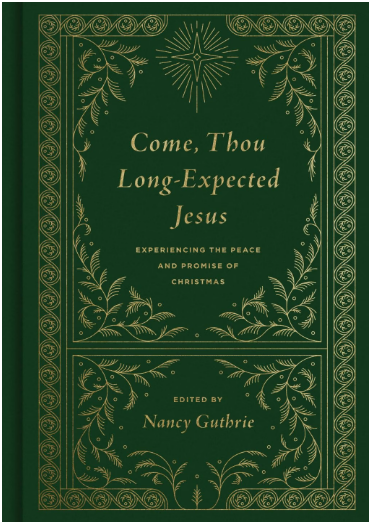
3. Come, Thou Long-Expected Jesus, edited by Nancy Guthrie
A beautiful choice for: Readers who enjoy deeper theological reflections and want to explore the meaning of Christ’s coming.
The title comes from a familiar Advent hymn, and the book follows a similarly thoughtful direction.
Come, Thou Long-Expected Jesus is a collection of 22 readings drawn from the work of classic and contemporary Christian theologians, pastors, and Bible teachers. The contributors include Martin Luther, John Calvin, Charles Spurgeon, Jonathan Edwards, John Piper, Tim Keller, J. I. Packer, and Joni Eareckson Tada.
Each reading explores a particular aspect of the Christmas story, from the incarnation and the role of Mary to the promises fulfilled through Christ.
What makes this collection different is the range of voices. You’re not following one writer’s interpretation throughout the book. Instead, you encounter different perspectives from Christian thinkers across several centuries.
The readings are also Scripture-based, with relevant Bible passages accompanying the meditations. That makes the collection especially appealing to readers who want something more substantial than general seasonal encouragement.
It’s not a strict 24-day Advent calendar, either. With 22 readings, it works well as a flexible collection that you can use throughout the season.
A reading suggestion: Don’t feel pressured to finish every reading in order. You could choose one that connects with the part of the Christmas story you want to explore, then spend some time with the accompanying Scripture.
4. Watch for the Light: Readings for Advent and Christmas
A beautiful choice for: Adults who enjoy literature, spiritual writing, and a variety of perspectives on Advent.
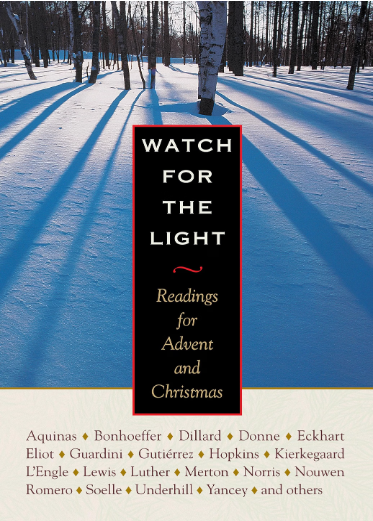
Some books are memorable because of one author’s voice. Others become interesting because of the number of different voices they bring together.
Watch for the Light belongs to the second group.
Published by Plough Publishing House, this anthology brings together Advent and Christmas readings from a wide range of writers, theologians, poets, and spiritual thinkers. Its contributors include C. S. Lewis, Dorothy Day, Dietrich Bonhoeffer, Søren Kierkegaard, Madeleine L’Engle, Henri Nouwen, Oscar Romero, and Evelyn Underhill.
The selections cover more than the familiar Christmas story. They explore waiting, hope, humility, faith, the incarnation, and what it means to welcome God into ordinary life.
I like the variety this collection offers. One reading might come from a theologian, another from a poet, and another from a writer reflecting on the meaning of spiritual waiting. The result is a reading experience that doesn’t feel restricted to one particular style.
It’s also worth knowing that this is not a conventional devotional with one short entry for every day of Advent. Think of it as a collection to return to throughout the season, choosing a reading when you have time for something thoughtful.
For readers who enjoy literary and theological writing, it can be a particularly rewarding December companion.
An Advent Book That Challenges the Way We Celebrate Christmas
Not every Advent book is primarily about personal reflection. Some ask a bigger question: what would happen if we changed the way we celebrate Christmas altogether?
5. Advent Conspiracy by Rick McKinley, Chris Seay, and Greg Holder
A beautiful choice for: Families, church groups, and adults who want to make Christmas less commercial and more meaningful.
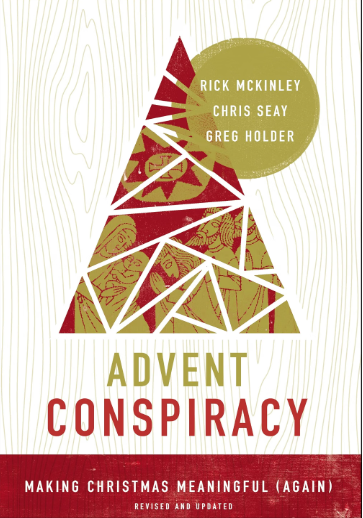
Many people reach Christmas Day feeling exhausted. They’ve spent weeks shopping, preparing meals, attending events, and trying to make everything perfect. Yet when the holiday finally arrives, they sometimes feel that they’ve missed the very thing they wanted to celebrate.
That’s the concern behind Advent Conspiracy.
Written by pastors Rick McKinley, Chris Seay, and Greg Holder, the book challenges the consumer-driven approach to Christmas and encourages readers to return their attention to the birth of Jesus.
s central message is organized around four ideas:
- Worship Fully: Make the celebration of Christ the centre of Christmas.
- Spend Less: Question unnecessary spending and resist the pressure to buy more.
- Give More: Focus on meaningful gifts, relationships, and generosity rather than simply spending money.
- Love All: Use the season as an opportunity to care for people in need.
What I find interesting about this book is that it moves beyond the idea of reading a devotional and thinking about its message. It encourages readers to put those ideas into practice.
For example, a family might decide to reduce unnecessary gift spending and use the money to support a meaningful cause. A church group might organize a community project, or friends might choose to spend more time together rather than exchanging expensive presents.
The book can also be used as a group study, with accompanying resources available for churches and small groups.
If your usual Christmas routine feels increasingly commercial or stressful, this is a useful book to consider.
Which Advent Book Should You Choose?
You don’t necessarily need to read all five. In fact, choosing one book and giving it your attention throughout December may be more rewarding than trying to complete several at once.
Here’s how I’d narrow down the choices:
Choose The Greatest Gift if you enjoy personal, poetic devotional writing and want to follow the biblical story through the Jesse Tree tradition.
Choose The First Songs of Christmas if you want a structured 31-day reading plan focused on Luke’s account of the first Christmas.
Choose Come, Thou Long-Expected Jesus if you enjoy theology and want to read different Christian perspectives on the incarnation.
Choose Watch for the Light if you prefer a varied collection of literary, historical, and spiritual readings.
Choose Advent Conspiracy if you want to rethink your Christmas habits and put faith, generosity, and relationships into practice.
How to Make Advent Reading Part of Your Daily Routine
You don’t need a complicated plan to get something meaningful from an Advent book. A little consistency is usually more helpful than trying to read several chapters at once.
Here are a few simple ways to make the experience enjoyable:
Find a regular reading moment. Morning coffee, a quiet lunch break, or the last few minutes before bed can all work. Pick a time that doesn’t make reading feel like another obligation.
Keep your Bible nearby. For Scripture-based devotionals, reading the referenced passage before or after the reflection can help you understand the context more fully.
Write down one thought. You don’t need to keep a detailed journal. A sentence about something you learned, a question you want to consider, or a prayer is enough.
Share a reading occasionally. Advent can be a lovely opportunity for couples, families, or friends to discuss a passage or reflection together. You don’t have to turn every reading into a formal group study.
Don’t worry about falling behind. If you miss a day, simply continue when you can. The purpose is to make room for reflection, not to create another December deadline.
Frequently Asked Questions
What is an Advent book?
An Advent book is a Christian reading resource designed to help people prepare spiritually for Christmas. Many contain daily reflections, Bible passages, prayers, or questions for personal application. Others are collections of essays, historical readings, or group studies focused on the themes of Advent.
When should adults start reading an Advent devotional?
Many people begin on December 1, while others start on the first Sunday of Advent. The traditional Advent season begins four Sundays before Christmas, so its calendar dates change each year. A 25-day devotional can also be used as a countdown beginning December 1.
What is the difference between an Advent devotional and an Advent reading collection?
An Advent devotional usually follows a structured format, with daily Scripture readings, reflections, and prayers. A reading collection brings together essays, sermons, or literary selections that readers can explore at their own pace. The First Songs of Christmas is an example of the former, while Watch for the Light is closer to the latter.
What is the Jesse Tree tradition in The Greatest Gift?
The Jesse Tree is an Advent tradition that traces the biblical story leading to Jesus, beginning with the family line of Jesse and David. It uses Scripture readings and symbols to connect events and promises from the Old Testament with the birth of Christ. Ann Voskamp’s The Greatest Gift uses this tradition as the foundation for its daily devotional readings.
Can couples read Advent books together?
Absolutely. Couples can read a daily reflection together, discuss the accompanying Bible passage, or take turns sharing their thoughts. Advent Conspiracy is particularly suitable for couples who want to rethink their holiday traditions and make more intentional decisions about spending, giving, and serving others.
Are these Advent books suitable for beginners?
Yes, although they offer different levels of depth. A Thrill of Hope and The First Songs of Christmas are accessible daily devotional options. Watch for the Light and Come, Thou Long-Expected Jesus include more varied theological and literary material, which may appeal to readers who enjoy deeper reflection.
Final Note
Advent doesn’t have to be another thing to organize during an already busy month. It can simply be a little space in the day to pause, read, reflect, and remember why Christmas matters.
Whether you choose Ann Voskamp’s Jesse Tree devotional, spend time with the different voices in Watch for the Light, or use Advent Conspiracy to rethink your holiday traditions, the important thing is finding a reading experience that feels meaningful rather than rushed.
And perhaps that’s the nicest part of an Advent reading habit: instead of arriving at Christmas wondering where December went, you give yourself a chance to appreciate the weeks leading up to it.

Leave a Reply