
Kent Haruf Books in Order: All Six Novels and the Plainsong Trilogy
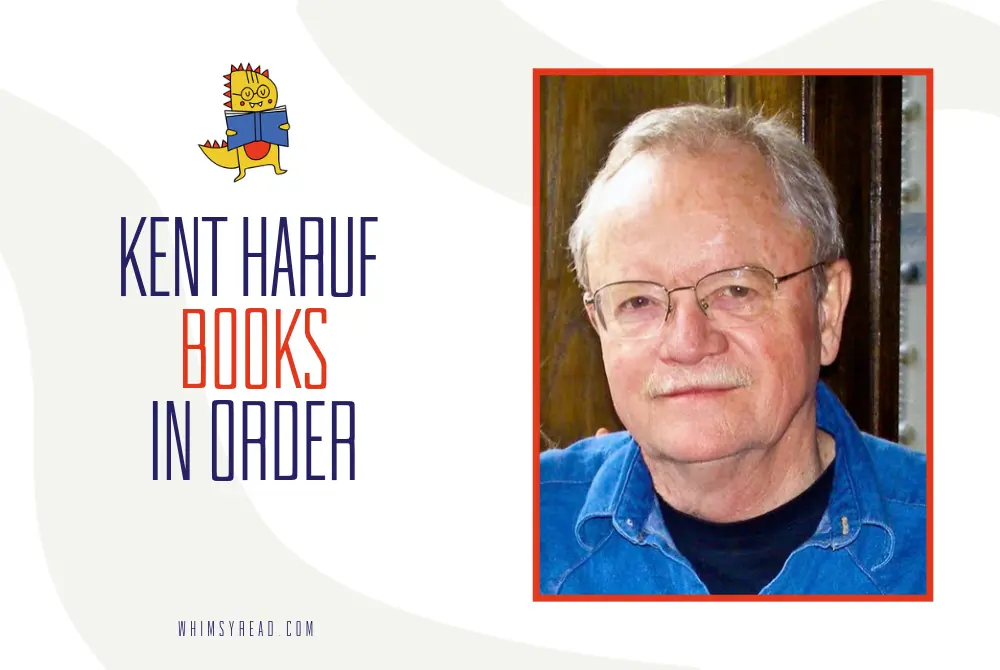
Kent Haruf’s novels explore small-town life in Colorado, where ordinary people face loneliness, family troubles, grief, and unexpected kindness. His writing is quiet and direct, but the lives he describes often leave a lasting impression.
If you’re looking for Kent Haruf books in order, you can read his six novels chronologically or start with the Plainsong trilogy, his best-known group of connected novels.
All Kent Haruf Books in Publication Order
Haruf’s bibliography is relatively short, with six novels published across three decades. The following list follows their original publication order, not the dates of later paperback editions.
1. The Tie That Binds (1984)
Haruf’s debut novel follows Edith Goodnough and the difficult life she has lived on a Colorado farm. Through the story of one family, Haruf examines duty, sacrifice, and the lasting consequences of choices made over generations.
The novel establishes many of the themes that would define his later work: rural isolation, complicated family relationships, and the quiet struggles of people whose lives rarely attract attention.
2. Where You Once Belonged (1990)
Set in the fictional Colorado town of Holt, this novel centers on Jack Burdette, a local man whose return home brings old wounds and unresolved questions back into the community. His story reveals how one person’s actions can affect an entire town.
Compared with Haruf’s later novels, this book has a darker edge. It explores betrayal, reputation, and the way a community remembers someone long after that person has left.
3. Plainsong (1999)
Often considered Haruf’s signature novel, Plainsong brings together several lives in Holt, Colorado. Among its central characters are a high school teacher dealing with family difficulties, a pregnant teenager facing an uncertain future, and two bachelor brothers who offer her an unexpected form of support.
The stories gradually intersect, revealing how compassion can emerge from people who might initially seem unlikely to help one another. The novel was a finalist for the National Book Award and is an excellent starting point for readers new to Haruf.
4. Eventide (2004)
Eventide returns to Holt and follows several residents whose lives are shaped by hardship, responsibility, and the need for human connection. The novel revisits the McPheron brothers, introduced in Plainsong, while expanding its attention to other people in the community.
Rather than relying on a single dramatic plot, Haruf builds the story through everyday encounters and personal struggles. Reading Plainsong first helps readers appreciate the returning characters and the changes in their lives.
5. Benediction (2013)
In Benediction, Dad Lewis, an elderly hardware-store owner, faces the final stage of his life while his family and neighbors deal with their own regrets and difficulties. His illness brings questions of forgiveness, memory, and reconciliation to the surface.
The novel returns to Holt, but its focus is not simply on revisiting familiar characters. Haruf uses the town to explore how people confront mortality and search for meaning in ordinary moments.
6. Our Souls at Night (2015)
Published posthumously, Our Souls at Night follows Addie Moore and Louis Waters, two widowed neighbors who have lived alone for years. Addie approaches Louis with an unusual proposal: they could spend their nights together talking, offering one another companionship without pretending that loneliness is easy to overcome.
Their arrangement develops into a tender story about intimacy, aging, and the courage to seek happiness later in life. It is Haruf’s final novel and a particularly accessible choice for readers interested in quiet, character-driven fiction.
The Plainsong Trilogy in Order
<AsyncImage query=”Kent Haruf Plainsong Eventide Benediction novel book covers” aspectRatio=”5:4″ width=”100%” />
Three of Haruf’s novels are commonly grouped as the Plainsong trilogy. All are set in the fictional town of Holt, Colorado, and share an interest in the relationships and struggles of its residents.
| Reading order | Book | Publication year |
| 1 | Plainsong | 1999 |
| 2 | Eventide | 2004 |
| 3 | Benediction | 2013 |
Read these novels in publication order. The books are connected through their setting and recurring characters, although they are not a single continuous story following one protagonist from beginning to end.
The trilogy is especially rewarding if you enjoy literary fiction that builds a sense of place over time. Holt becomes more than a backdrop: it is a community shaped by its residents’ kindness, mistakes, disappointments, and small acts of generosity.
Where Should You Start with Kent Haruf?
The best starting point depends on what you want from his fiction.
- For Haruf’s best-known novel: Start with Plainsong. Its intersecting stories introduce his approach to community and human connection.
- For a family-centered story: Choose The Tie That Binds, his debut novel about a family’s difficult history on a Colorado farm.
- For a moving story about later-life companionship: Read Our Souls at Night. It stands on its own and does not require familiarity with the other novels.
- For a connected reading experience: Begin with Plainsong and continue through Eventide and Benediction.
You do not need to read every novel to understand Haruf’s work. His books share a recognizable setting and sensibility, but each explores different characters and circumstances.
What Makes Kent Haruf’s Writing Distinctive?
Haruf’s novels are often described as understated, but that does not mean they lack emotional depth. He uses plain language, restrained dialogue, and carefully observed details rather than elaborate descriptions or dramatic speeches.
His stories also resist easy judgments. Characters can be stubborn, lonely, generous, or deeply flawed, sometimes all at once. Instead of reducing them to a lesson, Haruf allows readers to see how people live with their decisions and how compassion can change the direction of an ordinary life.
The recurring town of Holt gives several novels a sense of continuity, but the deeper connection is thematic. Again and again, Haruf returns to the question of how people care for one another when life becomes difficult.
Kent Haruf’s Other Published Work
Haruf also collaborated with photographer Peter Brown on West of Last Chance (2008), a book combining photography and writing about the landscape and communities of the American High Plains. It is not one of his six novels, but readers interested in the setting that informs his fiction may find it a worthwhile addition.
His short fiction includes stories such as “Now (And Then)” and “The Autopsy of Sam Adams.” These are separate from the six-novel bibliography and are not part of a numbered series.
Frequently Asked Questions
How many books did Kent Haruf write?
Kent Haruf published six novels: The Tie That Binds, Where You Once Belonged, Plainsong, Eventide, Benediction, and Our Souls at Night. He also published other work, including the photographic collaboration West of Last Chance.
What was Kent Haruf’s first book?
His first novel was The Tie That Binds, published in 1984. It explores the life of a Colorado farming family and introduces themes that recur throughout his fiction.
What is the correct order of the Plainsong trilogy?
Read Plainsong (1999), Eventide (2004), and Benediction (2013). This is the publication order and the recommended reading sequence.
Can I read Our Souls at Night as a standalone?
Yes. Our Souls at Night follows Addie Moore and Louis Waters in a self-contained story about companionship and aging. You do not need to read Haruf’s other novels first.
Is Our Souls at Night Kent Haruf’s last book?
It was his final novel, published in 2015 after his death in November 2014. Haruf continued revising the manuscript during the final year of his life.
Are all Kent Haruf novels set in Colorado?
His fiction is strongly associated with Colorado, particularly the fictional town of Holt and the surrounding High Plains. The Tie That Binds and Where You Once Belonged also draw on rural Colorado settings.
About Kent Haruf
Kent Haruf was an American novelist born in Pueblo, Colorado, in 1943. He worked as a teacher before gaining recognition for fiction that portrays rural communities with restraint, compassion, and close attention to ordinary lives.
His novels received significant literary recognition, including a National Book Award nomination for Plainsong. Haruf died in November 2014, aged 71, and Our Souls at Night was published the following year.
Although his bibliography contains only six novels, his work has earned a lasting readership for its thoughtful treatment of family, community, loneliness, and human kindness.
Final Note
If you’re discovering Kent Haruf for the first time, Plainsong is a strong place to begin, especially if you want to explore the connected stories of Holt. For a complete tour of his fiction, follow the six novels in publication order, from The Tie That Binds to Our Souls at Night.
Haruf’s books are less about solving a puzzle than understanding the people who live through it. Their quiet power comes from the possibility that even in difficult circumstances, a small act of kindness can make a meaningful difference.

Leave a Reply