
Josephine Tey Books in Order: Inspector Alan Grant and Every Novel
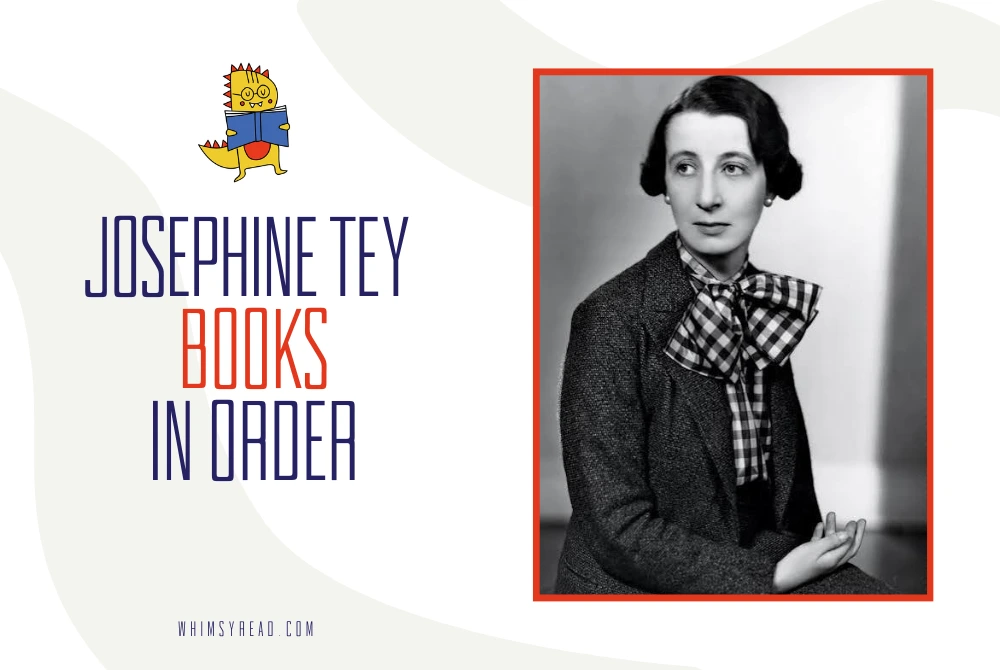
Josephine Tey is best known for classic British detective fiction, but her writing career was broader than the Inspector Alan Grant novels alone. She was the pen name of Scottish author Elizabeth Mackintosh, who also published as Gordon Daviot, particularly for her dramatic and historical work.
If you want the traditional detective experience, begin with Alan Grant. If you prefer psychological suspense, Brat Farrar and Miss Pym Disposes are excellent alternatives. Readers interested in Tey’s full literary career can also explore her historical novel The Privateer, her biography Claverhouse, and her plays.
The Inspector Alan Grant Novels in Publication Order
Inspector Alan Grant is a Scotland Yard detective whose cases range from conventional murder investigations to questions about identity, reputation, and historical truth. The six novels are best read in publication order, although most of the mysteries can be understood independently.
1. The Man in the Queue (1929)
Also published as Killer in the Crowd, this is the first Alan Grant mystery. A man is stabbed in a queue outside a London theatre, but the victim’s identity and the circumstances surrounding his death make the case unusually difficult to solve.
Grant must work through the evidence to establish who the victim was and why someone wanted him dead. The novel introduces Tey’s interest in the small details that can turn an apparently straightforward crime into a much more puzzling investigation.
Also known as: Killer in the Crowd. The book was originally published under Tey’s other pen name, Gordon Daviot.
2. A Shilling for Candles (1936)
A celebrated actress is found drowned near the English coast, and what initially appears to be an accident develops into a murder investigation. Grant examines the people in the victim’s life, including those whose public images may conceal private motives.
This mystery is also notable as the basis for Alfred Hitchcock’s film Young and Innocent (1937). Readers who enjoy a classic country-house atmosphere, theatrical personalities, and a widening circle of suspects may particularly enjoy it.
3. The Franchise Affair (1948)
A mother and daughter are accused of abducting a young girl, and their reputations quickly come under pressure as the allegation attracts attention. The central question is not simply who committed a crime, but whether the accusation itself can be trusted.
Grant appears in this novel, but he is not the central character in the same way he is in the other books. The story focuses more heavily on the accused women, the evidence against them, and the way public opinion can shape a case.
This is a particularly good choice for readers who enjoy mysteries built around uncertainty, social judgment, and the possibility of a convincing accusation being wrong.
4. To Love and Be Wise (1950)
Grant investigates the disappearance of a photographer whose charm and striking appearance have made him a subject of fascination. As he looks into the people surrounding the missing man, Grant must decide which accounts are reliable and what might have happened behind the scenes.
The novel blends character observation with the detective’s work. Instead of relying only on physical clues, Tey uses the personalities, relationships, and assumptions of the people involved to complicate the mystery.
5. The Daughter of Time (1951)
Often regarded as Tey’s best-known novel, The Daughter of Time takes Grant away from a conventional crime scene. While recovering in hospital, he becomes fascinated by the historical reputation of King Richard III and the mystery surrounding the disappearance of the Princes in the Tower.
Unable to investigate in person, Grant asks others to examine historical records and evidence. The resulting inquiry challenges the accepted story of Richard III and raises questions about how history is written, repeated, and believed.
This is the book to choose if you want a mystery that depends on research and reasoning rather than a conventional hunt for a present-day murderer. It can be read on its own, but readers following Grant’s development should reach it after the earlier novels.
6. The Singing Sands (1952)
Published after Tey’s death, The Singing Sands is the final Alan Grant novel. Grant is traveling in Scotland when a disturbing discovery and a cryptic message draw him into an investigation.
The Scottish setting gives the novel a different atmosphere from the London-centered cases, while Grant’s own condition and state of mind add a personal dimension to the mystery.
As the final book in the series, it is the natural place to finish if you want to follow Grant’s fictional career from its beginning to its end.
Inspector Alan Grant reading order at a glance
| No. | Book | First publication |
| 1 | The Man in the Queue | 1929 |
| 2 | A Shilling for Candles | 1936 |
| 3 | The Franchise Affair | 1948 |
| 4 | To Love and Be Wise | 1950 |
| 5 | The Daughter of Time | 1951 |
| 6 | The Singing Sands | 1952 |
One useful distinction: The Franchise Affair is included in the Grant series, but Grant’s role is much smaller than in the other five novels.
Five Standalone Novels Worth Exploring
Tey’s novels outside the Grant series show how varied her approach to mystery could be. Some are closer to psychological suspense than to the familiar police procedural.
Kif: An Unvarnished History (1929)
Published under the name Gordon Daviot, Kif belongs to Tey’s early work and is distinct from her better-known detective fiction. It is worth including for readers who want to understand the beginning of her career under both pen names.
The Expensive Halo (1931)
This early novel was published under the Josephine Tey name. It sits outside the Alan Grant series and offers a way to explore her fiction beyond the detective novels that later became her best-known work.
Miss Pym Disposes (1946)
Lucy Pym, a psychologist and writer, visits a physical-training college where she becomes involved in the lives and ambitions of its students. A tragic event forces her to confront the consequences of what she knows and what she chooses to do with that knowledge.
The novel is particularly interesting for readers who enjoy mysteries rooted in character, moral responsibility, and the pressures of a close-knit community. Its setting also draws on aspects of Tey’s own background in physical education.
Brat Farrar (1949)
An impostor appears at the Ashby family home, claiming to be Patrick Ashby, a young heir who disappeared years earlier. His return seems to solve a family problem, but the deception has a more complicated purpose than it first appears.
Brat Farrar is one of Tey’s strongest choices for readers who enjoy psychological suspense and mysteries built around identity. It is also commonly published under the alternate title Come and Kill Me.
The Privateer (1952)
Published in the year of Tey’s death, The Privateer is historical fiction rather than an Alan Grant detective novel. It explores a different side of her writing and is especially relevant to readers interested in her work as Gordon Daviot.
It belongs near the end of a full bibliography, although it does not need to follow any of the detective novels.
Beyond the Novels: Gordon Daviot’s Other Works
Leaving out Gordon Daviot would give an incomplete picture of Elizabeth Mackintosh’s career. She wrote plays and historical work under that name, and some of these titles appeared in print after her death.
Biography and historical writing
Claverhouse (1937)
This biographical work, published under the Gordon Daviot name, concerns John Graham of Claverhouse, a historical figure associated with seventeenth-century Scottish history. It is nonfiction, not a mystery novel, and is best treated separately from the fiction reading order.
Plays and dramatic works
Tey’s dramatic bibliography is more complicated than her novels because some works were published or collected after her death. The following titles appear in bibliographies of her work as Gordon Daviot:
- The Laughing Woman (1934)
- Richard of Bordeaux (1939)
- Leith Sands and Other Short Plays (1946)
- Remember Caesar (1946)
- Lady Charing Is Cross (published posthumously)
- Dickon (published posthumously)
- The Pen of My Aunt (published posthumously)
These are not additional Inspector Grant books. Publication dates for dramatic works can refer to a first performance, a printed edition, or a later collection, so they should not be treated as a single, straightforward novel-publication sequence.
A Reading Plan Based on Your Taste
Not everyone needs to begin with the first book published. Here are three good routes into Tey’s writing.
If you want the complete detective series: Start with The Man in the Queue and read through The Singing Sands. This gives you the original publication progression and Grant’s recurring presence across the books.
If you want Tey at her most intellectually distinctive: Read The Daughter of Time, then try Brat Farrar and The Franchise Affair. These three novels illustrate her interest in evidence, identity, reputation, and the stories people accept as truth.
If you want to explore her career beyond crime fiction: Read Kif, The Privateer, and Claverhouse, then look at the Gordon Daviot plays. This route is especially useful for readers interested in the author behind both names.
Frequently Asked Questions
How many Inspector Alan Grant books did Josephine Tey write?
Josephine Tey wrote six novels featuring Inspector Alan Grant, beginning with The Man in the Queue (1929) and ending with The Singing Sands (1952).
What is the most famous Josephine Tey book?
The Daughter of Time is generally considered her best-known novel. It follows Grant as he investigates the historical mystery surrounding King Richard III and the Princes in the Tower.
Should I read Josephine Tey’s books in publication order?
Publication order is recommended for the Alan Grant novels because it follows the series’ original progression. Her standalone novels can generally be read in any order.
Is The Franchise Affair an Inspector Alan Grant book?
Yes, it is included in the Grant series, but Grant’s role is limited compared with his role in the other five novels. The central story concerns an accusation against a mother and daughter.
What is the difference between Josephine Tey and Gordon Daviot?
Both are pen names used by Scottish author Elizabeth Mackintosh. She is best known as Josephine Tey for her mystery novels, while Gordon Daviot is associated particularly with her plays, historical fiction, and early writing.
Is Brat Farrar part of a series?
No. Brat Farrar is a standalone novel, often published under the alternate title Come and Kill Me. It can be read independently of the Inspector Alan Grant books.
Which Josephine Tey book should a new reader start with?
For a traditional detective mystery, begin with The Man in the Queue. For her most famous and unusual mystery, choose The Daughter of Time. For psychological suspense without a recurring detective, try Brat Farrar.
Did Josephine Tey write books after The Singing Sands?
The Singing Sands was published in 1952, the year Tey died, and is the final Alan Grant novel. Other works, including plays, were published after her death, so later publication dates do not necessarily mean she wrote new books after 1952.
Final Note
Josephine Tey’s books reward readers who enjoy mysteries that ask more than “whodunit.” Her six Inspector Alan Grant novels offer a satisfying series to follow, while Brat Farrar, Miss Pym Disposes, and The Daughter of Time reveal different sides of her interest in identity, evidence, and human judgment. For the clearest starting point, begin with The Man in the Queue and continue in publication order; then explore her standalone fiction and the works she published as Gordon Daviot.

Leave a Reply