
Colson Whitehead Books in Order: His Novels, Harlem Trilogy, and Nonfiction
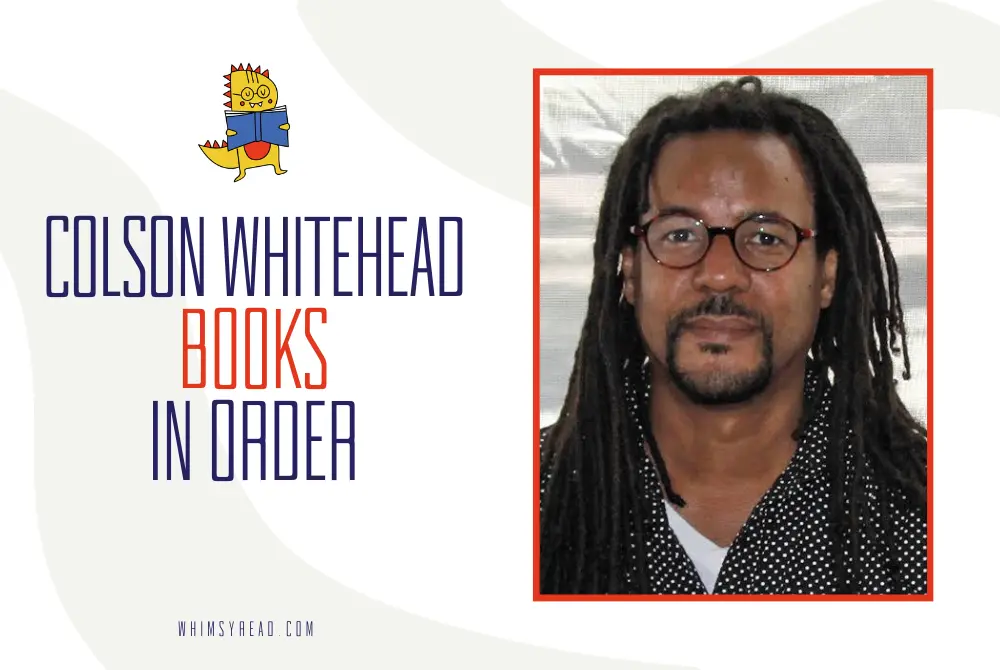
Colson Whitehead is an American novelist known for moving between genres without losing his distinctive perspective on race, history, identity, and American life. His fiction ranges from a mystery involving elevator inspectors to a reimagined Underground Railroad, a novel inspired by an abusive reform school, and a crime trilogy set in Harlem.
Two of his novels, The Underground Railroad and The Nickel Boys, won the Pulitzer Prize for Fiction. While most of his books stand alone, the Harlem Trilogy follows the same central character across several decades and should be read in sequence.
This guide covers Whitehead’s major books in publication order, explains the Harlem Trilogy reading order, and includes his nonfiction titles.
Colson Whitehead Books in Publication Order
The following list covers his ten major novels and two principal nonfiction books, arranged by original publication year.
1. The Intuitionist (1999)
Whitehead’s debut novel follows Lila Mae Watson, the first Black woman elevator inspector in her city. When an elevator crashes under mysterious circumstances, she becomes caught in a professional and political struggle between two competing approaches to elevator inspection. The novel uses this unusual premise to explore race, power, technology, and the limits of institutional authority.
2. John Henry Days (2001)
This novel follows J. Sutter, a journalist attending a commemorative event honoring John Henry, the legendary steel-driving man. As Sutter moves through a promotional press junket, the story connects American folklore, celebrity culture, labor history, and the modern media industry. Whitehead uses the legend of John Henry to examine how stories about American identity are created, marketed, and remembered.
3. The Colossus of New York (2003)
This collection of essays offers a personal portrait of New York City through its neighborhoods, streets, buildings, crowds, and everyday encounters. Rather than presenting a conventional travel guide, Whitehead explores the emotional experience of living in a city that constantly changes around its residents. It is a strong choice for readers interested in his nonfiction voice and his relationship with New York.
4. Apex Hides the Hurt (2006)
The protagonist of this novel is a professional naming consultant hired to help a small town choose a new name. What initially appears to be a straightforward branding assignment becomes a conflict over the town’s history, identity, and future. Through satire and an unusual central profession, Whitehead explores the power of language and the way names influence how people understand themselves.
5. Sag Harbor (2009)
Set during the summer of 1985, this coming-of-age novel follows Benji Cooper, a Black teenager spending the summer with his family in Sag Harbor, a Long Island community with a longstanding Black middle-class presence. Benji and his friends navigate adolescence, music, family expectations, social identity, and the awkwardness of growing up. The novel combines humor and nostalgia with a thoughtful examination of race and belonging.
6. Zone One (2011)
Set after a zombie outbreak has devastated the United States, this speculative novel follows Mark Spitz, a survivor assigned to help clear infected people from a section of Manhattan. Although the mission appears to be part of a national recovery effort, the fragile world around him reveals the psychological and social damage left by the catastrophe. Whitehead uses the post-apocalyptic setting to examine memory, routine, survival, and the idea of returning to normal life.
7. The Noble Hustle: Poker, Beef Jerky & Death (2014)
This nonfiction book recounts Whitehead’s experience preparing for and competing in the World Series of Poker. He approaches the tournament as a writer who must learn the game, navigate its rituals, and face the psychological pressures of competition. The book blends memoir, humor, observations about professional poker, and reflections on risk and ambition.
8. The Underground Railroad (2016)
This Pulitzer Prize-winning novel follows Cora, an enslaved young woman who escapes a plantation in Georgia. Whitehead transforms the historical Underground Railroad into a literal underground railway, with stations and routes connecting different regions of the country. Each place Cora encounters reveals another form of racial oppression, making the novel a powerful reimagining of slavery and its continuing legacy.
9. The Nickel Boys (2019)
Inspired by the real history of the Dozier School for Boys in Florida, this novel follows Elwood Curtis, a Black teenager sent to a brutal reform school during the Jim Crow era. There, he develops a friendship with Turner, whose outlook on survival differs sharply from his own. Whitehead explores institutional violence, injustice, friendship, and the long-term consequences of abuse in a story that won the Pulitzer Prize for Fiction.
10. Harlem Shuffle (2021)
The first book in the Harlem Trilogy introduces Ray Carney, a furniture salesman in 1960s Harlem who tries to maintain a respectable life despite having connections to the criminal underworld. When he becomes involved in a jewelry-store heist, his carefully maintained boundaries begin to collapse. The novel combines crime fiction, family drama, social history, and a detailed portrait of a changing Harlem.
11. Crook Manifesto (2023)
The second Harlem Trilogy novel returns to Ray Carney in 1970s New York. The story unfolds through interconnected episodes involving crooked police officers, political activism, crime, and Carney’s attempts to secure tickets to a Jackson 5 concert for his daughter. As Harlem changes around him, Carney finds it increasingly difficult to separate business, family life, and the criminal world.
12. Cool Machine (2026)
The third Harlem Trilogy novel brings Ray Carney’s story into the 1980s, continuing Whitehead’s portrait of Harlem across several decades. The city is being reshaped by changing neighborhoods, new criminal enterprises, and shifting economic and cultural forces. As the concluding installment, it completes the sequence that began with Harlem Shuffle and continued through Crook Manifesto.
Harlem Trilogy Books in Order
The Harlem Trilogy is Colson Whitehead’s connected crime-fiction series. Each novel can be understood on its own, but reading them in order makes it easier to follow Ray Carney’s changing circumstances and the transformation of Harlem.
1. Harlem Shuffle (2021)
Ray Carney wants to be a respectable businessman, but his family connections and occasional dealings with criminals pull him into a jewelry-store heist. The story establishes the double life that drives the trilogy and introduces the people and pressures surrounding Carney.
2. Crook Manifesto (2023)
Set in the 1970s, this installment follows Carney through a city marked by political tensions, crime, and cultural change. His efforts to get Jackson 5 tickets for his daughter lead him into increasingly complicated dealings.
3. Cool Machine (2026)
The trilogy concludes in the 1980s, with Carney facing another version of a changing New York. The novel completes his longer story while continuing the series’ exploration of crime, family, ambition, and urban transformation.
Recommended reading order: Harlem Shuffle → Crook Manifesto → Cool Machine.
Colson Whitehead’s Books by Category
Literary and speculative fiction
- The Intuitionist (1999)
- John Henry Days (2001)
- Apex Hides the Hurt (2006)
- Sag Harbor (2009)
- Zone One (2011)
These books demonstrate Whitehead’s range, from allegorical satire and American folklore to coming-of-age fiction and post-apocalyptic storytelling.
Historical fiction
- The Underground Railroad (2016)
- The Nickel Boys (2019)
Both novels explore racial injustice and American history, but they approach their subjects differently. The Underground Railroad uses speculative elements, while The Nickel Boys draws on the history of a real reform school.
Crime fiction
- Harlem Shuffle (2021)
- Crook Manifesto (2023)
- Cool Machine (2026)
These novels form the Harlem Trilogy and follow Ray Carney through different decades of New York history.
Nonfiction
- The Colossus of New York (2003)
- The Noble Hustle: Poker, Beef Jerky & Death (2014)
The first is a collection of essays about New York City; the second recounts Whitehead’s experience in competitive poker.
Should You Read Colson Whitehead’s Books in Order?
You do not need to read every Colson Whitehead book in publication order. Most of his novels are standalone works, each with its own setting, characters, and style.
The Harlem Trilogy is the exception. Start with Harlem Shuffle, continue with Crook Manifesto, and finish with Cool Machine to follow Ray Carney’s story across the 1960s, 1970s, and 1980s.
If you are new to Whitehead, choose a starting point based on the kind of story you enjoy:
- For historical fiction: Start with The Underground Railroad.
- For a powerful story about injustice: Read The Nickel Boys.
- For crime fiction: Begin with Harlem Shuffle.
- For unusual literary fiction: Try The Intuitionist.
- For essays about New York: Read The Colossus of New York.
About Colson Whitehead
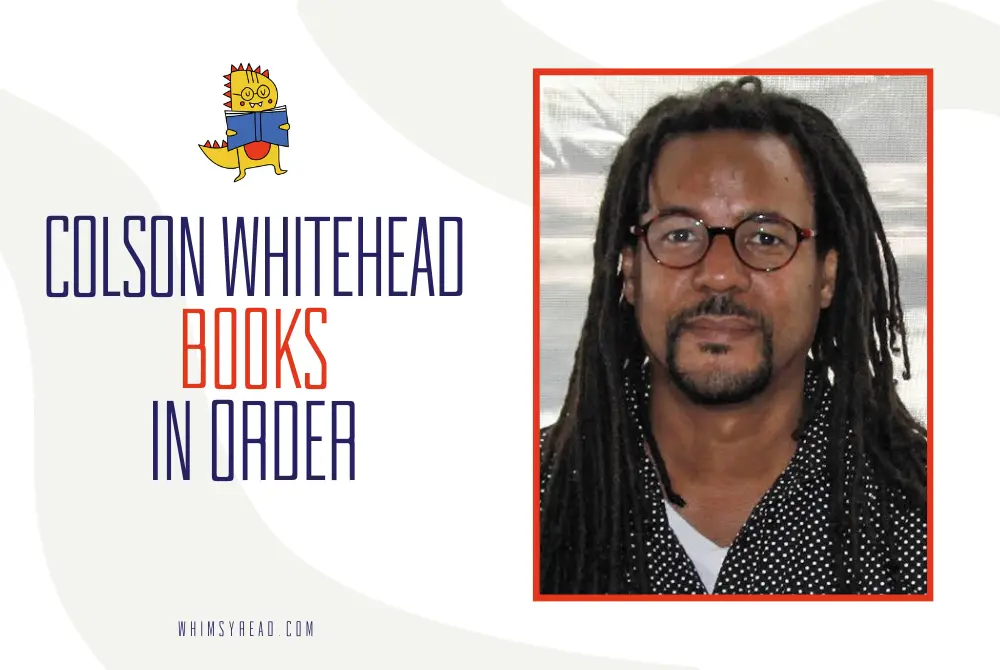
Colson Whitehead is an American novelist born in New York City in 1969. After graduating from Harvard University, he worked at The Village Voice before establishing himself as a fiction writer. His debut novel, The Intuitionist, introduced the inventive premises and social commentary that would become recurring features of his work.
Whitehead has received two Pulitzer Prizes for Fiction, for The Underground Railroad and The Nickel Boys. His books have also received major literary honors, and his writing frequently explores race, history, power, identity, and the stories Americans tell about themselves.
Frequently Asked Questions
What is Colson Whitehead’s first book?
His debut novel is The Intuitionist, published in 1999. It follows an elevator inspector investigating a mysterious accident while navigating a conflict between rival professional philosophies.
How many books has Colson Whitehead written?
His principal bibliography includes ten novels and two major nonfiction books: The Colossus of New York and The Noble Hustle. This count excludes anthologies and other works to which he contributed.
What is the correct order of the Harlem Trilogy?
The correct order is Harlem Shuffle (2021), Crook Manifesto (2023), and Cool Machine (2026). The books follow Ray Carney through three decades of life in New York City.
Which Colson Whitehead books won the Pulitzer Prize?
The Underground Railroad won the 2017 Pulitzer Prize for Fiction, and The Nickel Boys won the 2020 Pulitzer Prize for Fiction. Both books also received widespread critical recognition.
Is The Underground Railroad based on a true story?
The novel draws on the real history of slavery and the historical Underground Railroad, the network that helped enslaved people escape. However, Whitehead reimagines that network as an actual underground railway, making the novel a work of speculative historical fiction rather than a literal historical account.
Are Colson Whitehead’s novels connected?
Most are standalone novels. The Harlem Trilogy is the major connected sequence, following Ray Carney in Harlem Shuffle, Crook Manifesto, and Cool Machine.
Which Colson Whitehead book should I read first?
The Nickel Boys is a strong starting point if you want a relatively direct, emotionally powerful novel. The Underground Railroad is ideal for readers interested in historical fiction with speculative elements, while Harlem Shuffle is a good choice for crime-fiction fans.
Did Colson Whitehead write nonfiction?
Yes. The Colossus of New York is a collection of essays about the city, and The Noble Hustle: Poker, Beef Jerky & Death recounts his experience competing in the World Series of Poker.
Final Note
Colson Whitehead’s bibliography rewards readers who enjoy writers willing to move between genres. His early novels experiment with satire and literary form, his Pulitzer-winning books confront difficult parts of American history, and the Harlem Trilogy combines crime fiction with a changing portrait of New York. If you want a connected reading experience, follow Ray Carney’s story from Harlem Shuffle through Cool Machine. Otherwise, choose whichever standalone novel best matches your interests.

Leave a Reply