
Joseph Wambaugh Books in Order: The Complete Guide to His Police Novels and True-Crime Books
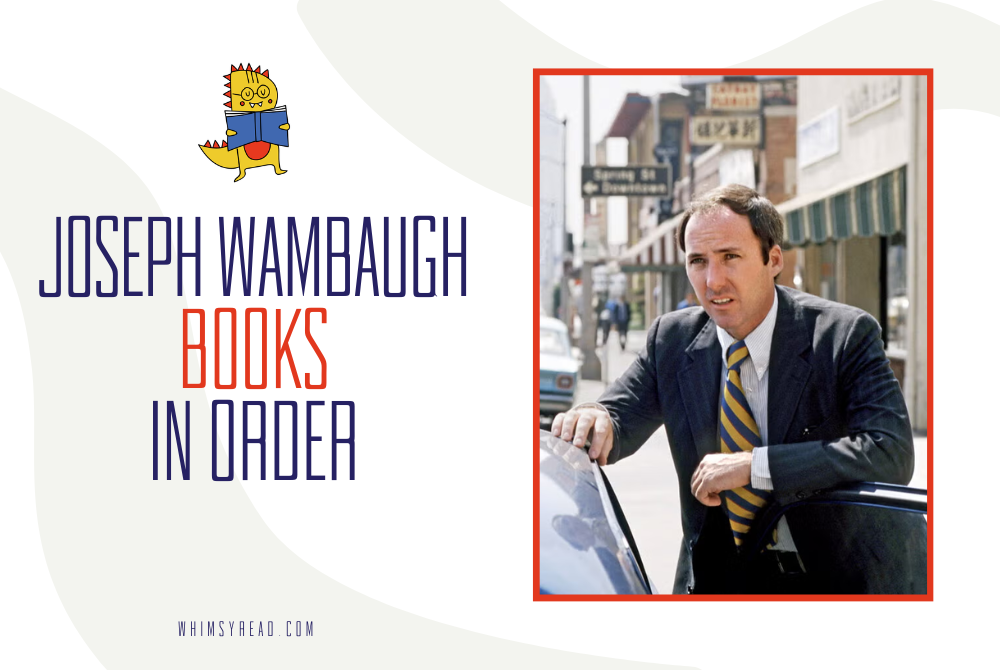
Joseph Wambaugh brought an unusually authentic perspective to crime fiction. After serving as an officer and detective sergeant with the Los Angeles Police Department, he built a writing career around the pressures, contradictions, dark humor, and emotional costs of police work.
His novels often portray officers as complicated people rather than flawless heroes. This guide separates his fiction from his nonfiction, explains the correct Hollywood Station reading order, and gives readers a practical way to explore his work.
Joseph Wambaugh Books in Publication Order
The following lists use the original publication chronology, with publication years following the author’s bibliography and established book references. Some reference sites differ by a year or two for older titles.
1. The New Centurions (1971)
Wambaugh’s debut novel follows three young Los Angeles police officers as they enter the profession and confront the gap between their expectations and the realities of the job. Their experiences show how police work affects their personal lives, beliefs, and relationships. It is an excellent starting point for readers interested in the foundations of Wambaugh’s realistic police fiction.
2. The Blue Knight (1972)
This novel centers on Bumper Morgan, a veteran Los Angeles police officer approaching retirement. Through his final days on the job, Wambaugh examines the habits, loyalties, frustrations, and personal code of a man whose identity has been shaped by policing. The book became one of Wambaugh’s best-known works and was adapted for television.
3. The Onion Field (1973)
Nonfiction
This true-crime account recounts the kidnapping of two LAPD officers by criminals Gregory Powell and Jimmy Lee Smith, and the murder of Officer Ian Campbell in an onion field. Wambaugh examines the crime, investigation, trial, and long-lasting effects on the surviving officer, Karl Hettinger. It is one of his most important nonfiction books and a key work for readers interested in the human consequences of violent crime.
4. The Choirboys (1975)
Set among Los Angeles police officers who gather for unofficial drinking sessions, this darkly comic novel explores workplace frustration, misconduct, friendship, and institutional dysfunction. Its episodic structure follows a group of officers whose private behavior reveals the toll of their profession. Wambaugh balances outrageous humor with a serious look at the pressures inside a police department.
5. The Black Marble (1978)
This police novel follows Detective Sergeant Valnikov, a troubled officer whose life and work become entangled with an investigation involving a stolen dog. The story mixes police procedure, eccentric characters, and social satire, using an apparently unusual case to explore human behavior and the less glamorous realities of law enforcement.
6. The Glitter Dome (1981)
Set in the entertainment world of Los Angeles, this crime novel follows detectives investigating a brutal murder connected to Hollywood. The investigation exposes a world of ambition, exploitation, and personal secrets beneath the industry’s glamorous surface. It is a strong choice for readers who enjoy police procedurals with a Hollywood setting.
7. The Delta Star (1983)
This novel follows LAPD detective Sergeant Danny Barrett as he investigates a series of crimes while struggling with the personal and professional pressures surrounding him. Wambaugh combines the mechanics of a police investigation with his characteristic interest in the people behind the badges. The result is a crime story concerned as much with character and institutional culture as with solving a case.
8. Lines and Shadows (1984)
Nonfiction
Wambaugh turns to the real-life work of the San Diego Police Department’s Border Crime Task Force, whose officers patrol the border region and confront crimes connected to illegal crossings. The book focuses on the challenges, risks, and moral complications faced by officers working in an unusually demanding environment. It offers a different perspective from his Los Angeles-centered fiction.
9. The Secrets of Harry Bright (1985)
This crime novel follows a police investigation involving a young man, Harry Bright, whose life and family connections become central to a troubling case. Wambaugh builds tension through the intersection of personal secrets, police work, and the behavior of people under pressure. Readers who enjoy character-driven mysteries may appreciate its emphasis on motive and human complexity.
10. Echoes in the Darkness (1987)
Nonfiction
This true-crime book examines the murder of Susan Reinert, a Pennsylvania schoolteacher whose disappearance led investigators into a complicated case involving people close to her. Wambaugh traces the investigation and the legal proceedings, showing how a seemingly contained crime can grow into a prolonged and deeply unsettling mystery. The book was also adapted as a television miniseries.
11. The Blooding (1989)
Nonfiction
Also published under the title The Blooding, this book recounts a British murder investigation that became a landmark in the use of DNA evidence. Wambaugh explains how forensic science helped investigators identify a killer and transformed the way biological evidence could be used in criminal cases. It is particularly relevant for readers interested in forensic investigation and the development of modern criminal identification.
12. The Golden Orange (1990)
Set in Southern California, this crime novel follows a former police officer whose circumstances draw him into a dangerous situation involving money, deception, and murder. Wambaugh blends suspense with a close look at the motivations of people who find themselves on the wrong side of the law. The setting and character work make it a useful choice for readers exploring his later standalone fiction.
13. Fugitive Nights (1992)
This novel follows a police detective involved in a case shaped by violence, personal conflict, and the pursuit of a dangerous fugitive. Wambaugh combines procedural elements with the psychological strain placed on officers as an investigation develops. It also demonstrates his continuing interest in the blurred lines between professional duty and private life.
14. Finnegan’s Week (1993)
This crime novel features a police officer whose professional responsibilities collide with a complicated personal life. Wambaugh uses a mix of suspense and dark humor to explore the unpredictable situations that can arise when relationships, ambition, and police work overlap. It offers a different tone from some of his more serious true-crime narratives.
15. Floaters (1996)
Set around San Diego’s annual boating festivities, this novel follows a collection of police officers and other characters amid a chaotic event. Wambaugh uses the crowded, unpredictable setting to create a crime story filled with eccentric personalities, absurd situations, and police-work complications. It is a good fit for readers who enjoy his blend of humor and procedural detail.
16. Fire Lover (2002)
Nonfiction
Wambaugh investigates the case of John Orr, a California fire investigator who was also a prolific arsonist. The book explores how Orr’s professional knowledge and position complicated the investigation into a series of fires. It is a disturbing account of deception, criminal psychology, and the difficulty of recognizing a perpetrator who appears to be part of the investigative system.
The Hollywood Station Books in Order
The Hollywood Station series is Wambaugh’s best-known sequence of later police novels. The books revisit the LAPD’s Hollywood Division, following a recurring cast of officers as they deal with crime, disorder, and the unpredictable people who pass through their patrol area.
Read these five books in publication order.
1. Hollywood Station (2006)
The series begins with officers working the Hollywood Division beat, where a jewelry-store robbery becomes connected to a wider web of criminal activity. Wambaugh introduces a lively cast of patrol officers and captures the strange mix of danger, absurdity, and routine that defines their work. This is the right place to start the series.
2. Hollywood Crows (2008)
The follow-up returns to the same police world, focusing more closely on officers who work in plain clothes and investigate crime beyond routine patrol duties. The story combines street-level police work with the eccentric characters and moral complications that define Wambaugh’s Los Angeles. Reading Hollywood Station first makes the recurring setting and characters easier to follow.
3. Hollywood Moon (2009)
The third book continues the series with another set of interconnected cases involving Hollywood’s police officers and the people they encounter. Wambaugh mixes criminal investigations with sharp observations about ambition, celebrity, and the peculiar realities of policing in a famous neighborhood. It maintains the series’ balance of suspense and dark comedy.
4. Hollywood Hills (2010)
The fourth novel expands the series’ view of Los Angeles police work, bringing officers into contact with crime and trouble in the city’s affluent hillside neighborhoods. The contrast between wealthy residents and the problems confronting police provides another angle on Wambaugh’s broader portrait of the city. It is best read after the first three novels.
5. Harbor Nocturne (2012)
The final Hollywood Station novel shifts much of its attention toward the Port of Los Angeles and San Pedro, where a young longshoreman and a Mexican dancer become caught in a dangerous situation involving crime and human trafficking. Familiar characters from the earlier books return, linking the harbor story to the wider world of Wambaugh’s police fiction. Some catalogs use the alternative title Nocturne, so readers should recognize both titles as referring to the same work.
Joseph Wambaugh Nonfiction Books in Order
For readers who prefer real investigations to fictional cases, Wambaugh’s nonfiction is a major part of his career. These books are listed below by original publication year.
- The Onion Field (1973): The kidnapping and murder of an LAPD officer, and the consequences for the surviving officer.
- Lines and Shadows (1984): The work of San Diego officers assigned to a border-crime task force.
- Echoes in the Darkness (1987): The murder of Pennsylvania schoolteacher Susan Reinert and the investigation that followed.
- The Blooding (1989): A British murder case that helped demonstrate the power of DNA evidence.
- Fire Lover (2002): The investigation of arsonist John Orr, a fire investigator who concealed his own crimes.
These titles can be read independently. There is no need to finish Wambaugh’s novels before beginning his true-crime work.
Should You Read Joseph Wambaugh’s Books in Order?
For his standalone novels, publication order is a useful way to follow the development of Wambaugh’s writing, but it is not essential. Most can be read on their own.
The Hollywood Station books are the exception. Read Hollywood Station, Hollywood Crows, Hollywood Moon, Hollywood Hills, and Harbor Nocturne in that order to follow the recurring cast and setting.
If you are new to Wambaugh, The New Centurions is a strong introduction to his police fiction. If you prefer nonfiction, start with The Onion Field or Fire Lover.
About Joseph Wambaugh
Joseph Wambaugh is an American crime writer and former Los Angeles Police Department detective sergeant. His experience in law enforcement shaped his fiction, which is known for its realistic portrayal of officers, dark humor, flawed characters, and the pressures of police work.
Across his fiction and nonfiction, Wambaugh examines both criminal behavior and the institutions tasked with confronting it. His work has earned major crime-writing honors, including recognition from the Mystery Writers of America, and several books have been adapted for film or television.
Frequently Asked Questions
How many books did Joseph Wambaugh write?
Bibliographies commonly list around 21 major books by Wambaugh across fiction and nonfiction, though totals can vary depending on whether anthologies, reprints, and alternate editions are included. The guide above covers his principal novels and nonfiction books.
What is Joseph Wambaugh’s first book?
His first novel was The New Centurions, published in 1971. It draws on the experiences of young Los Angeles police officers and established the realistic approach that became a hallmark of his work.
What is the correct order of the Hollywood Station books?
The five books are Hollywood Station (2006), Hollywood Crows (2008), Hollywood Moon (2009), Hollywood Hills (2010), and Harbor Nocturne (2012).
Is Harbor Nocturne part of the Hollywood Station series?
Yes. Harbor Nocturne is the fifth book in the series. Some book databases list only the first four titles, but the author’s bibliography and other references identify Harbor Nocturne as the fifth installment.
Should I read Joseph Wambaugh’s books in publication order?
Publication order is a sensible approach for readers who want to follow his career. However, most standalone novels and nonfiction books can be read independently. For the Hollywood Station series, publication order is recommended.
Which Joseph Wambaugh book should I read first?
Start with The New Centurions for his early police fiction, The Onion Field for a landmark true-crime account, or Hollywood Station if you want to begin with his later recurring cast of LAPD officers.
Did Joseph Wambaugh write true-crime books?
Yes. His nonfiction includes The Onion Field, Lines and Shadows, Echoes in the Darkness, The Blooding, and Fire Lover. These books examine real crimes, investigations, and the people involved.
Final Note
Joseph Wambaugh’s books offer two complementary ways to explore crime and law enforcement: fictional stories shaped by his police experience and nonfiction accounts of real investigations. Start with The New Centurions for his early fiction, choose The Onion Field for true crime, or follow the five Hollywood Station novels in sequence for a sustained look at his later police storytelling.

Leave a Reply