
Robert A. Heinlein Books in Order: His Complete Novel and Series Reading Guide
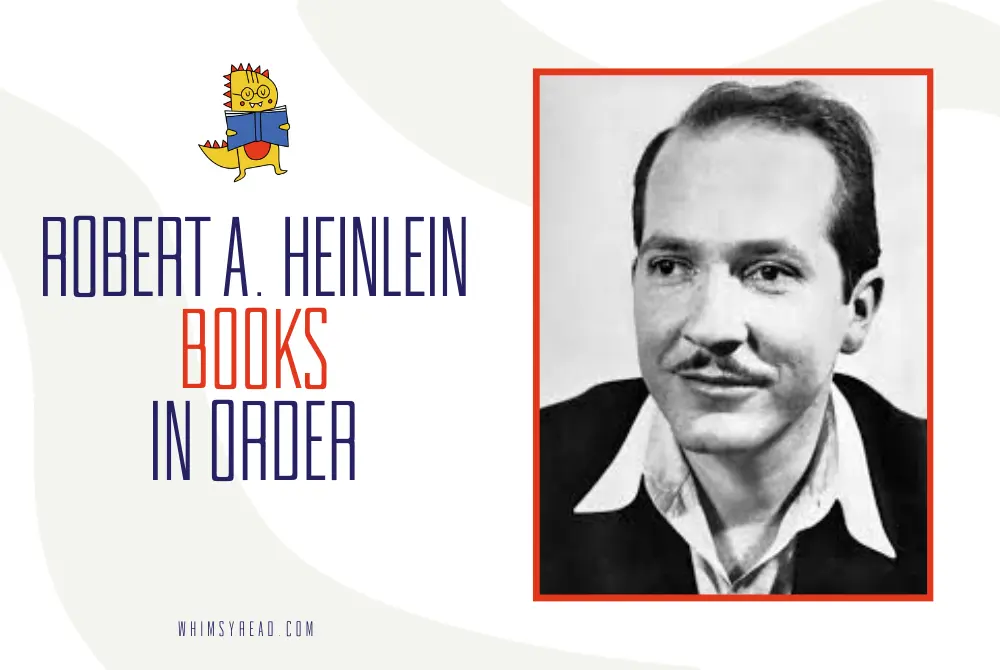
Robert A. Heinlein helped shape modern science fiction with stories about space exploration, political freedom, artificial intelligence, social change, and humanity’s future. His career stretched across five decades, and his work ranges from accessible adventures for younger readers to challenging adult novels about politics, society, and human identity.
The best way to read Heinlein depends on what you want from his books. Some stand alone, while others belong to larger fictional timelines or share recurring characters and ideas. This guide lists his novels in publication order, explains the main reading sequences, and includes his posthumously published fiction.
Robert A. Heinlein Books in Publication Order
The following list focuses on his 32 principal novels and major posthumous novels. The dates refer to book publication rather than the first appearance of a story in a magazine. Some works were serialized earlier, and a few posthumous books have special publication histories.
1. Rocket Ship Galileo (1947)
Three teenage boys join an ambitious scientist on a journey to the Moon. This early adventure combines youthful curiosity, engineering ingenuity, and the excitement of space exploration, making it an accessible introduction to Heinlein’s science fiction.
2. Beyond This Horizon (1948)
Set in a technologically advanced society, this novel explores genetic engineering, human improvement, and the meaning of individuality. Heinlein uses its futuristic setting to question whether a society can deliberately shape better human beings without losing something essential in the process.
3. Space Cadet (1948)
Matt Dodson joins the elite academy that trains young people for service in the Solar Patrol. The novel follows his education in responsibility, discipline, and ethical judgment as he prepares for a career protecting humanity across space.
4. Red Planet (1949)
On Mars, young Jim Marlowe and his friend Frank Sutton become involved in a conflict over the planet’s future. Their adventure combines alien life, colonial authority, and youthful resistance, with the Martian environment playing an important role in the story.
5. Sixth Column (1949)
After a foreign power conquers the United States, a small group of scientists develops technology that may help restore American independence. Originally published under Heinlein’s pseudonym Anson MacDonald, the novel mixes military science fiction with resistance and unconventional warfare.
6. Farmer in the Sky (1950)
Bill Lermer leaves Earth with his family to help establish a farming settlement on Ganymede, one of Jupiter’s moons. The novel focuses on colonization, hard work, and the practical challenges of building a life in an unfamiliar world.
7. Between Planets (1951)
Teenager Don Harvey becomes caught between Earth and Mars as political tensions threaten to turn into open conflict. His personal journey develops into a story about loyalty, identity, and the difficult choices that come with living between competing worlds.
8. The Puppet Masters (1951)
A secretive alien species begins taking control of human beings, threatening the independence of the entire planet. Government agents must identify the invaders and stop the spread of their influence before humanity loses control of its own future.
9. The Rolling Stones (1952)
The Stone family travels through the Solar System in a story centered on exploration, invention, and family life. Also published under the title Space Family Stone, this novel offers a lighter adventure than many of Heinlein’s adult works.
10. Starman Jones (1953)
Max Jones dreams of traveling among the stars, but his path to space is complicated by social restrictions and a system that limits opportunity. His knowledge of astronomy and navigation eventually becomes crucial when a voyage goes dangerously wrong.
11. The Star Beast (1954)
John Thomas Stuart XI inherits an unusual alien creature named Lummox, whose enormous size and mysterious origins create trouble on Earth. What begins as a family problem grows into a diplomatic and political situation involving humanity’s relationship with extraterrestrial life.
12. Tunnel in the Sky (1955)
Rod Walker prepares for a survival exercise on a distant planet, expecting the challenge to last only a short time. When the return route disappears, he and the other students must establish a functioning society and survive without knowing when help will arrive.
13. Double Star (1956)
Lorenzo Smythe is a talented actor hired to impersonate an important political figure. As he takes on the role, he becomes involved in a struggle over interplanetary politics, identity, and the responsibilities that come with public influence.
14. Time for the Stars (1956)
Twin brothers Tom and Pat Bartlett participate in a space exploration project that uses a special telepathic connection between twins. As one travels far from Earth, the difference between their experiences of time becomes central to the story.
15. Citizen of the Galaxy (1957)
Thorby begins life as an enslaved child and is rescued by Baslim, a disabled beggar with a hidden purpose. His journey across different societies reveals how freedom, identity, and responsibility can mean very different things depending on where a person belongs.
16. The Door into Summer (1957)
Engineer Daniel Boone Davis is betrayed by people he trusts and uses suspended animation in an attempt to reach a better future. With the help of a clever cat and a complicated plan, he tries to recover his life and find a way forward.
17. Have Space Suit—Will Travel (1958)
Teenager Kip Russell wins a battered space suit in a contest, hoping it will help him travel beyond Earth. His plans take an unexpected turn when he becomes involved in an interstellar adventure that places him in the hands of alien powers.
18. Methuselah’s Children (1958)
The Howard Families are a group of people who have secretly bred for longevity over generations. When their unusual lifespan becomes public, they face persecution and must search for a future where they can live without fear.
19. Starship Troopers (1959)
Juan “Johnny” Rico joins the Mobile Infantry, a military force fighting a dangerous alien enemy. Through his training and combat experience, the novel examines duty, citizenship, military service, and the personal cost of war.
20. Stranger in a Strange Land (1961)
Valentine Michael Smith is raised by Martians and later arrives on Earth, where his unusual perspective challenges conventional assumptions about religion, relationships, and society. One of Heinlein’s most influential novels, it explores cultural conflict and the consequences of seeing familiar customs through unfamiliar eyes.
21. Podkayne of Mars (1963)
Podkayne Fries dreams of becoming a space pilot and travels away from Mars with her younger brother, Clark. Their journey becomes more complicated than expected, bringing political intrigue and difficult choices into a story about growing up.
22. Orphans of the Sky (1963)
Generations of people live aboard a massive starship without understanding that they are traveling through space. Hugh Hoyland begins questioning the accepted beliefs of his community, uncovering the truth about the ship and the world his people inhabit.
23. Glory Road (1963)
Oscar Gordon is drawn into an extraordinary quest involving a mysterious woman, an unfamiliar world, and dangerous opponents. The novel blends fantasy adventure with science-fiction ideas and Heinlein’s recurring interest in courage, identity, and personal freedom.
24. Farnham’s Freehold (1964)
A nuclear attack forces Hugh Farnham and a small group of survivors into an unfamiliar future. Their struggle to understand their new surroundings becomes a disturbing examination of social hierarchy, survival, and the institutions people create.
25. The Moon Is a Harsh Mistress (1966)
In a lunar penal colony, computer technician Manuel Garcia O’Kelly becomes involved in a movement for independence from Earth. With help from a self-aware computer and political allies, the revolutionaries attempt to win freedom for the Moon.
26. I Will Fear No Evil (1970)
An elderly billionaire arranges for his brain to be transplanted into another body. The procedure creates a complicated new life that forces him to confront identity, gender, social expectations, and the question of what makes a person the same individual over time.
27. Time Enough for Love (1973)
Lazarus Long, an extraordinarily long-lived man, reflects on his experiences across centuries and explores the possibilities of love, family, and human existence. The novel is a central work in Heinlein’s later fiction and connects strongly to his broader fictional universe.
28. The Number of the Beast (1980)
A group of characters discovers a way to travel between different universes and fictional realities. Their adventures connect science fiction, fantasy, and literary play while returning to Heinlein’s interest in alternate worlds and the nature of reality.
29. Friday (1982)
Friday Jones is an artificially created courier whose abilities make her valuable to powerful organizations. As she navigates a fragmented political world, she searches for security, belonging, and a life in which she can be treated as a person rather than a tool.
30. Job: A Comedy of Justice (1984)
Alex Hergensheimer finds himself moving between alternate versions of Earth after a strange supernatural event. His journey raises questions about religion, morality, and justice while combining satire with fantasy and speculative fiction.
31. The Cat Who Walks Through Walls (1985)
A man known as Richard Ames becomes involved in a murder mystery that expands into a larger adventure across space and time. The novel includes recurring characters from Heinlein’s earlier fiction and connects to his later World as Myth ideas.
32. To Sail Beyond the Sunset (1987)
Maureen Johnson Long recounts her life across several generations, revealing connections to the larger Heinlein universe. The novel revisits themes of family, longevity, relationships, and personal freedom while serving as a major late entry in his interconnected fiction.
Posthumously Published Robert A. Heinlein Novels
These books were published after Heinlein’s death. They are important additions to his bibliography, but their publication histories differ from the novels released during his lifetime.
For Us, the Living: A Comedy of Customs (2003)
Written in 1938, this early novel imagines a future society organized around different economic and social principles. It was published decades after Heinlein’s death and offers a glimpse of ideas that would appear in his later work.
Variable Star (2006), with Spider Robinson
Based on an outline Heinlein wrote in 1955, this novel was completed by Spider Robinson. It follows a young man whose life changes when he learns that his future has been shaped by powerful family and political forces.
The Pursuit of the Pankera (2020)
This novel is an alternate version of The Number of the Beast, developed from a different version of the manuscript. It offers readers a different route through a story that explores parallel realities and fictional universes.
Robert A. Heinlein Books by Series
Heinlein did not organize all his novels into conventional numbered series. Several titles share a fictional setting, recurring characters, or a common timeline, while other books are standalone works. The following sections explain the main reading groupings.
1. Future History Series
Future History is a fictional timeline that traces the development of human civilization from the twentieth century into the distant future. It includes short stories, novellas, and novels, so it is much broader than a simple series of numbered books.
The stories were published in different years, and the order of publication does not always match the fictional chronology. For a first read, the following major books and collections offer a useful starting point.
1. The Man Who Sold the Moon (1950)
This collection includes stories about the early stages of humanity’s expansion into space and the people who make that expansion possible. The title story focuses on a determined entrepreneur who develops a plan to reach the Moon.
2. The Green Hills of Earth (1947; collection published later)
The collection brings together stories about space travel and the people who work beyond Earth. Its stories emphasize the human experiences behind technological progress and exploration.
3. Revolt in 2100 (1953)
This collection includes stories set in a future where religious authoritarianism has taken control of American society. Its central themes include resistance, political freedom, and the struggle to restore individual rights.
4. Methuselah’s Children (1958)
The Howard Families’ pursuit of a safe future connects questions about longevity and human development to the wider Future History timeline. It is one of the most substantial novels associated with this fictional universe.
5. Orphans of the Sky (1963)
The inhabitants of a generation ship have forgotten their original mission. The novel connects the future of space travel with the ways communities preserve or lose knowledge over time.
6. The Past Through Tomorrow (1967)
This large collection brings together much of Heinlein’s Future History fiction. Readers who want to explore the timeline comprehensively should look for this collection, though editions and contents may vary.
Reading tip: Future History is best understood as a shared timeline rather than a rigid numbered series. Short stories fill in important historical periods between the major novels.
2. Heinlein’s Juvenile Novels
Heinlein wrote a group of science-fiction adventures originally marketed to younger readers, often called his juvenile novels. They are not one continuous story with a single cast, but many share a spirit of exploration, technical problem-solving, and coming of age.
The commonly recognized publication order is:
- Rocket Ship Galileo (1947)
- Space Cadet (1948)
- Red Planet (1949)
- Farmer in the Sky (1950)
- Between Planets (1951)
- The Rolling Stones (1952)
- Starman Jones (1953)
- The Star Beast (1954)
- Tunnel in the Sky (1955)
- Time for the Stars (1956)
- Citizen of the Galaxy (1957)
- Have Space Suit—Will Travel (1958)
These novels can generally be read independently. Publication order is a convenient way to experience how Heinlein’s science-fiction adventures developed over time.
3. World as Myth Series
The World as Myth sequence is associated with Heinlein’s later fiction, especially the idea that different universes and realities may coexist and that stories themselves can become part of the structure of reality.
The principal novels to read together are:
1. Time Enough for Love (1973)
Lazarus Long reflects on his long life and the experiences that have shaped him. The book introduces ideas and characters that become important in Heinlein’s later interconnected novels.
2. The Number of the Beast (1980)
The characters discover a means of traveling between universes, leading to adventures that cross fictional boundaries. It develops the World as Myth concept more directly.
3. The Cat Who Walks Through Walls (1985)
A murder mystery expands into a journey through space and time. The novel connects to characters and ideas from Heinlein’s earlier works.
4. To Sail Beyond the Sunset (1987)
Maureen Johnson Long’s story provides another perspective on the connected fictional universe. It is best read after the earlier books in this sequence.
Recommended order: Time Enough for Love, The Number of the Beast, The Cat Who Walks Through Walls, and To Sail Beyond the Sunset.
4. Standalone Robert A. Heinlein Novels
Several of Heinlein’s most famous books can be enjoyed without reading any other novel first. These standalone titles are good options for readers who want to explore his major themes without committing to a larger timeline.
Starship Troopers (1959)
A military science-fiction classic about a young man joining an elite fighting force. It explores the obligations of citizenship and the relationship between individual responsibility and military service.
Stranger in a Strange Land (1961)
A human raised by Martians returns to Earth and challenges the assumptions of the society he encounters. It is one of Heinlein’s most discussed novels because of its treatment of religion, sexuality, and social norms.
The Moon Is a Harsh Mistress (1966)
A lunar colony seeks independence from Earth. The novel combines revolutionary politics, strategy, and a memorable artificial intelligence character.
Double Star (1956)
An actor impersonates a political leader and discovers that the role demands more than performance. It is an accessible introduction to Heinlein’s interest in politics and personal transformation.
The Door into Summer (1957)
An engineer seeks a fresh start after betrayal. Time travel and suspended animation give this novel a lighter, more personal approach to science-fiction speculation.
Friday (1982)
An artificially created courier searches for belonging in a divided political world. The novel explores what it means to be human when society treats people as products.
Where Should You Start with Robert A. Heinlein?
If you are new to Heinlein, you do not need to begin with his earliest book or read every novel in chronological order. A good first choice depends on your preferred kind of science fiction.
- For military science fiction: Start with Starship Troopers.
- For politics and revolution: Read The Moon Is a Harsh Mistress.
- For social and philosophical science fiction: Try Stranger in a Strange Land.
- For a space adventure with a younger protagonist: Begin with Rocket Ship Galileo or Have Space Suit—Will Travel.
- For interconnected characters and alternate realities: Start with Time Enough for Love before moving into the World as Myth sequence.
- For a broader look at his fictional future: Explore the Future History stories and The Past Through Tomorrow.
For most readers, one standalone novel is the easiest way to discover whether Heinlein’s writing suits their taste. You can then move into the connected books and larger timelines.
Frequently Asked Questions
How many novels did Robert A. Heinlein write?
Heinlein is generally credited with 32 principal novels published during his lifetime and three additional novels published posthumously. Counts can vary depending on whether alternate versions, unfinished manuscripts, and collaborative works are included.
What is Robert A. Heinlein’s first book?
Rocket Ship Galileo, published in 1947, is generally recognized as his first published novel. He had already published short fiction beginning in 1939, and some of his early novels appeared in magazines before being published as books.
What is the correct order to read Robert A. Heinlein’s books?
There is no single reading order for his entire bibliography. Publication order works well for a broad overview, while the Future History and World as Myth works benefit from being read as connected groups. His standalone novels can be read in almost any order.
Are Heinlein’s juvenile novels connected?
They are often grouped together because they were written for younger readers and share themes of exploration, technical problem-solving, and personal growth. They do not form one continuous narrative, so most can be read independently.
What is the Future History series?
Future History is Heinlein’s fictional timeline covering humanity’s development over several centuries. It includes short stories, novellas, and novels, with some stories set between the events of the larger works.
Should I read The Number of the Beast before Time Enough for Love?
Yes, if you want to follow the World as Myth novels in a recommended sequence, read Time Enough for Love first. It introduces Lazarus Long and ideas that become important in Heinlein’s later interconnected fiction.
Is Starship Troopers part of a series?
Starship Troopers is generally treated as a standalone novel rather than a numbered installment in a series. It is an excellent starting point for readers interested in Heinlein’s military science fiction and political ideas.
What is Robert A. Heinlein’s most famous book?
Several titles are widely recognized, including Starship Troopers, Stranger in a Strange Land, and The Moon Is a Harsh Mistress. The best choice depends on whether you prefer military adventure, social speculation, or political revolution.
Did Robert A. Heinlein write under another name?
Yes. Early in his career, he published stories under pseudonyms including Anson MacDonald, Lyle Monroe, John Riverside, Caleb Saunders, and Simon York. Many of those works were later reprinted under his own name.
Are there books published after Heinlein’s death?
Yes. For Us, the Living: A Comedy of Customs, Variable Star, and The Pursuit of the Pankera were published posthumously. Variable Star was completed by Spider Robinson from an outline Heinlein had written decades earlier, while The Pursuit of the Pankera is an alternate version of The Number of the Beast.
Final Note
Robert A. Heinlein’s bibliography offers much more than a list of classic science-fiction novels. His work moves from youthful space adventures to military fiction, political revolutions, social experiments, and interconnected stories about time and reality.
Start with the novel that interests you most, then follow the series or timeline if you want to explore further. Reading Heinlein by publication order is useful for understanding his career, while reading by fictional connection can reveal the larger universe behind some of his most memorable stories.

Leave a Reply