
Charles Dickens Books in Order: Complete Novels and Major Works
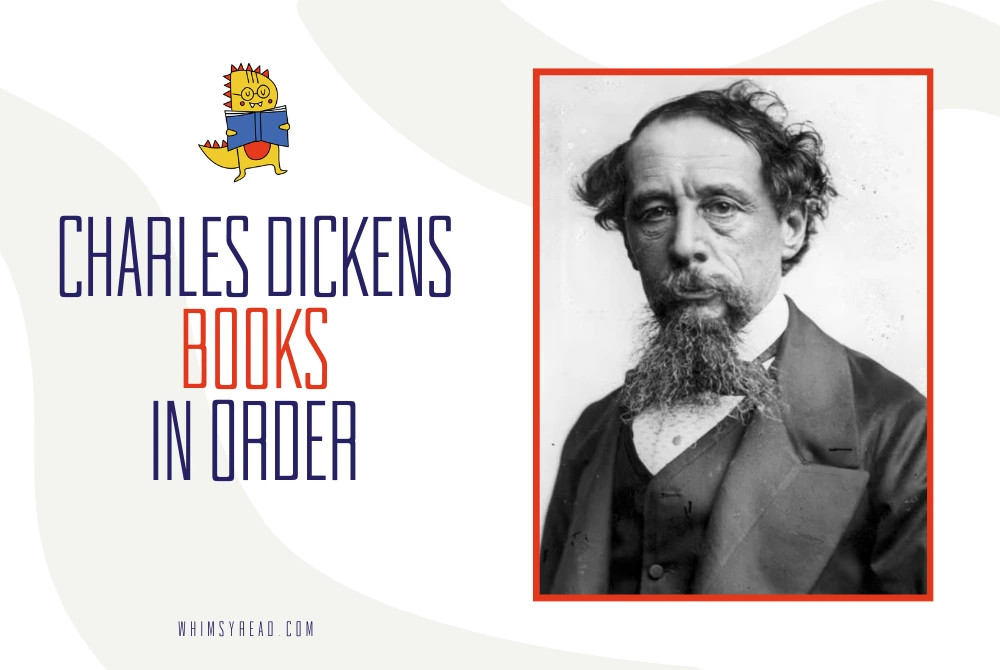
Charles Dickens remains one of the most influential English novelists of the Victorian era, known for memorable characters, social criticism, humor, suspense, and stories about poverty, class, childhood, family, and injustice. Because Dickens published much of his fiction serially, dates can sometimes appear differently across sources depending on whether they refer to serialization or book publication.
If you’re searching for Charles Dickens books in order, you do not need to read every work chronologically to understand his novels. However, publication order is an excellent way to follow the development of Dickens’s style, from the comic Pickwick Papers through the darker and more complex later novels.
Charles Dickens Novels in Order
Dickens completed 14 novels during his lifetime, with The Mystery of Edwin Drood remaining unfinished when he died in 1870. The Dickens Fellowship presents the novels in the order in which they were written, while scholarly chronologies also track their original serial publication.
1. The Pickwick Papers (1836–1837)
Also published as The Posthumous Papers of the Pickwick Club, this was Dickens’s first major novel and the work that established him as a literary sensation.
The story follows the good-natured Samuel Pickwick and his eccentric companions as they travel around England encountering a succession of comic adventures, misunderstandings, and memorable characters. Although the novel is primarily humorous, Dickens also explores imprisonment for debt, the legal system, class, and social injustice.
It is a sprawling, episodic introduction to the Dickensian world and an important starting point for understanding his career. The novel was serialized monthly from April 1836 to November 1837.
2. Oliver Twist (1837–1839)
Oliver Twist follows an orphan who grows up in poverty and becomes caught in London’s criminal underworld.
After suffering abuse in the workhouse, Oliver escapes to London, where he encounters the criminal Fagin and a group of young thieves. The novel combines adventure, mystery, melodrama, and social criticism while examining poverty, child exploitation, crime, and the treatment of the poor.
Oliver’s innocence contrasts sharply with the corrupt world surrounding him, making this one of Dickens’s most enduring novels. It was serialized in Bentley’s Miscellany from 1837 to 1839.
3. Nicholas Nickleby (1838–1839)
Nicholas Nickleby is forced to become the protector of his family after the death of his father leaves them financially vulnerable.
His struggle brings him into conflict with the cruel schoolmaster Wackford Squeers and eventually takes him through a series of adventures involving theater, family, romance, and social injustice.
The novel combines Dickens’s characteristic humor with a serious attack on the abuse suffered by children in certain boarding schools. Its large cast includes some of his most colorful comic characters.
4. The Old Curiosity Shop (1840–1841)
The story centers on Nell Trent, a young girl who lives with her grandfather in a London curiosity shop.
When her grandfather’s financial problems become disastrous, Nell is forced into a dangerous journey through England. Her vulnerability makes the novel one of Dickens’s more emotional early works.
The book was originally serialized weekly in Master Humphrey’s Clock. Its publication ran from April 1840 to February 1841.
5. Barnaby Rudge (1841)
Barnaby Rudge is Dickens’s historical novel and is set against the Gordon Riots of 1780.
The novel combines political unrest, family secrets, murder, violence, romance, and Gothic elements. Barnaby himself is a memorable and vulnerable character caught up in events much larger than himself.
Unlike many of Dickens’s later novels, the story is strongly rooted in a specific historical event and explores how crowds and political tensions can turn violent.
It was serialized weekly in Master Humphrey’s Clock alongside The Old Curiosity Shop.
6. Martin Chuzzlewit (1843–1844)
Martin Chuzzlewit follows a large and dysfunctional family dominated by the wealthy and self-important Martin Chuzzlewit.
The novel is filled with inheritance disputes, deception, greed, eccentric relatives, and comic characters. Dickens also sends some of his characters to the United States, allowing him to satirize aspects of American society based on his own travels.
The novel is especially notable for characters such as Pecksniff, Mrs. Gamp, and Tom Pinch.
7. Dombey and Son (1846–1848)
Dombey and Son explores the destructive effects of pride, wealth, business ambition, and emotional neglect.
Paul Dombey is a wealthy businessman obsessed with ensuring that his family name and commercial empire continue through his son. His relationship with his daughter Florence becomes increasingly painful as his priorities distort his family life.
The novel marks a significant development in Dickens’s characterization and psychological depth. It was serialized monthly between October 1846 and April 1848.
8. David Copperfield (1849–1850)
David Copperfield is one of Dickens’s most personal novels and is often described as his most autobiographical work.
David narrates his life from childhood through adulthood, describing his difficult upbringing, education, friendships, romances, professional ambitions, and eventual development as a writer.
The novel introduces unforgettable characters including Uriah Heep, Mr. Micawber, Betsey Trotwood, Dora Spenlow, and Steerforth.
For readers wondering which Charles Dickens book to read first, David Copperfield is one of the strongest choices if you want a character-driven introduction to his writing.
9. Bleak House (1852–1853)
Bleak House is one of Dickens’s most ambitious novels and combines mystery, social criticism, satire, and multiple narrative perspectives.
At the center is the seemingly endless legal case of Jarndyce and Jarndyce, which has consumed fortunes and lives through years of litigation.
Esther Summerson’s story provides the emotional center, while the novel explores poverty, bureaucracy, disease, corruption, and the failures of the Victorian legal system.
The Dickens Fellowship identifies Bleak House as one of the major novels Dickens produced during the period when he was also editing and publishing Household Words.
10. Hard Times (1854)
Hard Times is one of Dickens’s shortest major novels and one of his most direct works of social criticism.
Set in the industrial town of Coketown, it contrasts rigid utilitarian thinking with imagination, emotion, compassion, and human individuality.
The novel follows characters including Thomas Gradgrind, Louisa Gradgrind, and Stephen Blackpool while examining industrialization, education, labor, poverty, and class.
Unlike most Dickens novels, Hard Times was serialized weekly in Household Words rather than monthly. It appeared from April to August 1854.
11. Little Dorrit (1855–1857)
Little Dorrit centers on Amy Dorrit, whose father has spent years imprisoned for debt in the Marshalsea prison.
Amy’s life is shaped by poverty, family responsibility, and the peculiar social world surrounding her father’s imprisonment. The novel gradually expands into a much larger story involving wealth, bureaucracy, debt, inheritance, and social hypocrisy.
The Marshalsea and the complicated financial systems surrounding the characters allow Dickens to criticize institutions that trap people rather than help them.
12. A Tale of Two Cities (1859)
A Tale of Two Cities is Dickens’s historical novel about London and Paris before and during the French Revolution.
The story follows characters including Charles Darnay, Sydney Carton, Lucie Manette, and Dr. Manette as their lives become entangled with revolutionary violence.
Unlike many Dickens novels, the story is tightly plotted and comparatively compact. It is particularly famous for its themes of sacrifice, redemption, love, revolution, and social injustice.
For readers searching for the best Charles Dickens books to start with, this is one of the easiest entry points because of its relatively focused narrative.
13. Great Expectations (1860–1861)
Great Expectations follows Pip, an orphan who dreams of becoming a gentleman.
After encountering the escaped convict Magwitch as a child, Pip unexpectedly receives financial support from an unknown benefactor and enters London society. His ambitions, relationships, and assumptions about wealth and social status gradually lead him toward painful discoveries.
The novel explores class, ambition, guilt, love, identity, and the difference between appearance and genuine moral worth.
It remains one of Dickens’s most widely read novels and was serialized weekly in All the Year Round from December 1860 to August 1861.
14. Our Mutual Friend (1864–1865)
Our Mutual Friend is Dickens’s final completed novel.
The story begins with the mysterious inheritance of a fortune connected to a dead man found floating in the Thames. From that starting point, Dickens creates a sprawling network of characters whose lives intersect through money, marriage, inheritance, social ambition, and deception.
The novel contains some of Dickens’s darkest satire and most unusual characters, including Silas Wegg and the Boffins.
It was serialized monthly from May 1864 to November 1865.
15. The Mystery of Edwin Drood (1870)
The Mystery of Edwin Drood was Dickens’s final novel, but he died before completing it.
The story begins with the disappearance of Edwin Drood and introduces a group of characters surrounded by secrets, suspicion, drugs, family tensions, and romantic complications.
Only six of the planned twelve monthly installments were completed before Dickens died on June 9, 1870. Because the ending was never written by Dickens, the mystery of Edwin Drood remains unresolved.
This is therefore the latest Charles Dickens novel, but it should not be described as a completed novel.
Charles Dickens Novels in Order at a Glance
| # | Book | Publication period | Status |
| 1 | The Pickwick Papers | 1836–1837 | Complete |
| 2 | Oliver Twist | 1837–1839 | Complete |
| 3 | Nicholas Nickleby | 1838–1839 | Complete |
| 4 | The Old Curiosity Shop | 1840–1841 | Complete |
| 5 | Barnaby Rudge | 1841 | Complete |
| 6 | Martin Chuzzlewit | 1843–1844 | Complete |
| 7 | Dombey and Son | 1846–1848 | Complete |
| 8 | David Copperfield | 1849–1850 | Complete |
| 9 | Bleak House | 1852–1853 | Complete |
| 10 | Hard Times | 1854 | Complete |
| 11 | Little Dorrit | 1855–1857 | Complete |
| 12 | A Tale of Two Cities | 1859 | Complete |
| 13 | Great Expectations | 1860–1861 | Complete |
| 14 | Our Mutual Friend | 1864–1865 | Complete |
| 15 | The Mystery of Edwin Drood | 1870 | Unfinished |
This is the cleanest Charles Dickens novels in order list. The Dickens Fellowship likewise identifies 14 completed novels and The Mystery of Edwin Drood as unfinished.
The Five Charles Dickens Christmas Books in Order
The Christmas Books are separate from Dickens’s main novels. They are shorter works of fiction, and A Christmas Carol is technically a novella rather than one of his 14 completed novels. The Dickens Fellowship identifies five Christmas Books.
1. A Christmas Carol (1843)
Ebenezer Scrooge is a miser who despises Christmas until a series of supernatural visitors forces him to confront his past, present, and possible future.
It is Dickens’s most famous Christmas story and one of the best-known works of Victorian literature.
2. The Chimes (1844)
The Chimes follows Trotty Veck, a poor messenger who becomes overwhelmed by despair about society and the treatment of the poor.
The story uses supernatural elements to explore poverty, social responsibility, and the possibility of moral change.
3. The Cricket on the Hearth (1845)
This warm domestic Christmas tale focuses on a family whose apparently stable life is threatened by suspicion, jealousy, and deception.
A cricket on the hearth becomes a symbolic presence associated with home, happiness, and protection.
4. The Battle of Life (1846)
This Christmas story centers on two sisters and the complicated choices surrounding love, sacrifice, and happiness.
It is less supernatural than some of Dickens’s other Christmas Books and focuses more strongly on relationships and emotional sacrifice.
5. The Haunted Man and the Ghost’s Bargain (1848)
Professor Redlaw receives a supernatural gift that allows him to forget painful memories.
Instead of freeing him from suffering, however, the removal of his memories affects the people around him and creates unexpected consequences.
The story explores memory, resentment, forgiveness, and the importance of human emotional experience.
Charles Dickens Short Stories and Other Fiction
Dickens wrote far more fiction than his novels and Christmas Books alone suggest.
He contributed numerous stories and sketches to journals including Household Words and All the Year Round. The Dickens Fellowship notes that these periodicals contained a wide range of Dickens’s journalism and fiction.
Some notable shorter works include:
- The Haunted House
- A Message from the Sea
- Tom Tiddler’s Ground
- Somebody’s Luggage
- Mrs. Lirriper’s Lodgings
- Mrs. Lirriper’s Legacy
- Doctor Marigold’s Prescriptions
- Mugby Junction
- No Thoroughfare
- The Signal-Man
- The Trial for Murder
- George Silverman’s Explanation
- Hunted Down
- The Perils of Certain English Prisoners
- The Wreck of the Golden Mary
Because many of these appeared originally as individual contributions to periodicals, there is no single universally accepted “Charles Dickens short-story reading order.”
Charles Dickens Short Fiction Worth Reading First
If you do not want to work through every short story, several are particularly useful starting points.
The Signal-Man
One of Dickens’s best-known ghost stories, The Signal-Man combines psychological tension with supernatural mystery.
Doctor Marigold’s Prescriptions
This later Christmas-season story centers on a traveling bookseller and his relationship with an adopted child. It combines Dickens’s sentimentality with his concern for vulnerable people.
George Silverman’s Explanation
This darker later work presents the autobiographical-sounding reflections of George Silverman as he attempts to explain his troubled life and moral failures.
Mugby Junction
This collection of interconnected stories uses a railway setting to explore isolation, memory, crime, and human connection.
Charles Dickens Nonfiction Books in Order
Dickens was also a journalist, essayist, travel writer, editor, and social commentator.
His major book-length nonfiction works include:
1. American Notes for General Circulation (1842)
Dickens records his impressions of his first visit to the United States.
The book discusses American society, institutions, slavery, prisons, newspapers, and everyday life. His observations generated considerable controversy, particularly in the United States.
2. Pictures from Italy (1846)
This travel book records Dickens’s experiences during his travels through Italy.
Rather than functioning as a conventional travel guide, it combines observations, impressions, descriptions, and literary sketches.
The Dickens Fellowship identifies it as Dickens’s account of his Italian journey.
3. A Child’s History of England (1851–1853)
Written for younger readers, this work presents English history in Dickens’s accessible and strongly opinionated style.
It covers English history from early periods through the reign of Queen Victoria.
4. The Uncommercial Traveller (1860 onward)
The Uncommercial Traveller is a collection of essays based on Dickens’s observations while traveling around London, England, and elsewhere.
The Dickens Fellowship notes that the essays appeared in several phases between 1860 and 1869, totaling 37 different papers.
It is particularly valuable for readers interested in Dickens as a journalist and social observer rather than solely as a novelist.
Charles Dickens Books Chronologically
If your goal is to read Charles Dickens chronologically, start with the novels and then add the major Christmas Books and nonfiction around their original publication dates.
A simplified chronology looks like this:
- The Pickwick Papers — 1836–1837
- Oliver Twist — 1837–1839
- Nicholas Nickleby — 1838–1839
- The Old Curiosity Shop — 1840–1841
- Barnaby Rudge — 1841
- American Notes for General Circulation — 1842
- A Christmas Carol — 1843
- Martin Chuzzlewit — 1843–1844
- The Chimes — 1844
- The Cricket on the Hearth — 1845
- Pictures from Italy — 1846
- The Battle of Life — 1846
- Dombey and Son — 1846–1848
- The Haunted Man and the Ghost’s Bargain — 1848
- David Copperfield — 1849–1850
- Bleak House — 1852–1853
- A Child’s History of England — 1851–1853
- Hard Times — 1854
- Little Dorrit — 1855–1857
- A Tale of Two Cities — 1859
- Great Expectations — 1860–1861
- The Uncommercial Traveller — 1860 onward
- Our Mutual Friend — 1864–1865
- The Mystery of Edwin Drood — 1870, unfinished
The exact chronological placement of shorter journalism and individual stories is much more complicated because Dickens was simultaneously writing for multiple periodicals.
Do You Need to Read Charles Dickens Books in Order?
No.
Unlike a modern multi-book fantasy or mystery series, Dickens’s novels are generally independent stories. You can read Great Expectations, A Tale of Two Cities, David Copperfield, or Oliver Twist without reading the earlier novels first.
However, reading Charles Dickens books in publication order has one major advantage: you can see how his writing evolves.
His early work is often more episodic and comic, while later novels such as Bleak House, Little Dorrit, Great Expectations, and Our Mutual Friend tend to be more structurally complex and darker.
What Is the First Charles Dickens Book?
The first major Dickens novel is The Pickwick Papers.
It began as a monthly serial in 1836 and continued through November 1837. The work established Dickens as a major literary figure and introduced readers to his distinctive mixture of comedy, eccentric characters, social observation, and satire.
However, Sketches by Boz appeared earlier in book form in 1836 and collected Dickens’s sketches and shorter pieces. So if someone asks for his first published book, the answer can differ depending on whether they mean first book-length publication or first major novel.
What Is the Last Charles Dickens Book?
The final novel Dickens worked on was The Mystery of Edwin Drood.
It began publication in 1870, but Dickens completed only six of the planned twelve monthly installments before his death on June 9, 1870. Consequently, the novel has no authentic Dickens-written conclusion.
His final completed novel was Our Mutual Friend, published serially from 1864 to 1865.
How Many Books Did Charles Dickens Write?
The answer depends on what you count as a “book.”
For the core novel bibliography:
- 14 completed novels
- 1 unfinished novel: The Mystery of Edwin Drood
- 5 Christmas Books
- Numerous short stories and novellas
- Several travel and nonfiction books
- Hundreds of essays, journalistic pieces, and other contributions
The Dickens Fellowship specifically describes Dickens as having completed 14 novels and leaving The Mystery of Edwin Drood unfinished.
This is why different websites can give different numbers when asked how many Charles Dickens books there are.
Best Charles Dickens Books to Start With
You do not need to begin with The Pickwick Papers if you’re a first-time Dickens reader.
Best overall starting point: Great Expectations
Great Expectations is relatively accessible, tightly plotted, and introduces many of Dickens’s major themes.
Best for mystery and atmosphere: Bleak House
Choose Bleak House if you want mystery, social criticism, complex characters, and a sprawling Victorian setting.
Best for historical drama: A Tale of Two Cities
This is an excellent choice if you prefer a shorter, more focused narrative with suspense, revolution, and sacrifice.
Best for classic Dickensian characters: David Copperfield
Choose David Copperfield for character development, autobiography-inspired storytelling, humor, romance, and memorable personalities.
Best short introduction: A Christmas Carol
If you want to experience Dickens without committing to a long novel, A Christmas Carol is the obvious starting point.
Charles Dickens Books in Order: Simple Version
For readers who want only the major novels:
- The Pickwick Papers
- Oliver Twist
- Nicholas Nickleby
- The Old Curiosity Shop
- Barnaby Rudge
- Martin Chuzzlewit
- Dombey and Son
- David Copperfield
- Bleak House
- Hard Times
- Little Dorrit
- A Tale of Two Cities
- Great Expectations
- Our Mutual Friend
- The Mystery of Edwin Drood — unfinished
For the Christmas Books, read:
- A Christmas Carol
- The Chimes
- The Cricket on the Hearth
- The Battle of Life
- The Haunted Man and the Ghost’s Bargain
Final Thoughts
The Charles Dickens books in order are best approached as a literary journey rather than a single continuous series. His 14 completed novels move from the exuberant comedy of The Pickwick Papers to the social criticism and psychological complexity of works such as Bleak House, Great Expectations, and Our Mutual Friend, while The Mystery of Edwin Drood remains his unfinished final novel.
For a first-time reader, you can safely begin with Great Expectations, David Copperfield, A Tale of Two Cities, or A Christmas Carol. If your goal is to experience all Charles Dickens books chronologically, start with The Pickwick Papers and then follow the publication order above, adding the five Christmas Books and major nonfiction as separate categories.

Leave a Reply