
Raymond Feist Books in Order: Complete Riftwar Reading Order
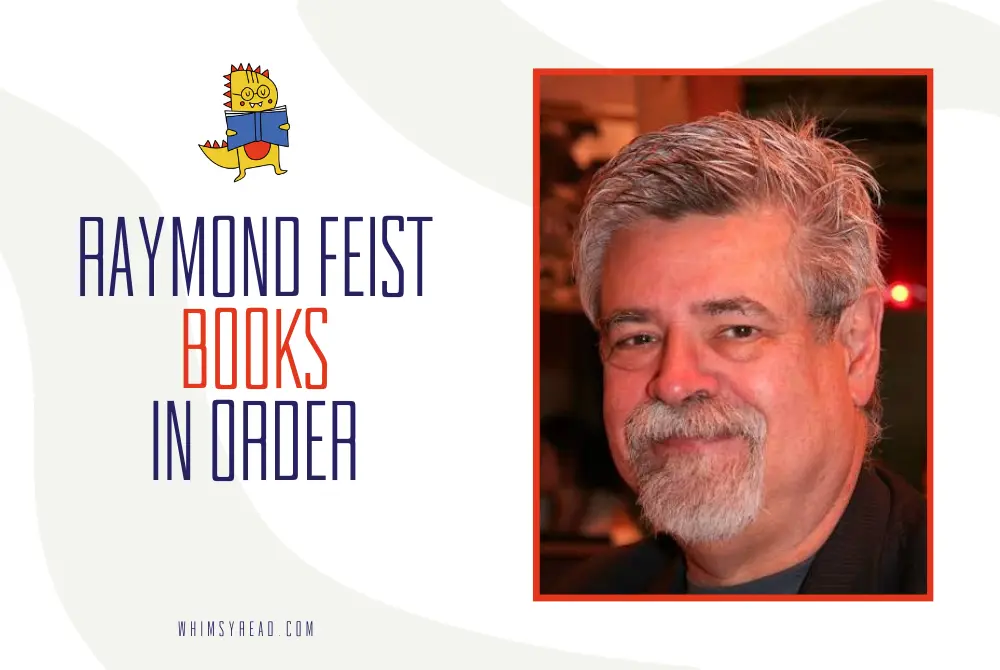
Raymond E. Feist is best known for creating Midkemia, one of modern epic fantasy’s largest interconnected settings. His books follow recurring characters such as Pug, Tomas, Arutha, Jimmy, Miranda, and other generations of heroes across wars, kingdoms, worlds, and centuries, making the reading order more complicated than a simple publication list.
If you’re searching for Raymond Feist books in order, this guide separates the major series and explains where each belongs. It also includes the Firemane Saga, Feist’s separate fantasy series, so you can see his major fiction bibliography in one place.
Raymond Feist Books in Order
The most useful reading order is series-by-series publication order rather than strict chronological order.
Feist’s books form a large connected sequence known as the Riftwar Cycle. Within that cycle, several series are designed to follow one another, while a few companion books can technically be read at different points.
Here is the recommended order.
The Riftwar Cycle
1. The Riftwar Saga
The original Riftwar Saga is where every new reader should begin. It introduces Midkemia, Pug, Tomas, Arutha, the Kingdom of the Isles, and the rift connecting Midkemia to the Empire of Kelewan. Penguin Random House identifies these four titles as Books 1–4 of the Riftwar Saga, with Magician published in some editions as two volumes.
1. Magician: Apprentice (1982)
Magician introduces Pug, an orphan who becomes an apprentice to the court magician Kulgan.
Pug initially struggles with conventional magic, but his unusual abilities become increasingly important when a mysterious rift opens between Midkemia and another world. The resulting conflict brings war, invasion, magic, and political upheaval to the Kingdom of the Isles.
In the United States, the original Magician was divided into Magician: Apprentice and Magician: Master. In many other editions, it appears as the single novel Magician.
2. Magician: Master (1982)
The second half of Magician follows Pug after he is captured and taken to the Empire of Kelewan.
There he becomes known as Milamber and discovers that his magical potential is far greater than anyone in Midkemia realized. At the same time, the war between the two worlds continues to escalate.
If your edition contains the complete Magician as one volume, you do not need to purchase Magician: Apprentice and Magician: Master separately.
3. Silverthorn (1985)
Prince Arutha is preparing to marry Princess Anita when tragedy strikes: Anita is poisoned by an assassin.
To save her life, Arutha sets out to find the rare Silverthorn herb, which grows in a dangerous region controlled by the Spellweavers. His journey brings together a mercenary, a minstrel, and a young thief while exposing the group to ancient magic and deadly enemies.
Silverthorn continues directly from the events of Magician.
4. A Darkness at Sethanon (1986)
The original Riftwar Saga reaches its climax in A Darkness at Sethanon.
Dark forces threaten the Kingdom of the Isles, while Pug must confront an ancient enemy connected to the deeper cosmic struggle between Order and Chaos.
The book brings together many of the characters and conflicts established in the previous novels and serves as a major foundation for the rest of the Riftwar Cycle.
2. The Empire Trilogy
The Empire Trilogy, written by Raymond E. Feist and Janny Wurts, shifts the perspective from Midkemia to Kelewan.
Rather than focusing primarily on the military conflict from Pug’s perspective, these novels follow Mara of the Acoma, a young woman who must survive the dangerous political system of the Tsurani Empire. Penguin Random House lists Daughter of the Empire, Servant of the Empire, and Mistress of the Empire as Books 1–3.
5. Daughter of the Empire (1987)
Mara becomes Ruling Lady of the Acoma after her father and brother are killed.
She inherits a house surrounded by political enemies and must use intelligence, diplomacy, alliances, and strategy to keep her people alive.
The novel offers a very different perspective on the Riftwar conflict and introduces the fascinating political culture of Kelewan.
6. Servant of the Empire (1990)
Mara’s influence continues to grow, but her enemies become more dangerous.
She must balance political maneuvering with personal relationships while navigating the rigid traditions of the Tsurani Empire.
The second book expands the political and cultural world introduced in Daughter of the Empire.
7. Mistress of the Empire (1992)
The trilogy concludes with Mara facing her most dangerous political challenges.
Assassins, rival houses, ancient powers, and the mysterious Black Robes threaten her family and position. Mara must find allies outside the traditional structures of the Empire if she is to survive.
The book brings the Mara storyline to a major conclusion.
3. Krondor’s Sons
The next two novels return to Midkemia and focus on the sons of Prince Arutha.
8. Prince of the Blood (1989)
Prince Borric and his younger brother Erland are sent on a diplomatic journey to the Empire of Kesh.
Their mission turns dangerous when their party is attacked and the brothers are separated. Borric is presumed dead, while Erland must navigate the political dangers of Kesh alone.
The novel combines court intrigue, adventure, and a coming-of-age story.
9. The King’s Buccaneer (1992)
Nicholas, another member of the royal family, embarks on a dangerous mission that takes him far beyond the familiar territories of Midkemia.
What begins as an adventure develops into a major threat involving slavery, piracy, political conflict, and distant lands.
It also introduces characters and ideas that become important later in the Riftwar Cycle.
4. The Serpentwar Saga
The Serpentwar Saga moves the Midkemian story forward and introduces a new generation of characters.
10. Shadow of a Dark Queen (1994)
A new threat emerges as an ancient and dangerous enemy begins gathering power.
Erik von Darkmoor, a young man fleeing a troubled past, becomes involved with the Kingdom’s military forces and eventually joins a dangerous mission.
The novel begins a much larger conflict that will require soldiers, magicians, nobles, and ordinary people to work together.
11. Rise of a Merchant Prince (1995)
Roo Avery attempts to build a new life through commerce rather than warfare.
His ambition brings him into the dangerous world of international trade, politics, and wealth, where success can be as dangerous as failure.
The book shifts some of the series’ focus from battlefield action to economics and political power.
12. Rage of a Demon King (1997)
The threat facing the Kingdom grows increasingly serious.
Military forces prepare for a devastating confrontation while demonic powers and political enemies threaten to overwhelm the protagonists.
The story becomes more closely connected to the larger cosmic conflict underlying Feist’s world.
13. Shards of a Broken Crown (1998)
The Serpentwar Saga concludes with the aftermath of the enormous conflict.
The surviving characters must deal with the political and personal consequences of war while Midkemia attempts to rebuild.
The book also prepares the setting for several later Riftwar stories.
5. Riftwar Legacy
The Riftwar Legacy books return to the streets and underworld of Krondor.
These stories are closely connected to the events of the earlier Riftwar novels and draw heavily on characters such as Jimmy the Hand.
14. Krondor: The Betrayal (1998)
A mysterious conspiracy threatens Krondor, forcing the Kingdom’s agents to investigate political betrayal and supernatural dangers.
The book is closely tied to the Krondor computer-game storyline but works as part of the larger Midkemia fiction.
15. Krondor: The Assassins (1999)
The danger surrounding Krondor continues as assassins and political enemies threaten the city.
The story expands the role of Jimmy and other familiar characters while introducing another mystery within the kingdom.
16. Krondor: Tear of the Gods (2000)
The third Riftwar Legacy novel raises the stakes by bringing magical and supernatural threats into the conflict.
The story continues the Krondor-focused adventures while developing the wider mythology of Midkemia.
17. Jimmy and the Crawler (2013)
This shorter work returns to Jimmy the Hand much later in the publication history.
It is best treated as a companion novella rather than a required fourth full-length Riftwar Legacy novel. Fantastic Fiction lists it under Riftwar Legacy, while also identifying it as a shorter work.
6. Legends of the Riftwar
These books explore stories connected to the Riftwar period and are partly written with other authors.
18. Honoured Enemy (2001)
Written with William R. Forstchen, Honoured Enemy follows soldiers caught behind enemy lines during the Riftwar.
The story focuses on enemies forced into an uneasy alliance when survival becomes more important than their original loyalties.
19. Murder in LaMut (2002)
Written with Joel Rosenberg, this novel combines mystery with the larger Riftwar setting.
An investigation into a murder in LaMut brings political and military complications to the forefront.
20. Jimmy the Hand (2003)
Written with S. M. Stirling, this novel explores the early life of Jimmy the Hand.
It provides additional background on one of the most popular recurring characters in the Midkemia books.
These three novels are optional companion stories, but they can be especially rewarding for readers who already know the original Riftwar characters. Fantastic Fiction identifies all three within Legends of the Riftwar.
7. Conclave of Shadows
The Conclave of Shadows trilogy begins another major stage of the Midkemian story.
21. Talon of the Silver Hawk (2002)
Kieli, a young boy whose people are destroyed by an enemy attack, is taken under the protection of the Conclave of Shadows.
He is trained to become an instrument of justice and revenge, eventually taking on the identity of Talon.
The novel introduces a new generation of heroes while retaining the larger political and magical background of Midkemia.
22. King of Foxes (2003)
Talon’s mission continues as he becomes increasingly involved in political manipulation and international intrigue.
His enemies are powerful, and his ability to survive depends on his training, intelligence, and willingness to operate behind the scenes.
23. Exile’s Return (2004)
The trilogy concludes as old and new characters become involved in a conflict involving ancient powers and political ambition.
The book connects Talon’s story more closely to the wider Riftwar universe.
8. The Darkwar Saga
The Darkwar Saga introduces another major supernatural threat to Midkemia.
24. Flight of the Nighthawks (2005)
The story begins with mysterious attacks and political unrest.
Pug and the Conclave of Shadows become involved as a dangerous new threat begins to emerge.
The novel brings together several strands of Feist’s world and begins another major trilogy.
25. Into a Dark Realm (2006)
The conflict expands into other realms as Pug and his allies attempt to understand the nature of the enemy.
Magic, alternate dimensions, and powerful supernatural forces become increasingly important.
26. Wrath of a Mad God (2008)
The Darkwar trilogy reaches its climax.
Pug and his allies must confront an enemy whose ambitions threaten more than a single kingdom or world.
The book provides one of the series’ major magical confrontations.
9. The Demonwar Saga
The Demonwar Saga is a shorter two-book sequence.
27. Rides a Dread Legion (2009)
A dangerous force emerges from another realm, bringing a new threat to Midkemia.
Pug and the Conclave of Shadows must respond to an enemy whose power could overwhelm the world’s existing defenses.
28. At the Gates of Darkness (2009)
The conflict reaches its next stage as the heroes attempt to stop the invading forces.
The book develops the larger cosmic mythology of Feist’s universe and leads directly toward the final Chaoswar storyline.
10. The Chaoswar Saga
The Chaoswar Saga was originally presented as the concluding major trilogy of the Riftwar Cycle.
29. A Kingdom Besieged (2011)
The Kingdom of the Isles faces new threats as political instability and supernatural forces converge.
Old characters return while a new generation becomes involved in the conflict.
The novel begins the final major arc of the original Riftwar Cycle.
30. A Crown Imperilled (2012)
The danger facing the Kingdom becomes more serious as enemies maneuver for power.
The characters must contend with both political threats and forces connected to the deeper struggle between Order and Chaos.
31. Magician’s End (2013)
Magician’s End was originally presented as the final Riftwar novel.
The story brings Pug’s enormous journey toward its culmination and resolves major elements of the long-running conflict between Order and Chaos.
For readers following the original Riftwar Cycle, this is an important landmark because it was written as the conclusion of the main Midkemian saga.
11. Firemane Saga
The Firemane Saga is not part of the Riftwar Cycle. It is a separate fantasy universe and should not be inserted into the Midkemia reading order.
32. King of Ashes (2018)
The first Firemane novel introduces a new world of kingdoms, political intrigue, magic, war, and powerful families.
Rather than continuing Pug’s story, Feist creates a completely new setting and cast.
33. Queen of Storms (2020)
The second book expands the political and military conflict introduced in King of Ashes.
Characters face new alliances, enemies, and threats as the larger struggle develops.
34. Master of Furies (2022)
The trilogy concludes with the protagonists facing the consequences of the conflicts that have developed throughout the first two novels.
The book completes the Firemane Saga and can be read independently of Midkemia.
Fantastic Fiction lists all three books as the Firemane Saga in this order.
12. Dragonwar Saga
After Magician’s End, Feist eventually returned to the Riftwar universe with a new series.
35. A Darkness Returns (2024)
A Darkness Returns is Book 1 of the Dragonwar Saga and returns readers to the Riftwar universe.
The novel revisits Midkemia and brings the familiar setting into a new era of conflict. It is therefore important for readers to understand that this is not a standalone fantasy novel and not part of the separate Firemane universe.
Current library and bibliography records identify A Darkness Returns specifically as Dragonwar Saga, Book 1, published in 2024.
As of the current bibliography, A Darkness Returns is the first published Dragonwar novel.
Raymond Feist Books in Order at a Glance
| # | Book | Series | Year |
| 1 | Magician: Apprentice | Riftwar Saga | 1982 |
| 2 | Magician: Master | Riftwar Saga | 1982 |
| 3 | Silverthorn | Riftwar Saga | 1985 |
| 4 | A Darkness at Sethanon | Riftwar Saga | 1986 |
| 5 | Daughter of the Empire | Empire Trilogy | 1987 |
| 6 | Servant of the Empire | Empire Trilogy | 1990 |
| 7 | Mistress of the Empire | Empire Trilogy | 1992 |
| 8 | Prince of the Blood | Krondor’s Sons | 1989 |
| 9 | The King’s Buccaneer | Krondor’s Sons | 1992 |
| 10 | Shadow of a Dark Queen | Serpentwar | 1994 |
| 11 | Rise of a Merchant Prince | Serpentwar | 1995 |
| 12 | Rage of a Demon King | Serpentwar | 1997 |
| 13 | Shards of a Broken Crown | Serpentwar | 1998 |
| 14 | Krondor: The Betrayal | Riftwar Legacy | 1998 |
| 15 | Krondor: The Assassins | Riftwar Legacy | 1999 |
| 16 | Krondor: Tear of the Gods | Riftwar Legacy | 2000 |
| 17 | Honoured Enemy | Legends of the Riftwar | 2001 |
| 18 | Murder in LaMut | Legends of the Riftwar | 2002 |
| 19 | Talon of the Silver Hawk | Conclave of Shadows | 2002 |
| 20 | Jimmy the Hand | Legends of the Riftwar | 2003 |
| 21 | King of Foxes | Conclave of Shadows | 2003 |
| 22 | Exile’s Return | Conclave of Shadows | 2004 |
| 23 | Flight of the Nighthawks | Darkwar | 2005 |
| 24 | Into a Dark Realm | Darkwar | 2006 |
| 25 | Wrath of a Mad God | Darkwar | 2008 |
| 26 | Rides a Dread Legion | Demonwar | 2009 |
| 27 | At the Gates of Darkness | Demonwar | 2009 |
| 28 | A Kingdom Besieged | Chaoswar | 2011 |
| 29 | A Crown Imperilled | Chaoswar | 2012 |
| 30 | Magician’s End | Chaoswar | 2013 |
| 31 | Jimmy and the Crawler | Riftwar Legacy | 2013 |
| 32 | King of Ashes | Firemane Saga | 2018 |
| 33 | Queen of Storms | Firemane Saga | 2020 |
| 34 | Master of Furies | Firemane Saga | 2022 |
| 35 | A Darkness Returns | Dragonwar Saga | 2024 |
Note: The table combines the principal novels and the shorter Jimmy and the Crawler. Firemane is a separate universe, while A Darkness Returns returns to the Riftwar setting as Dragonwar Saga Book 1.
Do You Need to Read Raymond Feist Books in Order?
Yes, if you want to experience the Riftwar Cycle as one continuous fantasy saga.
You technically can pick up individual series such as the Empire Trilogy without reading every earlier Midkemia novel, but the overall experience is much richer when you follow the recommended sequence.
The most important rule is to read each individual trilogy or series in its own order.
For example:
- Magician: Apprentice should come before Magician: Master.
- Daughter of the Empire should come before Servant of the Empire.
- Shadow of a Dark Queen should come before Rise of a Merchant Prince.
- Talon of the Silver Hawk should come before King of Foxes.
- Flight of the Nighthawks should come before Into a Dark Realm.
- A Kingdom Besieged should come before A Crown Imperilled.
- King of Ashes → Queen of Storms → Master of Furies is the complete Firemane sequence.
The publisher likewise presents the major Riftwar series as ordered sequences rather than independent books.
Where Should You Start with Raymond Feist?
The best starting point is Magician: Apprentice.
It introduces the world of Midkemia and the central magical conflict that eventually expands across generations of characters.
If your edition contains Magician as one complete volume, simply read that version rather than searching separately for Magician: Apprentice and Magician: Master. The two-volume division is a publishing format rather than two unrelated stories.
For the classic Riftwar story
Start with:
** Magician → Silverthorn → A Darkness at Sethanon **
For political fantasy
Try:
** Daughter of the Empire **
The Empire Trilogy offers a particularly strong political and character-driven side of the Riftwar universe.
For a newer standalone fantasy world
Start with:
** King of Ashes **
This begins the separate Firemane Saga.
For Feist’s newest Midkemia storyline
Start with:
** A Darkness Returns **
But because it belongs to the Dragonwar Saga and returns to the established Riftwar universe, reading the earlier Midkemia books first will give you substantially more context.
What Is the First Raymond Feist Book?
The first major Raymond E. Feist novel is Magician, originally published in 1982.
In American editions, the novel was divided into Magician: Apprentice and Magician: Master. Penguin Random House currently lists those two volumes separately as Books 1 and 2 of the Riftwar Saga.
Therefore, when readers ask for the first Raymond Feist book, you may see either Magician or Magician: Apprentice depending on the edition or bibliography being used.
What Is the Latest Raymond Feist Book?
The latest published Riftwar-universe novel is A Darkness Returns, published in 2024 as Book 1 of the Dragonwar Saga. Current library and bibliographic records explicitly identify it as Dragonwar Saga Book 1.
This means A Darkness Returns is particularly important for readers searching for the latest Raymond Feist book: Master of Furies (2022) was the conclusion of the separate Firemane Saga, while A Darkness Returns brought Feist back to Midkemia.
How Many Raymond Feist Books Are There?
The exact number depends on what you count because Feist’s bibliography includes novels, shorter works, coauthored books, graphic adaptations, nonfiction, and stories contributed to anthologies.
For the principal fiction covered in this reading guide, there are:
- 4 Riftwar Saga volumes in the U.S. presentation, although Magician is one novel in many editions
- 3 Empire Trilogy novels
- 2 Krondor’s Sons novels
- 4 Serpentwar novels
- 3 full-length Riftwar Legacy novels
- 3 Legends of the Riftwar novels
- 3 Conclave of Shadows novels
- 3 Darkwar novels
- 2 Demonwar novels
- 3 Chaoswar novels
- 3 Firemane novels
- 1 Dragonwar novel currently published
- 1 shorter Riftwar Legacy work, Jimmy and the Crawler
Penguin Random House describes Feist as the author or coauthor of more than thirty novels, while broader bibliography databases include additional works and collaborations.
Raymond Feist Books Chronologically
If you want the publication order, rather than the recommended series-by-series reading order, the beginning of Feist’s fiction is:
- Magician — 1982
- Silverthorn — 1985
- A Darkness at Sethanon — 1986
- Daughter of the Empire — 1987
- Prince of the Blood — 1989
- Servant of the Empire — 1990
- Mistress of the Empire — 1992
- The King’s Buccaneer — 1992
- Shadow of a Dark Queen — 1994
- Rise of a Merchant Prince — 1995
- Rage of a Demon King — 1997
- Shards of a Broken Crown — 1998
- Krondor: The Betrayal — 1998
- Krondor: The Assassins — 1999
- Krondor: Tear of the Gods — 2000
- Honoured Enemy — 2001
- Talon of the Silver Hawk — 2002
- Murder in LaMut — 2002
- King of Foxes — 2003
- Jimmy the Hand — 2003
- Exile’s Return — 2004
- Flight of the Nighthawks — 2005
- Into a Dark Realm — 2006
- Wrath of a Mad God — 2008
- Rides a Dread Legion — 2009
- At the Gates of Darkness — 2009
- A Kingdom Besieged — 2011
- A Crown Imperilled — 2012
- Magician’s End — 2013
- Jimmy and the Crawler — 2013
- King of Ashes — 2018
- Queen of Storms — 2020
- Master of Furies — 2022
- A Darkness Returns — 2024
The publication chronology can look confusing because the series were released across decades and some books were written with collaborators. For a first-time reader, series order is more useful than strict publication order.
Are the Empire Trilogy Books Part of the Riftwar Cycle?
Yes.
The Empire Trilogy is set primarily on Kelewan and was written by Raymond E. Feist and Janny Wurts. It is part of the larger Riftwar universe even though its focus is very different from the original Riftwar Saga.
The recommended order is:
- Daughter of the Empire
- Servant of the Empire
- Mistress of the Empire
These books provide some of the deepest exploration of Tsurani politics, culture, social hierarchy, and the consequences of the Riftwar.
Is Firemane Part of the Riftwar Universe?
No.
The Firemane Saga is a separate fantasy universe.
Its reading order is:
- King of Ashes
- Queen of Storms
- Master of Furies
You do not need to read any Riftwar books before starting King of Ashes. Fantastic Fiction lists Firemane separately from the Riftwar series.
What Is the Dragonwar Saga?
The Dragonwar Saga is Feist’s return to the Riftwar universe after the Firemane trilogy.
The first book is:
- A Darkness Returns (2024)
Current records identify it as Dragonwar Saga, Book 1, so it should not be confused with the earlier A Darkness at Sethanon despite the similar titles.
For readers discovering Feist today, this means there are effectively two different starting points:
New to Feist: Start with Magician.
Already familiar with Midkemia: A Darkness Returns begins the newer Dragonwar storyline.
Raymond Feist’s Best Books to Start With
If you’re deciding which Raymond Feist book to read first, these are the strongest choices:
Best overall starting point: Magician
Best classic epic fantasy: A Darkness at Sethanon
Best political fantasy: Daughter of the Empire
Best character-focused trilogy: The Empire Trilogy
Best later Midkemia entry: Talon of the Silver Hawk
Best separate fantasy series: King of Ashes
Newest Midkemia novel: A Darkness Returns
For most readers, however, Magician remains the clear choice because it establishes the world, magic, characters, and central conflict that make the Riftwar Cycle so expansive.
Raymond Feist Reading Order: Simple Version
If you want the complete Raymond Feist reading order without all the explanations, follow these series:
Riftwar Saga
- Magician
- Silverthorn
- A Darkness at Sethanon
Empire Trilogy
- Daughter of the Empire
- Servant of the Empire
- Mistress of the Empire
Krondor’s Sons
- Prince of the Blood
- The King’s Buccaneer
Serpentwar Saga
- Shadow of a Dark Queen
- Rise of a Merchant Prince
- Rage of a Demon King
- Shards of a Broken Crown
Riftwar Legacy
- Krondor: The Betrayal
- Krondor: The Assassins
- Krondor: Tear of the Gods
Legends of the Riftwar
- Honoured Enemy
- Murder in LaMut
- Jimmy the Hand
Conclave of Shadows
- Talon of the Silver Hawk
- King of Foxes
- Exile’s Return
Darkwar Saga
- Flight of the Nighthawks
- Into a Dark Realm
- Wrath of a Mad God
Demonwar Saga
- Rides a Dread Legion
- At the Gates of Darkness
Chaoswar Saga
- A Kingdom Besieged
- A Crown Imperilled
- Magician’s End
Later works
- Jimmy and the Crawler
- King of Ashes
- Queen of Storms
- Master of Furies
- A Darkness Returns
This simplified version treats Magician as one novel rather than counting its U.S. Apprentice and Master volumes separately.
Final Thoughts
The Raymond Feist books in order are best understood as one enormous fantasy reading journey rather than a single numbered series. Start with Magician, move through the interconnected Riftwar Cycle, and then decide whether you want to continue into Feist’s separate Firemane universe or return to Midkemia with the newer Dragonwar Saga.
For the most complete Midkemia experience, the recommended path is Riftwar Saga → Empire Trilogy → Krondor’s Sons → Serpentwar → Riftwar Legacy → Legends of the Riftwar → Conclave of Shadows → Darkwar → Demonwar → Chaoswar → Dragonwar. Firemane should remain separate because it belongs to a different fantasy universe.

Leave a Reply