
Anne McCaffrey Books in Order: Pern, The Rowan, Crystal Singer, and Beyond
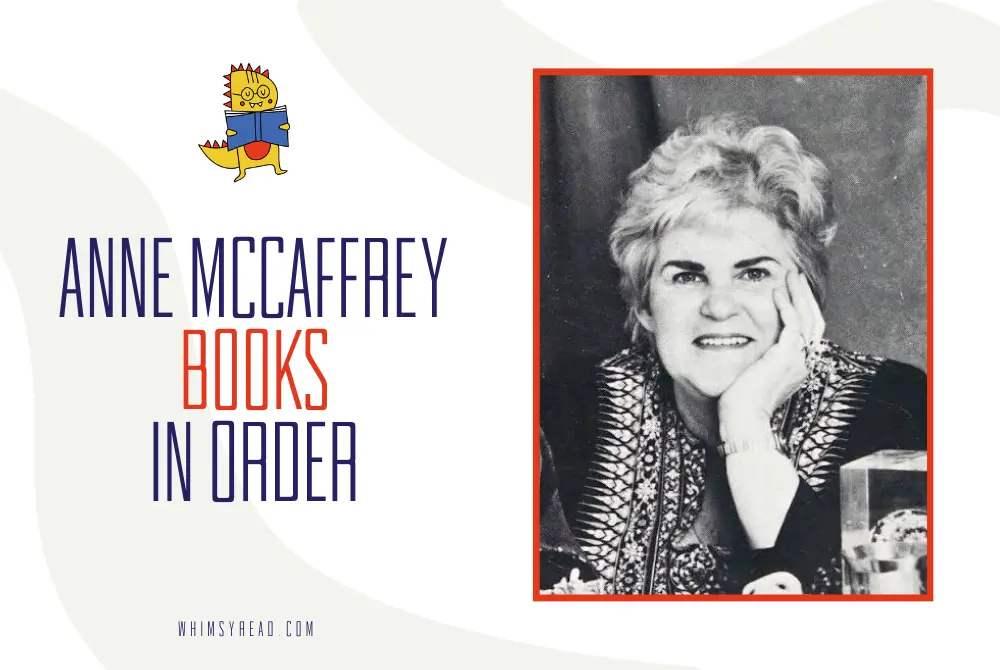
Anne McCaffrey was one of the most influential writers in science fiction, particularly known for changing the way dragons could function in speculative fiction. Her Pern stories combine telepathic bonds between humans and dragons with science-fiction ideas about colonization, ecology, technology, music, and survival.
But Pern represents only one part of her career. McCaffrey also created several other connected and standalone science-fiction worlds, often returning to themes of telepathy, human adaptation, space travel, unusual societies, and strong female protagonists.
Dragonriders of Pern Books in Order
The Dragonriders of Pern is McCaffrey’s signature series and by far the best-known part of her bibliography. Penguin Random House currently presents the Pern books as the Dragonriders of Pern series, while broader bibliographies divide the books into the main dragon novels, Harper Hall trilogy, and later related sequences.
For a first-time reader, publication order is the safest choice. The books were not written in internal chronological order, and some later novels deliberately explore much earlier periods in Pern’s history.
1. Dragonflight (1968)
Dragonflight introduces Pern, its dragonriders, and Lessa, a young woman whose hidden identity gives her a connection to the powerful dragons of Benden Weyr.
The novel established the central concept of Pern: dragons and humans are telepathically bonded partners who must work together against the deadly Thread. It grew out of McCaffrey’s earlier novellas “Weyr Search” and “Dragonrider.”
2. Dragonquest (1971)
Dragonquest continues the story after Dragonflight, with Threadfall becoming an increasingly serious threat to Pern.
Lessa and the dragonriders must deal not only with Thread but also with tensions created by the arrival of the Oldtimers. The novel expands Pern beyond the events of the first book and develops its society in greater detail.
3. Dragonsong (1976)
Dragonsong shifts the focus to Menolly, a talented young musician who has a difficult relationship with her family and community.
Her escape leads to an unexpected connection with the small fire lizards of Pern. The book begins the Harper Hall trilogy and is particularly accessible to readers who enjoy character-driven coming-of-age stories.
4. Dragonsinger (1977)
Dragonsinger follows Menolly as she joins the Harper Hall and begins developing her musical abilities.
The story moves away from the central dragonrider conflict and explores Pern through music, education, friendship, and the pressures placed on talented young people.
5. The White Dragon (1978)
The White Dragon returns to the dragonriders and follows Jaxom, a young Lord Holder who becomes bonded with the unusual white dragon Ruth.
Jaxom’s relationship with Ruth gives readers a different perspective on dragonrider life, while the novel also brings together characters and developments from the earlier Pern books.
6. Dragondrums (1979)
Dragondrums completes the Harper Hall trilogy and follows Piemur, a talented young apprentice whose musical abilities and adventurous personality repeatedly get him into trouble.
The novel broadens the Harper Hall side of Pern and gives readers another view of the society beyond the Weyrs and dragonriders.
7. Moreta: Dragonlady of Pern (1983)
Moreta: Dragonlady of Pern travels far back into Pern’s history.
Moreta is a Weyrwoman facing one of the most devastating plagues in Pern’s history. Because the novel is set centuries before the opening of Dragonflight, it is one of the clearest examples of why chronological order and publication order are very different in the Pern universe.
8. Nerilka’s Story (1986)
Nerilka’s Story tells the events surrounding the same historical period as Moreta from another perspective.
Rather than simply retelling Moreta, McCaffrey uses Nerilka to show how the plague affected ordinary people outside the central Weyr leadership. It works particularly well after Moreta.
9. Dragonsdawn (1988)
Dragonsdawn goes even further back, telling the story of the original human settlement of Pern.
Readers see how the colony develops and how the conditions that eventually produce Pern’s famous dragonriding culture begin to take shape. It is effectively the foundation story of the entire world.
10. The Renegades of Pern (1989)
The Renegades of Pern returns to the era of the main Pern novels and focuses more heavily on the people living outside the dragonriding Weyrs.
The book explores how ordinary Holders, traders, and other residents survive Threadfall and the social disruption caused by the struggle against it.
11. All the Weyrs of Pern (1991)
All the Weyrs of Pern brings together many of the major developments of the earlier novels.
Pern’s people begin considering whether the planet can finally find a permanent answer to Thread. The novel has a strong sense of culmination as characters attempt to use both traditional knowledge and technology to change Pern’s future.
12. The Chronicles of Pern: First Fall (1993)
The Chronicles of Pern: First Fall is a collection of stories rather than a conventional single novel.
It explores several episodes from the early history of Pern and adds background to the world between the initial settlement and later generations.
13. The Dolphins of Pern (1994)
The Dolphins of Pern expands Pern’s world by exploring the relationship between humans and the planet’s intelligent dolphins.
The story shows how the rebuilding of Pern after major historical upheavals opens opportunities to rediscover abilities and relationships that earlier generations had forgotten.
14. The Renegades of Pern-era stories and related material
Some Pern bibliographies include shorter pieces and collections alongside the novels. These should not be mistaken for additional full-length novels.
McCaffrey’s Pern bibliography includes short fiction such as The Smallest Dragonboy, which is often inserted between the main novels in series databases.
15. Dragonseye (1996)
Also published under the alternate title Red Star Rising, Dragonseye is set roughly two centuries after the first Threadfall.
The novel explores the generation that must convince skeptical Holders that Thread will return. It is another historical Pern novel rather than a direct continuation of The Skies of Pern.
16. The Masterharper of Pern (1998)
The Masterharper of Pern tells the life story of Robinton, one of Pern’s most important musical and political figures.
The novel reaches back into the period surrounding the earlier books and fills in the personal history of a character who had previously been seen mainly through the eyes of others.
17. The Skies of Pern (2001)
The Skies of Pern returns to the main Pern storyline and follows the consequences of Pern’s attempts to change its relationship with Thread.
It brings together familiar characters and explores the political and social consequences of technological changes that could fundamentally alter Pernian society.
The Later Pern Books with Todd J. McCaffrey
Anne McCaffrey later collaborated with her son Todd J. McCaffrey on five Pern novels. These books are important to the wider Pern reading order, but they should be clearly identified as collaborations rather than Anne’s solo novels.
18. Dragon’s Kin (2003)
Dragon’s Kin introduces a new generation of characters and focuses on the craft of dragon care and the people whose work supports the Weyrs.
Anne and Todd McCaffrey use the story to explore parts of Pern that are often overshadowed by the dragonriders themselves.
19. Dragon’s Fire (2006)
Dragon’s Fire continues the story while expanding the role of the younger generation.
The novel combines dragonriding, personal relationships, and the dangers facing Pern’s communities.
20. Dragon Harper (2007)
Dragon Harper returns to the Harper Hall and follows a young man whose abilities and ambitions put him in the middle of important changes.
It connects the musical and educational traditions of Pern with the wider dragonrider world.
21. Dragon’s Time (2011)
Dragon’s Time introduces a major threat to the dragon population and explores the extraordinary measures needed to preserve Pern’s future.
It was one of Anne McCaffrey’s final Pern novels and was written with Todd McCaffrey.
22. Sky Dragons (2012)
Sky Dragons was published after Anne McCaffrey’s death and was written with Todd McCaffrey.
It continues the story of Pern’s dragons and riders and completes the five-book sequence that began with Dragon’s Kin.
Harper Hall Trilogy in Order
The Harper Hall books are technically part of Pern, but readers often search for them as a separate trilogy.
- Dragonsong (1976)
- Dragonsinger (1977)
- Dragondrums (1979)
The trilogy is centered more heavily on music, the Harper Hall, and young characters than the main dragonrider novels.
If you are interested specifically in Menolly, read the Harper Hall trilogy in this order.
Crystal Singer Trilogy in Order
The Crystal Singer books are one of McCaffrey’s most popular non-Pern series.
1. Crystal Singer (1982)
Crystal Singer introduces Killashandra Ree, a talented musician who discovers an extraordinary opportunity to transform her life.
Her journey into the mysterious world of crystal singers combines music, space travel, alien technology, and psychological transformation.
2. Killashandra (1985)
Killashandra continues Killashandra’s adventures as her abilities and responsibilities grow.
The story expands the universe introduced in the first novel while putting greater emphasis on the consequences of her unusual talents.
3. Crystal Line (1992)
Crystal Line completes the trilogy and brings Killashandra’s long-running story to another stage.
Together, the three novels form a self-contained trilogy and can be read without knowing the Pern books.
The Crystal Universe
Two additional novels belong to the broader Crystal Universe but are not part of the main Crystal Singer trilogy.
- The Coelura (1983)
- Nimisha’s Ship (1998)
They share McCaffrey’s broader science-fiction imagination but are better treated as companion works rather than additional Crystal Singer novels.
The Rowan and Tower and Hive Books in Order
The Tower and Hive books are another major McCaffrey universe centered on powerful telepaths and a family whose abilities become increasingly important to humanity’s survival. Penguin Random House lists five books in the series.
1. The Rowan (1990)
The Rowan introduces a powerful telepath whose abilities set the foundation for the series.
The novel combines family drama, psychic abilities, space travel, and a future in which telepathy is essential to communication across enormous distances.
2. Damia (1991)
Damia moves the story into the next generation and explores another member of the extraordinary telepathic family.
The novel expands both the family saga and the wider threat facing human civilization.
3. Damia’s Children (1993)
Damia’s Children continues the generational story and broadens the role of the family’s psychic abilities.
The book becomes increasingly concerned with the relationship between humanity and the alien threats facing it.
4. Lyon’s Pride (1994)
Lyon’s Pride continues the conflict while following another generation of the powerful telepathic family.
The scale becomes increasingly interstellar, with the family’s personal relationships tied directly to humanity’s survival.
5. The Tower and the Hive (1999)
The Tower and the Hive concludes the main Tower and Hive sequence.
It brings together the family story and the larger struggle against the Hivers, giving the series a broad conclusion.
The Talents / Pegasus Books in Order
McCaffrey’s Talents Universe contains two connected strands, but the easiest starting point is the Pegasus sequence.
- To Ride Pegasus (1973)
- Pegasus in Flight (1990)
- Pegasus in Space (2000)
The books explore psychic abilities, especially the development and use of powerful human talents. To Ride Pegasus is a collection of earlier stories, while the later novels expand the setting into a larger future history.
Brainship Books in Order
The Brainship or The Ship Who universe began with one of McCaffrey’s best-known works outside Pern.
The complete shared-universe sequence is:
- The Ship Who Sang (1969)
- PartnerShip (1992), with Margaret Ball
- The Ship Who Searched (1992), with Mercedes Lackey
- The City Who Fought (1993), with S. M. Stirling
- The Ship Who Won (1994), with Jody Lynn Nye
- The Ship Errant (1996), by Jody Lynn Nye
- The Ship Avenged (1997), by S. M. Stirling
The important distinction is that Anne McCaffrey did not write all seven books. She wrote the first alone and co-wrote the next four listed above; the final two were written by other authors continuing the shared universe.
The Ship Who Sang (1969)
The Ship Who Sang follows Helva, a “shellperson” whose consciousness becomes integrated with a spacecraft.
It is one of McCaffrey’s most memorable explorations of disability, identity, companionship, and the relationship between humans and technology. The novel grew from several earlier stories about Helva.
Dinosaur Planet Books in Order
The Dinosaur Planet books are part of the larger Ireta universe and eventually connect with the Planet Pirates books.
- Dinosaur Planet (1978)
- Dinosaur Planet Survivors (1984)
The books follow the exploration of Ireta, where the colonists discover that the planet contains far more dangerous and complicated life than expected.
Planet Pirates Books in Order
The Planet Pirates trilogy continues the wider Ireta storyline.
- The Death of Sleep (1990), with Jody Lynn Nye
- Sassinak (1990), with Elizabeth Moon
- Generation Warriors (1991), with Elizabeth Moon
Because the Dinosaur Planet and Planet Pirates stories overlap, they are sometimes treated as one five-book Ireta sequence. The original bibliography recommends reading Dinosaur Planet and Dinosaur Planet Survivors first, followed by The Death of Sleep, Sassinak, and Generation Warriors.
Freedom / Catteni Books in Order
The Freedom series, also called the Catteni Sequence, is one of McCaffrey’s complete standalone series.
- Freedom’s Landing (1995)
- Freedom’s Choice (1997)
- Freedom’s Challenge (1998)
- Freedom’s Ransom (2002)
The series follows humans dealing with the alien Catteni and the struggle for freedom on an occupied planet. Unlike Pern, this series has a straightforward linear reading order.
Doona Books in Order
The Doona books explore a fascinating first-contact situation in which humans and another intelligent civilization both have reasons to claim the same planet.
- Decision at Doona (1969)
- Crisis on Doona (1992), with Jody Lynn Nye
- Treaty at Doona (1994), with Jody Lynn Nye
The later books continue the original premise while expanding the relationship between humans and the native civilization.
Powers Trilogy and Petaybee Books
The first Petaybee sequence is the Powers Trilogy, written with Elizabeth Ann Scarborough.
- Powers That Be (1993)
- Power Lines (1994)
- Power Play (1995)
These books introduce the unusual planet Petaybee and the people whose lives become connected to its mysterious properties.
Twins of Petaybee
A later trilogy continues the Petaybee universe:
- Changelings (2005)
- Maelstrom (2006)
- Deluge (2007)
All three were written with Elizabeth Ann Scarborough.
Acorna Books in Order
The Acorna books are another major science-fiction/fantasy series associated with McCaffrey. The story begins with a mysterious unicorn-like girl discovered by asteroid miners.
The complete reading order is:
- Acorna: The Unicorn Girl (1997), with Margaret Ball
- Acorna’s Quest (1998), with Margaret Ball
- Acorna’s People (1999), with Elizabeth Ann Scarborough
- Acorna’s World (1999), with Elizabeth Ann Scarborough
- Acorna’s Search (2001), with Elizabeth Ann Scarborough
- Acorna’s Rebels (2003), with Elizabeth Ann Scarborough
- Acorna’s Triumph (2004), with Elizabeth Ann Scarborough
- First Warning: Acorna’s Children (2005), with Elizabeth Ann Scarborough
- Second Wave: Acorna’s Children (2006), with Elizabeth Ann Scarborough
- Third Watch: Acorna’s Children (2007), with Elizabeth Ann Scarborough
The final three form the Acorna’s Children trilogy and should be read after the original seven Acorna novels.
Tales of the Barque Cats
McCaffrey and Elizabeth Ann Scarborough created another shared science-fiction universe around telepathic spacefaring cats.
- Catalyst (2009)
- Catacombs (2010)
The books combine space exploration with the unusual abilities of the Barque Cats and their human companions.
Three Women Books
Three of McCaffrey’s earlier works are sometimes grouped together as the Three Women or Three Gothic Novels collection.
- Ring of Fear (1971)
- The Kilternan Legacy (1975)
- The Mark of Merlin (1971)
The publication dates and collection histories can be confusing because The Mark of Merlin, Ring of Fear, and The Kilternan Legacy have also appeared together in omnibus editions under titles such as Three Women.
Anne McCaffrey Standalone Books
Not every McCaffrey novel belongs to a major series. Her standalone bibliography includes:
Restoree (1967)
Restoree was McCaffrey’s first published novel and predates Dragonflight. It is an early example of her interest in strong female protagonists within a science-fiction setting.
Stitch in Snow (1984)
A shorter standalone novel that moves away from the large space-opera universes for a more contained story.
The Year of the Lucy (1986)
Another standalone work that demonstrates McCaffrey’s range beyond dragons and interstellar adventure.
The Lady / The Carradyne Touch (1987)
Published under different titles in different markets, this is a historical romance rather than a Pern-style science-fiction novel.
An Exchange of Gifts (1995)
A short standalone work that sits outside her major continuing series.
No One Noticed the Cat (1996)
A light fantasy/science-fiction story that can be read independently of her major universes.
Where Should You Start With Anne McCaffrey?
For most readers, start with Dragonflight.
It is the book that introduced Pern to a broad audience and remains the clearest entry point into McCaffrey’s most famous fictional world. The original Pern trilogy is particularly approachable:
- Dragonflight
- Dragonquest
- The White Dragon
Penguin Random House also groups these three as the original trilogy.
If you prefer something shorter and more character-focused, The Ship Who Sang is an excellent alternative starting point.
For readers who enjoy psychic abilities and family sagas, The Rowan is the better choice, while Crystal Singer is a good entry into McCaffrey’s music-centered science fiction.
Should You Read the Pern Books in Chronological Order?
For a first reading, no.
Chronological order begins with Dragonsdawn, moves through The Chronicles of Pern: First Fall, Dragonseye, Moreta, and other historical books before eventually reaching Dragonflight. That order can be interesting for longtime fans, but it removes some of the historical discoveries and context that McCaffrey intended readers to encounter gradually.
Publication order is therefore the better starting point.
Publication Order vs. Chronological Order for Pern
The distinction is particularly important because the Pern books jump around in time.
For example:
- Dragonflight was published in 1968 but is set long after Dragonsdawn.
- Moreta: Dragonlady of Pern was published in 1983 but takes place centuries earlier.
- Dragonsdawn was published in 1988 and tells the story of Pern’s original colonists.
- Dragonseye was published in 1996 and explores another much earlier period.
- The Masterharper of Pern was published in 1998 but fills in the history of a character from the earlier books.
That is why simply numbering every Pern book as though it were a straightforward sequel can be misleading.
How Many Anne McCaffrey Books Are There?
The exact number depends on what is counted.
Bibliographic databases count her novels, novellas, collections, collaborations, alternate editions, and shared-universe books differently. FictionDB currently lists 96 books associated with Anne McCaffrey across 18 series, while specialized bibliographies distinguish novels, novellas, collections, omnibus editions, and short fiction.
For readers, the more useful approach is to separate Anne McCaffrey’s major series from omnibus editions and short fiction, rather than presenting every edition as a separate book.
About Anne McCaffrey
Anne McCaffrey was born in the United States in 1926 and later moved to Ireland, where she lived for decades. She became one of science fiction’s most influential writers and was the first woman to win the Hugo Award for fiction and the first woman to become a New York Times bestselling science-fiction author.
She was named a Grand Master of Science Fiction in 2005 and was inducted into the Science Fiction Hall of Fame in 2006. She died in 2011 at the age of 85.
Her influence extends far beyond Pern. Her work helped establish science-fiction stories in which women could be central heroes, leaders, pilots, musicians, telepaths, scientists, and explorers.
FAQ About Anne McCaffrey Books
What is the first Anne McCaffrey book?
Restoree, published in 1967, was Anne McCaffrey’s first published novel. Dragonflight followed in 1968 and became the first Pern novel.
What is the first Dragonriders of Pern book?
Dragonflight is the first published Pern novel. It was published in 1968 and introduces the world of Pern, Lessa, and the dragonriders.
How many Dragonriders of Pern books are there?
The broader Pern bibliography contains 24 primary works in the commonly used publication-order series listing, although different databases divide the Pern books differently and may include short fiction, collections, and later family-authored works separately.
Should I read the Pern books in publication order?
Yes, especially if this is your first time reading Pern. Publication order introduces the world and its history in the way McCaffrey originally developed it.
What is the best Anne McCaffrey series besides Pern?
That depends on your taste. Crystal Singer is a good choice for music and adventure, The Rowan for telepathy and family drama, and The Ship Who Sang for character-driven science fiction involving humans and technology.
Are the Harper Hall books part of Dragonriders of Pern?
Yes. Dragonsong, Dragonsinger, and Dragondrums are Pern books, but they are commonly grouped separately as the Harper Hall trilogy because of their focus on Menolly, music, and the Harper Hall.
Did Anne McCaffrey write the later Pern books with Todd McCaffrey?
Yes. Anne and Todd McCaffrey co-wrote Dragon’s Kin, Dragon’s Fire, Dragon Harper, Dragon’s Time, and Sky Dragons. Sky Dragons was published in 2012, after Anne’s death.
Is Acorna connected to Pern?
No. Acorna is a separate science-fiction universe. It should not be mixed into the Pern reading order.
What should I read after the original Pern trilogy?
If you want to continue in publication order, read Dragonsong, Dragonsinger, and The White Dragon. The Harper Hall books are especially useful because they expand Pern beyond the dragonrider characters.
What is Anne McCaffrey’s most famous series?
The Dragonriders of Pern is unquestionably her best-known series. Penguin Random House identifies McCaffrey as the creator of the Dragonriders of Pern series, which remains the central work associated with her name.
Final Verdict
Anne McCaffrey’s bibliography is much larger than the phrase Dragonriders of Pern suggests. Pern is the natural starting point, but her other worlds offer very different experiences, from the musical science fiction of Crystal Singer to the telepathic family saga of The Rowan, the brainship stories beginning with The Ship Who Sang, and the Acorna adventures.
For a first visit, start with Dragonflight, then continue through the original Pern publication order. Once you know Pern, Crystal Singer, The Rowan, and The Ship Who Sang are three of the strongest places to explore the rest of McCaffrey’s work.

Leave a Reply