
Isaac Asimov Books in Order: Foundation, Robots & His Greater Future History
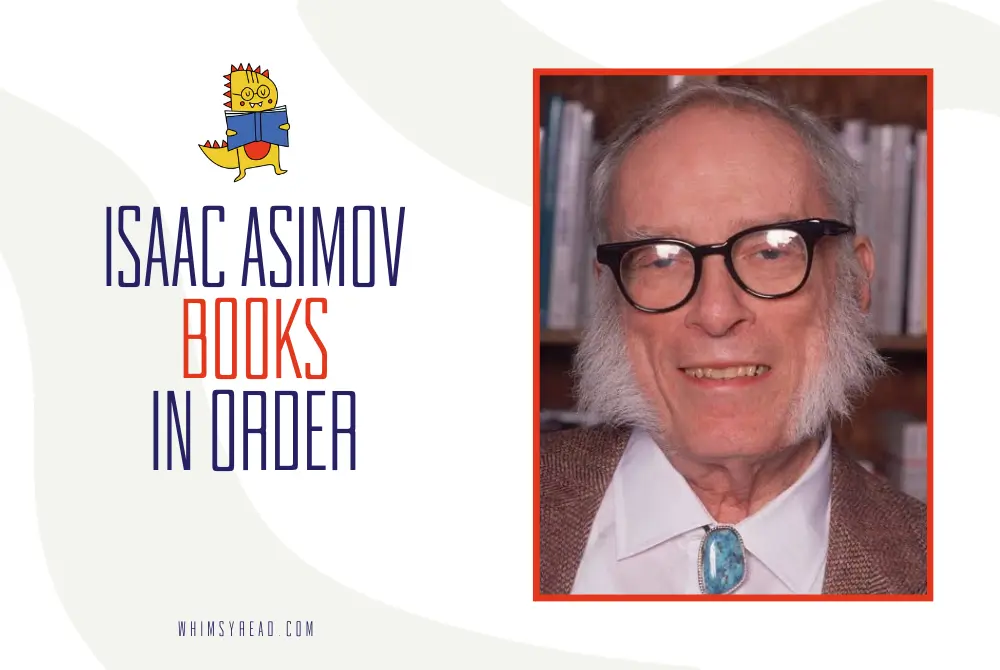
Isaac Asimov wrote an enormous number of books, covering science fiction, mysteries, popular science, history, and other nonfiction. So a search for “Isaac Asimov books in order” can become confusing very quickly. For this guide, the main focus is his fiction, especially the connected Robot–Empire–Foundation universe, while also covering his other important fiction series and standalone novels.
What makes Asimov especially interesting is that these stories were not originally planned as one giant universe. The Robot, Galactic Empire, and Foundation stories began as separate works, and Asimov later connected them into a much larger future history. He himself acknowledged that the books were not originally written in the order in which they might ultimately be read.
Isaac Asimov’s Connected Books in Order
If your main reason for searching for Isaac Asimov books in order is to understand the larger Foundation universe, these are the 15 core Asimov books to know.
The order below follows the broad story chronology, rather than publication order. This is close to the reading guide Asimov himself provided, with later additions such as Forward the Foundation incorporated.
| # | Book | Series | Published |
| 1 | I, Robot | Robot | 1950 |
| 2 | The Caves of Steel | Robot | 1954 |
| 3 | The Naked Sun | Robot | 1957 |
| 4 | The Robots of Dawn | Robot | 1983 |
| 5 | Robots and Empire | Robot | 1985 |
| 6 | The Stars, Like Dust | Galactic Empire | 1951 |
| 7 | The Currents of Space | Galactic Empire | 1952 |
| 8 | Pebble in the Sky | Galactic Empire | 1950 |
| 9 | Prelude to Foundation | Foundation | 1988 |
| 10 | Forward the Foundation | Foundation | 1993 |
| 11 | Foundation | Foundation | 1951 |
| 12 | Foundation and Empire | Foundation | 1952 |
| 13 | Second Foundation | Foundation | 1953 |
| 14 | Foundation’s Edge | Foundation | 1982 |
| 15 | Foundation and Earth | Foundation | 1986 |
The chronology is useful, but there is an important catch: I, Robot is a collection of interconnected robot stories rather than a conventional novel, and the Foundation books themselves were originally assembled from stories published in magazines.
The Robot Books in Order
The Robot stories introduce some of Asimov’s most famous ideas about artificial intelligence, robotics, ethics, and the relationship between humans and machines.
1. I, Robot (1950)
I, Robot is a collection of interconnected robot stories rather than one continuous novel. It introduces the Three Laws of Robotics and explores what happens when increasingly sophisticated robots encounter complicated human situations.
The stories are connected through Susan Calvin, a robot psychologist whose career provides a framework for examining the development of artificial intelligence.
2. The Caves of Steel (1954)
The Caves of Steel introduces detective Elijah Baley and the robot R. Daneel Olivaw, two characters who become central to Asimov’s larger future history.
Baley is assigned to investigate a murder in a heavily populated Earth city where humans live inside enormous enclosed urban environments and distrust robots. The result is part science fiction and part detective mystery.
3. The Naked Sun (1957)
Baley and Daneel return in The Naked Sun, this time investigating a murder on Solaria, a planet where people live in extreme isolation and rely heavily on robots.
The novel uses the murder mystery to explore an unusual society in which human contact has become deeply uncomfortable and technology has changed the meaning of everyday relationships.
4. The Robots of Dawn (1983)
After a long gap, Asimov returned to Baley and Daneel with The Robots of Dawn.
A robot has apparently been destroyed on the planet Aurora, and Baley must determine who—or what—is responsible. The investigation becomes increasingly important to the future relationship between Earth humans and the Spacer worlds.
5. Robots and Empire (1985)
Robots and Empire is the fourth and final Robot novel.
It moves beyond Baley’s individual investigations and begins connecting the Robot stories much more directly with the later Galactic Empire and Foundation universe. The novel is particularly important if you want to understand how Asimov eventually linked his previously separate series together.
The Galactic Empire Books in Order
The three Galactic Empire novels are sometimes called the Empire trilogy. They were published as independent stories before Asimov later incorporated them into his larger future history.
6. The Stars, Like Dust (1951)
The Stars, Like Dust takes place long before the Galactic Empire reaches its later form.
The story follows Biron Farrill, a young man caught up in a rebellion against the oppressive Tyranni. It is an adventure involving political intrigue, rebellion, space travel, and the struggle for independence.
7. The Currents of Space (1952)
The Currents of Space takes place during a period when the emerging Trantorian civilization is expanding.
A man suffering from amnesia may possess information that could determine the fate of an entire planet. The novel combines political conflict with one of Asimov’s recurring interests: how societies respond when scientific knowledge changes the balance of power.
8. Pebble in the Sky (1950)
Although Pebble in the Sky was published first, it is placed third in the internal chronology of the Empire trilogy.
The story begins with Joseph Schwartz, an ordinary twentieth-century man who is suddenly transported thousands of years into Earth’s future. Earth has become a relatively insignificant part of a vast Galactic Empire, and Schwartz finds himself caught in a dangerous conflict.
It was Asimov’s first published novel, making it an important milestone in his career.
The Foundation Books in Order
The Foundation series is Asimov’s most famous body of work. It begins with mathematician Hari Seldon’s theory of psychohistory, which predicts the eventual collapse of the Galactic Empire.
Seldon believes that although the coming collapse cannot be stopped, its consequences can be shortened dramatically by establishing the Foundation at the edge of the galaxy.
9. Prelude to Foundation (1988)
Prelude to Foundation takes place before the original Foundation trilogy.
A young Hari Seldon arrives on Trantor and begins developing the ideas that will eventually become psychohistory. The novel also introduces readers to the enormous and complicated world of Trantor.
Because this was written decades after the original trilogy, it works best as a prequel, rather than necessarily being the first Asimov Foundation book a new reader encounters.
10. Forward the Foundation (1993)
Forward the Foundation continues Hari Seldon’s story and covers the later stages of his life.
The novel shows how Seldon’s personal life becomes increasingly intertwined with the development of the Foundation project and the long-term plan for humanity’s future.
It was published after Asimov’s death, in 1993, but forms part of the Foundation prequel sequence.
11. Foundation (1951)
Foundation is where the famous Foundation story originally begins.
Hari Seldon’s psychohistory predicts the collapse of the Galactic Empire, and the Foundation is established on Terminus to preserve knowledge and help shorten the coming period of chaos.
Rather than following one hero throughout the entire book, the story jumps across decades, showing different generations facing new political and scientific challenges.
12. Foundation and Empire (1952)
Foundation and Empire continues the story as the Foundation becomes increasingly powerful.
The first part deals with conflict between the Foundation and the remnants of the old Empire. The second introduces one of the most important figures in the entire series: the Mule, a mysterious individual whose abilities create a problem that psychohistory did not predict.
13. Second Foundation (1953)
Second Foundation completes the original Foundation trilogy.
The search for the mysterious Second Foundation becomes central to the story as different groups attempt to understand and control the forces shaping the future of the galaxy.
The book brings the original trilogy’s major conflicts toward a conclusion while leaving room for a much larger future story.
14. Foundation’s Edge (1982)
Nearly three decades after Second Foundation, Asimov returned to the Foundation universe with Foundation’s Edge.
The story introduces a new question: Was Hari Seldon’s original plan actually the best possible future for humanity?
The Foundation’s expansion, the mysterious Second Foundation, and the search for humanity’s ancient home planet all become part of the investigation.
15. Foundation and Earth (1986)
Foundation and Earth continues directly from Foundation’s Edge.
Councilman Golan Trevize travels across the galaxy searching for Earth, the legendary original home of humanity.
The journey brings together ideas from the Foundation and Robot portions of Asimov’s larger universe and makes this book particularly significant for readers following the entire connected future history.
Isaac Asimov Books in Publication Order
If you would rather experience Asimov’s work the way readers originally encountered it, publication order is different from the chronological order above.
The major fiction sequence begins:
- I, Robot — 1950
- Pebble in the Sky — 1950
- Foundation — 1951
- The Stars, Like Dust — 1951
- Foundation and Empire — 1952
- The Currents of Space — 1952
- Second Foundation — 1953
- The Caves of Steel — 1954
- The End of Eternity — 1955
- The Naked Sun — 1957
- The Gods Themselves — 1972
- Foundation’s Edge — 1982
- The Robots of Dawn — 1983
- Robots and Empire — 1985
- Foundation and Earth — 1986
- Fantastic Voyage II: Destination Brain — 1987
- Prelude to Foundation — 1988
- Nemesis — 1989
- Forward the Foundation — 1993
This is not a complete list of every Asimov fiction book because he also wrote the Lucky Starr novels, mystery novels, short-story collections, and collaborations. His overall bibliography is much larger.
Other Isaac Asimov Fiction Books
The Foundation universe gets most of the attention, but Asimov wrote several other important fiction books that shouldn’t be left out of a broader Isaac Asimov books in order guide.
The End of Eternity (1955)
The End of Eternity is a standalone science-fiction novel about a secret organization called Eternity that operates outside normal time and alters history to prevent disasters.
The novel combines time travel, romance, paradoxes, and questions about whether humanity should have the freedom to determine its own future.
The Gods Themselves (1972)
The Gods Themselves is a standalone science-fiction novel built around an unusual energy source and the discovery of a connection between parallel universes.
The story is divided into three sections, allowing Asimov to explore humans, aliens, science, and the consequences of technological discoveries from different perspectives.
Fantastic Voyage II: Destination Brain (1987)
This novel is not a direct continuation of the 1966 Fantastic Voyage novel. Instead, Asimov created his own story around the concept of scientists being miniaturized and sent inside a human brain.
The book combines medical science fiction with an adventure plot.
Nemesis (1989)
Nemesis is a standalone science-fiction novel involving a newly discovered star system and humanity’s early experiments with interstellar travel.
The novel is particularly interested in what happens when human civilization begins expanding beyond the Solar System.
The Positronic Man (1992)
The Positronic Man was written by Asimov with Robert Silverberg and is based on Asimov’s famous story “The Bicentennial Man.”
It follows Andrew, a robot who gradually develops a desire to become recognized as a human being. The story focuses heavily on identity, freedom, artificial intelligence, and what it actually means to be human.
Lucky Starr Books in Order
Asimov also wrote six young-adult science-fiction novels about David “Lucky” Starr under the pen name Paul French. The series takes Lucky to different locations throughout the Solar System.
1. David Starr, Space Ranger (1952)
Lucky Starr is introduced as a young space adventurer investigating a threat to humanity. It establishes the fast-moving, planetary adventure style of the series.
2. Lucky Starr and the Pirates of the Asteroids (1953)
Lucky travels into the asteroid belt while dealing with pirates and a larger threat to interplanetary security.
3. Lucky Starr and the Oceans of Venus (1954)
Lucky heads to Venus, where the planet’s mysterious environment becomes the setting for another dangerous investigation.
4. Lucky Starr and the Big Sun of Mercury (1956)
This adventure takes Lucky to Mercury and combines scientific exploration with the series’ familiar mystery-and-action formula.
5. Lucky Starr and the Moons of Jupiter (1957)
Lucky investigates a new threat around Jupiter and its moons, continuing the increasingly ambitious Solar System adventures.
6. Lucky Starr and the Rings of Saturn (1958)
The final Lucky Starr adventure takes him to Saturn, where another mystery involving interplanetary politics and danger awaits.
Norby Books in Order
The Norby Chronicles are children’s science-fiction books written by Asimov with his wife, Janet Asimov.
The series begins with Norby, the Mixed-Up Robot in 1983 and continues through a number of lighthearted adventures involving the unusual robot Norby.
The main order is:
- Norby, the Mixed-Up Robot — 1983
- Norby’s Other Secret — 1984
- Norby and the Lost Princess — 1985
- Norby and the Invaders — 1985
- Norby and the Queen’s Necklace — 1986
- Norby Finds a Villain — 1987
- Norby Down to Earth — 1988
- Norby and Yobo’s Great Adventure — 1989
- Norby and the Oldest Dragon — 1990
- Norby and the Court Jester — 1991
These are much lighter children’s adventures than the Foundation or Robot books.
Are Isaac Asimov’s Foundation, Robot and Empire Books Connected?
Yes—but the connection developed over time.
The Robot stories, Galactic Empire novels, and Foundation books were originally separate creations. Asimov later connected them into one broad future history. His later Robot novels and Foundation novels make those connections increasingly explicit.
That is why different websites can give slightly different “correct” reading orders.
The publication order follows the history of how Asimov actually created the stories.
The chronological order follows the fictional history of humanity’s future.
Neither list should be treated as a simple mistake by the other. They answer two different questions.
Should You Read Isaac Asimov in Publication Order or Chronological Order?
For a first-time reader, publication order has one major advantage: you experience the ideas and connections as Asimov originally developed them.
The original Foundation trilogy, for example, was published decades before Prelude to Foundation. Reading the prequel first means you encounter information that Asimov himself did not intend readers to know when the original trilogy was written.
For someone who specifically wants to follow the history of Asimov’s fictional universe, chronological order is more attractive.
A practical approach is to begin with the original Foundation trilogy:
- Foundation
- Foundation and Empire
- Second Foundation
Then explore the Robot novels and later Foundation books.
Another option is to begin with I, Robot if robots and artificial intelligence interest you more than galactic politics.
Where Should You Start With Isaac Asimov?
Your best starting point depends on what kind of science fiction you want.
If you want the famous Foundation story
Start with Foundation.
It gives you the central concept of psychohistory and introduces the Galactic Empire’s collapse.
If you like robots and AI
Start with I, Robot.
It is especially useful if you want Asimov’s ideas about artificial intelligence, machine ethics, and the Three Laws of Robotics.
If you want science-fiction detective stories
Start with The Caves of Steel.
The combination of murder mystery and futuristic technology makes it quite different from Foundation.
If you want a standalone novel
Try The End of Eternity or The Gods Themselves.
Neither requires you to work through the Foundation universe first.
If you want a classic space adventure
Try Pebble in the Sky or the Lucky Starr books.
Isaac Asimov Books in Order: Quick Reference
Greater Foundation Universe
Robot
- I, Robot
- The Caves of Steel
- The Naked Sun
- The Robots of Dawn
- Robots and Empire
Galactic Empire
- The Stars, Like Dust
- The Currents of Space
- Pebble in the Sky
Foundation
- Prelude to Foundation
- Forward the Foundation
- Foundation
- Foundation and Empire
- Second Foundation
- Foundation’s Edge
- Foundation and Earth
This 15-book structure is a useful way to approach the connected Asimov universe without mixing in his enormous nonfiction bibliography.
Other Major Fiction
- The End of Eternity — 1955
- The Gods Themselves — 1972
- Fantastic Voyage II: Destination Brain — 1987
- Nemesis — 1989
- The Positronic Man — 1992, with Robert Silverberg
Lucky Starr
- David Starr, Space Ranger
- Lucky Starr and the Pirates of the Asteroids
- Lucky Starr and the Oceans of Venus
- Lucky Starr and the Big Sun of Mercury
- Lucky Starr and the Moons of Jupiter
- Lucky Starr and the Rings of Saturn
Frequently Asked Questions
How many Isaac Asimov books are there?
There is no single simple number because Asimov wrote novels, short-story collections, nonfiction books, edited anthologies, children’s books, and collaborations. His bibliography contains hundreds of book-length works and edited volumes. One detailed bibliography lists more than 500 entries when original and edited books are combined.
What is the first Isaac Asimov book?
Pebble in the Sky was Asimov’s first published novel, appearing in 1950. I, Robot was also published in 1950 and is a collection of robot stories rather than a conventional novel.
What is the correct order of the Foundation books?
For publication order:
- Foundation
- Foundation and Empire
- Second Foundation
- Foundation’s Edge
- Foundation and Earth
- Prelude to Foundation
- Forward the Foundation
For story chronology, Prelude to Foundation and Forward the Foundation come before Foundation.
Is I, Robot part of the Foundation series?
It is not a Foundation novel, but it belongs to the larger connected future history that eventually includes the Robot, Empire, and Foundation stories.
Should I read I, Robot before Foundation?
You don’t have to. They were originally separate works, and Foundation can be read perfectly well on its own. If you are particularly interested in robots and AI, however, I, Robot provides useful background for the larger Asimov universe.
Is The Caves of Steel a Foundation book?
No. It is the first full-length Robot novel featuring detective Elijah Baley and R. Daneel Olivaw. The Robot novels were later connected to the Foundation universe.
Are the Lucky Starr books part of the Foundation universe?
They are generally treated separately from the Greater Foundation sequence. Asimov wrote them under the pen name Paul French as young-adult space adventures.
What should I read after the original Foundation trilogy?
If you want to continue the Foundation story directly, read Foundation’s Edge and then Foundation and Earth. If you want to explore the deeper connections between robots and the Foundation universe, the four Robot novels are also important.
Final Thoughts
Isaac Asimov’s bibliography is too large to reduce neatly to one simple numbered list, but his fiction becomes much easier to navigate once you separate the Robot, Galactic Empire, and Foundation stories from his standalone novels and other series.
For the classic Foundation experience, start with Foundation, Foundation and Empire, and Second Foundation. If robots and artificial intelligence are more appealing, begin with I, Robot and continue through the Elijah Baley novels. And if you want a standalone Asimov story without committing to a huge universe, The End of Eternity or The Gods Themselves are natural places to explore his ideas on a smaller scale.

Leave a Reply