
Robin Hobb Books in Order: The Complete Reading Guide
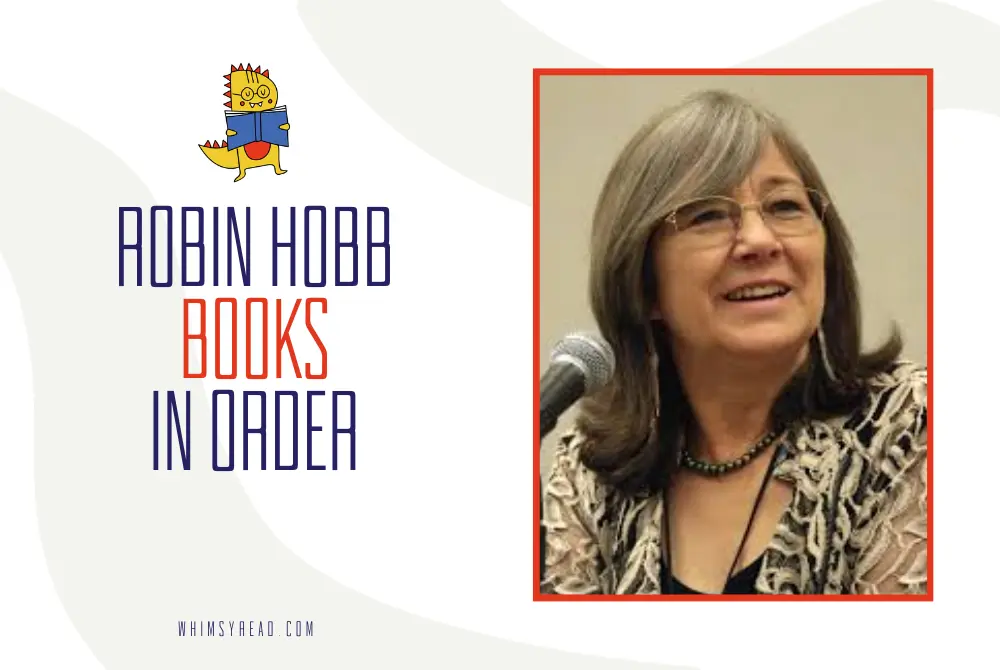
Robin Hobb’s bibliography can look complicated at first because the books set in the Realm of the Elderlings are divided into several different series, and not all of them follow the same characters. FitzChivalry Farseer is at the heart of the Farseer, Tawny Man, and Fitz and the Fool books, while the Liveship Traders and Rain Wild Chronicles introduce different characters and locations that gradually become important to the larger story.
That interconnected structure is exactly why reading order matters. The Liveship Traders books may initially seem unrelated to Fitz, but their characters, dragons, magic, and history become increasingly important later. Robin Hobb’s own site recommends reading the connected stories in publication order, and the publisher likewise presents the five major Elderlings series as parts of her larger body of fantasy fiction.
Robin Hobb Books in the Realm of the Elderlings
The Realm of the Elderlings contains 16 main novels divided into five connected series, beginning with the Farseer Trilogy in 1995 and concluding with the Fitz and the Fool trilogy in 2017. There is also one major standalone prequel novella, The Willful Princess and the Piebald Prince.
For a first-time reader, the recommended path is:
- Farseer Trilogy
- Liveship Traders Trilogy
- Tawny Man Trilogy
- Rain Wild Chronicles
- Fitz and the Fool Trilogy
The separate Soldier Son Trilogy can be read whenever you like because it takes place in a completely different fictional world.
Farseer Trilogy
The Farseer Trilogy is where Robin Hobb’s Realm of the Elderlings begins. The three books follow FitzChivalry Farseer, the illegitimate son of a prince who is drawn into the royal family’s dangerous world of politics, assassination, magic, war, and betrayal.
Penguin Random House lists Assassin’s Apprentice, Royal Assassin, and Assassin’s Quest as Books 1 through 3 of the Farseer Trilogy.
1. Assassin’s Apprentice (1995)
FitzChivalry Farseer is the illegitimate son of Prince Chivalry, heir to the throne of the Six Duchies. When his existence becomes known to the royal family, he is taken to Buckkeep and raised under the watch of Burrich, the royal stablemaster.
Fitz’s position is immediately complicated. He is part of the royal family but can never openly belong to it. King Shrewd recognizes that his bloodline could make him useful, so Fitz is secretly trained as an assassin while learning to survive the dangerous politics surrounding the throne.
At the same time, Fitz discovers that he possesses two very different kinds of magic. The Skill connects minds across distance, while the forbidden Wit allows a bond with animals. As Red-Ship Raiders begin attacking the Six Duchies, Fitz’s personal struggles become tied to the survival of the kingdom.
Assassin’s Apprentice introduces Fitz, the Fool, Chade, Burrich, Kettricken, Verity, and many of the relationships that will shape the entire Elderlings saga. It is the essential starting point for Robin Hobb’s world.
2. Royal Assassin (1996)
Fitz has survived his first major assignment as an assassin, but surviving does not mean he has escaped the dangers of the Farseer court.
The Red-Ship Raiders continue devastating coastal communities, while the royal family becomes increasingly divided. King Shrewd’s health is failing, Prince Regal’s ambitions are growing, and the question of succession becomes more dangerous with every passing day.
Fitz tries to distance himself from the court, but circumstances draw him back. His relationship with Molly deepens, his magical abilities become more difficult to control, and the line between his duties and his personal loyalties becomes increasingly blurred.
Royal Assassin expands the political side of the Farseer story while making Fitz’s emotional life just as important as the external conflict. The novel also deepens the mystery surrounding the Raiders and the strange condition they leave behind in their victims.
3. Assassin’s Quest (1997)
Fitz’s world collapses after a devastating betrayal. Believed dead by many of those who knew him, he is forced to recover from both physical and emotional destruction while the Six Duchies teeter toward disaster.
King Shrewd is dead, Regal has seized power, and Prince Verity has disappeared on a desperate mission to save the kingdom. Fitz’s own goal becomes intensely personal: he wants revenge against Regal.
But the journey takes Fitz far beyond the court. He begins to understand the deeper nature of the Skill and Wit, discovers more about the ancient Elderlings, and becomes involved in a struggle far older than the Farseer dynasty.
The third book transforms Fitz’s personal story into an epic quest and establishes mysteries that will remain important throughout the larger Realm of the Elderlings.
Should You Read the Farseer Trilogy First?
Yes. If you are new to Robin Hobb, Assassin’s Apprentice is the natural starting point.
Although The Willful Princess and the Piebald Prince takes place much earlier in the history of the Six Duchies, reading that prequel first is not the best way to experience the series. It was published much later and works better once you already understand the world and the history surrounding the Wit.
Liveship Traders Trilogy
The Liveship Traders Trilogy changes perspective dramatically. Fitz is no longer the central character, and the story moves to the coastal city of Bingtown, the Rain Wilds, the Pirate Isles, and the mysterious liveships.
The three books are Ship of Magic, Mad Ship, and Ship of Destiny.
This series is particularly important to the overall Elderlings story because it develops the history of dragons, Elderlings, wizardwood, and living ships.
4. Ship of Magic (1998)
Althea Vestrit has always believed that the liveship Vivacia is her inheritance. A liveship is no ordinary vessel: it is carved from magical wizardwood and eventually awakens into a sentient being.
But when Althea’s father dies, the family ship does not automatically become hers.
Instead, Vivacia is given to Althea’s brother-in-law, forcing Althea to leave Bingtown and find a way to reclaim the ship she considers her birthright. Meanwhile, her nephew Wintrow is taken from his religious life and forced to serve aboard Vivacia.
Then the pirate Kennit enters the story.
Kennit wants a liveship of his own because he believes capturing one will help him establish himself as the ruler of the Pirate Isles. His ambitions set him on a collision course with the Vestrit family, Althea, Wintrow, and the increasingly self-aware Vivacia.
Ship of Magic is a very different experience from the Farseer Trilogy, but it introduces some of the most important mythology in the entire Realm of the Elderlings.
5. Mad Ship (1999)
The struggle over Vivacia intensifies as the Vestrit family attempts to survive political upheaval, financial pressure, piracy, and betrayal.
Kennit has seized control of Vivacia and intends to use the liveship to build his influence among the Pirate Isles. Althea, meanwhile, refuses to give up her claim to the vessel.
The liveships themselves become increasingly important as their memories and personalities emerge. The mysterious nature of wizardwood begins to reveal connections to an older history, while the liveships’ relationships with their human crews become increasingly complicated.
Mad Ship expands the world considerably beyond Bingtown. It is a story about family, slavery, ambition, freedom, and the dangerous consequences of treating living beings as property.
6. Ship of Destiny (2000)
Bingtown is heading toward disaster, and the conflict surrounding the liveships reaches its most dangerous stage.
Ronica Vestrit tries to unite the people of Bingtown against a growing threat, while Althea and Brashen continue their desperate efforts to recover Vivacia from Kennit.
But the biggest revelations concern the liveships themselves. The secrets of wizardwood and the origins of the ships begin to emerge, changing what the characters understand about dragons, Elderlings, and the history of their world.
Ship of Destiny brings the Vestrit family’s story and Kennit’s ambitions toward a dramatic conclusion while laying important groundwork for later books in the Realm of the Elderlings.
Tawny Man Trilogy
The Tawny Man Trilogy returns to FitzChivalry Farseer, but many years have passed since the events of the original trilogy.
Fitz is older, more experienced, and still carrying the emotional scars of his earlier life. The Fool also returns, and their relationship becomes central to a new threat involving dragons, the Skill, and the future of the Six Duchies.
Penguin Random House lists Fool’s Errand, The Golden Fool, and Fool’s Fate as Books 1 through 3.
7. Fool’s Errand (2001)
Fitz has deliberately disappeared from court life and is living quietly under another identity.
That peaceful existence does not last.
The Fool returns to his life with an urgent warning, and Fitz is forced back into the affairs of the Farseer family. Someone is threatening the future of the kingdom, and the mystery surrounding Prince Dutiful’s disappearance becomes impossible for Fitz to ignore.
The novel also reunites Fitz with the Fool, whose relationship with him has always been one of the emotional foundations of the Elderlings story.
Fool’s Errand is both a continuation of Fitz’s life and a reminder that he can never completely escape the responsibilities created by his royal blood.
8. The Golden Fool (2002)
Fitz is once again living at Buckkeep, where he is secretly working to protect Prince Dutiful.
His new role places him close to the court, but he must conceal his true identity and his connection to the Wit. The political situation becomes increasingly complicated as the prince prepares for a marriage intended to strengthen relations with the Out Islands.
Meanwhile, Fitz’s connection with the Fool develops in new directions, and the Skill becomes increasingly important to the unfolding mystery.
The book balances court intrigue with magic and personal relationships, while gradually revealing that the dangers facing the Six Duchies are much larger than a simple political dispute.
9. Fool’s Fate (2003)
The final Tawny Man novel brings Fitz and the Fool into one of their most important journeys.
Prince Dutiful’s marriage is tied to the possibility of peace with the Out Islands, but the mission surrounding the prince becomes increasingly dangerous. Fitz must also contend with the strange and powerful young Skill user Thick, whose abilities are unlike anything Fitz has previously encountered.
The search leads the characters into ancient secrets involving dragons, the Elderlings, and the deeper history of the world.
Fool’s Fate is a major turning point in the overall Elderlings saga because it brings together threads that began in the Farseer and Liveship books.
The Rain Wild Chronicles
The Rain Wild Chronicles moves away from Fitz and follows a new group of characters in the Rain Wilds.
The four main novels are Dragon Keeper, Dragon Haven, City of Dragons, and Blood of Dragons. Although some bibliographies list The Inheritance among the Rain Wild books, The Inheritance is a short story rather than a fifth novel. The four-book series is the correct main reading order.
10. Dragon Keeper (2009)
Dragons are returning to the world, but these are not the magnificent creatures remembered from ancient stories.
The surviving dragons are weak, malformed, and dependent on humans for survival. A group of young dragons and human caretakers sets out from the Rain Wilds in search of the lost Elderling city of Kelsingra.
Among them is Thymara, a young woman whose own physical differences make her an outsider in Rain Wild society. There is also Alise Finbok, a Bingtown woman whose unhappy marriage and fascination with dragons lead her into the expedition.
As the journey begins, both the humans and dragons discover that the ancient world is not as dead as they believed.
Dragon Keeper is where the dragon mythology hinted at in the Liveship books becomes a central part of the story.
11. Dragon Haven (2010)
The dragon expedition continues toward Kelsingra, but survival becomes increasingly difficult.
The young dragons are growing stronger and beginning to remember more about what they are, while their human keepers struggle to maintain their own relationships and identities.
Alise becomes increasingly immersed in the study of dragons, while Thymara must navigate her complicated position among both humans and dragons.
The journey also begins uncovering more evidence of the Elderlings and the ancient city the expedition is seeking.
Dragon Haven deepens the relationship between humans and dragons while moving the group closer to the lost civilization that lies at the heart of the series.
12. City of Dragons (2012)
The search for Kelsingra reaches a new stage as the dragons and their keepers begin to understand that they are not simply searching for ruins.
The ancient city still contains secrets, knowledge, and evidence of a civilization that once lived alongside dragons.
The characters begin rebuilding parts of Kelsingra while dealing with the political and personal consequences of their discoveries. Meanwhile, the dragons continue to develop and recover memories of their ancient heritage.
The novel is particularly important for readers interested in the Elderlings because Kelsingra becomes one of the most significant locations in the larger universe.
13. Blood of Dragons (2013)
The Rain Wild story reaches its conclusion as the dragons, keepers, and inhabitants of Kelsingra face threats from several directions.
The dragons are no longer helpless creatures struggling simply to survive. Their strength and memories are returning, but that also creates new complications.
Alise, Thymara, Leftrin, and the other characters must determine what kind of future they can build in a world where dragons have returned and humans are once again forced to negotiate their place beside them.
Blood of Dragons completes the four-book Rain Wild Chronicles and brings together many of the dragon and Elderling threads that began much earlier in the Liveship books.
The Willful Princess and the Piebald Prince
This is a standalone novella within the Realm of the Elderlings, not part of one of the five main trilogies/series.
The Willful Princess and the Piebald Prince (2013)
Set generations before Fitz’s story, this book recounts one of the most famous legends in the history of the Six Duchies.
Princess Caution grows up in a royal household and eventually becomes known in history as the Willful Princess. Her story becomes intertwined with the Piebald Prince and with the history of the Wit, the magical ability that allows humans to bond with animals.
The novella is framed as a historical account of events from the Six Duchies’ past, giving readers a glimpse of a time when the Wit was not yet universally feared and persecuted.
It is particularly valuable for readers who want to understand the history behind the social attitudes toward the Wit that shape Fitz’s own life.
Because it was published in 2013, long after the original Farseer Trilogy, it is generally better to read it after becoming familiar with the Six Duchies rather than treating it as the first book in the entire universe. It is also commonly placed before the Fitz and the Fool trilogy in a publication-order reading guide.
Fitz and the Fool Trilogy
The Fitz and the Fool Trilogy is the final major sequence in the Realm of the Elderlings.
Fitz is now much older, and the trilogy brings together characters, mysteries, and plotlines from across the entire Elderlings saga. Penguin Random House identifies Fool’s Assassin, Fool’s Quest, and Assassin’s Fate as Books 1 through 3.
14. Fool’s Assassin (2014)
FitzChivalry Farseer has finally created something resembling a peaceful life.
He is married to Molly and living away from the political world that once consumed him. He has reached an age where he can look back on his life rather than constantly fighting to survive it.
Then a child is born.
Bee is Fitz’s daughter, and her unusual nature quickly becomes important. When violence enters Fitz’s seemingly peaceful home, his old instincts return.
The arrival of a mysterious assassin and the disappearance of people close to Fitz pull him back into a world he thought he had left behind.
Fool’s Assassin begins the final Fitz trilogy by combining the quieter concerns of Fitz’s later life with the mystery and danger that have followed him since Assassin’s Apprentice.
15. Fool’s Quest (2015)
The events of Fool’s Assassin have left Fitz searching for answers while the Fool’s return introduces an even larger mystery.
Fitz, the Fool, and their allies must uncover what has happened to those they care about and why a secretive group known as the Servants is so interested in prophecy and the future.
The story also expands Bee’s importance and reveals connections between events in the present and the ancient history of the Elderlings.
The novel brings back the political, magical, and personal elements of the earlier books while moving Fitz and the Fool toward their final confrontation. Penguin Random House describes it as the second book in the Fitz and the Fool trilogy.
16. Assassin’s Fate (2017)
Assassin’s Fate is the concluding novel of the entire Fitz and the Fool story.
Bee has been kidnapped by the Servants, a secretive group whose members use visions of possible futures to manipulate events. Fitz and the Fool believe Bee is dead and begin a journey of revenge that takes them toward Clerres, the place where the Fool once suffered terribly.
The novel brings together characters and ideas from across the Realm of the Elderlings. The history of the Skill, the Wit, dragons, the Elderlings, the Fool’s role as a prophet, and Fitz’s entire life converge here.
For readers who have followed all five major series, Assassin’s Fate is not simply the end of another Fitz trilogy. It is the conclusion of the 16-novel Realm of the Elderlings sequence.
Penguin Random House describes it as the conclusion to the Fitz and the Fool trilogy and emphasizes its connections to the Six Duchies, Rain Wilds, and Out Islands.
Robin Hobb’s Separate Soldier Son Trilogy
The Soldier Son Trilogy is completely separate from the Realm of the Elderlings. It takes place in another fantasy world and follows Nevare Burvelle.
You do not need to read any of the Elderlings books before starting it.
Robin Hobb’s official bibliography lists these three books separately from the Realm of the Elderlings.
Shaman’s Crossing (2005)
Nevare Burvelle is the second son of a soldier in a society obsessed with military service and social advancement.
As the son of a noble family, Nevare is expected to follow a predetermined path and eventually become an officer. He is sent to the prestigious King’s Cavalla Academy, where he begins training for the life expected of him.
But Nevare’s education introduces him to forces that his society does not understand. Strange magic, cultural conflict, and the legacy of his country’s expansion begin challenging everything he believes about his own identity.
Shaman’s Crossing establishes the world of the Soldier Son trilogy and begins Nevare’s transformation from privileged military student into someone caught between two very different cultures.
Forest Mage (2006)
Nevare’s life changes dramatically after the events of Shaman’s Crossing.
He is now struggling with physical and emotional consequences that he does not fully understand, while the magic of the Speckled people continues to influence him.
His military ambitions and his identity as a nobleman’s son become increasingly difficult to reconcile with what is happening inside him.
Forest Mage is more introspective than the opening novel, focusing heavily on Nevare’s transformation and his growing awareness that the society he comes from may not be as civilized or righteous as he once believed.
Renegade’s Magic (2008)
The final Soldier Son novel brings Nevare’s conflict to its conclusion.
The war between cultures and the supernatural forces behind it become increasingly dangerous, while Nevare must decide where his loyalty truly belongs.
His journey forces him to confront the consequences of his society’s expansion and his own role in it. The novel resolves the central questions surrounding the magic that has affected him since the beginning of the trilogy.
Soldier Son reading order:
Shaman’s Crossing → Forest Mage → Renegade’s Magic
Robin Hobb Books in Publication Order
If you want to read Robin Hobb’s novels under the Robin Hobb name, rather than reading one series at a time, this is the clean publication sequence for the major novels:
- Assassin’s Apprentice (1995)
- Royal Assassin (1996)
- Assassin’s Quest (1997)
- Ship of Magic (1998)
- Mad Ship (1999)
- Ship of Destiny (2000)
- Fool’s Errand (2001)
- The Golden Fool (2002)
- Fool’s Fate (2003)
- Shaman’s Crossing (2005)
- Forest Mage (2006)
- Renegade’s Magic (2008)
- Dragon Keeper (2009)
- Dragon Haven (2010)
- City of Dragons (2012)
- Blood of Dragons (2013)
- The Willful Princess and the Piebald Prince (2013)
- Fool’s Assassin (2014)
- Fool’s Quest (2015)
- Assassin’s Fate (2017)
This sequence is useful because it makes clear that the Soldier Son books were published between the Tawny Man and Rain Wild books but are not part of the Elderlings story.
Where Should You Start With Robin Hobb?
Start with Assassin’s Apprentice for the full Elderlings experience
If you want to experience Robin Hobb’s major fantasy achievement from the beginning, start with Assassin’s Apprentice.
Fitz’s story eventually stretches across three separate trilogies, and his relationships with the Fool, Chade, Molly, the Farseer family, and other characters develop over many years.
Start with Ship of Magic if you love seafaring fantasy
Ship of Magic is an excellent choice for readers who enjoy pirates, merchant families, living ships, political conflict, and stories told from multiple perspectives.
However, for a first read of the Elderlings, it is better to read it after the Farseer Trilogy.
Start with Shaman’s Crossing for a completely separate story
If you want Robin Hobb without committing to the enormous Elderlings universe, Shaman’s Crossing is the obvious alternative.
The Soldier Son Trilogy has its own characters, world, magic system, and conflicts.
Do You Have to Read the Realm of the Elderlings in Order?
For a first read, yes.
You technically can read individual trilogies separately, but doing so means losing much of the significance of later events.
The Liveship Traders books are the clearest example. They initially appear to be a separate story about merchant families, pirates, and living ships. Later, however, their dragons, Elderlings, magic, and characters become important to the wider narrative.
The same is true of the Rain Wild Chronicles. By the time you reach Assassin’s Fate, material from across the Realm of the Elderlings has become part of one much larger story.
Robin Hobb’s own site makes this point in its reading-order guidance: the different series change characters and locations, but they eventually meet again.
Can You Skip the Liveship Traders Trilogy?
You can physically skip it, but it is not recommended if you intend to read the entire Realm of the Elderlings.
The Liveship books establish important information about dragons, wizardwood, the Elderlings, and the Rain Wilds. Those ideas become increasingly important later.
Skipping the trilogy may allow you to follow Fitz’s immediate story, but it removes a significant amount of context from the later books.
Can You Skip the Rain Wild Chronicles?
The same principle applies.
The Rain Wild books focus on a different group of characters, but they develop the dragons, Kelsingra, the Elderlings, and the ancient history of the world.
Those elements matter to the final Fitz and the Fool trilogy, particularly as the entire world begins to converge.
What Is the Realm of the Elderlings?
The Realm of the Elderlings is Robin Hobb’s interconnected fantasy universe containing five major series:
- Farseer Trilogy
- Liveship Traders Trilogy
- Tawny Man Trilogy
- Rain Wild Chronicles
- Fitz and the Fool Trilogy
Together they contain 16 main novels.
There is also The Willful Princess and the Piebald Prince, a standalone prequel novella set in the Six Duchies, plus several shorter stories set in the same universe.
Robin Hobb Short Stories and Other Realm of the Elderlings Fiction
Robin Hobb has written several shorter works connected to the Realm of the Elderlings. These are not additional novels and should not be mixed into the 16-book main sequence.
Among them are:
- The Inheritance
- Homecoming
- Words Like Coins
- Blue Boots
- Cat’s Meat
- Her Father’s Sword
Some have been collected in The Inheritance & Other Stories.
These stories provide additional background about the world, but they are optional for readers who simply want to follow the main novels.
The Inheritance (2011 collection)
The Inheritance is particularly easy to misunderstand because it shares a title with one of Hobb’s short stories.
The collection contains several stories by Robin Hobb, including stories connected to the Elderlings, alongside stories written under her Megan Lindholm name. It is therefore better treated as supplementary reading rather than as a fifth Rain Wild novel.
Robin Hobb and Megan Lindholm
Robin Hobb and Megan Lindholm are the same author, but the two names represent different parts of her bibliography.
Robin Hobb is primarily associated with epic fantasy, especially the Realm of the Elderlings and Soldier Son books. Megan Lindholm was the name under which she published earlier science fiction and fantasy works.
Penguin Random House explicitly notes that Hobb has also written as Megan Lindholm.
For this reason, this guide focuses on books originally published under the Robin Hobb name. Megan Lindholm’s bibliography is a separate topic and should not be mixed into the main Robin Hobb reading order.
Robin Hobb’s Major Series at a Glance
| Series | Books | Setting |
| Farseer Trilogy | 3 | Realm of the Elderlings |
| Liveship Traders Trilogy | 3 | Realm of the Elderlings |
| Tawny Man Trilogy | 3 | Realm of the Elderlings |
| Rain Wild Chronicles | 4 | Realm of the Elderlings |
| Fitz and the Fool Trilogy | 3 | Realm of the Elderlings |
| Soldier Son Trilogy | 3 | Separate fantasy world |
| The Willful Princess and the Piebald Prince | 1 novella | Realm of the Elderlings |
How Many Robin Hobb Books Are There?
There are 20 main novels published under the Robin Hobb name, plus The Willful Princess and the Piebald Prince, which is a standalone novella set in the Realm of the Elderlings.
The 20 novels consist of 16 books in the Realm of the Elderlings and three books in the separate Soldier Son Trilogy, with the count depending on whether the novella is included in a “books” total. The 16-book Elderlings figure refers specifically to the five main novel series.
Is Robin Hobb Still Writing Fitz Books?
As of 2026, Assassin’s Fate remains the concluding novel of the Fitz and the Fool trilogy and the final novel in the main Realm of the Elderlings sequence. Penguin Random House continues to describe it as the conclusion of the Fitz and the Fool trilogy.
Robin Hobb remains active as a writer and public figure, however. Her official site continues to feature appearances, signing events, and other activities in 2026.
About Robin Hobb
Robin Hobb is the pen name of American author Margaret Astrid Lindholm Ogden. She is best known for the Realm of the Elderlings, an interconnected epic fantasy universe spanning multiple generations, cultures, and characters.
Her work is particularly known for its deep character development and its willingness to let consequences accumulate over many books. FitzChivalry Farseer’s story is not simply a sequence of adventures. Readers follow him from childhood through adulthood and old age, watching his relationships, mistakes, loyalties, and losses shape the person he becomes.
Hobb has also written the separate Soldier Son Trilogy and has published fiction under the name Megan Lindholm. Penguin Random House identifies her as the author of the Farseer, Liveship Traders, Tawny Man, Soldier Son, and Rain Wild Chronicles series.
Frequently Asked Questions
What is the first Robin Hobb book?
The first Robin Hobb novel is Assassin’s Apprentice, published in 1995. It introduces FitzChivalry Farseer and begins the Realm of the Elderlings.
What order should I read Robin Hobb’s books?
For the Realm of the Elderlings, read the Farseer Trilogy, Liveship Traders Trilogy, Tawny Man Trilogy, Rain Wild Chronicles, and Fitz and the Fool Trilogy in that order.
Is Assassin’s Apprentice the first book in the Realm of the Elderlings?
Yes. Assassin’s Apprentice is the first novel published in the Realm of the Elderlings and Book 1 of the Farseer Trilogy.
How many books are in the Realm of the Elderlings?
There are 16 main novels divided into five series: three Farseer books, three Liveship Traders books, three Tawny Man books, four Rain Wild Chronicles books, and three Fitz and the Fool books.
Is The Willful Princess and the Piebald Prince part of the Farseer Trilogy?
No. It is a standalone novella set in the Realm of the Elderlings. It tells an earlier story from the history of the Six Duchies and the Wit. It is related to the Farseer world but is not one of the three Farseer novels.
Should I read The Willful Princess and the Piebald Prince before Assassin’s Apprentice?
For a first-time reader, it is better to start with Assassin’s Apprentice. Although the novella takes place much earlier chronologically, it was published in 2013 and is designed as supplementary history for the Six Duchies rather than as the opening novel of the saga.
Are the Liveship Traders books connected to Fitz?
Yes. The Liveship Traders trilogy follows different characters, but it is part of the same world. Its dragons, Elderlings, magic, and historical revelations become increasingly important later in the Realm of the Elderlings.
Do I have to read Liveship Traders before Tawny Man?
Yes, if this is your first journey through the complete Realm of the Elderlings. The Tawny Man books focus on Fitz again, but the wider mythology and events of the Liveship books contribute to the later story.
Is the Rain Wild Chronicles connected to the Liveship Traders?
Very closely. The Rain Wild Chronicles returns to locations and mythology introduced in the Liveship books and follows the re-emergence of dragons in the Rain Wilds.
Is Soldier Son part of the Realm of the Elderlings?
No. Shaman’s Crossing, Forest Mage, and Renegade’s Magic form a separate trilogy in a different fantasy world.
What should I read after Assassin’s Fate?
If you have finished the complete Realm of the Elderlings, the natural next step is Hobb’s separate Soldier Son Trilogy. If you have not read her Megan Lindholm work, that bibliography provides another substantial part of her career.
What is Robin Hobb’s most important series?
Rather than treating one series as separate from the others, it is more accurate to view the five Elderlings series as parts of one larger narrative. The Farseer books introduce Fitz, while the Liveship and Rain Wild books develop other corners of the world that eventually become important to the final Fitz and the Fool trilogy.
Are Robin Hobb’s books suitable for readers who like epic fantasy?
Yes, particularly if you enjoy fantasy that puts character development and relationships alongside magic, politics, adventure, and world-building. The Realm of the Elderlings is much more than a conventional quest fantasy, with major portions of the story focusing on identity, loyalty, family, trauma, love, social prejudice, and the consequences of personal choices.
Final Thoughts
Robin Hobb’s books are easiest to understand when you stop thinking of the Realm of the Elderlings as a collection of unrelated trilogies and instead see it as one enormous story told from different viewpoints.
Start with Fitz in Assassin’s Apprentice, leave the Six Duchies for the liveships of Bingtown, return to Fitz in Fool’s Errand, follow the dragons into the Rain Wilds, and finally come back to Fitz and the Fool for Assassin’s Fate. The changes in characters and setting can feel dramatic at first, but they are part of what makes the eventual connections so meaningful.
For that reason, the best first-time reading order is simple: Farseer → Liveship Traders → Tawny Man → Rain Wild Chronicles → Fitz and the Fool.
If you want a separate Hobb story outside that universe, the Soldier Son Trilogy is the place to go.

Leave a Reply