
Laura Ingalls Wilder Books in Order: The Little House Series Guide
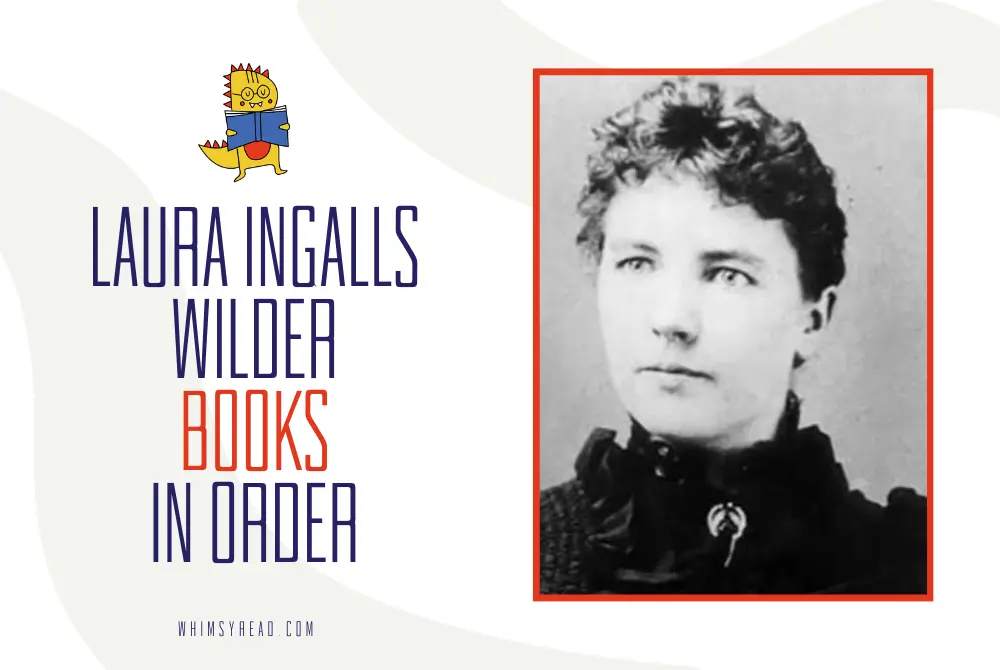
Laura Ingalls Wilder’s Little House books follow Laura Ingalls and her family as they move across the American frontier, from Wisconsin to Kansas, Minnesota, and Dakota Territory. Although the stories are based on Wilder’s childhood and early adult life, they are literary adaptations of her memories rather than straightforward autobiographies.
The series is easiest to read in publication order because Laura’s life unfolds naturally from childhood through her marriage to Almanzo Wilder. Farmer Boy is the one major detour: it focuses on Almanzo’s childhood in New York, but it remains part of the original nine-book collection.
Little House Books in Order
The original Little House collection contains nine books. The first eight were published between 1932 and 1943, while The First Four Years appeared posthumously in 1971. The Library of America also presents all nine together in publication order.
1. Little House in the Big Woods (1932)
The series begins with Laura as a young girl living with her parents and sisters in a log cabin in the Wisconsin Big Woods.
The book focuses on everyday pioneer life: hunting, farming, preserving food, seasonal work, family gatherings, and the challenges of surviving harsh winters. It introduces the Ingalls family and establishes the firsthand, domestic perspective that makes the series distinctive.
2. Farmer Boy (1933)
Farmer Boy steps away from Laura and tells the story of Almanzo Wilder’s childhood on a prosperous farm in New York.
Almanzo is still a boy here, years before he meets Laura. Readers get a detailed picture of farm life, school, food, chores, family expectations, and the skills Almanzo develops as he grows up.
Because it follows Almanzo rather than Laura, some readers are tempted to skip it. It is better treated as part of the original series, especially if you want to understand Almanzo before he becomes an important character later in the books. The official Little House collection includes it as the second book.
3. Little House on the Prairie (1935)
The Ingalls family leaves Wisconsin and travels west by covered wagon to Kansas, where Pa builds a new home on the prairie.
Laura experiences the excitement and uncertainty of frontier life as the family tries to establish itself in a new place. The novel also contains historical material and perspectives on Native Americans that modern readers should understand within the context of when Wilder wrote the book.
4. On the Banks of Plum Creek (1937)
The Ingalls family moves again, this time to Minnesota, where they establish a home near Plum Creek.
Laura and her sisters experience a very different environment from the Big Woods and Kansas prairie. The family faces flooding, grasshoppers, blizzards, financial difficulties, and the constant work required to maintain a homestead.
The book also marks Laura’s gradual movement toward a more mature understanding of family responsibilities and the world around her.
5. By the Shores of Silver Lake (1939)
The family travels west once more, settling in Dakota Territory near the growing railroad town of De Smet.
This is an important transition in Laura’s story. The railroad is transforming the landscape, the family begins thinking seriously about establishing a permanent home, and Laura takes on more responsibilities.
The book also introduces several people and circumstances that become important in the later Little House novels.
6. The Long Winter (1940)
The Ingalls family faces one of the most difficult periods in the series when an exceptionally harsh winter isolates the community at De Smet.
Trains stop running, food supplies become increasingly scarce, and the people of the town struggle to survive month after month of blizzards and extreme cold.
Unlike some of the earlier books, The Long Winter places considerably more emphasis on collective survival and the vulnerability of a frontier community.
7. Little Town on the Prairie (1941)
Laura is growing older, and the story moves from childhood toward young adulthood.
She becomes increasingly involved in the social and educational life of De Smet, while Mary leaves home to attend a school for the blind. Laura also begins teaching, taking on responsibilities that prepare her for the next stage of her life.
The book combines school, friendships, community events, family changes, and Laura’s growing independence.
8. These Happy Golden Years (1943)
Laura’s story moves firmly into young adulthood as she continues teaching and develops her relationship with Almanzo Wilder.
The romance between Laura and Almanzo becomes central to the novel, but the book is also about Laura’s transition away from the life she has known with her parents and sisters.
For readers following Laura’s life as a continuous story, this is the natural culmination of the original Little House novels.
9. The First Four Years (1971)
The First Four Years covers Laura and Almanzo’s early married life on their Dakota homestead.
Unlike the polished novels that preceded it, this book is based on a manuscript Wilder left unfinished. It was not published until 1971, fourteen years after her death.
That distinction matters when deciding where to place it. Although it is commonly called the ninth Little House book, it was not the ninth book published during Wilder’s lifetime. These Happy Golden Years was the final Little House novel published during her lifetime.
For that reason, read The First Four Years after These Happy Golden Years.
The Correct Reading Order at a Glance
| # | Book | Original publication |
| 1 | Little House in the Big Woods | 1932 |
| 2 | Farmer Boy | 1933 |
| 3 | Little House on the Prairie | 1935 |
| 4 | On the Banks of Plum Creek | 1937 |
| 5 | By the Shores of Silver Lake | 1939 |
| 6 | The Long Winter | 1940 |
| 7 | Little Town on the Prairie | 1941 |
| 8 | These Happy Golden Years | 1943 |
| 9 | The First Four Years | 1971 |
The Library of Congress’s National Library Service gives this same nine-book reading sequence, while the Library of America groups the first eight novels with the posthumous The First Four Years.
Publication Order vs. Laura’s Chronological Story
For most readers, publication order is the best reading order.
There is one small complication: Farmer Boy comes second even though Almanzo’s childhood takes place separately from Laura’s story. It is essentially a companion story within the larger series.
If you wanted to follow Laura herself without the Almanzo detour, you could read:
- Little House in the Big Woods
- Little House on the Prairie
- On the Banks of Plum Creek
- By the Shores of Silver Lake
- The Long Winter
- Little Town on the Prairie
- These Happy Golden Years
- The First Four Years
Then return to Farmer Boy whenever you want Almanzo’s childhood story.
However, there is little reason to do this. The traditional nine-book reading order works very well.
Which Little House Book Should You Start With?
Start with Little House in the Big Woods
If you are new to Laura Ingalls Wilder, this is the natural starting point. It introduces Laura, her parents and sisters, the family’s life in Wisconsin, and the rhythms of pioneer life.
Start with Farmer Boy
If Almanzo interests you more than Laura, Farmer Boy can work as an early entry point. It is also a good choice for readers who particularly enjoy stories about farming, food, animals, chores, and rural family life.
Start with The Long Winter
Readers interested in survival stories may find The Long Winter especially compelling. It can technically be read on its own, but the family’s earlier moves and relationships have much more meaning if you have read the preceding books.
What Makes the Little House Books Different From Modern Historical Fiction?
The Little House books occupy an unusual place between children’s literature, historical fiction, and autobiographical storytelling.
Wilder based the books heavily on her own experiences, but she shaped those experiences into narratives for young readers. As the Library of America notes, the books form an episodic sequence based on Wilder’s life and the broader pioneer experience.
That means readers should not assume every event happened exactly as presented. Some events were rearranged, compressed, omitted, or shaped for storytelling.
This distinction becomes particularly important when comparing the novels with Pioneer Girl, Wilder’s original adult memoir manuscript.
Books by Laura Ingalls Wilder Beyond the Original Series
The nine Little House books are the core reading experience, but Wilder’s bibliography includes several other works that are valuable for readers who want more of her life and writing.
On the Way Home (1962)
Published after Wilder’s death, On the Way Home records the Wilder family’s 1894 journey from South Dakota to Mansfield, Missouri.
It is different from the Little House novels because it is based on Wilder’s diary and related material rather than being another fictionalized childhood novel.
West from Home (1974)
West from Home collects Laura’s letters to Almanzo from her 1915 visit to San Francisco.
The book gives readers a glimpse of Wilder as an adult writer rather than as the young Laura depicted in the Little House novels.
Pioneer Girl: The Annotated Autobiography (2014)
Pioneer Girl is especially important for readers who want to separate Wilder’s real-life experiences from the literary version presented in the Little House books.
The original Pioneer Girl manuscript dates from the early 1930s. It was finally published in an extensively annotated edition in 2014. PBS’s timeline records the original manuscript and its eventual publication.
Because it is an annotated autobiography rather than a continuation of the novels, it should be considered supplementary reading rather than Book 10.
The Little House Books and Historical Context
Modern readers should also approach the series with some awareness of its historical context.
The books describe westward expansion and pioneer life from the perspective of a white settler family. Some passages, particularly descriptions of Native Americans and other groups, reflect attitudes and assumptions of the period in which Wilder wrote.
That does not change the books’ historical and literary importance, but it is useful context when introducing the series to children or using it as historical reading.
The Laura Ingalls Wilder Award, established by the American Library Association in 1954, was renamed the Children’s Literature Legacy Award in 2018. PBS records the change and the concerns surrounding Wilder’s representations of Native Americans and Black people.
Are the Little House Books Autobiographical?
Yes, but not in the strict sense of autobiography.
The books are based on Laura Ingalls Wilder’s childhood, adolescence, and early married life, but she transformed her memories into stories for children.
This is why Pioneer Girl is so useful. It allows readers to compare Wilder’s original recollections with the much more polished narratives that became the Little House books.
Is Farmer Boy About Laura Ingalls Wilder?
No.
Farmer Boy is about Almanzo Wilder, who later becomes Laura’s husband. It tells the story of his childhood on a farm in New York and is separate from Laura’s own childhood narrative.
Nevertheless, it is one of the nine original Little House books and is traditionally read as Book 2.
Is The First Four Years Really the Ninth Little House Book?
It depends on what you mean by “ninth.”
It is commonly treated as the ninth book in the complete Little House collection, and official collections of the series include it as the ninth volume. But it was published posthumously in 1971 and was based on an unfinished manuscript.
So, for a reading guide, it makes sense to place it after These Happy Golden Years while clearly identifying it as a posthumous work.
Do You Need to Read the Little House Books in Order?
It is strongly recommended, although most of the individual books have their own self-contained stories.
The first eight novels follow Laura’s life in sequence, so characters, family circumstances, locations, and Laura’s age change naturally from one book to the next.
Reading in order also makes These Happy Golden Years more meaningful because Laura’s relationship with Almanzo has developed over several earlier books.
Frequently Asked Questions
How many Little House books did Laura Ingalls Wilder write?
There are nine books commonly collected as the original Little House series. Eight were published during Wilder’s lifetime, while The First Four Years was published posthumously in 1971.
What is the first Laura Ingalls Wilder book?
Little House in the Big Woods is the first book in the series. It was published in 1932 and introduces Laura and her family in Wisconsin.
What is the correct order of the Little House books?
The traditional order is Little House in the Big Woods, Farmer Boy, Little House on the Prairie, On the Banks of Plum Creek, By the Shores of Silver Lake, The Long Winter, Little Town on the Prairie, These Happy Golden Years, and The First Four Years.
Should I read Farmer Boy before Little House on the Prairie?
Yes, if you are following the traditional series order. Farmer Boy is Book 2, although it tells Almanzo’s story rather than continuing Laura’s directly.
What comes after These Happy Golden Years?
The First Four Years comes next in the commonly used nine-book collection. It follows Laura and Almanzo during the first four years of their marriage and was published posthumously.
Is The First Four Years part of the original Little House series?
It is generally included as the ninth Little House book, but it differs from the first eight because it was based on an unfinished manuscript and published after Wilder’s death.
Is On the Way Home part of the Little House series?
No. On the Way Home is a separate posthumously published work based on Wilder’s diary and the family’s 1894 journey to Missouri. It is valuable supplementary reading but is not one of the nine original Little House books.
Should I read Pioneer Girl before the Little House books?
No. Pioneer Girl is best saved for after the novels if you want to explore the real-life experiences behind Laura’s stories. It is an annotated autobiography, not another installment of the series.
Are the Little House books suitable for children?
They are classic children’s books and continue to be published for young readers, but parents and educators may want to provide historical context for some passages, particularly the books’ representations of Native Americans and other groups.
Laura Ingalls Wilder Books in Order: Simple List
For readers who just want the answer:
- Little House in the Big Woods (1932)
- Farmer Boy (1933)
- Little House on the Prairie (1935)
- On the Banks of Plum Creek (1937)
- By the Shores of Silver Lake (1939)
- The Long Winter (1940)
- Little Town on the Prairie (1941)
- These Happy Golden Years (1943)
- The First Four Years (1971)
Final Thoughts
The Little House books work best as a continuous journey through Laura Ingalls Wilder’s childhood and early adulthood, beginning with Little House in the Big Woods and ending with The First Four Years. Farmer Boy is the one book that shifts the focus away from Laura, but its place in the traditional reading order makes sense because it introduces Almanzo before he becomes central to Laura’s later story.
For readers who finish the nine-book collection and want to go beyond the novels, On the Way Home, West from Home, and especially Pioneer Girl: The Annotated Autobiography offer a different perspective on the real woman and historical experiences behind the beloved books.

Leave a Reply