
Lord Peter Wimsey Books in Order: The Complete Reading Guide
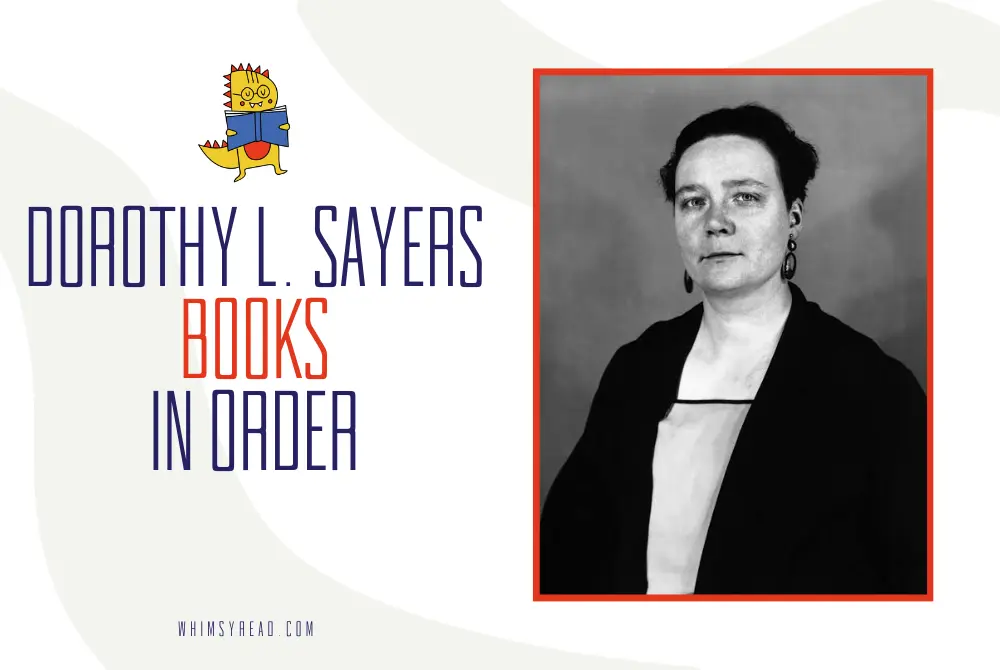
Lord Peter Wimsey is one of the defining gentleman detectives of Golden Age crime fiction. Created by Dorothy L. Sayers, he first appeared in Whose Body? in 1923 and gradually developed from an apparently frivolous aristocratic amateur detective into a much more complex character whose investigations increasingly overlap with questions of morality, love, class, war, and personal responsibility.
The series also has an important second chapter. After Sayers died, Jill Paton Walsh completed Sayers’s unfinished Thrones, Dominations and subsequently wrote three more Wimsey and Harriet Vane novels. For readers who want the complete story, those four books belong after Sayers’s 11 original novels.
Lord Peter Wimsey Books by Dorothy L. Sayers
Dorothy L. Sayers wrote 11 completed Lord Peter Wimsey novels. Publication order is the simplest reading order, particularly because Harriet Vane’s importance grows considerably in the later books.
1. Whose Body? (1923)
Lord Peter Wimsey is introduced when a dead man is discovered in the bathtub of an architect in Battersea, wearing nothing but a pair of pince-nez. The apparently bizarre crime soon becomes connected to the disappearance of a wealthy man.
This is the book that establishes Wimsey, his family background, his distinctive personality, and his relationship with his manservant Bunter.
2. Clouds of Witness (1926)
Wimsey returns to his family estate after his sister’s fiancé is found dead and his brother, the Duke of Denver, is accused of murder.
The case brings Peter’s aristocratic family directly into the investigation and gives readers much more of the Wimsey family and their complicated relationships.
3. Unnatural Death (1927)
An elderly woman dies under circumstances that initially appear natural, but another character becomes convinced that she was murdered.
Wimsey investigates a case involving inheritance, medical knowledge, and a murder method that is particularly difficult to prove.
Unnatural Death was also published in the United States under the title The Dawson Pedigree.
4. The Unpleasantness at the Bellona Club (1928)
General Fentiman is found dead in his chair at the Bellona Club, but the timing of his death creates an unusual financial mystery.
Wimsey investigates the circumstances surrounding the general’s death while also examining the relationships and inheritance issues surrounding him.
5. Strong Poison (1930)
Harriet Vane, a successful mystery novelist, is accused of poisoning her former lover.
Lord Peter becomes convinced that Harriet is innocent and sets out to prove it. This novel is particularly important to the larger series because it introduces Harriet Vane, who becomes Wimsey’s most important long-term relationship.
6. The Five Red Herrings (1931)
Wimsey travels to Scotland after an artist is found dead near Kirkcudbright.
Six people had both the opportunity and potential motive to commit the crime, creating one of Sayers’s classic puzzle mysteries. The investigation makes extensive use of geography, railway timetables, and the movements of the suspects.
The book is also commonly titled Five Red Herrings without the word “The.”
7. Have His Carcase (1932)
Harriet Vane discovers a body while walking along the coast and becomes involved in the investigation.
When she asks Wimsey for assistance, the two work together to determine whether the death was suicide or murder. Their relationship develops further while the mystery unfolds.
8. Murder Must Advertise (1933)
Wimsey goes undercover at an advertising agency after the suspicious death of a copywriter.
The novel takes him into London’s advertising industry, where commercial rivalries, drugs, crime, and deception become part of the investigation.
9. The Nine Tailors (1934)
After a car accident leaves Wimsey stranded near a Fenland village, he becomes involved with the local church bell ringers.
Months later, a body is discovered in a grave, and the investigation leads back to a stolen necklace and events that happened years earlier.
The novel is particularly notable for its atmospheric setting and its detailed treatment of change-ringing.
10. Gaudy Night (1935)
Harriet Vane returns to her Oxford college for a reunion known as a gaudy, only to discover that someone has been sending threatening messages and committing increasingly disturbing acts of vandalism.
She asks Peter Wimsey for help, and the investigation becomes intertwined with Harriet’s own feelings about her career, independence, and relationship with Peter.
Gaudy Night is not simply a conventional murder mystery. Much of the book concerns intellectual freedom, women’s education, ethics, and Harriet’s developing relationship with Wimsey.
11. Busman’s Honeymoon (1937)
Peter and Harriet are finally married and head to Talboys, their new country home, for their honeymoon.
Their plans for a peaceful married life are interrupted when they discover a body in the basement. Their honeymoon therefore becomes another murder investigation.
This was the last completed Lord Peter Wimsey novel written by Sayers herself.
Lord Peter Wimsey Books by Jill Paton Walsh
Dorothy L. Sayers left an unfinished Wimsey manuscript titled Thrones, Dominations. Jill Paton Walsh completed it from Sayers’s surviving manuscript and notes, and subsequently wrote three further Wimsey and Harriet Vane novels.
These four books are best read after Sayers’s original 11 novels.
12. Thrones, Dominations (1998)
Peter and Harriet are adjusting to married life when a new murder investigation draws them back into detective work.
The novel was completed by Jill Paton Walsh from Sayers’s unfinished manuscript and notes. It therefore occupies a special place in the series: it begins with Sayers’s original material but was completed and published decades after her death.
13. A Presumption of Death (2002)
Set during the Second World War, the novel follows Peter and Harriet as wartime circumstances separate them.
Harriet remains involved with family and home-front concerns while Peter undertakes secret work away from home. A mystery develops alongside the pressures of wartime life.
14. The Attenbury Emeralds (2010)
Peter becomes involved with the mystery of the Attenbury emeralds, a case connected to an event from his own youth.
The novel moves between the past and present and gives readers more information about Wimsey’s early life while developing the family story surrounding Peter and Harriet.
15. The Late Scholar (2013)
Peter and Harriet become involved in a dispute at an Oxford college when questions about the institution’s future become increasingly heated.
The conflict eventually turns deadly, bringing the couple into another investigation involving Oxford, academia, history, and competing claims over the college’s future.
The Late Scholar is currently the final published Lord Peter Wimsey and Harriet Vane novel.
The Complete Lord Peter Wimsey Novel Order
For readers who want the novels only, without the short-story collections, use this sequence:
- Whose Body? (1923)
- Clouds of Witness (1926)
- Unnatural Death (1927)
- The Unpleasantness at the Bellona Club (1928)
- Strong Poison (1930)
- The Five Red Herrings (1931)
- Have His Carcase (1932)
- Murder Must Advertise (1933)
- The Nine Tailors (1934)
- Gaudy Night (1935)
- Busman’s Honeymoon (1937)
- Thrones, Dominations (1998)
- A Presumption of Death (2002)
- The Attenbury Emeralds (2010)
- The Late Scholar (2013)
The first 11 are Sayers’s novels; the final four are the posthumous continuation written by Jill Paton Walsh, beginning with Sayers’s unfinished Thrones, Dominations.
Lord Peter Wimsey Short Story Collections in Order
Sayers also wrote a substantial body of shorter Wimsey fiction. These stories are not necessary to follow the main novel storyline, but they are worth including in a complete Lord Peter Wimsey reading guide.
1. Lord Peter Views the Body (1928)
This is the first major collection of Lord Peter Wimsey short stories.
The stories show Wimsey handling cases that are considerably shorter and more varied than the full-length novels, giving readers additional glimpses of his relationship with Bunter and his investigative methods.
2. Hangman’s Holiday (1933)
Hangman’s Holiday contains Lord Peter stories alongside stories featuring other Sayers characters.
Because it is a mixed collection, readers interested only in Wimsey do not need to read every story in the volume.
3. In the Teeth of the Evidence (1939)
This collection includes additional Lord Peter stories along with other short fiction by Sayers.
It was published after Busman’s Honeymoon and provides more short-form Wimsey cases.
4. Striding Folly (1972)
Published posthumously, Striding Folly collects several later Sayers stories featuring Lord Peter.
It includes “Striding Folly” and “The Unpleasantness at the Bellona Club”?
For readers building a complete Sayers bibliography, it is worth checking the contents of the specific edition because some later collections and reprints overlap in their selection of Wimsey stories.
The Wimsey Papers
The Wimsey Papers (1939–1940)
The Wimsey Papers are different from the detective novels and short-story collections.
They originally appeared as a series of fictional documents and letters in The Spectator during the early years of the Second World War. Written as correspondence and family papers, they provide a fictional account of the Wimsey family’s experiences and opinions during wartime Britain.
They are best treated as an optional supplement after the main Sayers novels.
Talboys
Talboys
“Talboys” is a later Lord Peter Wimsey short story written by Dorothy L. Sayers and published in 1942.
Set at Talboys, Peter and Harriet’s home, the story involves their children and a comparatively domestic mystery. It is useful for readers interested in the Wimsey family after Busman’s Honeymoon.
It is generally encountered in later editions of Sayers’s short-story collections rather than as a separate novel.
The Lord Peter Wimsey and Harriet Vane Relationship
Harriet Vane becomes increasingly important as the series progresses, so readers who are mainly interested in the character development should pay particular attention to the middle and later books.
Her story begins in:
- Strong Poison
- Have His Carcase
- Gaudy Night
- Busman’s Honeymoon
Their relationship then continues in:
- Thrones, Dominations
- A Presumption of Death
- The Attenbury Emeralds
- The Late Scholar
The progression from Strong Poison through Busman’s Honeymoon is especially important because the books gradually transform their relationship from investigator and suspect’s advocate into a partnership and marriage.
Where Should You Start with Lord Peter Wimsey?
If you want to experience the character from the beginning, start with Whose Body?.
If your main interest is Peter and Harriet’s relationship, you can still begin with Whose Body?, but the most important sequence for their relationship is Strong Poison, Have His Carcase, Gaudy Night, and Busman’s Honeymoon.
If you are primarily interested in the classic puzzle-mystery side, The Unpleasantness at the Bellona Club, The Five Red Herrings, and The Nine Tailors offer very different types of investigations.
Do You Need to Read Lord Peter Wimsey Books in Order?
You can read most of the individual mysteries independently because each novel presents a separate investigation.
However, publication order is recommended for a first read because Wimsey’s personality develops substantially over the series, while Harriet Vane’s role grows from one novel to the next. The relationship between Peter and Harriet is especially difficult to appreciate fully if the later books are read before the earlier ones.
The four Jill Paton Walsh books should also be read after Sayers’s original novels because they continue Peter and Harriet’s lives after Busman’s Honeymoon.
Dorothy L. Sayers vs. Jill Paton Walsh
| Books | Author | Period | Role in the series |
| 1–11 | Dorothy L. Sayers | 1923–1937 | Original Lord Peter Wimsey novels |
| 12 | Dorothy L. Sayers / Jill Paton Walsh | 1998 | Sayers’s unfinished manuscript completed by Walsh |
| 13–15 | Jill Paton Walsh | 2002–2013 | New Wimsey and Harriet Vane novels |
Jill Paton Walsh’s four books are not simply reprints or adaptations. Thrones, Dominations was completed from Sayers’s unfinished work, while the three subsequent novels were written by Walsh as continuations of the characters and world. Penguin describes Walsh as the author who completed and continued Sayers’s series.
Frequently Asked Questions About Lord Peter Wimsey Books
How many Lord Peter Wimsey novels are there?
There are 15 published novels if you include the four posthumous/continuation novels completed or written by Jill Paton Walsh. Dorothy L. Sayers herself completed 11 Lord Peter Wimsey novels.
What is the first Lord Peter Wimsey book?
Whose Body?, published in 1923, is the first Lord Peter Wimsey novel. It introduces Peter Wimsey and his manservant Bunter.
What is the last Lord Peter Wimsey book?
The Late Scholar, published in 2013, is currently the final published Lord Peter Wimsey and Harriet Vane novel. It was written by Jill Paton Walsh.
Did Dorothy L. Sayers write all the Lord Peter Wimsey books?
No. Sayers wrote the original 11 completed novels. Jill Paton Walsh later completed Thrones, Dominations from Sayers’s unfinished manuscript and wrote three additional continuation novels.
Who is Harriet Vane?
Harriet Vane is a mystery novelist who first appears in Strong Poison. She becomes increasingly important to the series and eventually marries Lord Peter Wimsey.
Which Lord Peter Wimsey book introduces Harriet Vane?
Strong Poison introduces Harriet Vane. She is on trial for the murder of her former lover, and Peter Wimsey becomes determined to prove her innocence.
Should I read Strong Poison before Gaudy Night?
Yes, if you are reading the series for the first time. Gaudy Night depends on the relationship and history developed between Peter and Harriet in the earlier books, particularly Strong Poison and Have His Carcase.
Is Gaudy Night a murder mystery?
Gaudy Night contains a mystery involving threats, vandalism, and attempted harm, but it is also a novel about Oxford, intellectual life, women’s independence, and Harriet Vane’s relationship with Peter Wimsey. The mystery is only one part of the book.
What comes after Busman’s Honeymoon?
The next Wimsey novel is Thrones, Dominations. It was completed by Jill Paton Walsh from Dorothy L. Sayers’s unfinished manuscript and was published in 1998.
Is The Late Scholar the final Lord Peter Wimsey book?
Yes, it is currently the final published Wimsey novel. The Late Scholar was published in 2013 and was written by Jill Paton Walsh.
Are there Lord Peter Wimsey short stories?
Yes. Sayers wrote numerous Wimsey short stories, collected in books including Lord Peter Views the Body, Hangman’s Holiday, In the Teeth of the Evidence, and Striding Folly.
Lord Peter Wimsey Books in One Simple List
For readers who want the main novels without the additional short fiction:
- Whose Body?
- Clouds of Witness
- Unnatural Death
- The Unpleasantness at the Bellona Club
- Strong Poison
- The Five Red Herrings
- Have His Carcase
- Murder Must Advertise
- The Nine Tailors
- Gaudy Night
- Busman’s Honeymoon
- Thrones, Dominations
- A Presumption of Death
- The Attenbury Emeralds
- The Late Scholar
Final Thoughts
The Lord Peter Wimsey books are more rewarding when read as a developing character story rather than simply as a collection of unrelated murder mysteries. Peter changes considerably over the course of the series, and Harriet Vane’s arrival adds a long-running personal and intellectual dimension that becomes central to the later novels.
For a first read, begin with Whose Body? and continue through Sayers’s 11 novels before moving to Thrones, Dominations and the three Jill Paton Walsh continuations. The short stories can then be added separately whenever you want more of Wimsey and the wider Wimsey family.

Leave a Reply