J.R.R. Tolkien Books in Order: Where to Start with Middle-earth and Beyond
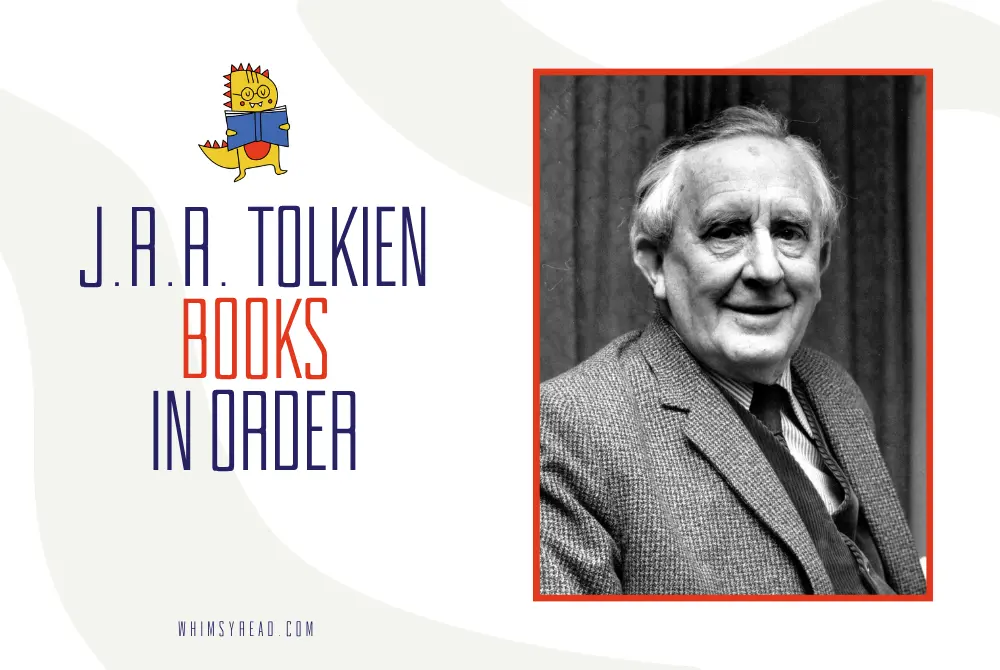
J.R.R. Tolkien created one of the most influential fictional worlds in literary history, but figuring out which Tolkien book to read first can be surprisingly confusing. The Hobbit and The Lord of the Rings are only part of a much larger body of work that includes ancient legends, unfinished stories, children’s tales, poetry, translations, and decades of posthumously published manuscripts.
This guide organizes J.R.R. Tolkien’s books in publication and recommended reading order, explains which books are essential for casual readers, and helps you decide when—or whether—you should venture into the deeper parts of Middle-earth.
J.R.R. Tolkien Books at a Glance
| Recommended Order | Book | Publication Year | Best For |
| 1 | The Hobbit | 1937 | New readers |
| 2 | The Fellowship of the Ring | 1954 | Beginning The Lord of the Rings |
| 3 | The Two Towers | 1954 | Continuing the journey |
| 4 | The Return of the King | 1955 | Completing the main story |
| 5 | The Silmarillion | 1977 | Middle-earth history |
| 6 | Unfinished Tales | 1980 | Deeper lore |
| 7 | The Children of Húrin | 2007 | A complete tragic tale |
| 8 | Beren and Lúthien | 2017 | Tolkien’s legendary romance |
| 9 | The Fall of Gondolin | 2018 | First Age history |
My recommendation for most readers: Do not feel pressured to read everything. Start with The Hobbit and The Lord of the Rings. Tolkien’s own publication history—and the Tolkien Estate’s guidance—makes clear that there is no single compulsory order for every reader.
The Best Order to Read J.R.R. Tolkien’s Middle-earth Books
1. The Hobbit (1937)
Publication year: 1937
Reading position: Recommended starting point
Key themes: Adventure, courage, friendship, greed, dragons
The Hobbit follows Bilbo Baggins, a comfort-loving hobbit who is unexpectedly recruited by Gandalf to join a group of dwarves on a dangerous quest.
Their goal is to reclaim the Lonely Mountain from the dragon Smaug, but Bilbo’s journey introduces him to trolls, elves, goblins, Gollum, and a mysterious magical ring. The novel was Tolkien’s breakthrough success and became the foundation for his later return to Middle-earth.
2. The Fellowship of the Ring (1954)
Publication year: 1954
Reading position: The Lord of the Rings #1
Key themes: Fellowship, temptation, friendship, good versus evil
Years after Bilbo’s adventure, his mysterious ring has become the center of a much larger and more dangerous conflict.
Frodo Baggins inherits the One Ring and discovers that it belongs to the Dark Lord Sauron. To prevent Sauron from recovering it, Frodo begins a perilous journey toward Mordor with a group of companions known as the Fellowship.
3. The Two Towers (1954)
Publication year: 1954
Reading position: The Lord of the Rings #2
Key themes: War, loyalty, corruption, courage
The Fellowship has been broken, and its members are now separated across Middle-earth.
While Frodo and Sam continue their journey toward Mordor, Aragorn, Legolas, and Gimli become involved in the growing war against Saruman. The story expands the scale of Tolkien’s world and moves the conflict toward open war.
4. The Return of the King (1955)
Publication year: 1955
Reading position: The Lord of the Rings #3
Key themes: Sacrifice, hope, war, destiny
The War of the Ring reaches its decisive stage as the forces of Middle-earth prepare for a final confrontation with Sauron.
Meanwhile, Frodo and Sam face the most difficult part of their mission. The Return of the King concludes the central narrative of The Lord of the Rings while showing that even victory comes with loss and lasting consequences. The three volumes were originally published between 1954 and 1955.
The Essential Tolkien Reading Order After The Lord of the Rings
Once you finish the main story, you have two choices: stop there and remain completely satisfied—or explore the enormous history behind Middle-earth.
5. The Silmarillion (1977)
Publication year: 1977
Reading position: Essential expanded Middle-earth reading
Key themes: Creation, mythology, elves, tragedy, war
Published after Tolkien’s death and edited by his son Christopher Tolkien, The Silmarillion is not a conventional sequel to The Lord of the Rings.
Instead, it tells the ancient history of Middle-earth: the creation of the world, the rise of the Elves, the great wars of the First Age, and the events that shaped the distant past remembered by characters such as Elrond and Galadriel.
Important reading note: Chronologically, much of The Silmarillion happens before The Hobbit, but I do not recommend starting here unless you already enjoy mythological and history-like storytelling.
6. Unfinished Tales (1980)
Publication year: 1980
Reading position: Advanced Middle-earth reading
Key themes: Lost stories, world-building, history, characters
Unfinished Tales of Númenor and Middle-earth collects narratives and fragments that Tolkien left incomplete.
The book contains additional material connected to several periods of Middle-earth’s history and offers fascinating context for readers who want to understand characters, places, and events beyond the finished novels. It is particularly valuable after The Silmarillion.
7. The Children of Húrin (2007)
Publication year: 2007
Reading position: Standalone First Age story
Key themes: Fate, tragedy, family, war
The Children of Húrin tells one of the darkest stories in Tolkien’s legendarium.
The novel follows Túrin Turambar and his family as they struggle against the curse and destructive influence of Morgoth. Christopher Tolkien assembled the narrative from his father’s manuscripts to present the story as a sustained, book-length tale. The Tolkien Estate recommends it as a way for readers to approach the distant First Age through a fully developed story.
8. Beren and Lúthien (2017)
Publication year: 2017
Reading position: For readers exploring First Age legends
Key themes: Love, mortality, sacrifice, immortality
This book follows the legendary romance between the mortal man Beren and the Elf maiden Lúthien.
Their story became one of the most important myths within Tolkien’s legendarium and appears in several versions across his manuscripts. The published book, edited by Christopher Tolkien, allows readers to follow the evolution of the tale rather than presenting only one final version.
9. The Fall of Gondolin (2018)
Publication year: 2018
Reading position: Advanced First Age reading
Key themes: War, betrayal, heroism, destruction
The Fall of Gondolin explores the fate of one of the greatest hidden Elven cities of the First Age.
Like Beren and Lúthien, this publication presents Tolkien’s evolving versions of the story. It is especially rewarding for readers who have already developed an interest in the mythology and history behind The Silmarillion.
The Lord of the Rings Books in Order
The main Lord of the Rings trilogy should always be read in this order:
1. The Fellowship of the Ring (1954)
Frodo begins the journey that will determine the future of Middle-earth.
2. The Two Towers (1954)
The Fellowship is divided while the war against Sauron and Saruman grows.
3. The Return of the King (1955)
The War of the Ring reaches its conclusion as Frodo approaches Mount Doom.
Although the story is commonly called a trilogy because it was published in three volumes, Tolkien conceived The Lord of the Rings as one larger work.
Middle-earth Books in Chronological Order
If you want to follow the internal history of Middle-earth, rather than publication order, the broad chronology looks like this:
First Age
- The Silmarillion
- The Children of Húrin
- Beren and Lúthien
- The Fall of Gondolin
Second Age
- Selected material in The Silmarillion
- Unfinished Tales
Third Age
- The Hobbit
- The Fellowship of the Ring
- The Two Towers
- The Return of the King
However, chronological order is not necessarily the best reading order. The Tolkien Estate specifically notes that there is no need to follow the internal chronology and recommends choosing an entry point suited to the reader.
J.R.R. Tolkien’s Other Fiction Books
Tolkien wrote far more than Middle-earth fiction. These books can be read independently.
Farmer Giles of Ham (1949)
Publication year: 1949
Reading position: Standalone
Key themes: Humor, dragons, medieval parody
A reluctant farmer becomes involved in an increasingly absurd adventure involving giants, dragons, and royalty.
The story has a deliberately old-fashioned, mock-medieval style and shows Tolkien’s playful sense of humor.
Leaf by Niggle (1945)
Publication year: 1945
Reading position: Standalone short fiction
Key themes: Art, mortality, imagination, legacy
This short story follows Niggle, an artist obsessed with completing a great painting but constantly interrupted by the practical demands of life.
It is one of Tolkien’s most personal and frequently discussed pieces of shorter fiction, exploring creativity, responsibility, and what remains unfinished in a human life.
Smith of Wootton Major (1967)
Publication year: 1967
Reading position: Standalone
Key themes: Faërie, wonder, imagination, aging
A seemingly ordinary village tradition gives one child an unexpected connection to the magical world of Faërie.
This is a quieter and more reflective fantasy than The Hobbit, focusing on wonder and the temporary nature of extraordinary experiences.
Roverandom (1998)
Publication year: 1998
Reading position: Posthumously published standalone
Key themes: Magic, adventure, childhood, transformation
Originally created as a story for Tolkien’s children, Roverandom follows a dog who is transformed by a wizard and sent on a remarkable journey.
The story combines whimsical fantasy with adventures involving the Moon, the sea, and magical creatures.
Mr. Bliss (1982)
Publication year: 1982
Reading position: Posthumously published children’s book
Key themes: Humor, adventure, absurdity
Mr. Bliss is an illustrated children’s story about a well-meaning but accident-prone man whose adventures quickly become chaotic.
The book demonstrates Tolkien’s talent as both a storyteller and illustrator.
Tales from the Perilous Realm Reading Order
Several of Tolkien’s shorter works are often collected under the title Tales from the Perilous Realm.
The major stories include:
- Roverandom
- Farmer Giles of Ham
- The Adventures of Tom Bombadil
- Leaf by Niggle
- Smith of Wootton Major
These stories do not form a series, so they can be read in any order.
They are ideal for readers who want Tolkien’s imagination without committing to the length and complexity of The Lord of the Rings.
The History of Middle-earth Books in Order
The History of Middle-earth is a twelve-volume scholarly series edited by Christopher Tolkien.
These books are not traditional novels. They examine Tolkien’s manuscripts, drafts, abandoned ideas, and the development of his legendarium.
1. The Book of Lost Tales, Part One (1983)
Key themes: Early mythology, lost stories, world-building
The first volume explores some of Tolkien’s earliest versions of stories that would eventually become part of the Middle-earth legendarium.
2. The Book of Lost Tales, Part Two (1984)
Key themes: Early legends, mythology, literary development
This volume continues Tolkien’s earliest mythological narratives and shows how different some familiar stories originally were.
3. The Lays of Beleriand (1985)
Key themes: Poetry, Beren and Lúthien, Túrin
A collection of Tolkien’s long narrative poems connected to major First Age legends.
4. The Shaping of Middle-earth (1986)
Key themes: Mythology, geography, early legendarium
This volume explores the development of Tolkien’s world and the early shaping of its mythology.
5. The Lost Road and Other Writings (1987)
Key themes: Númenor, time travel, mythology
Readers encounter material connected to Númenor and abandoned ideas that reveal alternative directions Tolkien considered.
6. The Return of the Shadow (1988)
Key themes: Writing process, The Lord of the Rings, early drafts
The series begins examining the evolution of The Lord of the Rings from its earliest drafts.
7. The Treason of Isengard (1989)
Key themes: Drafts, character development, Middle-earth
Tolkien’s developing ideas for the second part of The Lord of the Rings are examined in detail.
8. The War of the Ring (1990)
Key themes: War, drafts, narrative development
This volume follows the development of the later portions of the great conflict against Sauron.
9. Sauron Defeated (1992)
Key themes: Mordor, endings, alternative drafts
The ninth volume explores the conclusion of The Lord of the Rings and additional related material.
10. Morgoth’s Ring (1993)
Key themes: Creation, evil, First Age
The focus returns to the deeper mythology of The Silmarillion and the nature of Tolkien’s world.
11. The War of the Jewels (1994)
Key themes: Beleriand, Elves, First Age
This volume examines additional material relating to the great conflicts and peoples of the First Age.
12. The Peoples of Middle-earth (1996)
Key themes: History, languages, characters, world-building
The final volume explores the development of Tolkien’s peoples, histories, and ideas about the later stages of his legendarium.
Important: I would not recommend The History of Middle-earth as an introduction to Tolkien. It is best approached after reading at least The Hobbit, The Lord of the Rings, and preferably The Silmarillion.
The Best J.R.R. Tolkien Reading Order for Beginners
If you are completely new to Tolkien, I recommend this path:
Step 1: Start with The Hobbit
It is shorter, more accessible, and introduces Middle-earth through a straightforward adventure.
Step 2: Read The Lord of the Rings
Continue with:
- The Fellowship of the Ring
- The Two Towers
- The Return of the King
This is the heart of Tolkien’s fictional legacy and the best place to understand why Middle-earth became so influential.
Step 3: Read The Silmarillion
Once you already care about the world, its ancient history becomes much more rewarding.
Step 4: Choose Your Own Direction
From here, select based on your interests:
- For a complete tragic story: The Children of Húrin
- For deeper lore: Unfinished Tales
- For Beren and Lúthien’s legend: Beren and Lúthien
- For Tolkien scholarship: The History of Middle-earth
This approach is far less intimidating than trying to read every Middle-earth story chronologically.
Should You Read The Hobbit Before The Lord of the Rings?
Ideally, yes—but it is not absolutely necessary.
The Tolkien Estate notes that The Lord of the Rings recalls the essential events of The Hobbit, meaning readers can begin with Tolkien’s most famous work without being completely lost.
However, I still recommend reading The Hobbit first.
It introduces Bilbo, Gandalf, Gollum, and the Ring in a simpler setting. It also makes the shift from Bilbo’s adventure to Frodo’s much larger mission more meaningful.
What Makes J.R.R. Tolkien’s Books Different?
Tolkien was not simply writing a sequence of fantasy adventures. He was a philologist and scholar whose fascination with language, mythology, and ancient literature helped shape his fictional world.
Middle-earth Has a Deep Historical Structure
The events in The Lord of the Rings feel like part of a much older world because, in Tolkien’s imagination, they were.
Thousands of years of fictional history, languages, legends, and genealogies exist behind the main story.
Languages Matter
Tolkien’s professional interest in language influenced the creation of Elvish languages and many of the names, cultures, and histories within Middle-earth.
The languages were not merely decorative details—they were closely connected to how Tolkien imagined his fictional peoples.
Good and Evil Are Complex
Tolkien’s stories contain powerful struggles between good and evil, but individual characters still face deeply personal moral choices.
The temptation of the Ring, for example, is effective precisely because power can appear attractive even to people with good intentions.
Small Characters Can Change History
One of Tolkien’s most enduring ideas is that greatness does not belong only to kings and warriors.
Hobbits are physically small and politically unimportant, yet their courage and endurance can determine the fate of the entire world.
About J.R.R. Tolkien
J.R.R. Tolkien was an English writer, scholar, and philologist best known for creating Middle-earth and writing The Hobbit and The Lord of the Rings.
His success with The Hobbit, first published in 1937, eventually led to the creation of The Lord of the Rings, which grew from a proposed sequel into a vast epic published in three volumes between 1954 and 1955.
Tolkien died in 1973, but his literary world continued to expand through the work of his son Christopher Tolkien, who spent decades editing and publishing his father’s manuscripts, including The Silmarillion, Unfinished Tales, and The History of Middle-earth.
His influence on modern fantasy is difficult to overstate. The languages, history, maps, cultures, and mythology of Middle-earth helped establish the idea of the fully realized secondary world that has influenced generations of fantasy writers.
Frequently Asked Questions About J.R.R. Tolkien Books
What is the correct order to read J.R.R. Tolkien books?
For most readers, the best order is:
- The Hobbit
- The Fellowship of the Ring
- The Two Towers
- The Return of the King
- The Silmarillion
- Unfinished Tales
- The Children of Húrin
After that, you can explore Beren and Lúthien, The Fall of Gondolin, and The History of Middle-earth.
This is a recommended reading order rather than a strict chronological order.
Should I read The Hobbit or The Lord of the Rings first?
For younger readers and complete beginners, The Hobbit is usually the easiest starting point.
However, the Tolkien Estate notes that older readers can begin directly with The Lord of the Rings, since the essential events of The Hobbit are recalled at the beginning of the story.
My recommendation remains: read The Hobbit first if possible.
Are The Hobbit and The Lord of the Rings connected?
Yes.
The Lord of the Rings began as a sequel to The Hobbit. Bilbo’s discovery of the Ring becomes one of the central events behind the later story.
However, The Lord of the Rings eventually became much larger, darker, and more complex than its predecessor.
Should I read The Silmarillion before The Lord of the Rings?
No, not for most readers.
Chronologically, the events of The Silmarillion occur long before The Hobbit and The Lord of the Rings, but publication and reading chronology are different things.
The Tolkien Estate explicitly notes that there is no need to follow Middle-earth’s internal chronological order. The Silmarillion is usually more rewarding after you already understand and care about the world of Middle-earth.
Is The Silmarillion a novel?
Not in the traditional sense.
The Silmarillion is a collection of interconnected myths, histories, and legends covering the ancient ages of Middle-earth. Its style is closer to mythology or legendary history than to the continuous adventure narrative of The Lord of the Rings.
How many J.R.R. Tolkien books are there?
There is no single simple number.
Tolkien published fiction, scholarly works, translations, poetry, and children’s stories during his lifetime. After his death, many additional books were assembled and edited from his manuscripts, most notably by Christopher Tolkien.
The number also changes depending on whether you count multi-volume scholarly works such as The History of Middle-earth as individual books.
What is the best J.R.R. Tolkien book to start with?
For most people, The Hobbit is the best starting point because it is shorter and more accessible.
For adult readers who want to experience Tolkien at his most ambitious immediately, The Fellowship of the Ring is also a perfectly valid place to begin.
What books should I read after The Lord of the Rings?
The best next book is usually The Silmarillion if you want to understand the ancient history behind Middle-earth.
If you prefer another story with a more conventional narrative structure, try The Children of Húrin. Readers who enjoy manuscripts, lore, and unfinished stories should move on to Unfinished Tales.
Final Verdict
The biggest mistake new readers make is believing they must understand every age, family tree, Elvish name, and historical event before they can enjoy Tolkien.
You don’t.
Start with the adventure that appeals to you. For most readers, that means The Hobbit, followed by The Lord of the Rings. Once Middle-earth feels familiar, The Silmarillion opens the door to the enormous history that existed long before Bilbo found the Ring.
My personal recommendation is simple:
The Hobbit → The Lord of the Rings → The Silmarillion → The Children of Húrin → Unfinished Tales
After that, you are no longer simply reading Tolkien’s most famous books—you are exploring the vast literary workshop behind Middle-earth itself.

Leave a Reply